

When the temperature plummets here in Alberta, a common question pops into homeowners' heads: "Do mice hibernate?" The answer is a firm no. Unlike groundhogs or bears that settle in for a long winter’s nap, mice stay very much awake and active. Their survival instinct kicks into high gear, driving them to find warmth, food, and water—and your house is the perfect five-star resort.
Why Winter Is Peak Season For Mouse Invasions
Once that first frost blankets Alberta, the real question isn't if mice will disappear, but where they'll go. For a mouse facing a brutal winter, a heated home is the ultimate prize, offering a reliable escape from the harsh conditions outside. This is exactly why the cold season is prime time for infestations.
Mice are resourceful little opportunists. Instead of slowing down, they channel all their energy into finding and exploiting any weakness in your home's defenses. A tiny crack in the foundation, a small gap under the garage door, or an unsealed vent is like a wide-open invitation.
Once they're inside, they have everything they need to not only survive but to thrive and multiply all winter long.
Understanding Their Winter Strategy
Here in Alberta, mice absolutely do not hibernate. This holds true across central regions like Red Deer, where temperatures can dive to -30°C or even lower from November through March. Instead of sleeping, common species like the house mouse and the white-footed mouse actively seek out shelter in our homes, barns, and businesses to ride out the cold.
You can learn more about the specific behaviours of rodents in our province in this handy agricultural guide from the Alberta government.
This behaviour is a core survival tactic. While a groundhog is busy preparing for a months-long, deep sleep, a mouse is preparing for a strategic home invasion. They aren't looking for a place to doze off for a few months; they're scouting for a base of operations where they can actively forage for food and breed.
This critical difference is why a quiet house in December doesn't mean a mouse-free house. They could be just getting started.
To make this crystal clear, let's compare how a true hibernator behaves versus the mice you'll likely encounter in Alberta. The table below really highlights why you need to stay vigilant all winter.
Hibernation vs. Winter Survival How Mice Behave
This table provides a quick comparison of the behaviour of true hibernators versus the winter activity patterns of common Alberta mice.
| Characteristic | True Hibernators (e.g., Groundhogs) | Mice in Alberta |
|---|---|---|
| Metabolic Rate | Drastically slows down to near zero. | Remains high; they stay fully active. |
| Body Temperature | Drops to just above freezing. | Stays at a normal, warm-blooded level. |
| Activity Level | Enters a deep, continuous sleep for months. | Actively forages for food and water daily. |
| Food Source | Relies on stored body fat to survive. | Needs a constant supply of food found indoors. |
| Breeding | Ceases until spring. | Continues to breed and multiply year-round. |
| Shelter Goal | Finds an undisturbed burrow for long-term sleep. | Seeks warm, sheltered places near food sources. |
As you can see, mice aren't just surviving the winter—they're moving their entire operation indoors. This active, opportunistic behaviour is precisely why winter pest control is so important.
Understanding The Difference Between Hibernation And Torpor
When you hear a faint scratching sound from inside your walls on a frigid winter night, it’s natural to second-guess yourself. Aren’t mice supposed to be sleeping the cold away? It’s a common assumption, but it comes from mixing up two very different survival tactics: true hibernation and a state called torpor.
Getting this difference straight is the key to understanding why mice are a persistent threat all winter long here in Alberta.
True Hibernation: The Deep, Long Sleep
Think of hibernation as the ultimate long-term commitment to doing nothing. Animals like groundhogs and bears use this strategy to ride out months of brutal weather and non-existent food sources.
During true hibernation, an animal’s body goes through some pretty extreme changes:
- Drastic Slowdown: Their heart rate, breathing, and metabolism slow to a near crawl.
- Temperature Drop: Their body temperature plummets, sometimes to just above freezing.
- Unconsciousness: They enter a state of deep unconsciousness and are incredibly difficult to wake up.
A hibernating animal is basically "offline" for the whole season. They live entirely off their stored body fat and definitely won't be scurrying around your kitchen looking for a midnight snack.
Torpor: The Energy-Saving Power Nap
Mice, on the other hand, play a much smarter, more flexible game. They use a strategy called torpor. Instead of a months-long shutdown, torpor is more like a quick, energy-saving power nap. It's a short-term state of lower activity that might last a few hours, usually during the coldest part of the day or night.
Torpor allows mice to conserve precious energy when conditions are tough, but it's a light, temporary state. They can snap out of it quickly when they need to, making them highly adaptable survivors.
This is exactly why you might hear that mouse in your walls on a bitterly cold Red Deer night. They aren't sleeping the winter away. They've just woken up from a short nap and are now ready to find their next meal—which, unfortunately, could be in your pantry.
This simple flowchart shows the two very different paths an animal might take when winter arrives.
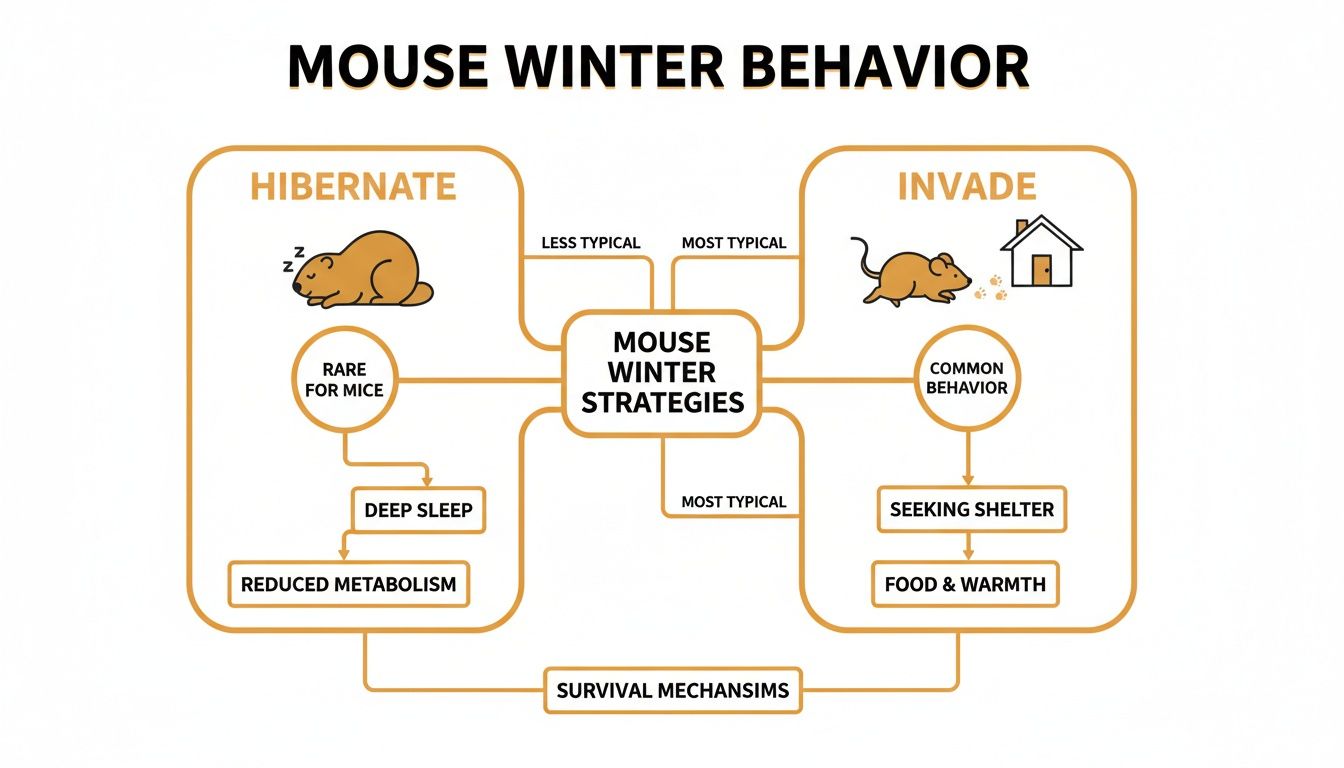
As you can see, the deep sleep of a hibernator is a world away from the opportunistic strategy of a mouse, which is simply to find a warm home to invade.
This biological adaptability is well-documented right here in Central Alberta's mouse populations. None of the seven species found in our province actually hibernate. Instead, they just use these short torpor states during extreme cold snaps. They can quickly get back to foraging under the snow or—much more conveniently for them—inside a heated house. You can discover more insights about these local mouse behaviours from Orkin Canada.
Because they never truly check out for the winter, mice are always on the hunt for two things: warmth and food. Your home provides the perfect five-star resort for them to ride out the winter, not by sleeping, but by actively living, eating, and breeding right inside your walls.
Identifying Alberta's Most Common Winter Intruders
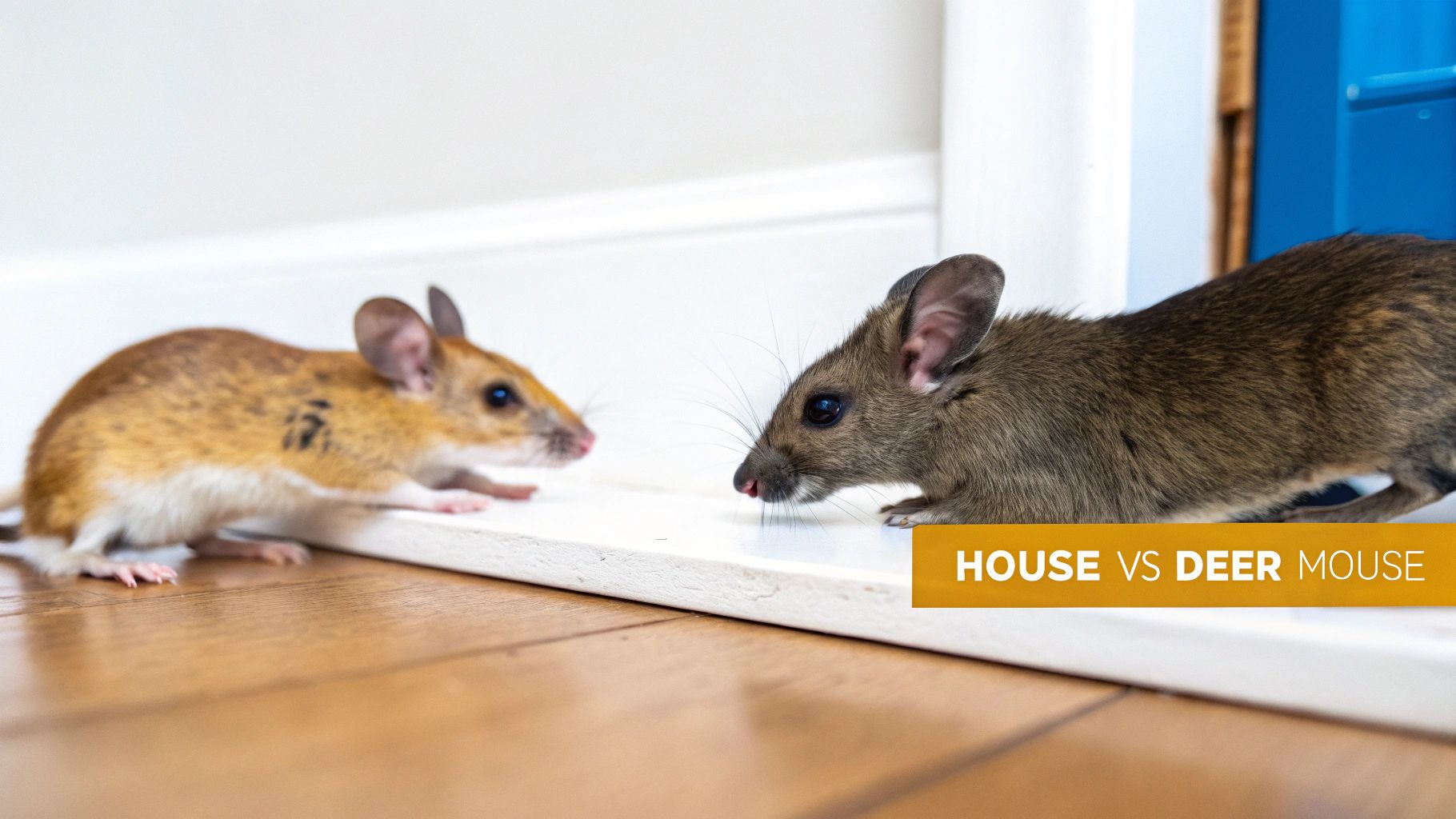
So, we've settled that mice don't hibernate. Instead, they look for somewhere warm to ride out the winter—and that often means your home. But who exactly are you up against?
In Alberta, two specific uninvited guests are most likely to show up when the temperature drops: the House Mouse and the Deer Mouse.
They might look similar at first glance, but knowing the difference is your first step toward getting them out and keeping them out. It’s also a good idea to make sure you’re not dealing with something bigger; understanding the differences between mice and rats can help you figure out the scale of your problem.
The House Mouse (Mus musculus)
This is the classic home invader. The House Mouse is typically a solid greyish-brown with a lighter-coloured belly, and they are absolute masters of getting inside.
Their bodies are so flexible they can squeeze through a hole the size of a dime. That tiny crack in your foundation or the small gap around a utility pipe? To them, it's a wide-open door. Once they're in, they’ll find a dark, hidden spot near a food source and get comfortable.
- Common Nesting Spots: You'll often find them in wall voids, attics, behind the fridge, or deep inside cluttered closets.
- Diet: They aren't picky. Cereals, grains, pet food, and any forgotten crumbs are all fair game.
The Deer Mouse (Peromyscus maniculatus)
Often found in rural areas and farms around Red Deer, the Deer Mouse has no problem moving indoors when the first frost hits. They're easy to spot because of their distinct two-toned colouring—usually brownish-red on top with a sharp, clean white underbelly and feet.
While any mouse is a nuisance, Deer Mice are a bigger concern because they are known carriers of Hantavirus, a serious respiratory illness. Their presence isn't just an annoyance; it's a significant health risk that demands prompt, professional removal.
A Rapidly Multiplying Problem
The most alarming thing these two mice have in common is how quickly they breed. One pair can explode into a full-blown infestation over a single winter.
A female house mouse, for example, can have up to 12 litters a year, with about six pups in each. Do the math: that's potentially 72 new mice from just one female in a year.
This incredible reproductive rate is why spotting the problem early is so critical. If you think you've seen "just one mouse," chances are you're already behind.
Key Signs Of A Winter Mouse Infestation
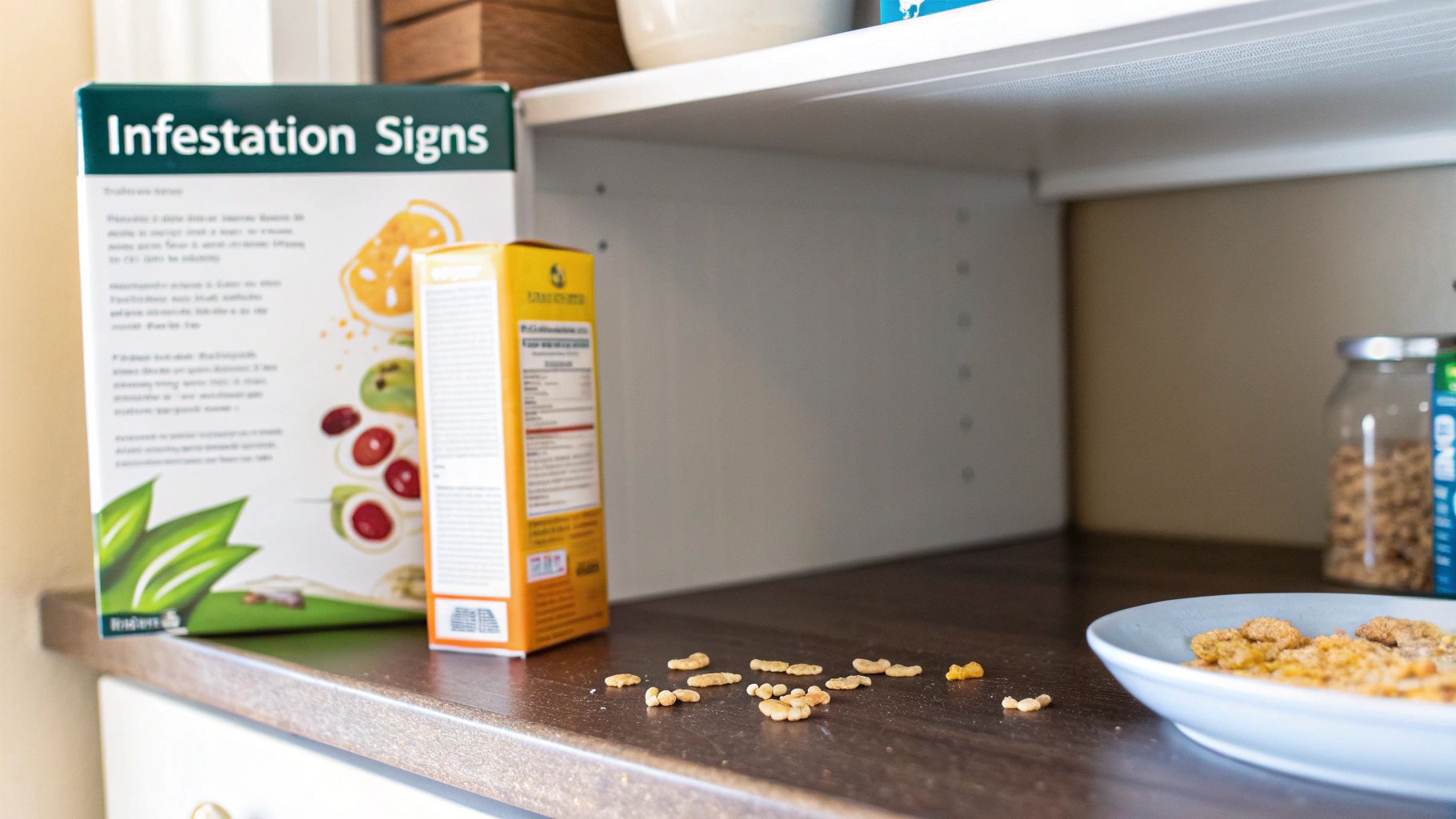
Since mice are wide awake all winter, their survival plan often involves becoming your uninvited roommates. The real problem? They’re masters of stealth, preferring to stick to the quiet, undisturbed corners of your house where you’re least likely to notice them.
Catching an infestation early means learning to spot the subtle clues they leave behind. Think of yourself as a detective in your own home, checking for evidence in places you might normally overlook. Fortunately, mice are creatures of habit and almost always leave a trail. If you know what you're looking for, you can stop a few unwanted guests from turning into a full-blown crisis.
Visual Evidence And Physical Damage
The most glaring signs of a mouse problem are the ones you can see. Mice are constantly eating, chewing, and exploring, which means they leave plenty of physical proof of their presence. Regular checks in high-activity areas can help you uncover an issue fast.
Start by looking for these dead giveaways:
- Droppings: This is the classic, number-one sign. Mouse droppings are tiny, dark, and shaped like grains of rice. You'll usually find them concentrated in pantries, cupboards, under sinks, and along the baseboards they use as highways.
- Gnaw Marks: A mouse’s teeth never stop growing, forcing them to chew on things constantly to file them down. Keep an eye out for small, rough chew marks on food packaging, baseboards, furniture legs, and even dangerous spots like electrical wiring.
- Nests: To stay warm, mice build messy little nests out of any soft materials they can find. Check for shredded paper, bits of fabric, insulation, or cotton packed into hidden corners of closets, attics, wall voids, or behind large appliances.
A strong, musky odour in a confined space like a pantry or cabinet is a major red flag. This distinct smell comes from their urine and often indicates a well-established nest is hidden nearby. Don't ignore it.
Sounds And Smells To Watch Out For
Sometimes, the first clue you have of an infestation isn't something you see, but something you hear or smell. Mice are most active at night when the house is quiet, making it the perfect time to listen for their movements. These auditory clues are often the earliest warning signs a homeowner gets.
The stillness of a Red Deer winter night makes these faint noises much easier to pick up on. Pay close attention to sounds coming from within your walls, ceilings, or from the attic just after you've gone to bed.
Listen for these distinct sounds:
- Scratching Noises: Do you hear faint scratching or scrambling coming from inside your walls or above the ceiling? That's a classic sign of mice scurrying along their hidden pathways.
- Scurrying Sounds: You might hear the pitter-patter of quick, light footsteps moving across the attic floor or behind the kick plate under your kitchen cabinets.
- Squeaking: While you might not hear it often, faint squeaks are another auditory clue, especially if you have a larger number of mice communicating with each other.
To help you stay vigilant, we've put together a simple checklist. Use it to periodically inspect the most common mouse hotspots in your home.
Winter Mouse Infestation Checklist
| Area of Home | What to Look For (Visual Signs) | What to Listen For (Auditory Signs) |
|---|---|---|
| Kitchen/Pantry | Droppings in cupboards, chewed food packages, gnaw marks on baseboards, musky odours. | Scurrying sounds under appliances or behind cabinets, faint squeaking at night. |
| Attic/Crawlspace | Shredded insulation, droppings in corners, tunnels in stored boxes, damaged wiring. | Scratching or running sounds overhead, especially after dark. |
| Basement/Garage | Nests in storage boxes, droppings along walls, grease marks on pipes or foundation. | Scrambling noises from within walls or near the sill plate. |
| Behind Appliances | Nests behind the fridge or stove, chewed electrical cords, droppings on the floor. | Faint scurrying when the appliance is moved or the room is quiet. |
Catching these signs early empowers you to take action quickly. The sooner you identify an infestation, the easier it is to manage and prevent the population from growing out of control during the long Alberta winter.
How To Prevent Mice From Entering Your Home This Winter

Now that we know the answer to "do mice hibernate?" is a hard no, our focus has to shift from waiting them out to actively keeping them out. Hands down, the most effective way to handle a mouse problem is to stop it before it even starts. By fortifying your home before the first major Alberta snowfall, you create a powerful defensive barrier that makes your property a whole lot less appealing to rodents looking for a warm place to stay.
A proactive strategy is always your best defence. This means sealing up potential entry points, getting rid of tempting food sources, and managing your property to remove easy nesting spots.
Seal Every Possible Entry Point
Mice are absolute masters of infiltration. They can squeeze their way through openings as small as a dime, so your first job is to think like a mouse. Get outside and do a thorough inspection of your home's exterior, from the foundation right up to the roofline.
Look for tiny cracks and gaps, especially where utilities like pipes or wires enter the house. Pay extra attention to the foundation, around window frames, and the corners of your garage door.
- Use the Right Materials: For smaller gaps, stuff them tight with steel wool (mice hate chewing it) and then seal over it with caulking. For bigger holes, expanding foam or a cement patch will do the trick.
- Check Vents and Chimneys: Make sure all your vents—dryer, attic, you name it—are covered with durable mesh screens. Your chimney should also be properly capped.
Beyond these quick fixes, you can take things a step further. For instance, learning how to properly seal your home's exterior with a water seal for brickwork can help protect porous masonry and close up the tiny micro-cracks mice might exploit over time.
Remove All Food And Water Sources
Mice show up for two main reasons: shelter and food. If you make your home a place with nothing to eat or drink, you give them very little reason to stick around. This calls for consistent, diligent cleanliness, especially in and around the kitchen.
An open cereal box or a bag of pet food is an all-you-can-eat buffet for a mouse. Securing your food isn't just a suggestion; it's one of the most critical steps in rodent prevention.
Start building these habits right away:
- Store Food in Sealed Containers: Move pantry items like grains, pasta, cereals, and pet food out of their original packaging and into chew-proof containers made of glass, metal, or thick plastic.
- Clean Up Promptly: Never leave dirty dishes in the sink overnight. Make it a rule to wipe down counters, sweep floors, and clean up any crumbs or spills immediately.
- Fix Leaks: Repair any dripping faucets or leaky pipes under sinks. Mice need water, and cutting off easy access makes your home far less hospitable.
Manage Your Property And Eliminate Hiding Spots
The area right around your house can either be a welcome mat for pests or a powerful deterrent. Clutter and debris piled up against your foundation give mice the perfect cover to hide while they look for a way inside.
Keep your property clean and organized, particularly as winter sets in. This is a core part of any effective December pest control guide for those of us living in Alberta.
- Yard Debris: Rake up leaves and clear away any piles of brush or garden waste from your yard.
- Firewood Storage: Stack your firewood at least 20 feet away from the house and get it up off the ground on a rack. A woodpile leaning against your foundation is a five-star hotel for mice.
- Trim Landscaping: Cut back tree branches or overgrown shrubs that are touching your house. These can act like bridges, giving mice easy access to your roof and attic.
When To Call A Professional For Mouse Control
Taking proactive steps like sealing up entry points and keeping food sources locked down can make a huge difference in keeping your home mouse-free. But let’s be realistic—DIY methods have their limits, and some situations just need the skill and tools of a professional.
Knowing when to pass the problem over to an expert is the key to stopping a small issue from exploding into a major crisis. Sometimes, a mouse problem can escalate faster than a few traps can handle. If your best efforts aren't making a dent or the signs of an infestation are actually getting worse, that's a clear signal to call for backup.
Decisive Signs You Need Expert Help
Certain clues are dead giveaways that an infestation is much larger or more established than you first thought. These aren't situations to take lightly, since a big mouse population poses serious risks to both your health and your property. A professional can figure out the full scope of the issue and put a plan in place that gets to the root of the problem.
It's time to pick up the phone if you notice:
- Daytime Sightings: Mice are nocturnal creatures. Seeing one scurrying around during the day usually means the population has grown so large that the younger, bolder mice are being forced out to find food when they normally wouldn't.
- Recurring Problems: You got rid of them, but a few months later, they're back. This is a classic sign of an underlying entry point or attractant you haven't been able to find.
- Nests and Strong Odours: Finding an active nest or noticing a persistent, musky smell means mice aren't just visiting—they're breeding and have made themselves at home.
When an infestation hits this stage, the risks shoot up. We're talking serious property damage from constant gnawing and health issues from droppings and urine. Professional intervention is simply the safest and most effective way forward.
For homeowners in Red Deer facing a stubborn rodent problem, understanding how to get rid of mice with an expert's help provides a clear path to a real solution. Professional pest control technicians offer a lot more than just traps. They provide a comprehensive service that includes pinpointing entry points, using commercial-grade treatments, and creating a long-term exclusion plan to make sure your home stays protected for good.
This expertise doesn't just offer a quick fix; it delivers lasting peace of mind.
Common Questions About Mice In Winter
Even when you know the answer to "do mice hibernate?" is a solid no, other questions always seem to pop up as the snow starts to fall. Getting a handle on their winter behaviour is the key to keeping them out of your Alberta home for good.
Let's break down some of the most common queries we hear from homeowners.
Where Do Mice Go When It Snows In Alberta?
They don’t pack up and leave; they just go underground. The snowpack acts as a surprisingly effective insulating blanket, and mice take full advantage of it. They create a whole network of tunnels in the space just above the frozen ground.
This little mouse highway is called the subnivean zone, and it protects them from both predators and the worst of the cold. From there, they can travel safely between their nests and any nearby food sources—which, unfortunately, often includes your house.
Can Mice Survive Outside During An Alberta Winter?
Yes, but it's incredibly tough for them. While they can burrow and enter short states of torpor to save energy, a warm home with a steady supply of food is a much better bet for survival.
This is exactly why indoor infestations spike the moment the first deep frost hits Red Deer and the surrounding areas. To a mouse, your home is a five-star resort compared to the harsh, frozen world outside.
The crucial takeaway here is that mice are driven indoors by pure survival instinct. Their goal isn't just to find a temporary hideout but to set up a secure base of operations for the entire winter.
Are Mice Louder In The Winter?
They aren't necessarily making more noise, but you're a lot more likely to actually hear them. With more mice seeking refuge inside and your home being quieter at night, the sounds of their activity become much more obvious.
That scurrying, gnawing, and squeaking you hear in the walls or attic is a dead giveaway that they've moved in for the season.
When your own prevention efforts aren't cutting it, understanding the Pest Control Service industry can help you find the right professionals for the job.
If you're dealing with a persistent mouse problem, don't wait for it to get worse. The experts at Dragon Pest Control have proven solutions to protect your home and give you lasting peace of mind. Book your service online today
Article created using Outrank