
It’s a common question we get as the cold weather rolls in: do wasps just disappear in the winter? The short answer is yes, for the most part. The first hard frost we get here in Alberta is a death sentence for the entire wasp colony—all the workers and males are wiped out.
But the story doesn't end there. One crucial member of the colony survives: the newly mated queen. She's the key to the whole operation, carrying the genetic blueprint for a brand-new colony come springtime.
The Annual Wasp Lifecycle and Winter Survival
It helps to think of a summer wasp nest not as a permanent home, but as a temporary factory. Its single purpose is to produce and raise a new generation of queens before the season ends. Once autumn’s chill arrives, this bustling operation is designed to shut down completely.
The worker wasps, after a summer spent tirelessly building the nest and foraging, have fulfilled their purpose. Their lifecycle is over. The lone survivor is the young, fertilized queen, and she has one mission: find a safe, insulated spot to ride out our harsh Alberta winter.
She enters a state of deep hibernation known as diapause, where her metabolism slows to a crawl. She's not just taking a long nap; she's conserving every ounce of energy to emerge in the spring and single-handedly start a new empire from scratch.
This timeline shows you exactly how it works, from a thriving summer colony to a lone, hibernating queen.
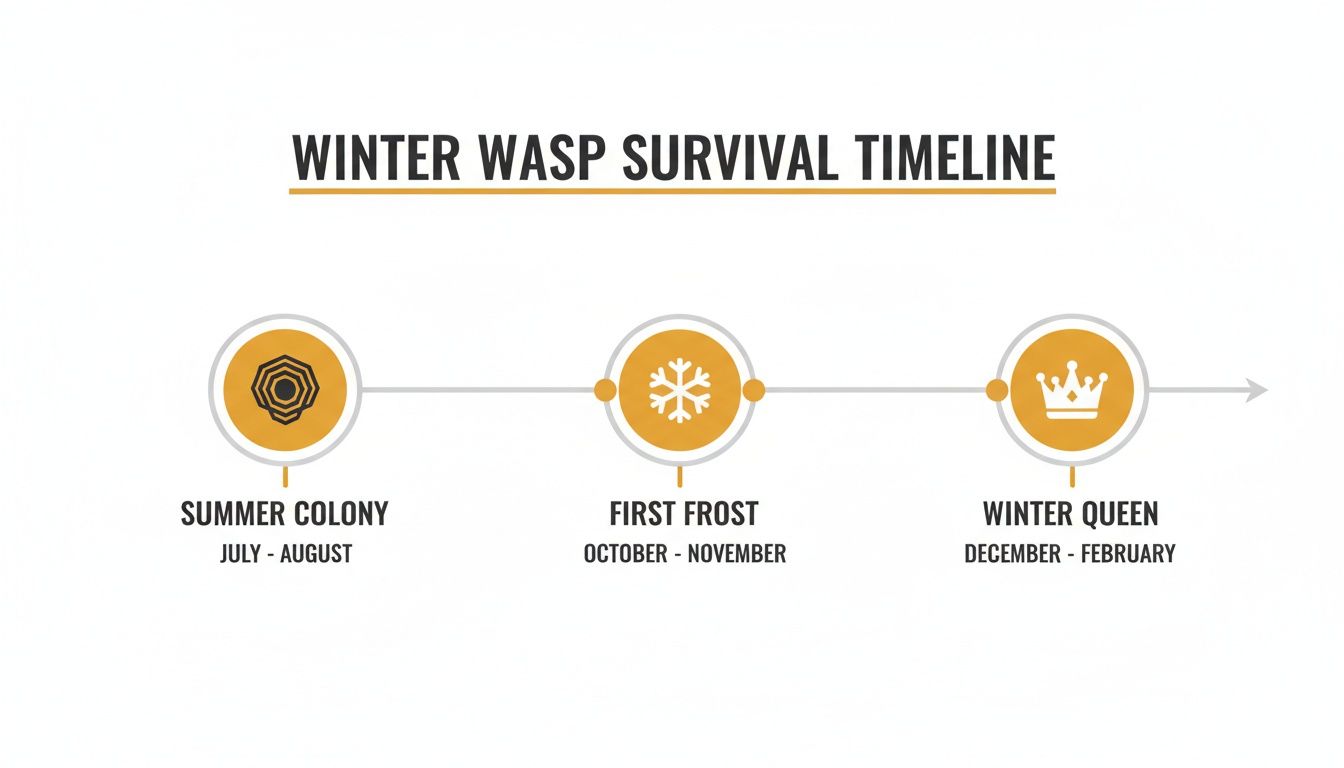
As you can see, that first frost is the trigger. It collapses the old colony and sends the queen searching for shelter.
To put it simply, here’s a quick rundown of who makes it and who doesn’t.
Winter Wasp Survival Status
| Wasp Type | Winter Fate | Primary Role |
|---|---|---|
| Queen Wasp | Survives | Overwinters to start a new colony in spring. |
| Worker Wasp | Dies | Forages and builds the nest; lifecycle ends. |
| Male Wasp | Dies | Mates with the new queen; lifecycle ends. |
| Solitary Wasp | Survives | Hibernates individually as a pupa or adult. |
This table makes it clear: the queen is the only one from the social colony who is built to last the winter.
Why One Wasp Matters
Understanding this cycle is the secret to effective, long-term wasp control. That huge, intimidating nest you dealt with in August is just a symptom. The real source of next year's problem is the single queen hiding out in your attic, wall void, or shed right now.
The survival of a single queen is the only thing that allows a wasp population to persist from one year to the next. Eliminating her overwintering spot is the most effective form of long-term prevention.
This is why late fall and winter are the perfect times to be proactive. By focusing on simple preventative measures now, you can stop a full-blown infestation before it even has a chance to start. For more seasonal advice, our December pest control guide offers valuable insights for keeping all kinds of winter pests out.
Taking care of one lone queen today means you won't have to deal with thousands of her offspring next summer.
Where Do Queen Wasps Hide During Winter?
While the first deep freeze wipes out the worker wasps, the newly mated queen is just beginning her most important mission: surviving the winter. Her survival is the only thing that guarantees the future of her species. To do this, she needs to find a safe, insulated spot to wait out Alberta's brutal cold.
She isn't just taking a long nap. The queen enters a state of deep hibernation known as diapause. Think of it as a biological pause button. Her entire metabolism slows to a crawl, allowing her to survive for months on end without a single meal. This incredible adaptation lets a fragile insect endure temperatures that can easily drop to -30°C or lower. In this state, she’s basically a living time capsule, carrying the genetic blueprint for next summer’s entire colony.
Common Overwintering Hideouts
To make it through diapause, a queen needs a shelter that protects her from freezing temperatures, moisture, and hungry predators. It’s no surprise that the homes we build offer far better accommodations than anything she could find in the wild. Her ideal winter getaway is dry, undisturbed, and totally shielded from the elements.
If you're a homeowner in central Alberta, you should know where these queens love to hide:
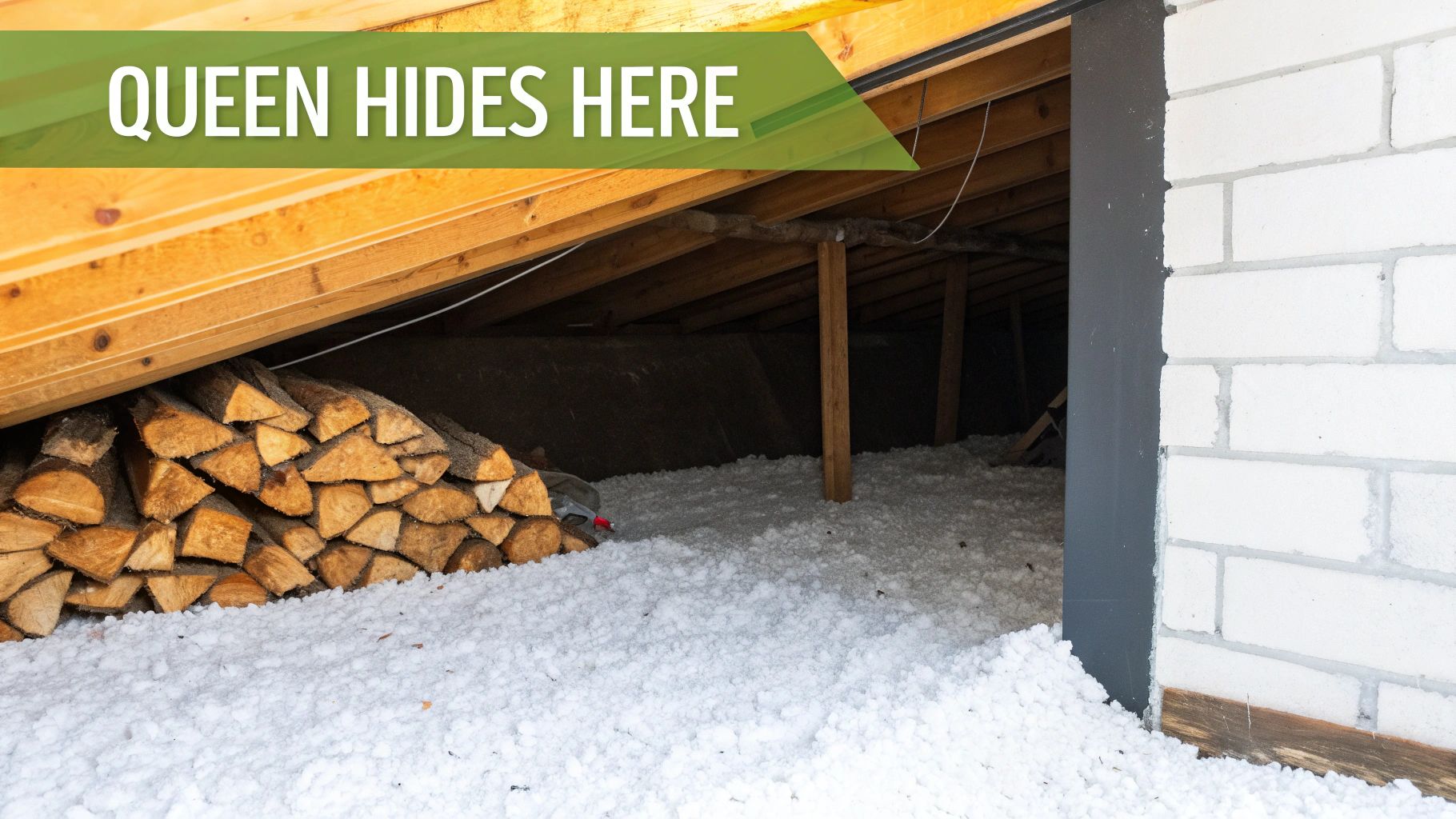
- Attics and Crawlspaces: The fluffy insulation in your attic is like a five-star hotel for a wasp queen. It offers fantastic thermal protection, keeping her just warm enough to survive.
- Wall Voids: Those empty spaces behind your drywall provide a secure, stable environment, protecting her from wind and wild temperature swings.
- Sheds and Garages: Unheated outbuildings are full of perfect little nooks and crannies. She might tuck herself away inside a piece of old equipment, a stack of firewood, or some forgotten boxes.
- Under Siding and Eaves: Tiny gaps under your home’s siding or behind fascia boards create the perfect little protected pockets for a lone queen to hibernate.
She’ll often return to the same types of places year after year. So, if your property has hosted a queen before, there’s a good chance it will again.
A hibernating queen isn't looking for a fight; she’s just looking for refuge. The problem is, her choice of shelter directly sets the stage for a massive infestation right on your property once spring arrives.
Knowing where she hides is the first step toward smart, proactive prevention. By finding and securing these vulnerable spots around your home, you can deny her the sanctuary she needs to survive. This turns the vague threat of a future nest into a real problem you can solve during the quiet winter months—long before you hear that first buzz of spring.
Getting to Know Alberta’s Common Wasp Invaders
Not all wasps play by the same rules when winter hits. While it’s true that most wasps die off, understanding which species you’re dealing with in Alberta is key to knowing what specific threats your property faces. Each type has a slightly different game plan for how its queen finds shelter, which tells you where to start looking for potential problems.
Knowing the difference between a yellowjacket and a paper wasp takes you beyond a one-size-fits-all approach. It arms you with the knowledge to take targeted, preventative action before a new colony gets going in the spring.
The Aggressive Yellowjacket
Yellowjackets are probably the most infamous pests at any Alberta barbecue, known for aggressively defending their nests and crashing parties for a sip of your sugary drink. Their queens are incredibly resourceful when it’s time to find a winter hideout.
A yellowjacket queen isn't just looking for any old spot; she wants five-star insulation. This is why she often skips natural hiding places and heads straight for man-made structures that offer better protection from our harsh winters.
You’ll often find them tucked away in:
- Structural Voids: Those empty spaces behind your drywall or inside concrete blocks are perfect.
- Dense Insulation: An attic filled with fluffy blown-in or fibreglass insulation makes a cozy bed for a burrowing queen.
- Underground Cavities: They might also hunker down in old rodent burrows or compost piles right next to your home's foundation.
The western yellowjacket (Vespula pensylvanica), often called a "meat bee," is a dominant species that’s become an expert at using these spots. A single queen that survives the winter can launch a colony of over 5,000 wasps by July, making her survival a major threat to your summer peace.
The Opportunistic Paper Wasp
You’ll recognize paper wasps by their unique, open-celled nests that look like upside-down umbrellas. They love to hang them from eaves, deck railings, and porch ceilings. Their queens are less likely to burrow deep inside your walls and are more opportunistic, looking for small, ready-made crevices.
Think of them as masters of the tight squeeze. A paper wasp queen is on the hunt for any small, protected gap she can tuck herself into for the winter.
Check for them in places like:
- Underneath Siding: That tiny space between siding panels and the house frame is a favourite hideout.
- Behind Window Shutters or Frames: These spots offer a slim but secure pocket of shelter from the elements.
- Inside Outdoor Equipment: An unused grill, a stack of patio furniture, or a pile of firewood can easily host a hibernating queen.
Climate is a huge factor in their survival. In milder places like coastal California, entire yellowjacket colonies can sometimes survive the winter, creating massive, multi-year nests. Here in Alberta, our brutal winters ensure that almost all colonies die off, leaving only the queens to hibernate. But even with our cold, a queen’s survival odds go way up if she makes it inside a warm structure. For a deeper dive on how climate impacts wasp survival, you can explore the findings from UC IPM's research on social wasps.
Here's the rewritten section, crafted to sound completely human-written and match the provided examples:
Why Alberta Winters Make Your Home a Wasp Magnet
An Alberta winter is a brutal test of survival for any insect, and a newly mated queen wasp is no exception. While the rest of her colony dies off with the first hard frost, she has one mission: find a safe place to ride out the cold. Her survival is everything.
Out in the wild, the odds are stacked against her. A hollow log or a crack in a rock offers flimsy protection from months of deep freezes and heavy snow. The constant threat of temperature swings can be lethal, and very few queens hibernating in natural spots will ever see the spring. This is exactly why our homes, sheds, and garages become such prime real estate.
The Ultimate Winter Upgrade
For a queen wasp, your home is the single greatest advantage she can find. The stable, dry, and insulated spaces we create are a five-star upgrade compared to anything in nature.
- Consistent Temperatures: Even an unheated attic or wall void is far more stable than the outdoors, shielding her from deadly freeze-thaw cycles.
- Protection from Elements: Your house is a fortress against wind, snow, and ice—the main culprits of winter mortality for insects.
- Secluded and Undisturbed: Attics, crawlspaces, and sheds offer endless dark, quiet corners where she can hibernate without being disturbed.
This huge difference in shelter quality dramatically boosts her chances of making it to spring. A queen that successfully gets into your home is almost guaranteed to emerge, ready to build a new nest.
By providing the perfect overwintering site, a home accidentally becomes the launchpad for the next generation of wasps. The difference between a queen surviving outside versus inside your house is the difference between a small annoyance and a major infestation.
Our climate makes this even more of a problem. In milder places like Fresno, California, where winter lows don't often drop below freezing, paper wasp queens have a much higher natural survival rate. Pest experts there say 70-80% more queens can survive the winter compared to colder climates where nearly all outdoor-hibernating wasps die off.
For Alberta homeowners, this really highlights how critical our homes are in this cycle. A single queen that finds refuge in your property can start a colony of 5,000 wasps by summer. You can read more about how climate affects wasp survival from these pest control specialists in California.
Spotting the Warning Signs of a Winter Wasp Problem
With most wasps gone for the winter, it’s tempting to think you’re in the clear until spring. But a single hibernating queen hiding in your walls or attic is a ticking time bomb. Finding her now is a whole lot easier than dealing with a nest the size of a basketball on your porch in July.
The good news is, there are clues. You just have to know what you’re looking for. This isn’t about spotting a busy nest; it’s about finding the quiet evidence left behind by one very resourceful survivor.
The Lone Wasp Inside
Ever seen a single, drowsy-looking wasp buzzing lazily around your living room on a warm winter day? That’s not a fluke. It's one of the most reliable signs you have a queen overwintering somewhere in your house.
Unseasonably warm spells, like one of our classic Alberta chinooks, can easily trick a hibernating queen into thinking spring has sprung. If she’s bunkered down in your attic, wall voids, or behind your siding, the warmth from your home can wake her up. Confused, she'll head towards the light and warmth, often emerging inside your house through light fixtures, vents, or tiny gaps in the drywall.
Finding one slow-moving wasp indoors during the winter is a major red flag. It almost certainly means a queen was disturbed from her hiding spot within your home's structure and is now trying to get back to safety—or find a way out.
The Abandoned Nest Clue
You might stumble across an old, grey, papery nest under the eaves or in the back of your shed and dismiss it as a relic from last summer. And while it’s true wasps almost never reuse an old nest, you absolutely shouldn't ignore it. That old nest is a bright-red arrow pointing directly to a prime piece of real estate for wasps.
Think of it as a historical marker. It tells you two critical things:
- Ideal Conditions: Your property provided the perfect mix of shelter, food, and water for a colony to thrive there once before.
- Proven Entry Points: The queen who built that nest found a way in. The new queens she produced last fall are programmed to look for similar weak spots nearby.
An abandoned nest is a clear signal that your property is attractive to wasps. The new, mated queen from that very colony probably didn't fly far to find her own winter hideout. She could easily be just a few feet away, tucked inside your soffits, attic, or another sheltered nook. Use that old nest as ground zero for your inspection and start looking for the tiny cracks and gaps a new queen would use to get inside.
Your Proactive Winter Wasp Prevention Checklist

Now that you know only the queen survives the winter, you have the secret to truly effective wasp prevention. Fortifying your home during the cold months denies her the shelter she needs to make it to spring and start a new colony. A little work now can save you from a full-blown infestation of thousands of wasps next summer.
Think of your home's exterior like a fortress wall. A queen wasp doesn't need a battering ram; she just needs one tiny crack to breach your defences. Your mission is to find and seal these vulnerabilities before she does. This checklist will walk you through the most common entry points.
Seal and Secure Potential Entry Points
Start by taking a slow, detailed walk around your property. You're looking for small, easily overlooked gaps. A queen can squeeze through an opening as small as 6 mm, so you have to be meticulous.
-
Inspect and Seal Cracks: Check your foundation, siding, and the frames around every window and door. Sealing these gaps is your first line of defence. If you need a simple, effective fix, learning how to use rope caulk is a great place to start.
-
Secure Vents and Chimneys: Make sure all your vents—for the dryer, attic, you name it—are covered with fine-mesh insect screens. A chimney cap is also a must-have to block what is otherwise a direct highway into your home.
-
Repair Damaged Screens: A tiny tear in a window or door screen is a massive "Welcome!" sign to a queen wasp. Take the time to repair or replace them to create a solid barrier against any queens trying their luck on a warmer day.
-
Check Utility Entry Points: Look closely where pipes, wires, and other utility lines enter your house. These spots almost always have small gaps around them, creating the perfect sneaky entrance for a queen. Use a good quality caulk or expanding foam to seal them up tight.
Remember, sealing a tiny gap around a utility pipe isn't just routine maintenance; it's blocking a superhighway for a queen seeking a safe harbour from Alberta's harsh winter.
Taking these steps transforms your home from a potential wasp hotel into a secure stronghold. For a more detailed guide on long-term strategies, check out our resources on how to prevent wasp nests before they even get started.
When to Call for Professional Wasp Control
While sealing up entry points around your home is a fantastic DIY strategy, some situations are simply best left to the experts. Knowing when to pick up the phone is the key to making sure your home is truly secure from a future infestation.
If you suspect a queen is already bunkered down inside your home—especially if she’s tucked away in a wall void or a hard-to-reach attic corner—trying to remove her yourself is a bad idea. Disturbing a queen can be a gamble. You might not even find her, and if you do, you risk making her defensive. A groggy, half-asleep wasp may seem harmless, but it can still deliver a nasty sting.
Plus, a professional approach is about more than just dealing with a single insect. Licensed technicians have the proper training and gear to safely find and treat these hidden overwintering spots without tearing your home apart in the process.
The Safest Solution for Peace of Mind
At the end of the day, calling a professional is the smartest move when you have an active concern. Experts can confirm whether a queen is actually present and use targeted treatments that DIY methods just can't compete with. This is especially true if you’re dealing with a full-blown infestation, which is why it’s so important to know when you need specialised wasp nest removal services.
A professional assessment guarantees that the root of the problem—the hibernating queen—is handled correctly. It gives you complete peace of mind that a whole colony won't suddenly spring to life in your living room when the weather warms up.
This doesn't just get rid of the immediate threat; it also comes with expert advice on how to secure your home against future invaders. To get a better handle on the risks involved, you can learn more about how to remove a wasp nest safely and understand why professional help is almost always the best choice.
If you've noticed the warning signs of an overwintering wasp or just want to make sure your home is fully protected, don't wait for spring to arrive. Contact Dragon Pest Control today to schedule a professional inspection and keep your home safe, guaranteed.