
That moment you spot it—the papery, grey football-shaped nest hanging from your eave, or a terrifyingly busy stream of insects pouring out of a hole in the ground—your heart just drops. Here in Red Deer and across central Alberta, our short, intense summers mean hornet and wasp colonies can seem to pop up and expand overnight.
The first instinct for many is to grab a can of spray or a long stick. That's almost always the most dangerous thing you can do.
First Steps After Spotting a Hornet Nest
What you do in the first few minutes is critical for keeping everyone safe. Instead of panicking and rushing in, the goal is to stop, step back, and assess the situation from a safe distance. We're talking at least 6 to 9 metres away. This isn't just about avoiding a few stings; it's about figuring out exactly what you're up against.
Your primary goal is to contain the area and observe, not to start a fight. Hornets are fiercely territorial and will swarm to defend their home with painful, repeated stings if they feel the slightest bit threatened.
Here’s what you need to do immediately:
- Set up a "No-Go Zone." Get everyone, especially kids, away from the area. Make it a clear rule: nobody goes near that spot. If you need to, mark it off with some tape or a lawn chair.
- Get pets inside. Dogs and cats are curious, and their sniffing around can easily provoke an attack. Bring them indoors until the situation is handled.
- Cut the noise and vibrations. Hold off on mowing the lawn, using the weed whacker, or even slamming a nearby door. These vibrations travel through the ground or the structure of your house and can trigger a defensive swarm.
- Watch their flight path. From your safe spot, just watch them for a few minutes. See where they fly in and out. This confirms the nest is active and helps you understand their main travel routes.
A huge mistake we see homeowners make is underestimating how far a hornet's defensive zone extends. They can sense movement and vibrations from metres away, and their reaction is incredibly fast. Rule number one is always, always respect their space.
Know Who You're Dealing With
While they all sting, knowing which insect you have is key to understanding the risk. In Alberta, you're most likely up against Bald-Faced Hornets or Yellowjackets, which are actually types of wasps, not true hornets.
Bald-Faced Hornets are the ones that build those classic, large, exposed paper nests. You'll find them hanging from tree branches, under the eaves, or on a porch ceiling. They are known for their extreme aggression when defending the nest.
Yellowjackets are often the more dangerous of the two, simply because of where they build their homes. They love concealed spaces—inside your walls, in the attic, or in a hidden burrow underground. This is what makes accidental encounters so common and so dangerous. You could be mowing the lawn and run right over an underground colony without ever seeing it, triggering a massive, sudden attack.
Knowing this difference is absolutely critical before you even think about removal.
Identifying Nests and Assessing the Real Risk
Knowing exactly what you're up against is the first, most critical step in dealing with a hornet nest safely. Before you even think about a plan of attack, you need to correctly identify the type of nest on your property and get a realistic sense of the danger it poses. Trust me, the difference between a small, new paper wasp nest and a mature bald-faced hornet colony is night and day.
Hornet & Wasp Nest Identification Guide for Alberta
Figuring out which stinging insect has moved in can feel like a guessing game. Here in Alberta, you're most likely dealing with one of a few common culprits. This quick guide will help you tell them apart just by looking at the nest structure and where they've decided to build it.
| Nest Type | Appearance | Common Locations | Aggression Level |
|---|---|---|---|
| Bald-Faced Hornet | Large, grey, paper-like teardrop or football shape. | Hanging from tree branches, roof eaves, utility poles. | Extremely High. Very aggressive defenders. |
| Yellowjacket | Often hidden. Can be a papery nest in a void or underground. | Wall voids, attics, sheds, old rodent burrows. | High. Easily provoked, especially if you get too close. |
| Paper Wasp | An open, upside-down umbrella shape with visible hexagonal cells. | Sheltered spots: under porch roofs, window ledges, playsets. | Moderate. Will sting if their nest is directly disturbed. |
Recognizing the nest is your first clue. While this table helps, if you're ever in doubt, it's always safer to assume it's a high-risk situation. Proper identification is a huge part of identifying and treating common outdoor pests of all kinds.
Performing Your Risk Assessment
Okay, you’ve identified the likely suspect from a safe distance. Your next move is a quick but careful risk assessment. This isn’t about figuring out how to remove the nest yourself; it's about deciding if you should even consider it. The goal here is simple: determine if this is a low-risk job or one that absolutely requires a pro from Dragon Pest Control.
Ask yourself these critical questions:
- Where is it? A nest way up on a second-storey eave, inside a wall, or right next to your front door is automatically high-risk. Anytime a ladder is involved, the danger multiplies. A swarm can easily cause a serious fall.
- How big is it? Here’s a good rule of thumb I always tell homeowners: if the nest is bigger than a golf ball, it has too many hornets for a safe DIY removal. A bigger nest means more defenders and a much more aggressive response.
- How busy is it? Watch the entrance for a few minutes. Do you see one or two insects coming and going, or is it a non-stop highway of activity? Heavy traffic means a large, thriving colony that you do not want to disturb.
A huge mistake people make is underestimating the defensive zone around a nest. Hornets can feel vibrations from several metres away. A quiet-looking nest near a pathway is a time bomb waiting for the wrong vibration—like a lawnmower starting up or a door slamming—to trigger an all-out attack.
Red Flags That Scream "Call a Professional"
Some situations are complete non-starters for a DIY approach. If you spot any of these high-risk factors, your only safe move is to pick up the phone and call for professional hornet nest removal. Trying to tackle these yourself can lead to serious injuries.
This decision guide makes it simple to see when it's time to back away and call for help.
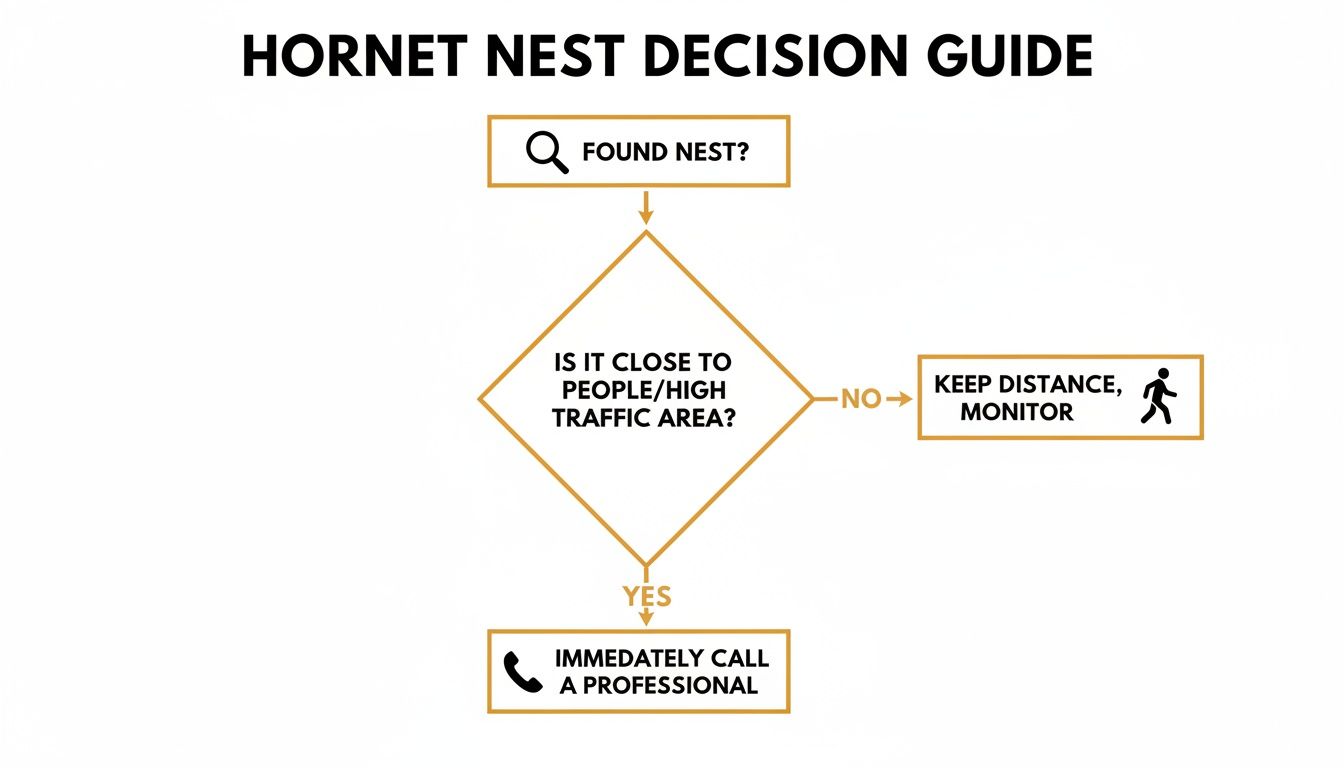
The main takeaway here is that your safety comes first. Keeping your distance and getting an expert opinion are the smartest things you can do after finding a nest. This is something vector control specialists see all the time—DIY attempts gone horribly wrong. For example, when someone disturbs a yellowjacket nest, the swarm doesn't just sting repeatedly; they also bite to get a better grip.
With the right weather conditions, populations can explode. In one region, service requests doubled to over 1,000 in a single year, which shows you how fast things can escalate—a scenario that could easily happen here in Alberta. A professional assessment is your best defence against these dangers.
Safe DIY Removal for Small and Accessible Nests
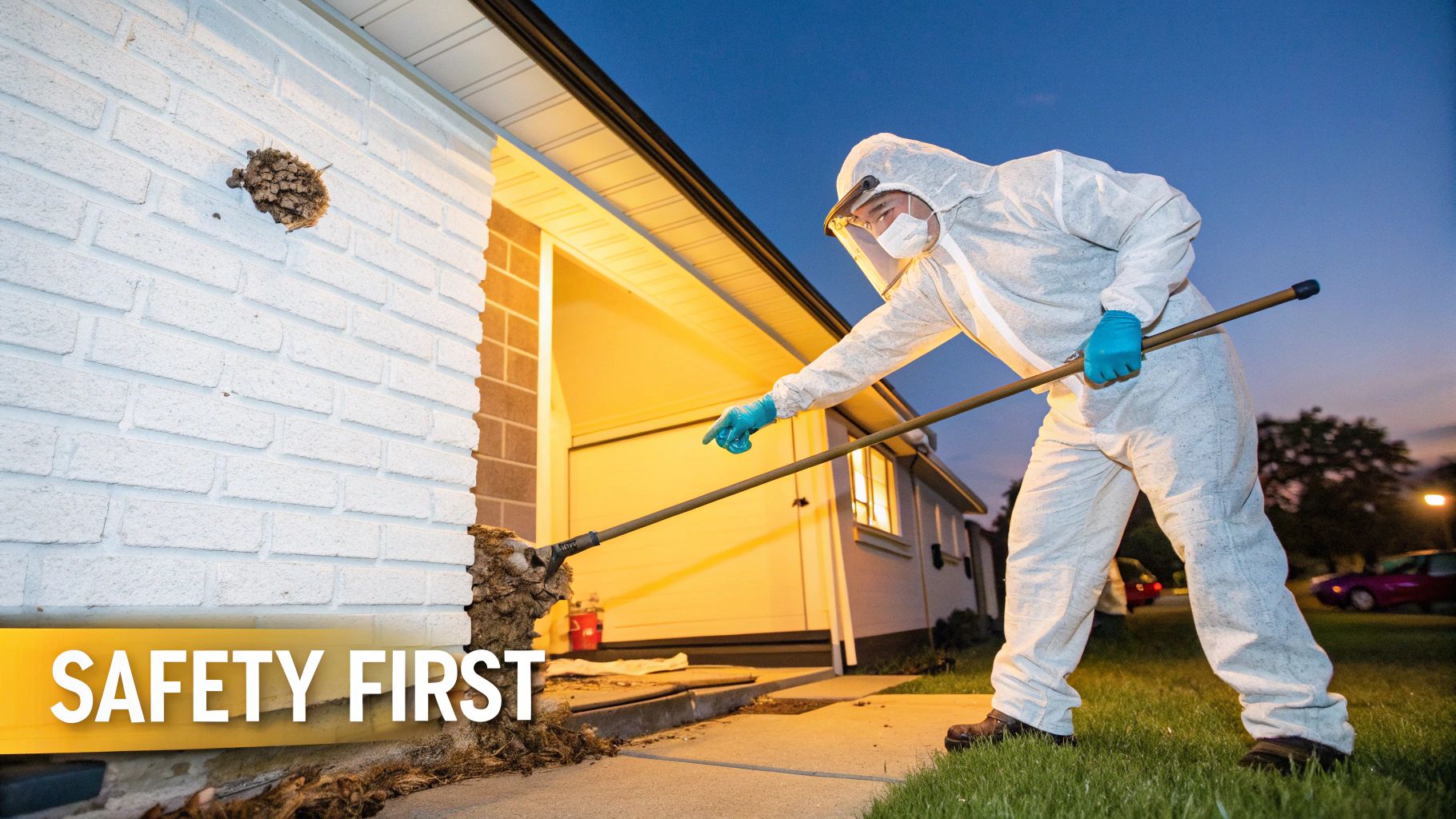
Let's be clear: trying to remove a hornet nest yourself is a high-stakes gamble. It’s a decision that should never, ever be taken lightly.
That said, there's a very narrow set of circumstances where a DIY approach might be on the table. We’re talking about a tiny, brand-new nest that’s completely out in the open. This guide is for those specific, low-risk scenarios, and it demands an uncompromising commitment to safety.
Think of this less as a recommendation and more as a strict safety protocol. If your situation is even slightly different from the conditions we outline, the risk of a dangerous swarm attack goes up dramatically. Our goal here is to help you make a responsible choice, not a reckless one.
The Non-Negotiable Safety Checklist
Before you even consider getting close to a nest, you need the right gear and a solid plan. Those commercial hornet sprays you find at the hardware store are designed to shoot from a distance, but they aren't foolproof. You have to be protected in case things go sideways.
And they can go sideways fast. Hornets are notoriously aggressive and, when they attack, they aim for the face and eyes. Your personal protective equipment (PPE) is your only real defence, so don't cut corners.
- Full-Body Coverage: Wear thick, loose-fitting clothes. That means long sleeves, long trousers tucked into your socks, closed-toe boots, and heavy-duty gloves. The space between the fabric and your skin can sometimes stop a stinger from reaching you.
- Specialized Head and Face Protection: A beekeeper's veil is absolutely essential. Don't even think about trying this with just safety glasses or a hoodie pulled tight. You need 360-degree protection for your head, face, and neck.
- A Clear Escape Route: Before you do anything else, plan your exit. Clear a path to a safe indoor location, making sure there are no toys, hoses, or garden tools to trip over. You need to be able to retreat instantly.
One of the biggest mistakes we see in the field is people trying to tackle a nest in flip-flops and a t-shirt. They think a quick spray will solve the problem, but hornets can swarm in seconds. Without the right gear, a few stings can turn into dozens, creating a serious medical emergency.
Timing Your Approach Perfectly
Hornet behaviour is almost entirely dictated by the time of day and the temperature. During the heat of the day, they're out foraging and are at their most active and aggressive. Attempting a removal then is just asking for trouble.
Your window for a safer approach is incredibly small. The best time for any hornet nest removal is either at dusk or just before dawn. In these cooler periods, the entire colony, queen included, is back in the nest and far more sluggish. This drastically lowers the odds of a coordinated, aggressive defence.
A quick tip: never shine a flashlight with a direct beam on the nest, as the sudden light can startle them. If you need light, rely on ambient sources or use a red-light filter.
Defining the Hard Limits of DIY
Honestly, the most important skill here is knowing when to back away and call a professional. Too many homeowners get into dangerous situations because they misjudged a nest's size or location. While our guide on how to remove a wasp nest safely offers more context, some jobs just aren't worth the risk.
These are the absolute deal-breakers for any DIY attempt. If any of these apply to your situation, your next and only step should be calling Dragon Pest Control.
Do NOT Attempt Removal If…
- The Nest is Larger Than a Golf Ball: A nest this size can already be home to dozens of hornets, all ready to defend it.
- It is Located Above Head Height: Working on a ladder is dangerous enough. Add a swarm of angry hornets, and you have a recipe for a serious fall and a whole lot of stings.
- The Nest is Hidden: Any nest inside a wall, attic, shed, or underground is a job for experts, period. You can't see the true size of the colony, and spraying into a void can drive the swarm inside your house.
- You or a Family Member Has Allergies: If anyone in your household is allergic to insect stings, the risk is far too high. Don't even consider it.
- Heavy Insect Traffic is Visible: See a constant stream of hornets flying in and out? That means the colony is mature, large, and will be extremely aggressive.
In the end, your safety is worth much more than the cost of a can of spray. Making the smart call to bring in a professional for anything beyond the smallest, most accessible nest is always the right decision.
When You Absolutely Need a Professional
Knowing when to back away and call for help is the single most important safety decision you can make with a hornet nest. While a tiny, brand-new nest might seem like something you can handle, some situations immediately turn a hornet problem from a simple nuisance into a serious hazard.
These are the non-negotiable red flags. These are the moments you need a licensed pest control technician, period. Trying to tackle these high-risk nests isn't just a bad idea—it's a recipe for aggressive swarms, multiple painful stings, and potentially life-threatening allergic reactions.
Complex and Hidden Nest Locations
One of the clearest signs you're out of your league is when you can't see the entire nest. Hornets, and especially yellowjackets, are masters of finding tricky, concealed spots to build their homes.
Watch out for these high-risk locations:
- Inside Wall Cavities: Spraying a can of store-bought insecticide into a wall void is one of the worst things you can do. The spray almost never gets the whole colony, and the survivors' only way out is often into your house—through light fixtures, outlets, or baseboards.
- In Attics or Soffits: Nests built into the structure of your home are almost always bigger than they look from the outside. We use specialized equipment, like insecticidal dusters with long applicators, to treat these enclosed spaces safely and thoroughly without tearing your home apart.
- Underground Nests: A yellowjacket nest in your lawn is a hidden landmine. You might only see a small hole in the ground, but that colony can be home to thousands of extremely aggressive defenders. Just mowing the lawn nearby can trigger a massive swarm erupting from the ground.
The second a nest is inside any part of your home’s structure, it's a completely different ball game. We’ve seen cases where a homeowner sprays a nest in a wall, only to have hundreds of angry hornets pour out of a light fixture in an upstairs bedroom. It’s a terrifying scenario that is entirely preventable.
The Dangers of Large Established Nests
Size really does matter here. A hornet nest that’s been quietly growing all summer is a formidable opponent. By late July and August in Alberta, a single bald-faced hornet nest can house hundreds or even thousands of workers.
A large, established colony has a much wider defensive zone and will react with overwhelming force to anything it sees as a threat. The sheer number of stinging insects makes any DIY attempt incredibly dangerous. Professionals have access to full protective suits and commercial-grade treatments that are far more effective than anything you can buy off the shelf. We understand the principles of Integrated Pest Management, which focuses on effective, targeted solutions. You can learn more about what is Integrated Pest Management and see how this approach keeps your family safe.
Parallels in Pest Pressure
Changing weather patterns can have a huge impact on insect populations, making professional help even more critical. For instance, in San Mateo County, California—a region with some climate similarities to central Alberta—vector control officials saw service requests for yellowjacket nests nearly double in one year, jumping from a typical 600 to over 1,000. They linked this surge to a cooler summer that let the colonies thrive. Technicians there urge residents to call for professional removal because DIY attempts just provoke the hornets and make the situation worse. You can read more about these regional pest population spikes on smcmvcd.org.
This is a great example of how a mild Alberta fall could create a similar population explosion, turning a small problem into a major infestation in no time. Having the expertise to handle these population booms is what sets a professional service like Dragon Pest Control apart. We get the job done right the first time, protecting your property and your peace of mind.
Decoding the Cost of Hornet Nest Removal
When you spot a hornet nest on your property, one of the first things that probably comes to mind is, "How much is this going to set me back?" The truth is, there’s no simple, flat-rate answer. The price of professional hornet nest removal comes down to the specific risks and complexities of each job.
Think of it like calling in a specialist for a delicate operation. The cost reflects the danger involved, the specific equipment we need to bring, and the time it takes to guarantee everyone's safety. It's an investment not just in getting rid of a nest, but in peace of mind.
Key Factors That Drive the Cost
Any quote you get for a professional service here in the Red Deer area is built on three main factors: where the nest is, how easy it is to get to, and how big it's gotten. Each one of these plays a big part in the final cost because they dictate the level of risk and the approach we have to take.
-
Nest Location and Accessibility: Where the hornets decided to build is the biggest cost driver, hands down. A small, exposed nest hanging from a first-floor porch railing is pretty straightforward. But a colony tucked away inside a second-story eave, behind siding, or deep in an attic? That requires specialized tools, ladders or lifts, and a whole lot more time.
-
Nest Size and Maturity: A small, golf-ball-sized nest you find in early June is a much simpler job than a massive, football-sized nest you discover in late August. A bigger nest means hundreds, sometimes thousands, of very aggressive defenders, which ramps up the danger for our technicians and calls for more intensive treatment.
-
Species of Hornet or Wasp: While this is less of a direct cost factor, correctly identifying the species helps our technicians prepare properly. An underground yellowjacket nest, for example, requires a completely different approach and different gear than an aerial bald-faced hornet nest.
The most significant variable is always access. If we need to bring in a 40-foot ladder or carefully work around power lines to reach a nest on a high roof peak, the job instantly becomes more complex and hazardous. That's always going to be reflected in the cost.
Before we get into the numbers, it's helpful to see how these factors play out in real-world scenarios.
Estimated Hornet Nest Removal Costs in Alberta
This table illustrates how factors like nest size, location, and season impact the cost of professional removal services.
| Nest Scenario | Estimated Cost Range | Key Factors |
|---|---|---|
| Small, Accessible Nest | $150 – $275 | Early season (May-June), located under 10 ft high, easily reached (e.g., porch railing, low tree branch). |
| Medium, Moderately Accessible | $275 – $500 | Mid-season (July-August), located on the first story (e.g., under an eave), requires a standard ladder. |
| Large, Difficult Access | $500 – $850 | Peak season (Aug-Sept), located on the second story, requires extension ladders and more intensive treatment. |
| Very Large or In-Structure | $850 – $1,300+ | Large, mature nest inside a wall, attic, or soffit. Requires specialized equipment, potential structural access, and extensive safety protocols. |
These ranges give you a good idea of what to expect, but a firm quote always requires a professional assessment of your specific situation.
Why Timing Is Your Best Cost-Saving Tool
Acting quickly is the single best way to keep the cost of hornet nest removal down. A queen starts building her nest in the spring, and that colony grows at an incredible rate all summer. When you call us in May or June, we're dealing with a smaller, less established, and far less defensive colony.
Wait until late summer, and you're not just dealing with more danger—you're looking at a higher price tag. Field data from regions with seasonal patterns like ours in Alberta shows that early-season removals can be 30-40% less expensive than tackling a massive, peak-season nest in August. You can explore more general pricing insights from industry reports like this one on pest control costs from bigginsexterminating.com.
Ultimately, it’s best to view professional removal as a safety investment. The cost covers the expertise, the specialized gear, and the guarantee that the job will be done safely and effectively, protecting your family from the very real risks of a hornet swarm.
Keeping Hornets From Coming Back
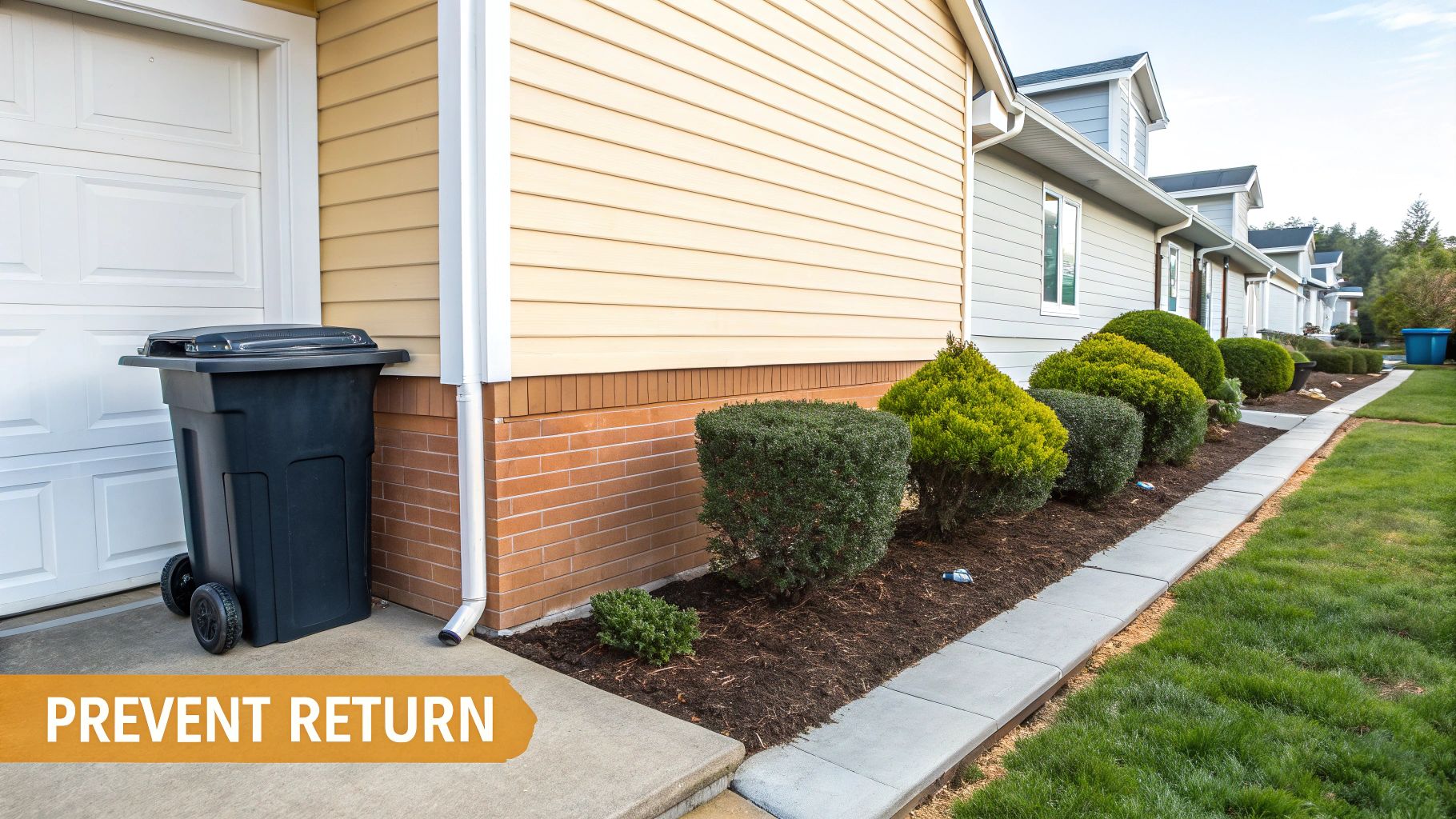
Successfully removing a hornet nest brings a huge sense of relief, but the real win is making sure you don't have to do it all over again next season. Hornets never reuse an old nest, but that doesn't stop a new queen from setting up shop on a property that has everything she's looking for.
This is where proactive prevention becomes your best long-term strategy. It's about shifting your mindset from reactive removal to making your home and yard less inviting to those scouting queens in the first place.
Your Proactive Prevention Checklist
Making your property a less attractive target doesn't require a massive overhaul. It really just comes down to consistent maintenance and closing off the easy opportunities hornets look for every spring.
Start by folding these simple habits into your routine:
- Seal Entry Points: Do a thorough walk-around of your home’s exterior, looking for small gaps and cracks. Pay extra attention to siding, where utility lines enter, soffits, and around window frames. A simple tube of caulk is one of the most effective tools in your prevention arsenal.
- Secure Your Bins: Always keep your garbage and recycling bins tightly sealed. An open bin is basically a 24/7 buffet for foraging hornets, especially later in the summer when they're desperate for sugars and proteins.
- Manage Compost Piles: If you have a compost pile, make sure it’s well-maintained and located far from your house or patio. Decaying food scraps are a huge attractant.
These basic steps can make a world of difference. For a deeper dive, check out our guide on how to prevent wasp nests from forming around your property.
Landscaping for a Hornet-Free Yard
Your garden and yard maintenance habits also play a huge role. Any overgrown vegetation provides the perfect sheltered spot for a queen to start building.
A common mistake we see is people letting dense shrubs grow right up against their house. This creates a hidden, protected space that's an absolute magnet for a queen looking to build her nest without being disturbed. Regular trimming is non-negotiable.
Make a point to trim back any tree branches or thick shrubs that touch or overhang your roof and siding. Just maintaining a foot of clearance can eliminate these prime nesting real estate locations. By thinking like a hornet and taking away their easy access to food and shelter, you can drastically reduce the odds of another unwelcome surprise next summer.
Common Questions About Hornet Removal
When you've got a hornet or wasp problem buzzing around your property, questions are bound to come up. Here at Dragon Pest Control, we've heard just about all of them from homeowners across Alberta. We've put together some straightforward answers to the concerns we hear most often.
Will Hornets Go Away on Their Own in the Winter?
The short answer is yes, the colony in that specific nest will die off once we get our first hard frost. But that's not the end of the story. Before the colony collapses, a newly mated queen will have already bailed, finding a cozy spot to spend the winter—think a woodpile, under some loose bark, or in a sheltered crevice.
Come spring, she'll emerge ready to build a brand new nest, and she'll often pick the same property if it's a good spot. So, while that particular nest is a one-and-done, the hornet problem itself can absolutely return the following year if that queen makes it through the winter.
What Is the Most Dangerous Wasp in Alberta?
In our experience, yellowjackets get the top vote for the most dangerous stinging insect in Alberta. While bald-faced hornets are notoriously aggressive, yellowjackets have a nasty habit of building their nests in hidden locations, like underground in old rodent burrows or inside wall voids.
This is what makes them so risky. You're far more likely to stumble upon them by accident. A simple task like mowing the lawn can suddenly trigger a massive swarm attack from a ground nest you had no idea was there. Since they can sting over and over, an accidental encounter is a serious threat.
Is It Illegal to Remove a Hornet Nest Myself?
No, it's not illegal to remove a nest on your own property here in Alberta. That said, it is incredibly risky to tackle without professional training and the right protective gear.
It's a different story for landlords and property managers. You have a legal responsibility to make sure any pest control is handled safely. Hiring a licensed and insured professional isn't just about getting the job done right—it protects you from liability and keeps your tenants and the public safe.
How Can I Tell the Difference Between a Bee and a Hornet?
The easiest way is to look at their body shape and "texture." Bees, especially bumblebees, tend to look fuzzy and chunky; they're built for collecting pollen. Hornets and wasps, on the other hand, are sleek and shiny with a very distinct, narrow "waist" between their main body segments.
Their behaviour is another big clue. Bees are usually quite docile when they're away from the hive, just focused on flowers. Hornets are predators. They're naturally more aggressive, especially if you're eating outside or they feel their nest is threatened.
Don't let a hornet nest put your family at risk. The licensed technicians at Dragon Pest Control have the expertise and equipment to handle any hornet or wasp situation safely and effectively. Book your professional hornet nest removal today.