When it comes to hotel pest control, we’re not just talking about getting rid of the occasional bug. We're talking about a core part of risk management that has a direct line to your reputation and, ultimately, your revenue. It only takes one pest sighting to trigger a social media firestorm, undoing all the hard work you've put into building your brand. Trust me, paying for proactive prevention is always, always cheaper than a reactive emergency call.
Why Proactive Pest Control Is Non-Negotiable in Hospitality
In the hospitality world, what a guest perceives is their reality. Their experience is a tapestry woven from countless details, but nothing unravels that tapestry of comfort and cleanliness faster than a cockroach scurrying across the floor or the tell-tale signs of bed bugs. The fallout goes way beyond a single complaint, creating a ripple effect that can dog your business for months, if not years.
Taking a "wait and see" approach—basically, waiting for a guest to report a problem before you do anything—is a massive gamble with both your finances and your reputation. The cost isn't just the exterminator's emergency fee.
The True Cost of a Pest Sighting
Let's walk through a common nightmare scenario. A guest finds what looks like a bed bug in their room late at night. You know the immediate drill: a panicked call to the front desk, a scramble to find them a new room, and probably a comped stay to smooth things over. But the real damage is in the hidden costs that follow.
- Reputational Damage: That guest immediately posts a scathing one-star review, complete with photos, across Google, TripAdvisor, and social media. When a study shows that 81% of travellers rely heavily on user-submitted photos when picking a hotel, you can see how quickly that single post can scare off hundreds of potential bookings.
- Operational Disruption: It’s not just the one room you have to take out of service. Best practice requires treating adjacent rooms as well, leading to a significant chunk of lost revenue. A proper, thorough treatment can take days, which means multiple nights of unbookable, money-losing inventory.
- Intensive Treatment Costs: Emergency bed bug treatments are far more expensive than routine preventive checks. You're looking at specialized heat treatments, laundering every single piece of linen, and potentially throwing out expensive infested furniture.
Think of a proactive pest management plan not as an expense, but as an insurance policy for your brand, your guests' safety, and your long-term bottom line. The single most important shift you can make is moving from a reactive "firefighting" mode to a steady, preventive mindset.
This is exactly why a structured, forward-thinking strategy is critical. The gold standard for this is known as Integrated Pest Management (IPM). An IPM program is smarter than just spraying chemicals and hoping for the best. It's about understanding how pests think and behave, cutting off their access to food and shelter, and only using targeted, low-risk treatments when absolutely necessary. It turns pest control from a recurring headache into a managed, ongoing process that protects your most valuable asset: your reputation.
Building Your Integrated Pest Management Program
An effective pest control strategy doesn't start when a guest spots a bug; it begins with a system designed to keep them out entirely. That system is called Integrated Pest Management (IPM). To really build a solid defense, you need to get familiar with the core ideas of an Integrated Pest Management (IPM) strategy.
Think of it like building a fortress. You wouldn't just throw up a wall and call it a day. You'd survey the landscape, find the weak spots, dig a moat, and post guards. IPM applies that same strategic thinking to pest control, focusing on long-term prevention using a mix of smart, common-sense practices. We have a detailed guide explaining what Integrated Pest Management is and why it's the gold standard for commercial properties like yours.
This proactive approach gets you away from just reacting with chemicals and moves you toward a smarter, more sustainable, and way more effective solution.
Conducting Your Initial Risk Assessment
Before you can build your defenses, you need to know where you're vulnerable. Every single hotel has unique pressure points where pests are most likely to sneak in and make themselves at home. A detailed risk assessment is your battle plan, helping you put your time and money where it’ll actually make a difference.
Start by walking your property with a critical eye. Better yet, think like a pest. Where's the food? The water? The shelter? Your goal is to map out every potential source of these three things, because that’s all they need to survive.
Your assessment should zoom in on a few key zones:
- Kitchens and Food Service Areas: These are the obvious hotspots. Look for food bits under equipment, grease buildup in drains, and food stored improperly.
- Loading Docks and Receiving Bays: These are major highways for pests. They can hitch a ride on incoming shipments of food, linens, and other supplies. Check for doors that are constantly propped open and look for gaps around the seals.
- Waste Disposal Areas: Dumpsters and compactors are a five-star buffet for rodents, flies, and cockroaches. Check how clean they are, how often they're picked up, and how far they are from the building.
- Laundry Rooms: The combination of warmth, moisture, and lint creates a perfect home for pests like cockroaches and silverfish.
Document everything you find. Take pictures and make detailed notes. This initial audit will be the foundation for your entire IPM program.
This infographic shows just how fast a single pest sighting can blow up into serious reputational damage—a core risk every hotel needs to manage.
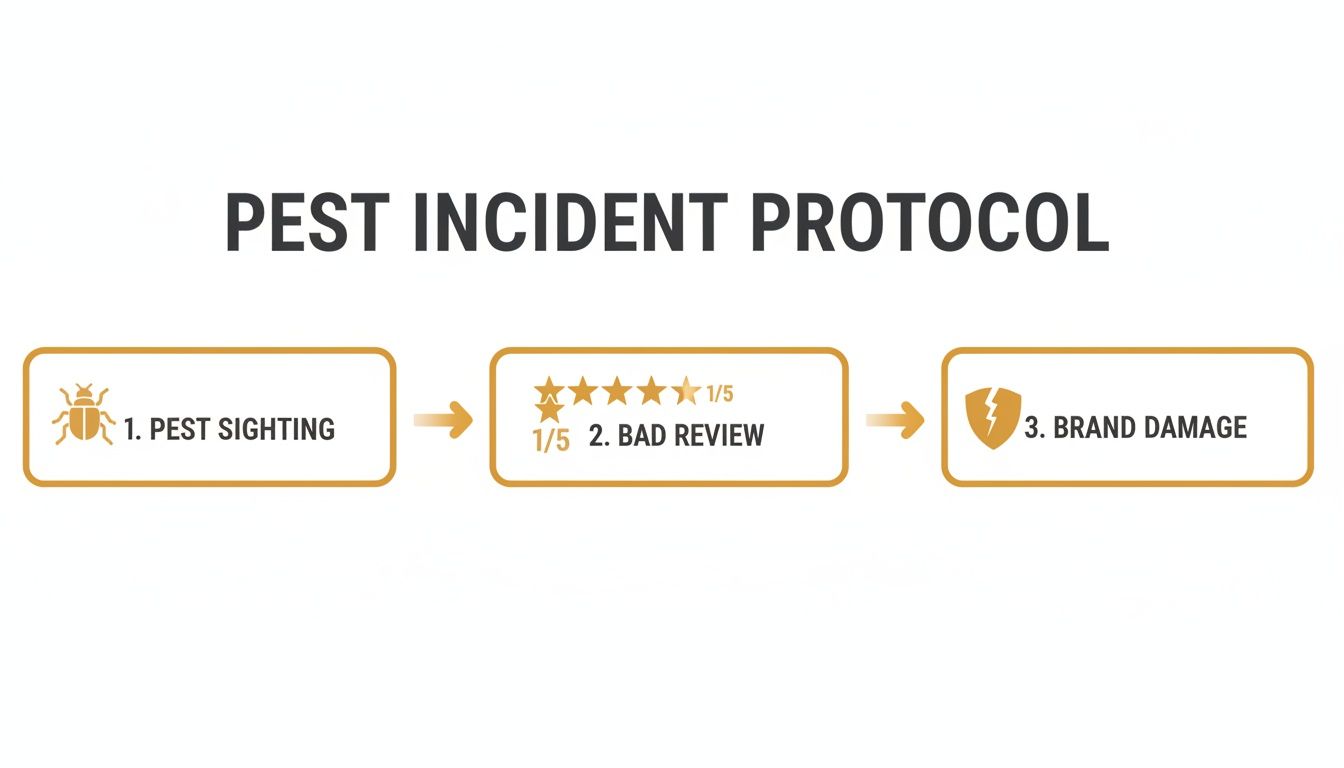
It's clear the impact isn't small. A tiny problem can quickly spiral into brand damage that hurts future bookings and revenue.
Mastering Pest Exclusion and Prevention
Once you know your risks, the next move is to block pests from getting in at all. This is easily the most cost-effective part of any hotel pest control plan. Sealing an entry point is way cheaper and more effective than dealing with an infestation that’s already settled in.
Exclusion is a hands-on job for your maintenance team. Their mission is to seal up the building envelope, making it as tough as possible for pests to find a way inside.
Get them focused on these critical tasks:
- Seal Gaps and Cracks: Do a full inspection of the building's exterior for any openings. Pay extra attention to gaps around utility pipes, vents, and any cracks in the foundation. Use caulk, steel wool, or expanding foam to seal them tight.
- Install Door Sweeps: Make sure all exterior doors, especially the ones near kitchens and loading docks, have tight-fitting sweeps at the bottom. This is a simple fix that blocks rodents and crawling insects.
- Maintain Window and Vent Screens: Check that every screen is in good shape, with no rips or holes. It's a basic but crucial barrier against flies and other flying insects.
Prevention also comes down to how you run things day-to-day. Simple changes in your operations can make your hotel much less appealing to pests. For instance, make sure all your waste bins have tight-fitting lids and are emptied frequently. Inside, enforce strict cleaning rules, especially in food prep areas where crumbs and spills are an open invitation for pests to move in overnight.
Monitoring and The Hierarchy of Control
You can't manage what you don't measure. This is where strategic monitoring comes in—it’s the "sentry" part of your IPM fortress. It gives you early warnings of pest activity so you can act before a small issue becomes a full-blown infestation. Monitoring tools are your eyes and ears on the ground.
Some common tools you'll use are:
- Sticky traps: Placed in out-of-the-way spots like under sinks or behind equipment to catch crawling insects.
- Pheromone traps: These are used to lure and capture specific pests, like pantry moths.
- Rodent bait stations: Secure, tamper-resistant stations placed along exterior walls to keep an eye out for rodent activity.
When your monitoring picks up on something, the IPM approach follows a "hierarchy of controls." This just means you use the safest, most targeted methods first. You always start with non-chemical solutions and only bring in chemical treatments when it's absolutely necessary.
The hierarchy of control prioritizes prevention and physical removal over chemical applications. It's about using the right tool for the job, not reaching for the strongest chemical first.
If an infestation does happen, bringing in a professional is key. Studies show that targeted chemical applications combined with diligent monitoring can cut the risk of re-infestation by up to 80%. But waiting is a costly mistake; an initial visit that might cost $250 can quickly turn into thousands if the problem spreads. And with hotel operators reporting that 56% of ant issues make existing bed bug problems worse, having focused protocols—like elevating guest luggage and regularly checking rooms—is essential to slash those risks.
Training Staff as Your First Line of Defense
An effective hotel pest control program isn't just about professional treatments and sealed entryways—it's powered by your people. Think about it: your team members are the eyes and ears of your property, moving through every corner of the hotel, every single day. When you arm them with the right knowledge, you turn your entire staff into a powerful, proactive pest detection network.
This isn't about making them exterminators. Far from it. The goal is to build a culture of awareness where every employee, from housekeeping to the front desk, understands their role in prevention and reporting. A sharp, well-trained team can spot the subtle signs of a problem long before it becomes a full-blown crisis, saving your hotel from serious reputational damage and expensive treatments.
Empowering Housekeeping with Targeted Knowledge
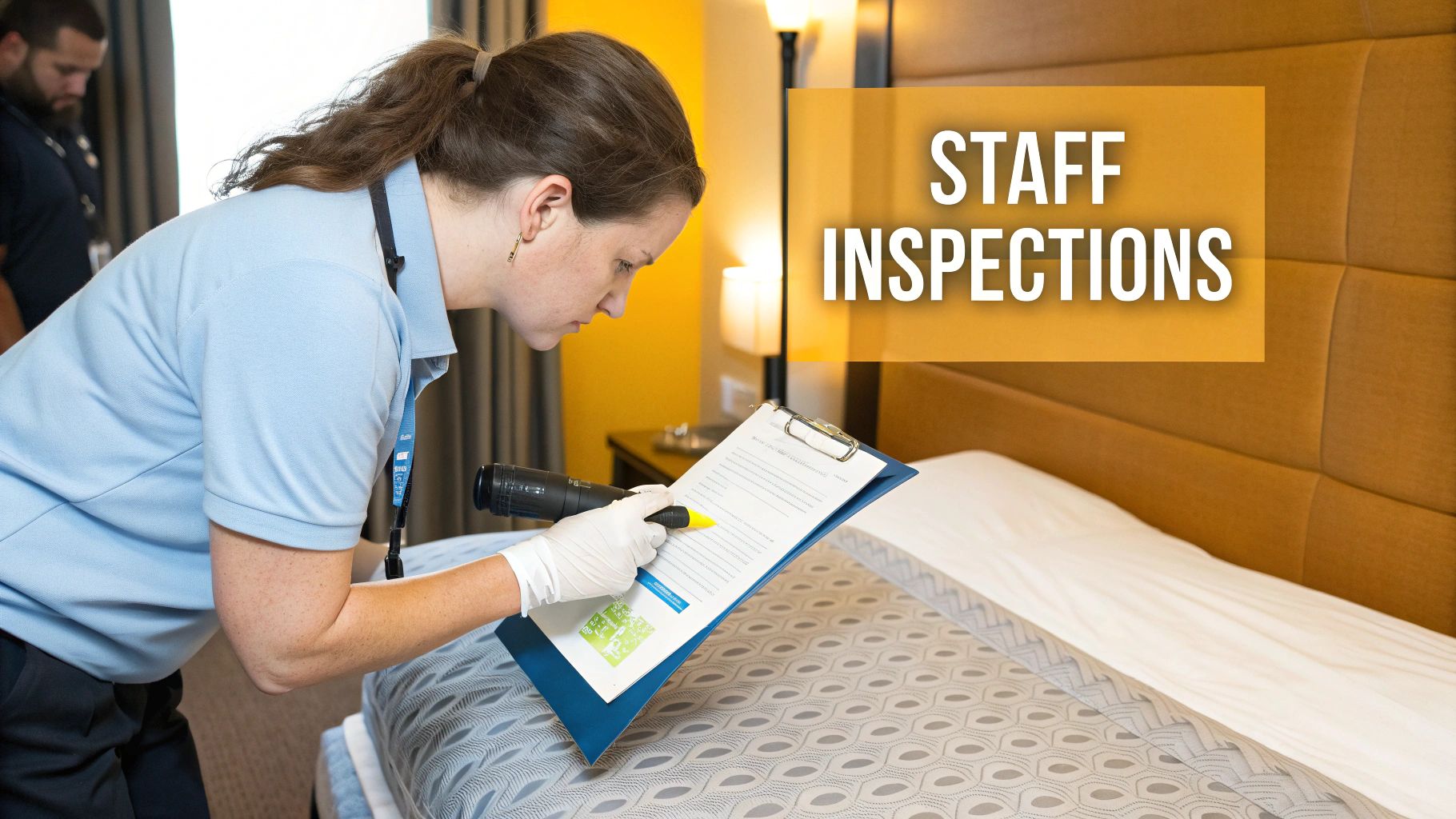
No one has more access to guest rooms than your housekeeping team. Their daily cleaning routines are the perfect opportunity for quick inspections, but only if they know exactly what they're looking for. The training needs to go beyond general cleanliness and zero in on specific, actionable signs of common hotel pests—especially bed bugs.
Here are the key visual cues housekeeping staff should be trained to spot:
- Small, rust-coloured stains on mattresses, box springs, headboards, or sheets.
- Tiny dark specks, about the size of a poppy seed, often found along mattress seams.
- A strange, musty, or slightly sweet odour that seems out of place in an otherwise clean room.
- Shed skins or tiny, pale egg casings tucked into the crevices and corners of furniture.
Teaching your team how to check for bed bugs is one of the single best investments you can make in your hotel's defense. It turns every room turnover into a critical screening process.
The real goal here is to make pest reporting a standard, seamless part of the job—not a rare exception. When staff feel confident they can spot a problem and know they’ll be supported for speaking up, your entire defensive strategy gets a massive boost.
Activating Your Maintenance and Front Desk Teams
While housekeeping is on the front lines, every department has a part to play. Your maintenance crew is crucial for exclusion, and your front desk staff are the face of your response when a guest raises an issue.
Maintenance Staff Training
Your maintenance team should be trained to see their daily tasks through a pest control lens. When they fix a leaky pipe, they're not just stopping a drip; they're cutting off a vital water source for pests like cockroaches.
Their pest-focused duties should include:
- Identifying and sealing cracks in the foundation or gaps around utility lines.
- Checking and repairing worn-out door sweeps and damaged window screens.
- Ensuring waste management areas are kept clean and that all bin lids seal properly.
Front Desk Staff Protocols
Your front desk team needs the tools to handle guest complaints with professionalism and empathy. A calm, scripted response can de-escalate a tense situation and stop a bad experience from becoming a negative online review. Give them clear, discreet steps for documenting the report, expressing genuine concern, and offering a swift solution, like moving the guest to a different, fully inspected room.
Department-Specific Pest Identification Training
To make training truly effective, it needs to be relevant to each team's daily environment. This quick-reference table outlines what different departments should look for.
| Department | Pest to Watch For | Key Signs to Identify | Immediate Action Protocol |
|---|---|---|---|
| Housekeeping | Bed Bugs, Cockroaches | Rust-coloured spots, shed skins on beds; musty smells, droppings | Stop cleaning, avoid moving items, and report to a supervisor. |
| Maintenance | Rodents, Birds, Cockroaches | Gnaw marks, droppings, nests; gaps in walls or pipes, water leaks | Document and seal entry points; report evidence to management. |
| Kitchen Staff | Cockroaches, Flies, Rodents | Droppings, greasy smears, chewed packaging; live or dead pests | Immediately clean the area and report to the kitchen manager. |
| Front Desk | Any (from guest reports) | Guest complaints of bites, sightings of pests | Follow the guest complaint script; notify management discreetly. |
By tailoring the training, you empower every employee to become an expert in their own zone, creating a stronger, more comprehensive defense system across the entire property.
Creating a Culture of Proactive Reporting
Great training isn't a one-and-done seminar. It needs constant reinforcement. Brief refreshers during team huddles can keep pest awareness top of mind. If you want a more structured program, there are excellent resources for creating a high-impact health and safety course that can integrate pest awareness into your formal onboarding and ongoing staff development.
Ultimately, you want to build a hotel culture where every single employee feels responsible for protecting the guest experience. When reporting a potential pest sighting is seen as a critical contribution, not an inconvenience, you’ve successfully built your most powerful line of defense.
Your Emergency Response Plan for Pest Sightings
When a guest reports a pest, what happens in the next ten minutes is critical. Your team's reaction can be the difference between a discreetly handled issue and a one-star review that lives online forever. A swift, professional, and empathetic response is your best tool for damage control.
This isn't just about good customer service; it's about containment. Having a clear, pre-planned protocol means every team member knows exactly what to do, acts decisively, and stops a minor incident from snowballing into a widespread infestation or a PR nightmare.

Immediate Guest-Facing Actions
The moment a guest reports a pest, your front desk and management staff are on the clock. Speed and empathy are everything.
First, listen and validate their concern without questioning their story. Acknowledge their distress and assure them you are taking it seriously. Your immediate offer should be to relocate them to a new room—and if you have one, an upgraded one. This simple gesture shows you value their comfort above all else.
Before the guest even sets foot in the new room, it must be inspected. A manager or head of housekeeping needs to do a quick but thorough check for any signs of pests. Moving a guest from one problem room to another is an unforgivable mistake.
Document and Isolate the Scene
Once the guest is settled and taken care of, your focus shifts to containment and documentation. This step is non-negotiable—it's vital information for your professional pest control partner and for your own internal records.
Your staff should follow a clear procedure:
- Document Everything: Get the guest's name, their original room number, the time of the report, and a detailed description of what they saw. If they can, have them try to capture the pest (in a cup or bag) for identification by your technician.
- Take the Room Offline: Immediately block the affected room in your property management system. Put "Do Not Disturb" signs on the door so no one enters and accidentally spreads pests to other areas of the hotel.
- Notify Key Personnel: Get the head of housekeeping, the maintenance manager, and your designated pest control contact on the phone. Clear, immediate communication gets everyone on the same page, fast.
A well-handled emergency can paradoxically strengthen a guest's loyalty. Swift, decisive action that prioritizes their well-being demonstrates a level of care that can turn a potential detractor into an advocate for your hotel's excellent service.
Engage Your Professional Pest Control Partner
This is not a time for DIY solutions from the hardware store. As soon as the room is isolated, call your professional pest control provider and let them know you have an emergency. Give them all the details you documented, including the type of pest if it's known.
They'll guide you on the next steps, which almost always involve inspecting the affected room and all adjacent rooms—above, below, and on every side. This professional assessment is the only way to know the true scope of the problem and map out a treatment plan. For instance, dealing with bed bugs often means heat treatments, which are effective at temperatures of 120°F.
Considering a full-blown infestation can cost upwards of $5,000 per room to fix, early and professional intervention is key. Industry surveys show a single pest incident can scare off 40% of future bookings, so acting fast is your best defence.
If bed bugs are the culprit, a rapid and thorough response is especially critical. Our guide on how to get rid of bed bugs fast has essential information that complements professional treatment protocols. Following your emergency plan protects your guests, your reputation, and your bottom line.
When it comes to picking a pest control provider for your hotel, you’re not just hiring someone to spray for bugs. This is a critical partnership. You need a team that’s dedicated to protecting your brand's reputation, keeping guests safe, and truly understanding the unique pressures of the hospitality industry.
Think about it: this isn't like hiring a plumber or an electrician for a one-off fix. A generic residential company might be great at handling ants in a suburban kitchen, but they often don't get the bigger picture for a hotel. They might not grasp the need for absolute discretion, the immediate urgency of a guest-reported sighting, or the complex regulatory standards you're up against.
You need a specialist. You need a partner who sees your property as a dynamic ecosystem with its own vulnerabilities, not just a collection of rooms.
Verifying Credentials and Hospitality Experience
Before you even glance at a proposal, the vetting process needs to start with the fundamentals. The right partner will have a solid, verifiable track record working specifically with hotels. This isn’t just a nice-to-have; it’s a must.
Don’t be shy about asking potential vendors for references from other hotels or commercial properties similar to yours. And actually call them. Ask about their communication, how quickly they respond to emergencies, and the professionalism of their technicians on-site.
Beyond references, you need to confirm their qualifications:
- Licensing and Insurance: They must hold all the proper provincial licenses for commercial pest control in Alberta and carry more than enough liability insurance.
- Technician Certification: Are their technicians certified? Do they receive ongoing training on the latest IPM techniques and safety protocols? You need to know.
- Industry Experience: Ask them direct questions about how they've handled common hotel pests—bed bugs, cockroaches, rodents—in a commercial setting before.
Prioritizing an IPM Philosophy
If a provider's main sales pitch is all about their powerful chemical arsenal, that’s a huge red flag. Modern, effective pest management for hotels is built on an Integrated Pest Management (IPM) philosophy. This isn’t just a buzzword; it’s a proactive strategy that puts prevention, monitoring, and non-chemical solutions first.
A true IPM partner will kick off the relationship by conducting a thorough assessment of your property. They should be focused on identifying the root causes and weak spots—like sanitation gaps or structural issues—long before they recommend spraying anything. Their goal should be to make your property less attractive to pests for the long haul, not just react to today’s problem.
A vendor sells you a service; a partner helps you build a system. The right company will work with you to train staff, refine sanitation protocols, and create a resilient defense, reducing your reliance on chemical treatments over time.
Scrutinizing the Service Agreement and Guarantees
The service agreement is where all the promises are put down in writing. This document needs to be detailed, transparent, and specifically tailored to a hotel environment. A vague contract is a sure sign of a vendor who might not stand behind their work when things get tough.
Zero in on these key areas of the contract:
- Scope of Service: It needs to clearly list which pests are covered and exactly which areas of the property are included. No ambiguity here.
- Emergency Response Time: Look for a guaranteed response time for urgent issues, like a guest sighting. This should be defined in hours, not days.
- Documentation and Reporting: The provider must offer detailed digital or physical logbooks that document every single visit. This is non-negotiable for health inspections.
- Guarantees and Warranties: With over 34,000 pest control firms out there, and many struggling with 22.6% staff retention, a strong guarantee is a major differentiator. Look for providers that offer free re-treatments if a problem comes back between scheduled visits. This kind of accountability is vital. You can explore more about bed bug trends and see how proactive hotels are staying protected.
Your Top Questions About Hotel Pest Management Answered
Even with a rock-solid Integrated Pest Management program, questions are going to pop up in the day-to-day running of a hotel. When they do, you need quick, clear answers to keep your team aligned and confident. This is your go-to guide for those practical, "what if" scenarios.
Think of this as the field guide to hotel pest control. We’re covering everything from how often you really need service to what your guests are thinking. These are the answers you need to protect your reputation and your bottom line.
How Often Should a Hotel Really Get Professional Pest Control Service?
There’s no magic number here. The right schedule is completely tied to your property's specific risks. A brand-new build with no restaurant is a different ball game than a historic hotel with a busy kitchen and bar.
That said, for most hotels, quarterly professional services are the absolute bare minimum for staying ahead of problems.
A much smarter approach is to tier your service based on risk level:
- High-Risk Zones: We're talking kitchens, loading docks, garbage areas, and laundry rooms. These spots need attention on a monthly basis. They're a constant draw for pests because of food, water, and non-stop deliveries.
- Guest-Facing Areas: Lobbies, guest rooms, and hallways can usually be managed perfectly with quarterly inspections.
- The Outside Perimeter: A quarterly treatment around the building's foundation is non-negotiable. It creates a barrier that stops pests before they even think about coming inside.
Your pest control partner should help you map this out after they’ve done a thorough risk assessment of your property.
What Pests Should We Worry About Besides Bed Bugs?
Bed bugs get all the headlines because they're a PR nightmare, but they are far from the only pest that can derail a hotel's operations. If you ignore the others, you're setting yourself up for health code violations, property damage, and some seriously unhappy guests.
Your program needs to be just as vigilant about these culprits:
- Cockroaches: They love kitchens and damp areas. Roaches are infamous for spreading bacteria and triggering allergies, and a single sighting can bring a health inspector to your door.
- Rodents (Mice and Rats): This is a double-whammy threat. They contaminate food supplies and can cause catastrophic structural damage by chewing on electrical wiring—a massive fire hazard.
- Ants: They might seem small, but an ant problem is a big red flag for sanitation gaps. It doesn't take long for them to become a major nuisance in guest rooms and dining areas.
- Flies: A huge turn-off for guests, especially if you have a restaurant or outdoor patio. They’re not just annoying; they’re vectors for disease.
An IPM program is only as strong as its weakest link. Focusing only on bed bugs while a rodent issue is brewing in the basement leaves your hotel wide open to huge financial and reputational hits. A comprehensive plan has to cover all the bases.
How Can We Keep Treatments Discreet?
In hospitality, discretion is everything. The last thing you want is a guest seeing a van with "PEST CONTROL" plastered on the side pulling up to the front entrance. It creates panic and bad assumptions.
A professional partner who gets the hotel industry will have this down to a science. Here’s how it’s done:
- Scheduling during off-peak hours, like the crack of dawn or overnight shifts.
- Using unmarked service vehicles that blend in.
- Having technicians wear plain uniforms or something that looks similar to your maintenance team's gear.
- Communicating clearly with your staff so treatments in guest areas only happen when rooms are empty.
Are Eco-Friendly Pest Control Options Actually Effective?
Absolutely. Not only are they effective, but they're often the smarter choice within an IPM framework. Modern pest management is all about using the least toxic solution that gets the job done.
This means leading with non-chemical methods like heat treatments for bed bugs, clever trapping for rodents, and using natural, bio-based products where appropriate.
These greener methods are a huge win for hotels. They lower the risk of chemical exposure for your guests and staff, they line up with corporate sustainability goals, and in the hands of a certified pro, they are just as powerful as traditional applications.
Ready to build a pest management program that protects your guests and your reputation? The expert technicians at Dragon Pest Control specialize in discreet, effective solutions for the hospitality industry across Alberta. Request your free quote today and discover the peace of mind that comes with a true pest control partner.