
For homeowners in Alberta, seeing a spider scuttling across the floor is an all-too-common sight, especially when the weather starts to turn. Your first instinct might be to grab a can of house spider spray, but does that really solve the problem?
The short answer is: it’s a temporary fix, not a long-term solution.
Understanding Your Battle with Spiders
Think of that store-bought spray like putting a bucket under a leaky pipe. Sure, it catches the drips you can see, but it does absolutely nothing to fix the leak itself. While it’s definitely satisfying to zap a spider on the spot, this approach completely misses the bigger picture—why they’re getting into your house in the first place.
This guide will walk you through how these sprays actually work, what their limitations are, and what a truly effective spider control strategy looks like for your Red Deer home. A quick spray just isn't enough for the kinds of spider challenges we face here in Alberta.
Moving Beyond a Quick Fix
If your only strategy is spraying spiders as you see them, you're signing up for a never-ending cycle. To really get a handle on the issue, you need to shift from being reactive to being proactive. It's about understanding a few key ideas that we professionals focus on every day:
- Seal Entry Points: Finding and blocking off all the tiny cracks and gaps spiders are using as their personal doorways into your home.
- Reduce Food Sources: Spiders go where the food is. By getting rid of other insects, you're taking away their main reason for sticking around.
- Create a Barrier: Applying treatments that create a protective perimeter around your home, stopping spiders before they even get a chance to step inside.
The goal isn't just to get rid of the spiders you see today. It's to make your home an unattractive, difficult place for new spiders to move into tomorrow. This fundamental shift is what separates temporary relief from lasting peace of mind.
Once you learn what makes your home so appealing to these eight-legged intruders, you can start taking real steps toward a lasting fix. For a deeper look at how the pros create a spider-free environment, you can learn more about our guaranteed spider control services and see how we help Alberta homeowners take back their homes for good.
How Store-Bought Spider Sprays Actually Work
When you grab a can of spider spray from under the sink, you're reaching for a fast, direct solution. But what’s really going on when that spray hits its target? Most of the sprays you'll find at your local hardware store in Red Deer rely on a powerful class of active ingredients called pyrethroids.
Pyrethroids are synthetic chemicals, but they’re designed to mimic pyrethrins—a natural insecticide found in chrysanthemum flowers. These ingredients are neurotoxins, which means they are specifically engineered to attack an insect's nervous system.
Think of a spider’s nervous system like a complex electrical grid, with signals firing constantly to control movement. The pyrethroids in the spray act like a master key that shorts out the entire system. They disrupt the normal flow of nerve signals, causing instant muscle spasms, paralysis, and ultimately, the spider’s demise. This direct-hit approach is why these sprays appear to work so effectively in the heat of the moment.
Contact Sprays vs. Residual Sprays
It’s important to know that not all spider sprays are created equal. They generally fall into two different camps, and knowing the difference will help you understand what you can realistically expect from them.
We can break them down into two main types: sprays that kill on contact and those that leave a barrier behind.
Contact Sprays vs. Residual Sprays: A Quick Comparison
This table shows the key differences between the two main types of over-the-counter house spider sprays. It should help you decide which tool is right for the job at hand.
| Feature | Contact-Kill Sprays | Residual (Barrier) Sprays |
|---|---|---|
| How It Works | Kills spiders instantly upon direct application. | Leaves behind a chemical film that kills spiders crossing it. |
| Effectiveness | High for visible spiders, but has no lasting effect. | Remains effective for days or weeks, offering proactive control. |
| Best Use Case | Spot-treating a spider you see right now. | Creating a defensive line along baseboards, windowsills, and entry points. |
| Primary Limitation | Once it dries, it's completely useless. It's a purely reactive measure. | Can degrade with exposure to sunlight and moisture; may not be ideal for all surfaces. |
Ultimately, a contact-kill spray is for that immediate "get it away from me" moment. A residual spray is an attempt to play defence, creating a chemical perimeter that you hope spiders will cross.
The big idea behind any store-bought spray is to give you an immediate fix. But that immediacy often comes at a price—you're only treating the symptom (the one spider you see) instead of the real reason you have spiders in the first place.
This is a common trap homeowners fall into. You see a spider, you spray it, and you think the problem is solved. But you're often missing the bigger picture.
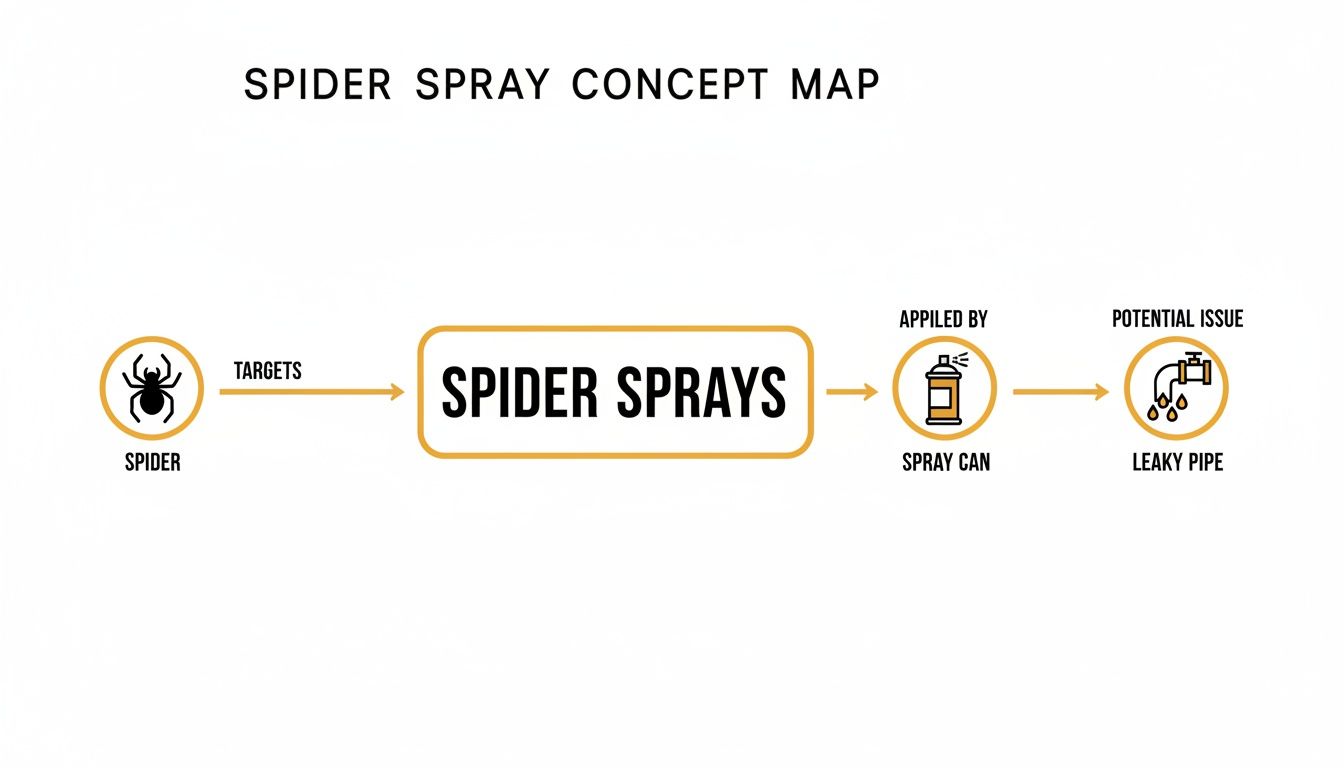
As this image shows, the spray might take care of the spider, but it does absolutely nothing about the leaky pipe under the sink that’s attracting spiders and other pests in the first place.
The Hidden Weakness of Sprays
For all their chemical power, nearly every single store-bought spray has a massive blind spot: they are completely ineffective against spider egg sacs.
A single sac can hold hundreds of future spiders, all safely tucked away inside a tough, silk-woven casing that the chemicals just can't penetrate. So, while you might feel victorious after eliminating one spider, you could be leaving an entire generation behind, ready to hatch and start the cycle all over again.
Safe Application Tips for Household Spider Sprays
Grabbing a can of spider spray and going to town might seem like the easiest solution, but using any chemical inside your home requires a bit of care. It’s about more than just pointing and shooting; it’s about protecting your family and pets while making sure the product actually does its job.
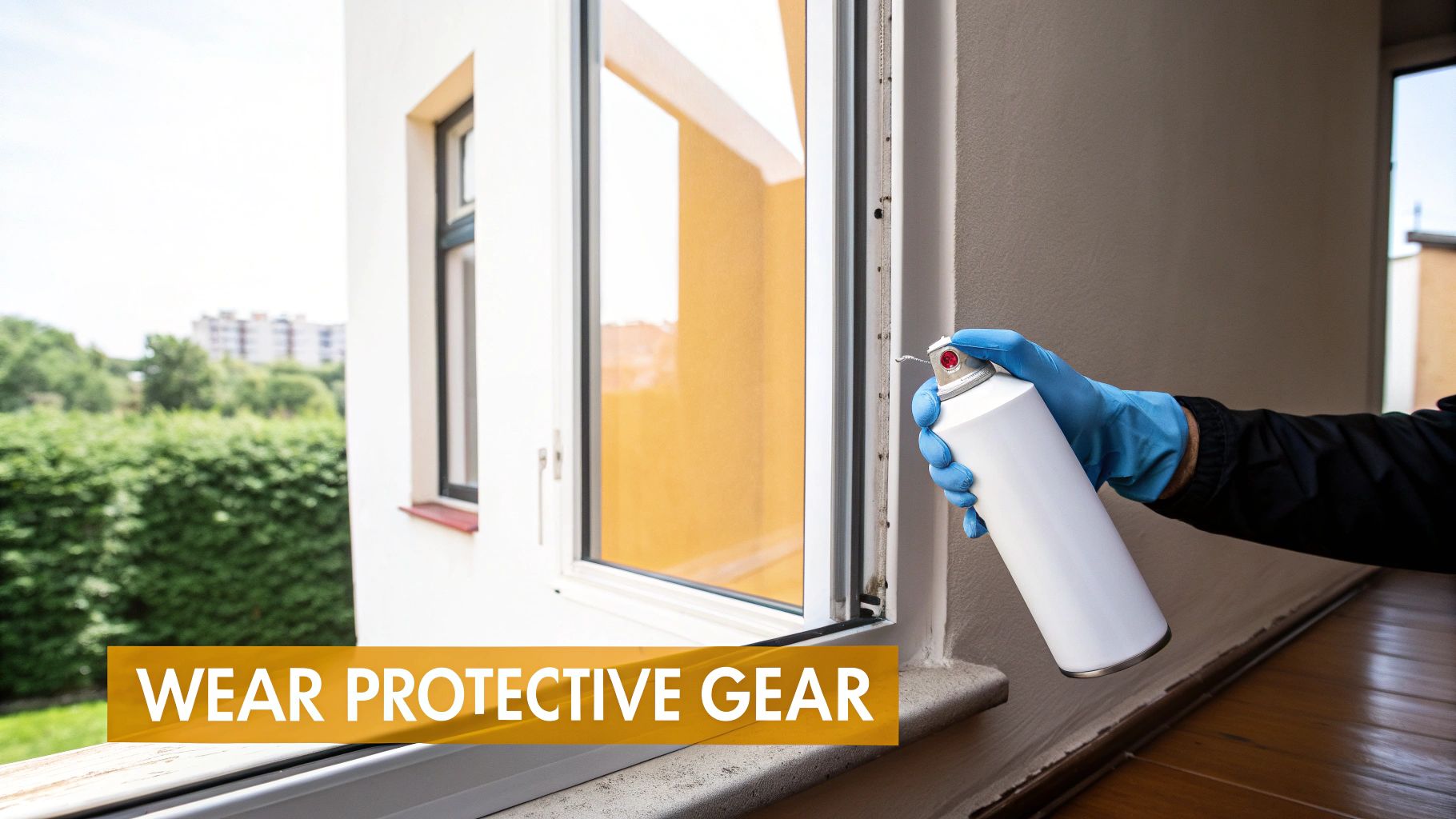
The most important step is the one most people skip: read the entire product label. Seriously. This isn't just a friendly suggestion—it's your roadmap to using the product correctly. The label tells you everything you need to know, from the active ingredients to what protective gear you should be wearing and, crucially, where you should and should not be spraying.
Preparing for a Safe Treatment
Getting the area ready is key to avoiding accidental exposure. Think of it like setting up a controlled work zone, where you can target the pests without putting the rest of your household at risk.
Before you start, run through this simple safety checklist:
- Gear Up (PPE): At the very least, pull on a pair of chemical-resistant gloves. For extra protection against any airborne droplets, it’s a good idea to wear goggles and a simple mask.
- Get Some Airflow: Open up windows and doors to create a cross-breeze. This helps any fumes dissipate quickly instead of lingering in the air you’re breathing.
- Clear the Area: Move or cover up any food, dishes, kids' toys, and pet bowls in the room you're treating.
- Move People and Pets Out: Make sure children and pets are completely out of the area. They shouldn't come back in until the spray has totally dried, which could take a few hours depending on the product and how much air is moving through the room.
The goal is precision, not saturation. Dousing an area with more spider spray doesn't make it more effective. It just leaves behind unnecessary chemical residue and can be rough on your home's indoor air quality.
Smart Application and Post-Treatment Steps
When you're ready to spray, concentrate your efforts on the spots where spiders are most likely to sneak in or build their webs. Hit the baseboards, window frames, door sills, and any dark, quiet corners. Steer clear of spraying wide-open surfaces like countertops, floors, or furniture where people and pets hang out.
Once you're done, let the area air out completely. Head to the sink and wash your hands thoroughly with soap and water, even if you wore gloves.
Finally, storage is just as important as application. Always keep the spider spray in its original container with the cap sealed tight. Tuck it away in a cool, dry place that’s well out of reach of children and pets. This kind of careful, strategic approach is a small piece of a much larger pest control philosophy called Integrated Pest Management. You can learn more about Integrated Pest Management and see how professionals like us build smarter, long-term solutions to keep pests out for good.
Why Sprays Fail During Seasonal Spider Surges
Have you ever noticed that the moment the cool autumn air arrives in Alberta, your house seems to develop a serious spider problem overnight? It’s not just your imagination. This is a predictable, seasonal migration, and it’s the exact time when that trusty can of spider spray from the hardware store starts to feel completely useless.
The reason it fails comes down to simple math. As outside temperatures drop, spiders instinctively hunt for warmth, shelter, and a stable food source to get them through the winter. Your home is basically a five-star resort for them. This isn't just one or two opportunistic spiders wandering in; it's a full-scale invasion of pests actively trying to get inside.
A simple spot treatment—which is all most store-bought sprays are good for—is designed to handle individual spiders. But it’s easily overwhelmed when facing a constant stream of new arrivals. It’s like trying to bail out a leaky boat with a teacup during a rainstorm. You might deal with the water you can see, but you’re not stopping more from pouring in.
The Problem of Reactive Control
The biggest issue here is that spraying a spider after you see it is a purely reactive strategy. By the time you’ve spotted one, you can bet more are already hiding somewhere inside or are on their way.
This is especially true during the fall. In places like Alberta with distinct seasons, indoor spider populations can jump by 40-60% from September through November as they move inside to escape the cold. This massive increase is exactly why a reactive approach is doomed to fail; you’re always playing catch-up against a population that's constantly growing. You can find more insights about this on Killroy.com's blog about seasonal spider activity.
This seasonal pressure is precisely why a proactive strategy is so critical. If you wait for spiders to show up before you act, you’ve already lost the battle for your home’s perimeter.
Professional pest control is timed to get ahead of these predictable seasonal patterns. The goal isn't to spray the spiders you see, but to establish a protective barrier that stops them from ever getting inside in the first place.
This approach completely flips the script. Instead of running around putting out fires, a professional treatment creates an invisible shield around your home's foundation, windows, and other entry points before the main invasion even begins.
Creating a Proactive Barrier
Here’s how a professional, preventative house spider spray application works so much better:
- Strategic Timing: We apply treatments just before the fall surge hits, anticipating the spiders' movement based on seasonal patterns.
- Commercial-Grade Products: Professionals have access to residual products that keep working for much longer than the over-the-counter sprays you can buy.
- Targeted Application: Our technicians are trained to identify and treat the specific cracks, vents, and tiny gaps spiders use to sneak into your home.
This preventative barrier doesn’t just eliminate the odd spider that makes it through; it stops the vast majority of them from ever crossing your threshold. It shifts your strategy from a frustrating, endless battle of spot treatments to a confident, proactive defence that keeps your home secure all season long.
Effective Spider Control Without Using Sprays
While reaching for a can of spider spray feels like an immediate win, long-term victory in the battle against spiders comes from a different playbook entirely. The real secret is making your home a place they simply don't want to be. This is the core idea behind Integrated Pest Management (IPM)—it’s about being proactive, not reactive. Think of it as locking your doors before an intruder even gets to the front step.
Instead of constantly fighting off spiders that are already inside, you can shift your focus to changing the environment. It all comes down to sealing off their entryways and getting rid of the things that draw them in. By addressing the root of the problem, you get lasting peace of mind that a spray just can't offer.
Your Proactive Prevention Checklist
For homeowners here in Red Deer and across Alberta, a few smart moves can make a world of difference. Every small step you take helps fortify your home against those eight-legged visitors. Start with this simple checklist to lock down your property.
-
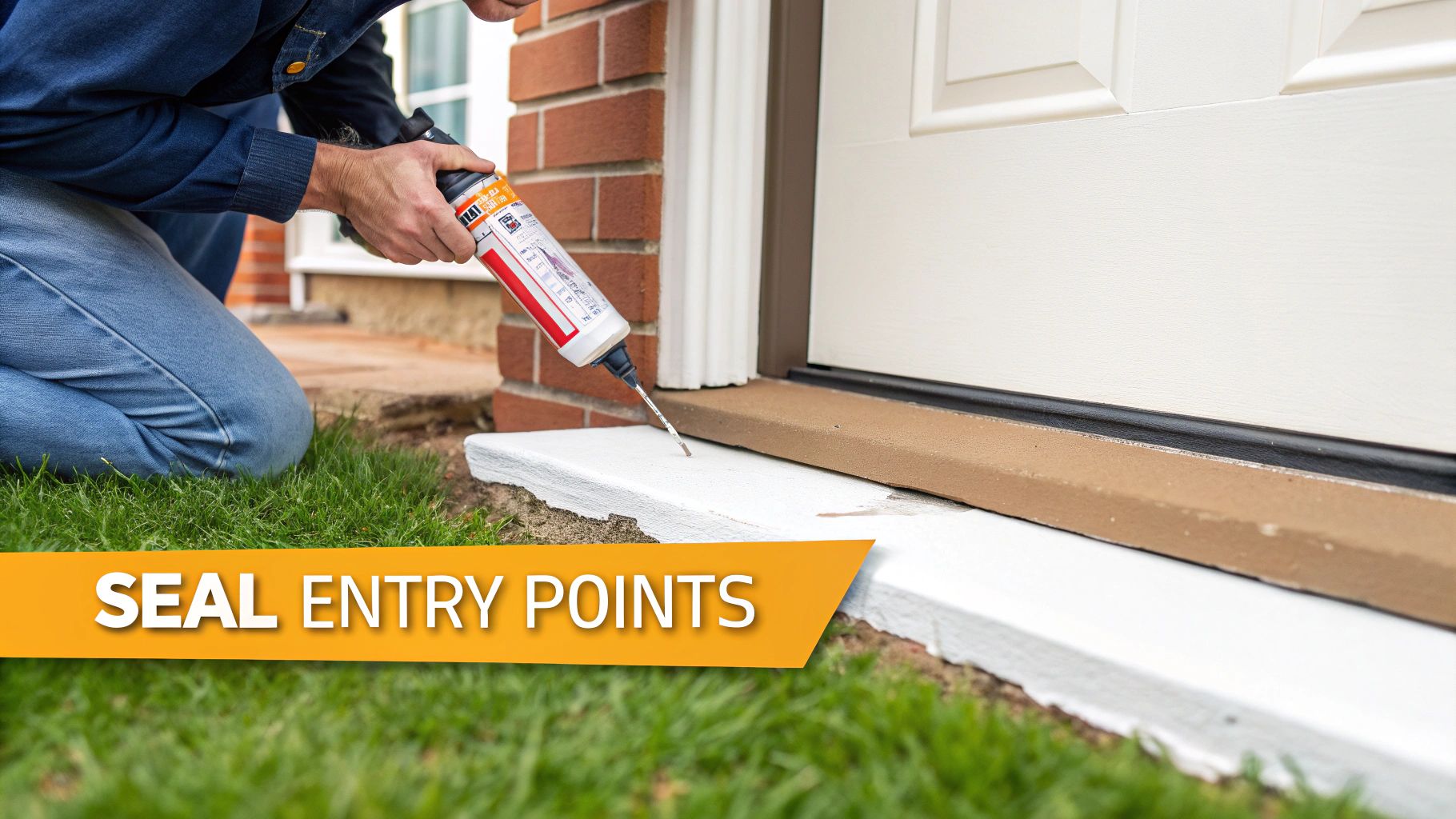
Seal Every Gap: Take a close look around your home’s foundation, siding, and window frames. Grab a tube of caulk and seal up any cracks or holes you find. No matter how tiny they seem, these are superhighways for spiders trying to get inside.
-
Install Door Sweeps and Weather Stripping: That little gap under your front or back door might as well be a welcome mat for spiders. Installing tight-fitting weather stripping and a door sweep is a cheap and incredibly effective way to block one of their favourite entry points.
-
Rethink Your Exterior Lighting: Bright white outdoor lights are basically a giant "all-you-can-eat buffet" sign for the bugs spiders love to prey on. Swap them out for yellow-toned LED bulbs or motion-sensor lights to cut down on the nightly insect smorgasbord you’re offering.
Beyond sprays, simple household cleaning can have a huge impact; learn effective strategies for cleaning window wells, a spot spiders absolutely love to set up shop.
An ounce of prevention is worth a pound of cure. Sealing a pencil-sized hole in your foundation today is far more effective than spraying the dozen spiders that will eventually crawl through it.
Maintain a Tidy Yard
What’s happening right outside your home plays a massive role in how many spiders you see inside. A cluttered yard is a paradise for spiders, giving them endless places to hide and breed before launching an invasion.
Make sure firewood piles, compost heaps, and other debris are kept at least 20 feet away from your house. It's also a good idea to regularly trim back shrubs, vines, and tree branches that are touching the side of your home. These act like bridges, giving spiders an easy climb up to your siding and windows. A clean perimeter leaves them with fewer places to hide and far less reason to try and move in.
When to Call a Professional for Spider Control
At some point, the battle against spiders can feel less like a minor chore and more like a frustrating, endless cycle. While a can of spider spray gives you a moment of victory, it rarely solves the bigger problem. Knowing when to put down the DIY products and bring in a professional is the key to winning the war, not just a single skirmish.
There are a few clear signs that it’s time to make that call. If you're dealing with a stubborn infestation that seems to disappear only to come right back, your home probably has entry points or attractants that store-bought sprays simply can't fix. This recurring pattern is a big red flag that there's a deeper issue only an expert can spot.
Recognizing High-Stakes Situations
Another critical moment is when you identify the type of spider you're dealing with. Here in Alberta, we share our space with a few potentially harmful spiders, including the black widow. Finding one of these in or around your home instantly changes the game from a simple nuisance to a serious safety concern. Their presence demands a professional response to make sure they're handled safely and effectively.
Likewise, an overwhelming number of spiders or a sudden explosion of webs means you have a well-established population. If you feel outnumbered or just plain uncomfortable in your own home, the infestation has definitely grown beyond what DIY sprays can handle.
The biggest advantage of hiring a professional is the peace of mind. It’s the confidence you get from knowing the problem is being handled correctly, safely, and completely by licensed technicians who understand how local pests behave in Red Deer.
The Professional Advantage
Professional pest control technicians bring a lot more than just a powerful sprayer; they bring a whole strategy. They use targeted, commercial-grade products that are far more effective and last much longer than anything you can buy at the store. These treatments aren't just for killing the spiders you see—they create a lasting barrier to keep new ones from getting in.
A surge in spiders can also point to a bigger problem with other insects in your home, which are the spiders’ main food source. While spider bite fatalities are incredibly rare, the stress of a constant infestation and the presence of species like black widows are major reasons homeowners decide to call for help.
Ultimately, choosing a professional service is about getting a guaranteed, worry-free solution. It’s an investment in your home’s comfort and your family’s safety. If you’re ready to finally end the cycle of spider invasions, exploring professional pest control services in Red Deer is your most effective next step.
Common Questions About Spider Sprays and Control
When you're trying to figure out the best way to deal with spiders, a lot of questions pop up. Here are some straightforward answers to the things Alberta homeowners most often ask about using spider sprays and keeping their homes free of eight-legged visitors.
Is it true that spiders are more scared of us than we are of them?
While spiders don't really feel "fear" the way we do, they're definitely defensive. Their instinct is almost always to bolt when a giant creature like a human comes near. Of course, if you have a real phobia, knowing this doesn't make a surprise encounter any less stressful.
Are House Spider Sprays Safe for Pets?
This is a huge concern, and for good reason. Most spider sprays you grab off the shelf contain pyrethroids, which are known to be toxic to cats and fish.
To be safe, you absolutely must remove your pets from the room before you spray. Don't let them back in until the product is 100% dry. The most important thing you can do is read the product label for specific warnings. Honestly, if you have pets, looking at non-chemical options or calling in a professional who uses pet-safe treatments is often the smarter, safer choice.
The best pest control strategy is one that keeps chemical use inside your home to a minimum. When you focus on sealing up entry points and getting rid of things that attract pests, you're solving the problem at the source without bringing unnecessary risks to your family and pets.
Should I kill spiders I find in my house?
Many of the common spiders we see are harmless and actually help us out by eating other pests like flies and ants. But seeing them over and over is usually a red flag. It means there are gaps in your home's defences that other, less helpful pests can also use.
Instead of just squishing the one spider, think of it as a sign to check your home’s exterior for cracks and gaps that need to be sealed. This proactive approach will help stop future pests of all kinds from getting in.
Ready to stop seeing spiders for good? The team at Dragon Pest Control provides guaranteed, safe, and effective solutions to protect your home. Get your free quote today.