
So, you’ve discovered a line of ants marching across your kitchen counter. It’s a frustrating sight for any homeowner in Red Deer, and the first instinct is usually to grab the nearest can of spray and wipe them out.
But hold on. A lasting solution requires a bit more strategy than that. To really get rid of ants for good, you need to think like a detective before you act like an exterminator. The goal is to figure out the "who, how, and why" of your ant problem so you can apply a treatment that actually works on the source—the hidden nest.
Your First Steps to an Ant-Free Home
Rushing this initial phase is the biggest mistake I see homeowners make. It often leads to treatments that only take care of the foragers you can see, leaving the colony untouched and ready to send out a fresh wave of troops.
It all boils down to three simple actions: identify the invader, trace their path, and inspect your home's defences.
Identify Your Unwanted Guests
Not all ants are created equal, especially here in central Alberta. The game plan for tiny Pavement ants is completely different from the approach you'd take for large, wood-destroying Carpenter ants. Knowing what you're up against is half the battle.
- Carpenter Ants: These are the big ones, usually black or a reddish-black. The tell-tale sign of a Carpenter ant nest is finding small piles of what looks like fine sawdust (we call it "frass") near baseboards or window sills. This means they are literally chewing through your home's structure.
- Pavement Ants: These are the small, dark brown or black ants you’re most likely to see. They typically nest in the soil under your driveway, sidewalks, or foundation and march inside looking for food.
- Moisture Ants: Often yellowish or reddish-brown, these ants are a red flag for a bigger issue. They're drawn to damp, decaying wood, so their presence often points to a leaky pipe, poor drainage, or other moisture problems.
Trace the Ant Trail
Once you have an idea of the species, the next step is to play spy. Resist that powerful urge to wipe up the ant line right away. Instead, watch them. Where are they coming from, and where are they going? You're looking for the superhighway that leads directly back to their entry point.
This workflow is the core of any effective initial response.
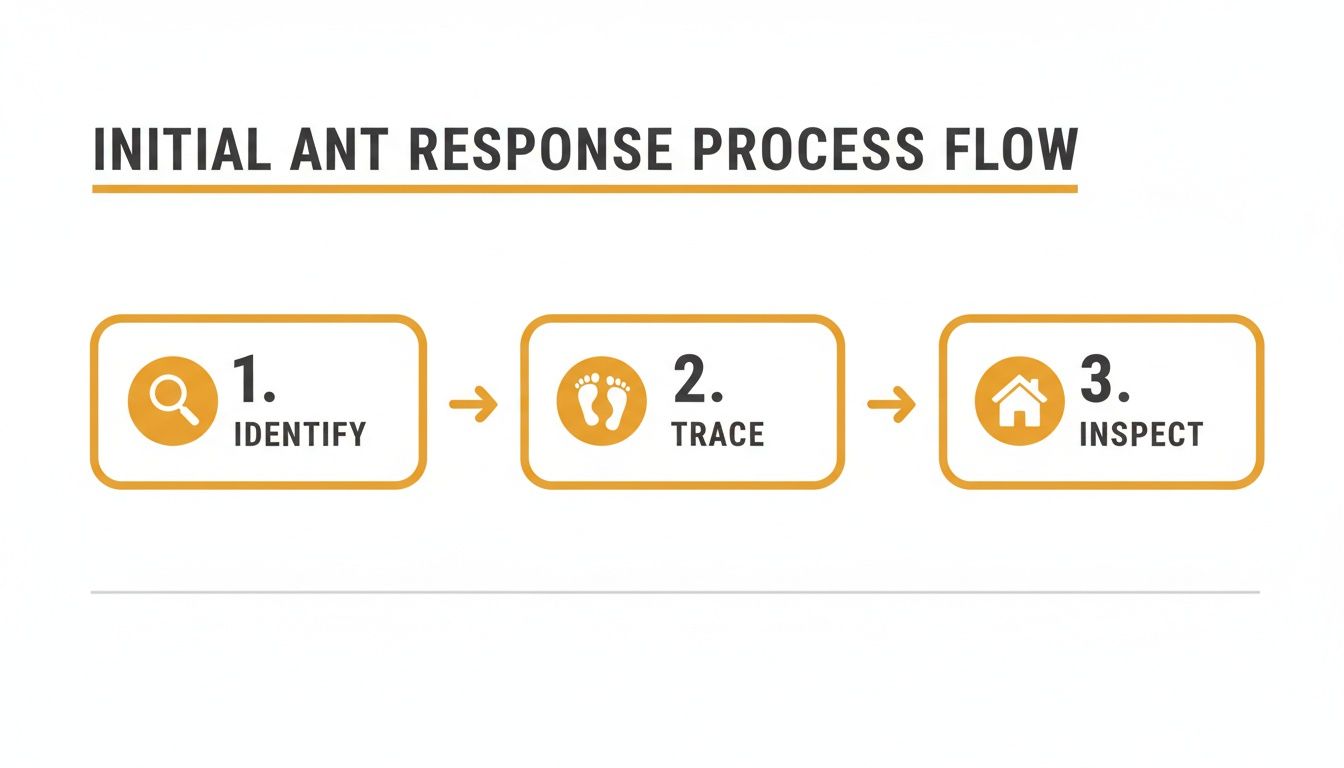
As you can see, successful ant control always starts with careful observation, long before any treatment is even considered.
Inspect Potential Entry Points
With the trail mapped out, it's time to put on your inspector hat and search for vulnerabilities. Ants are masters of exploitation; they can use the tiniest crack or gap to get inside.
A successful ant control strategy isn't about killing the ants you see; it's about making your home an unattractive and inaccessible target for the thousands you don't see.
Walk the perimeter of your home and check these common weak spots:
- Cracks in the foundation
- Gaps around window and door frames
- Entry points for utility lines (pipes, wires, and cables)
- Tree branches or shrubs that are touching the side of your house, creating a natural bridge
To help you stay organized, here's a quick reference guide for your immediate actions.
Immediate Ant Invasion Response Plan
| Action Step | Why It's Important | Pro Tip |
|---|---|---|
| Observe & Identify | Different ant species require different treatments. Misidentification leads to ineffective control. | Take a clear, close-up photo of the ant. You can compare it to online guides or show it to a professional. |
| Follow the Trail | This reveals the ants' entry and exit points, showing you where to focus your sealing and treatment efforts. | Place a tiny drop of honey on a piece of cardboard near the trail. This will attract more ants, making the trail easier to see. |
| Inspect for Gaps | Finding how they get in is crucial for long-term prevention. Killing them inside won't stop more from coming. | Do a slow walk-around of your home's exterior, looking for any gap you could slide a credit card into. Ants need far less space than that. |
Following these steps puts you in control, turning a reactive panic into a proactive plan.
And if you're feeling overwhelmed by ants, you're not alone. Nationally, 54% of pest professionals reported a rise in ant infestations in recent years. Kitchens (96%) and bathrooms (89%) are the most common battlegrounds. Research shows that ant invasions often spike during wet seasons and then again during hot, dry spells—a pattern that perfectly matches Alberta’s unpredictable climate. You can read the full research about these ant invasion patterns to learn more about why they show up when they do.
DIY Ant Control Methods That Actually Work
So, you've done your detective work, identified the tiny intruders, and figured out how they’re getting in. Now it's time to choose your weapon. But hold on—not all DIY ant control methods are created equal. The biggest mistake I see homeowners make is grabbing a can of repellent ant spray. It feels satisfying to zap the trail you see, but you could actually be making your ant problem a whole lot worse.
Repellent sprays kill the ants they touch and leave behind a chemical barrier that survivors avoid. This might clear the visible ants, but it does absolutely nothing to the colony hiding in your walls or under your foundation. The surviving ants just find a new path, often splitting the colony into several new groups. This is a phenomenon called budding, and it’s how one ant trail turns into three or four scattered all over your house.
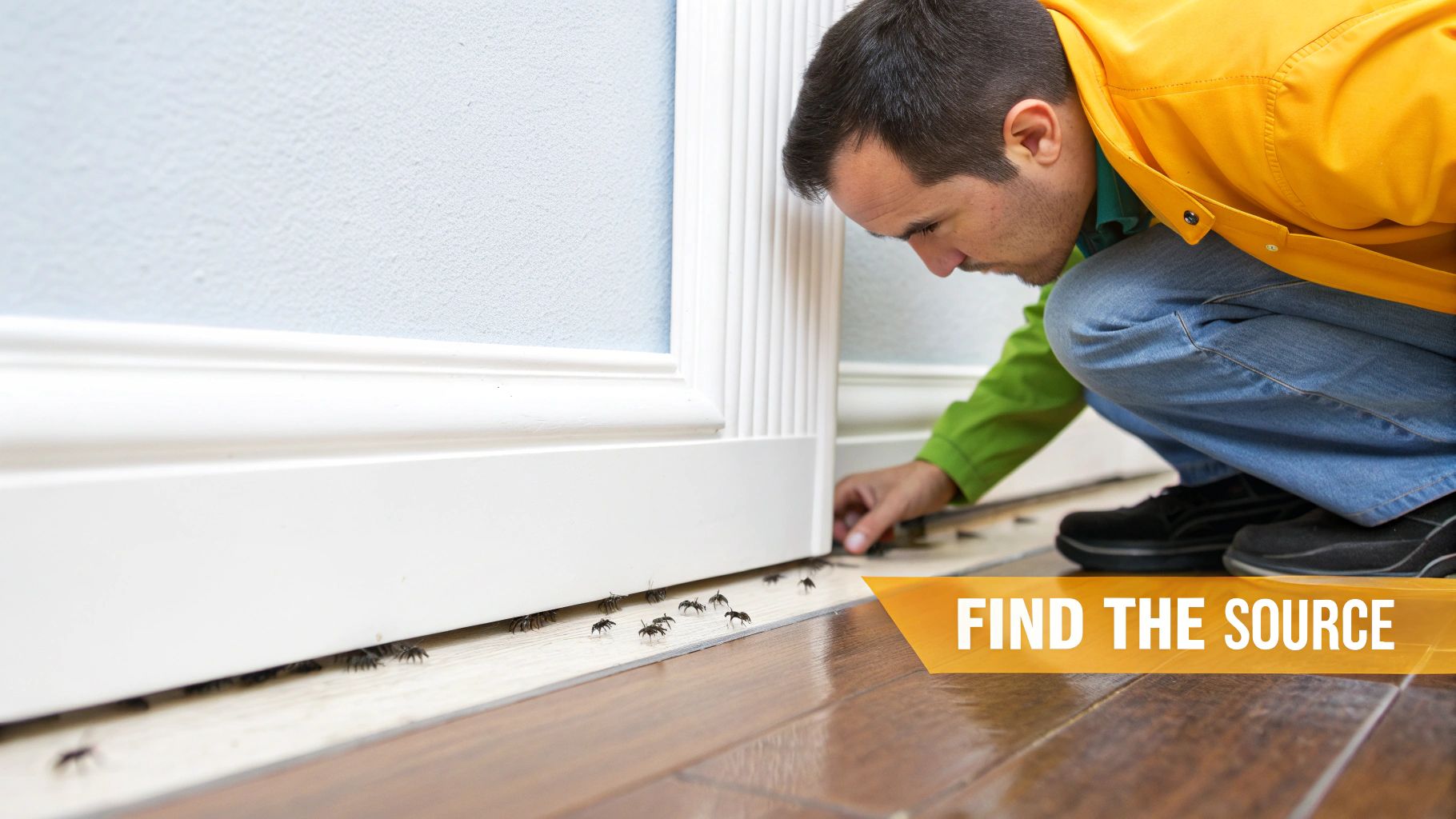
The Smarter Approach: Non-Repellent Baits
By far, the most effective DIY solution is a non-repellent ant bait. Think of it as a Trojan horse. Instead of killing a few foragers on the spot, baits are designed to be an irresistible food source that the worker ants eagerly carry back to the nest. They then share this "food" with the queen and the rest of the colony.
This strategy is genius because it turns the ants' own social instincts against them. The active ingredient is slow-acting by design, which gives the workers enough time to make several trips and spread the poison throughout the entire colony. In just a few days to a week, the bait can wipe out the whole operation from the inside.
For this to work, you have to offer them what they're craving. An ant colony’s diet can change from sugars to proteins depending on the season and what the queen needs to produce more young.
- Sugar-Based Baits: These usually come as gels or liquids and are perfect for ants you see trailing toward a drop of juice or a crumb of cake.
- Protein-Based Baits: These are often granular baits. They work wonders for ants that are after greasy, oily, or meaty scraps.
Pro Tip: Not sure what your ants are in the mood for? Run a quick test. Put a tiny drop of honey next to a small dab of peanut butter on a piece of cardboard near their trail. Whichever one they swarm is your answer—use that type of bait.
Strategic Bait Placement for Maximum Impact
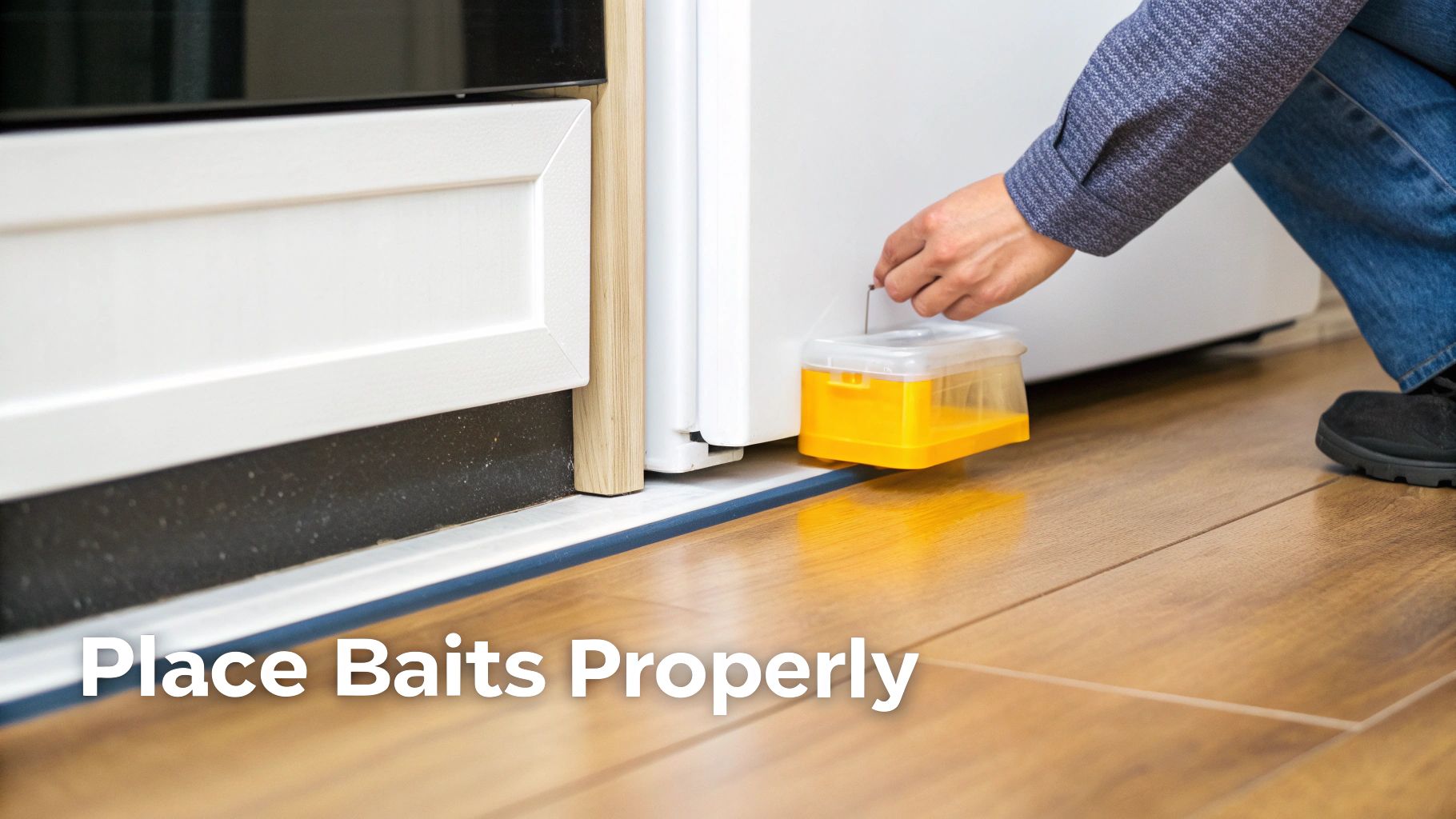
Where you put the bait is just as crucial as the type you use. If you stick it in the wrong spot, the ants will just ignore it. You need to place the bait stations directly on or right next to the ant trails you found earlier. Don't break the trail—just set the bait nearby.
And be careful not to place baits where you've recently sprayed cleaning products. The chemical residue can warn ants to stay away. Of course, always keep bait stations out of reach of children and pets. Many effective homeowner products are available, like the HGX Ant Control product, which is designed for targeted elimination.
What About Natural Remedies?
Many homeowners in Alberta prefer to try natural options first, and I get it. While some can provide temporary relief, you need to understand their limits.
Diatomaceous Earth (DE): This is a fine powder made from fossilized algae. It works physically, not chemically, by scratching the ant's waxy exoskeleton and causing it to dehydrate. The key is that the ants must walk directly through a dry application of food-grade DE.
- Effectiveness: It's best used as a barrier in dry, undisturbed spots like behind your fridge or along the back of cupboards. It won't get rid of the colony, though, and it stops working the second it gets wet.
Vinegar and Lemon Juice: The acid in these liquids can wipe out the invisible pheromone trails ants follow. A 50/50 mix of white vinegar and water sprayed on surfaces can confuse them and clean up the trail.
- Effectiveness: This is a short-term fix. It cleans the trail, but it does nothing to the nest. New scouts will eventually re-establish a path to the food.
These natural methods can help manage the ants you see and are a good part of an overall strategy, but they almost never solve the core problem. Ants are a classic warm-weather pest, and knowing how to handle them is key. For more seasonal tips, take a look at our guide on warm weather pest control for Alberta homes.
Building a Long-Term Ant Prevention Strategy
Getting rid of the ants you can see is just the first battle. Winning the war means making your home a place they never want to visit again. The real secret to long-term success is shifting your mindset from reaction to prevention. It’s all about exclusion and sanitation—the two pillars of making your home an ant-proof fortress.
Think about it from an ant's perspective. They’re looking for easy access, food, and water. Take those away, and your home suddenly drops way down on their list of desirable real estate. This is how you stop the cycle and get rid of ants for good.
Seal Off Every Possible Entry Point
Ants are masters of infiltration, capable of squeezing through the most minuscule cracks you wouldn't even notice. Your first mission is to walk the perimeter of your house like a general inspecting the defences. Think of it as plugging leaks in a boat before it starts taking on water.
Start with the foundation. Look for any cracks, no matter how small. Pay special attention to where different materials meet, like the seam between your siding and the concrete. These are practically neon signs for ant scouts.
From there, get even more detailed with your inspection:
- Utility Lines: The gaps around pipes, wires, and vents are ant superhighways. A bit of caulk or expanding foam is all it takes to shut them down.
- Windows and Doors: Worn-out weather stripping or small gaps in the frames are open invitations. A simple tube of silicone caulk is your best friend here.
- Vents and Soffits: Make sure the screens on your vents are fully intact and that there are no openings where soffits meet the roofline.
This isn't just busywork—it's the most critical step. You can have the cleanest kitchen in Alberta, but if ants have an unlocked door, they’ll eventually find a reason to come inside.
Make Your Home Less Appealing to Ants
Once the perimeter is secure, it's time to turn your attention inward. Scout ants are constantly on the hunt for three things: food, water, and shelter. By systematically removing these attractants, you make your home a boring, unrewarding place for them to explore.
Good sanitation is more than just a quick wipe of the counter. It's about building habits that consistently deny ants the resources they need to thrive. Start in the kitchen with a zero-tolerance policy for food access.
Your goal is to make every crumb and spill disappear before an ant scout can report back to its colony. Consistent sanitation is your most powerful, non-chemical tool in long-term ant prevention.
Keep all food—and that includes pet food—in truly airtight containers. A simple Ziploc bag won't stop a determined ant. Glass jars or plastic containers with tight-sealing lids are what you need. And never, ever leave dirty dishes in the sink overnight. A daily sweep or vacuum of the kitchen floor is non-negotiable.
Beyond food, you also have to manage moisture. Many local ant species are drawn to damp areas.
- Fix leaky pipes under sinks immediately. A small drip is a five-star resort for ants.
- Ensure your bathrooms have good ventilation to keep condensation down.
- Check that your gutters are clean and channelling water far away from your foundation.
For more hands-on advice on fortifying your home, you can find a ton of great DIY pest prevention tips for effective pest control in Red Deer that build on these fundamentals.
Landscaping for Ant Prevention
Don’t forget that your yard can either be a buffer zone or a staging area for the next invasion. A few smart landscaping tweaks can make a massive difference in keeping ants away from your foundation.
First, trim back any tree branches or shrubs that are touching your siding or roof. These act as natural bridges, giving ants an easy highway to bypass any barriers you’ve set up on the ground. Try to maintain at least a foot of clear space between any vegetation and your house.
Mulch is another thing to watch. It’s great for garden beds, but when piled deep against your foundation, it traps moisture and creates a perfect nesting site for ants. A simple fix is to pull the mulch back, leaving a dry, clear barrier of at least six inches around the base of your home.
When to Call a Professional for Ant Control
DIY ant control can work wonders for those small, one-off invasions. But let's be honest—sometimes, no matter how many baits you set or cracks you seal, the ants just keep coming back. Knowing when to throw in the towel and call a professional is the key to protecting your home, your sanity, and ultimately, your wallet.
There are a few telltale signs that an ant problem has gotten bigger than a simple weekend project.
Recurring infestations are the biggest red flag. If you manage to wipe out an ant trail, only to see it pop right back up a few weeks later (or worse, in a new spot), you’re probably dealing with a massive, well-established colony. You're just trimming the weeds, not pulling out the root.
The sheer scale of the problem is another dead giveaway. Seeing a handful of ants is one thing. Seeing multiple, active ant highways in different rooms? That screams satellite nests. This is a classic move for species like Pavement ants, and trying to fight them one trail at a time is a battle you'll lose.
The High Cost of Incomplete Treatments
Letting a major infestation linger can have serious consequences. A cautionary tale comes from California's long battle with red imported fire ants, which led to a massive eradication effort covering over 204,000 hectares. Despite treating more than 29,000 sites between 2000 and 2004, the program was cut short, and the ants came roaring back.
This shows exactly what happens when treatments are incomplete—it underscores why bringing in licensed professionals with proven strategies is so important.
Identifying a Carpenter Ant Problem
The most critical sign that you need to pick up the phone right now is identifying Carpenter ants. These aren't just a nuisance; they're a direct threat to the structure of your house.
If you spot little piles of fine sawdust (we call this frass) near baseboards, or you see large, winged ants crawling around inside, don't wait. Carpenter ants chew tunnels through wood to build their nests, and the damage can be devastating and incredibly expensive to fix.
For serious infestations, especially with destructive pests, it's always best to consult professional pest control companies that have the right tools and expertise for the job.
Calling a pro for Carpenter ants isn't giving up; it's a smart investment in protecting your home. The cost of a professional treatment is a drop in the bucket compared to what you could pay for major structural repairs.
What to Expect From a Professional Service
When you call in an expert from Dragon Pest Control, you're getting a lot more than a guy with a spray can. The whole process is far more thorough.
It all starts with a detailed inspection. We'll identify the exact ant species, track down every single nesting site (inside and out), and find all the entry points you might have missed.
From there, our licensed technician builds a custom treatment plan. This usually involves professional-grade, non-repellent insecticides and specialized baits that are far more powerful than anything you can buy at the store. We also have the right gear to treat those hard-to-reach spots where colonies love to hide, like inside wall voids or up in the attic.
Finally, a good pest control company stands by their work with a guarantee and follow-up visits to make sure the colony is gone for good. This comprehensive approach is why professional help is often the fastest, most effective, and permanent solution for those stubborn ant problems. Getting effective pest control solutions in Red Deer, Alberta means you can finally rest easy knowing the job was done right.
To help you decide on the best course of action, here’s a quick comparison of common ant situations and our recommendations.
DIY vs. Professional Ant Control
| Scenario | Recommended DIY Action | When to Call Dragon Pest Control |
|---|---|---|
| A few ants near the kitchen sink after a spill. | Clean the area thoroughly with a vinegar/water solution. Place a few store-bought bait stations nearby. | If the ants return to the same spot daily, even after cleaning. |
| A single, small ant trail from a window to a pet food bowl. | Move the pet food, clean the trail, and seal the visible crack in the window sill. Use ant baits along the trail. | If multiple trails appear in different rooms or the original trail returns within a week. |
| You see a handful of large, black ants, but no other signs. | Try to identify them. If they aren't Carpenter ants, set out some powerful liquid ant baits and monitor activity. | If you see any signs of frass (sawdust), hear faint rustling in walls, or confirm they are Carpenter ants. Don't wait! |
| You've tried multiple types of baits and sprays for weeks, but the ants keep coming back. | At this point, DIY efforts are likely only killing off forager ants, not the colony. | Your DIY methods aren't working. A professional can identify the species and use targeted treatments to eliminate the source. |
| Small, greasy-looking ants are trailing to outlets or inside appliances. | This could indicate a nest in a wall void, which is difficult and risky to treat yourself. | Immediately. Treating around electrical components is dangerous, and the nest is likely inaccessible without specialized equipment. |
Remember, DIY methods are great for minor issues, but persistent, large-scale, or destructive pest problems require a professional strategy to ensure they're gone for good.
Keeping Your Family and Pets Safe During Treatment
Getting rid of ants is a fantastic feeling, but making sure the process is safe for your kids and pets is just as important. Safety isn't an afterthought—it's woven into every step of a good pest control plan, whether you're tackling it yourself or bringing in the pros.
The number one rule for safe treatment is simple: always read and follow the product label instructions. This isn't just a friendly suggestion; it's a legal requirement and your best guide for using, storing, and disposing of any product correctly. Every label has specific details on ventilation, protective gear, and how long to keep everyone away from treated areas.
Handling and Storing Ant Control Products
When you bring any kind of pest control product home, you need to handle it with care from the get-go. Proper storage is absolutely non-negotiable to prevent any accidents.
All pesticides, even something as common as diatomaceous earth, should stay in their original containers. This keeps the label and all its critical safety info right where you need it. Store them in a locked cabinet or on a high shelf in the garage or a utility room, well out of reach of curious hands and paws.
When you're applying treatments like sprays or dusts, a few simple safety steps go a long way:
- Get the Air Moving: Open up some windows and use fans to circulate air. This helps clear out any fumes or airborne particles quickly.
- Gear Up: At the very least, wear gloves to protect your skin. Depending on the product, safety glasses and a mask might be a good idea, too.
- Wash Your Hands: As soon as you're done, wash your hands thoroughly with soap and water, even if you were wearing gloves. It's just good practice.
Preparing for a Professional Treatment
When you call in a professional service like Dragon Pest Control, we’ll need your help with a few things to make sure the treatment is both safe and effective. It's a team effort.
Before our technician shows up, we usually ask homeowners to clear out the areas we need to treat. For instance, that means taking everything off your kitchen counters. You'll want to cover any surfaces where you prepare food and be sure to put away pet food bowls, water dishes, and toys. We might also advise you to find a temporary spot for your pets for a few hours, depending on the treatment we're using.
The best thing you can do is talk to your pest control technician. Don't be shy—ask about the products they're using and what specific precautions you need to take before, during, and after the service.
Post-Treatment Safety Protocols
Once the job is done, the final safety measures kick in. Your technician will give you clear instructions on when it’s safe for your family and pets to come back into the treated areas. This waiting period is really important, as it allows any sprays to dry completely.
After you're back in, it’s always a smart move to wipe down countertops, stovetops, and any other food prep surfaces with soap and water before using them. Following these straightforward steps gives you peace of mind, ensuring your home is not just ant-free, but completely safe for everyone who lives there.
Common Questions About Ants in Alberta
Even when you have a solid plan, a sudden ant invasion can leave you with a lot of questions. As pest control pros here in central Alberta, we tend to hear the same concerns from homeowners over and over again. We've put together the most common questions we get, with clear, straightforward answers to help you figure out what's happening and what to do next.

Why Do I Suddenly Have So Many Ants in My House?
It almost always feels like they appeared overnight, but there’s usually a specific trigger that sent them marching into your home. Pinpointing that trigger is your first step toward getting rid of them for good.
A sudden shift in Alberta's weather is a huge factor. A heavy downpour can easily flood their outdoor nests, forcing the entire colony to seek higher, drier ground—and your home is the perfect refuge. On the flip side, a long dry spell can send them indoors hunting for water, which is why you’ll often find them around kitchen sinks and bathrooms.
But the biggest motivator, without a doubt, is food. A few crumbs, a sticky spill that wasn't quite wiped up, or an open pet food bowl is all it takes for a single scout ant to hit the jackpot. That one ant lays down an invisible pheromone trail, essentially creating a superhighway for the rest of the colony to follow straight to the source.
Are the Little Black Ants in My Kitchen Harmful?
Seeing a trail of tiny black ants marching across your counter is definitely unsettling. The good news is that the usual suspects in Alberta kitchens, Pavement ants, are mostly just a nuisance. They don't cause structural damage and aren't a major health risk, though you certainly don't want them contaminating your food.
The real trouble starts if you're dealing with a different kind of ant.
- Pavement Ants: Small, dark, and incredibly annoying, but not destructive. They’re just after your leftovers.
- Carpenter Ants: These are the ones you need to worry about. They're much larger, often black or a reddish-black combo, and they tunnel through wood to build their nests. Finding little piles of fine sawdust (we call it frass) is a major red flag. This points to a Carpenter ant problem that needs immediate professional attention.
Knowing the difference is critical. You can often manage a Pavement ant issue with baits and better sanitation. But a Carpenter ant infestation can seriously compromise your home's structure. If you spot large ants, especially near wooden beams, window sills, or door frames, it's time to call in a professional for a proper identification.
How Long Does It Take for Ant Baits to Work?
This is probably the most common question we get, and the short answer is: you need to be patient. Ant baits are designed to eliminate the whole colony, not just kill the ants you see on contact. This slow-acting feature is actually what makes them so effective.
The goal is for worker ants to find the bait, eat it, and carry it back to the nest to share with the queen and the rest of the colony.
Ant baiting is a marathon, not a sprint. You might even see more ant activity for the first day or two as they recruit others to the new "food" source. This is a good sign—it means the bait is working.
Typically, you’ll see a major drop in ant numbers within a few days to a week. For a big, well-established colony, it could take up to two weeks to get full control. The most important thing is to leave the bait stations alone and resist the urge to spray the ants you see. Spraying them will just kill the workers before they can get the bait back to the nest, defeating the whole purpose.
Can Ants Come Back After a Professional Treatment?
We believe in being honest with our clients, and it's important to set the right expectations. A professional treatment from a certified technician is incredibly effective at wiping out the current ant colony causing problems in your home. What it doesn't do is create a permanent, magical force field around your property.
It's entirely possible for a completely new and different colony to move in months or even a year later if the conditions are right. This is precisely why the prevention strategies we talked about earlier—sealing gaps, keeping things clean, and managing your yard—are so crucial. They make your home a far less appealing target for the next colony that comes scouting.
This is especially true with highly invasive species. For example, California is in a constant battle with Argentine ants, which form massive super-colonies. Despite years of pest control efforts, their site occupancy in urban areas is still over 90%. This just goes to show that for certain persistent pests, a one-time fix isn't enough; you need an ongoing strategy. You can discover more insights about California's ant invasion to understand the challenges of these super-colonies.
Any reputable pest control company will also offer a guarantee on their service. For us, that means if the same colony shows any signs of life within a specific period after our treatment, we’ll come back to take care of it, no questions asked. We make sure the initial problem is truly solved.
If you're tired of fighting the endless ant trails and want a solution that works, Dragon Pest Control is ready to help. Our licensed technicians offer fast, effective, and safe ant control services across Red Deer and central Alberta, giving you back your peace of mind. Don't let ants take over your home—book your service online today!