Before you can even think about getting rid of ants naturally, you have to know exactly what you’re up against. Figuring out the specific species is the absolute first step, because a tactic that works for tiny sugar ants will do nothing against wood-destroying carpenter ants.
Success really does start with knowing your enemy.
Your First Step to an Ant-Free Home: Identifying the Invader
When you spot that tell-tale line of ants marching across your kitchen counter, your first instinct might be to just grab a spray bottle. But hold on for a second. Taking a moment to actually observe them can save you weeks of frustration down the road.
Different ants have completely different behaviours, diets, and nesting habits. One of the most common reasons natural methods fail is a simple mismatch between the treatment and the type of ant.
For instance, a bait made with sugar is fantastic for sweet-loving pavement ants. But that same bait will do very little to stop carpenter ants, which are far more interested in tunnelling through the damp wood in your walls. By correctly identifying the invader right from the start, you can choose the right natural solution the first time.
Common Ant Species in Alberta Homes
Here in Red Deer and across Alberta, you’re most likely to run into a few specific types of ants. Learning their distinct features is your best advantage. Pay close attention to their size, colour, and where you’re finding them.
- Pavement Ants: These are the small (2.5–4 mm), dark brown or black ants you often see coming out of cracks in the sidewalk or your foundation. Inside, they're on the hunt for greasy or sweet foods, making them a common kitchen pest.
- Odorous House Ants: True to their name, these little guys release a smell like rotten coconut when you crush them. They are tiny, dark brown ants that usually follow very clear trails along baseboards or countertops, looking for sweets.
- Carpenter Ants: These are the biggest ants you'll see in Alberta, ranging from 6 to 12 mm long. Typically black or a reddish-black, their presence is a major red flag. They don't eat wood, but they excavate it to build their nests, which can cause serious structural damage over time.
Identifying carpenter ants early is crucial. Look for tell-tale signs like little piles of fine sawdust (called frass) near wooden structures or even faint rustling sounds inside your walls. These pests demand a much more aggressive approach than your average pantry ant.
How to Observe and Identify Your Ants
To get a proper ID, you’ll need to play detective for a bit. Don't just squash the first ant you see. Instead, watch it. Where is it going? Is it carrying anything? Are there others following the exact same path?
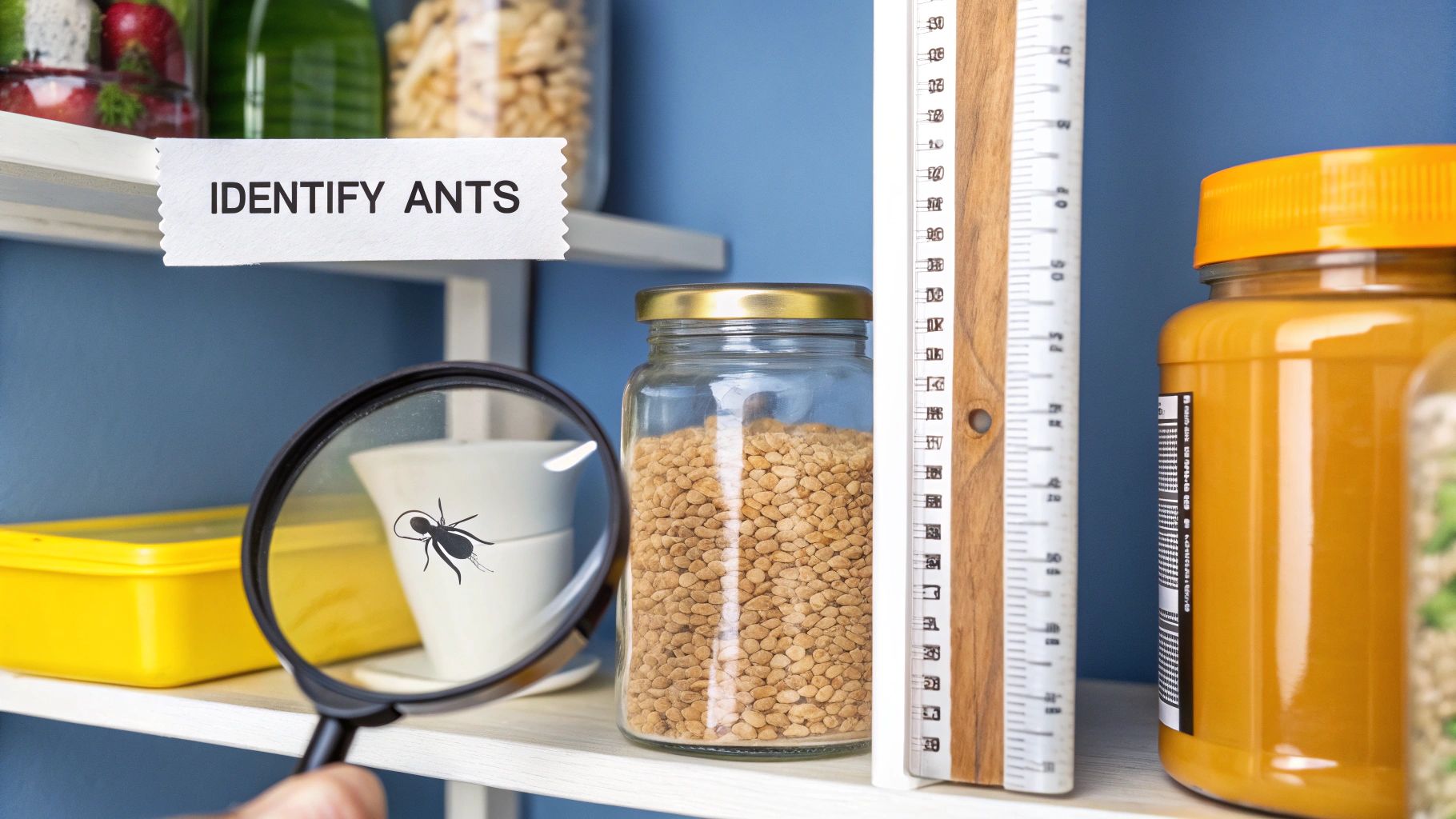
A great trick is to place a small dab of honey or peanut butter on a piece of cardboard near their trail. This lets you observe them up close without making them scatter. Take note of their size, the shape of their body (do they have one or two little bumps on their "waist"?), and their colour. A magnifying glass can be a surprisingly useful tool here.
If you have a hunch you're dealing with the destructive kind, it’s worth looking into effective carpenter ant treatment to understand the stakes. Capturing one in a clear jar can also help you compare it against identification guides online or show it to a professional if you need to.
Taking these initial steps ensures your natural ant removal efforts are targeted and effective. You'll go from randomly spraying intruders to strategically taking down their entire operation at its source. Once you know your target, you can pick the right bait, repellent, and exclusion strategy to reclaim your home for good.
Fortifying Your Home: The Ultimate Ant Prevention Plan
Honestly, the best way to deal with ants is to make sure your home never ends up on their radar in the first place. A solid defence beats scrambling for a cure every single time. This is about more than just wiping up the odd spill; it’s about actively fortifying your home against these tiny, persistent intruders.
Think of your house as a fortress. Every little crack, gap, or unchecked bit of moisture is a weak spot that scout ants are hardwired to find. By sealing up these entry points and cutting off their supply lines, you can create a home they’ll simply pass by.
This isn’t about a one-and-done cleaning frenzy. It's about building a smart, long-term prevention strategy. A little bit of effort now will save you a world of frustration down the road.
Sealing Every Entry Point
Ants are masters of infiltration. An opening that looks completely insignificant to you is like a wide-open garage door to them. Your first mission is to get down on your hands and knees and do a full inspection of your home's exterior and interior, hunting for these weak points.
Start outside at the foundation. Walk the entire perimeter and look for those hairline cracks in the concrete—they're a favourite for pavement ants. Pay close attention to where utility lines, pipes, and outdoor taps enter the house, as these spots almost always have small gaps around them.
Inside, your focus should be on the areas where ants are most likely to be looking for food and water:
- Kitchens: Pull out the fridge and stove. Check along the seams where countertops meet the wall and look at the plumbing under the sink.
- Bathrooms: Inspect around the base of the toilet, the edges of the tub and shower, and where the sink pipes go into the wall.
- Windows and Doors: Make sure the weather stripping is in good shape and creates a solid seal. A tiny tear or a worn-out section is a welcome mat for ants.
A key part of fortifying your home is sealing these cracks and gaps, and a bit of caulking goes a long way. For many of the smaller jobs, especially inside, you don't even need fancy tools. Learning how to caulk a kitchen or bath without a caulking gun can make these quick fixes easy for any homeowner.
A proactive approach is everything. Don't wait until you see a full-blown ant trail to start sealing gaps. Do a seasonal check-up every spring and fall to find and fix weak spots before pests can exploit them.
Eliminating Water and Food Sources
At the end of the day, ants are driven by two simple needs: food and water. If you systematically cut off their access to these resources, your home becomes a much less appealing place to build a colony.
Leaky pipes are a huge magnet. That slow drip under the bathroom sink or a tiny leak from a dishwasher hose creates the perfect damp environment that many ants, especially carpenter ants, absolutely love. Regularly check under all sinks and around your appliances for any signs of moisture.
Food is the other half of the puzzle. Wiping up crumbs is a given, but true prevention takes it a step further:
- Store pantry items like sugar, flour, and cereal in airtight containers. Those cardboard boxes and thin plastic bags are no challenge for a determined ant.
- Wipe down the outside of honey, syrup, and jam containers after you use them. Even a small, sticky residue is a powerful beacon.
- Be smart about pet food. Try not to leave a full bowl out all day. Stick to set feeding times, then clean the bowls and the floor around them right after.
Strategic Landscaping for Ant Prevention
Your yard can either act as a buffer zone or a direct bridge for ants trying to move into your home. Making smart landscaping choices, especially with the Alberta climate in mind, plays a huge role in keeping pests out. Ants will use plants, mulch, and other garden features to get from the ground right up to your house.
One of the most effective things you can do is create a clear zone around your foundation. Keep a gap of at least 30 centimetres between any mulch or flower beds and your home’s siding. Mulch is great for retaining moisture, which also makes it a perfect place for ants to nest. When it’s touching your foundation, it’s basically a superhighway for them.
Also, keep an eye on your trees and shrubs. Any branch or vine that touches your roof or siding acts as a ladder, letting ants completely bypass any barriers you’ve set up on the ground. Keep everything trimmed back so there's no direct contact with your house. As the seasons change, pest management is an ongoing task. For more on this, check out our guide on warm weather pest control for other valuable strategies.
Your Natural Ant Control Toolkit: Recipes and Strategies
Once you've sealed up your home's defences, it's time to get hands-on with some effective, natural solutions for any ants that still sneak through. You can forget about harsh chemical sprays—your kitchen pantry is already stocked with everything you need for powerful repellents and baits. Learning how to get rid of ants naturally is all about understanding why certain homespun methods work so well and using them strategically.
These aren't just old wives' tales, either. A simple vinegar solution, for instance, literally erases the invisible pheromone trails that scout ants leave behind for their nestmates to follow. You're essentially wiping their map clean. Other methods, like diatomaceous earth, work on a purely physical level, creating a barrier that ants just can't cross safely. When you get the science behind these simple recipes, you can deploy them with precision for the biggest impact.
This visual guide breaks down the core principles of a solid ant prevention plan.
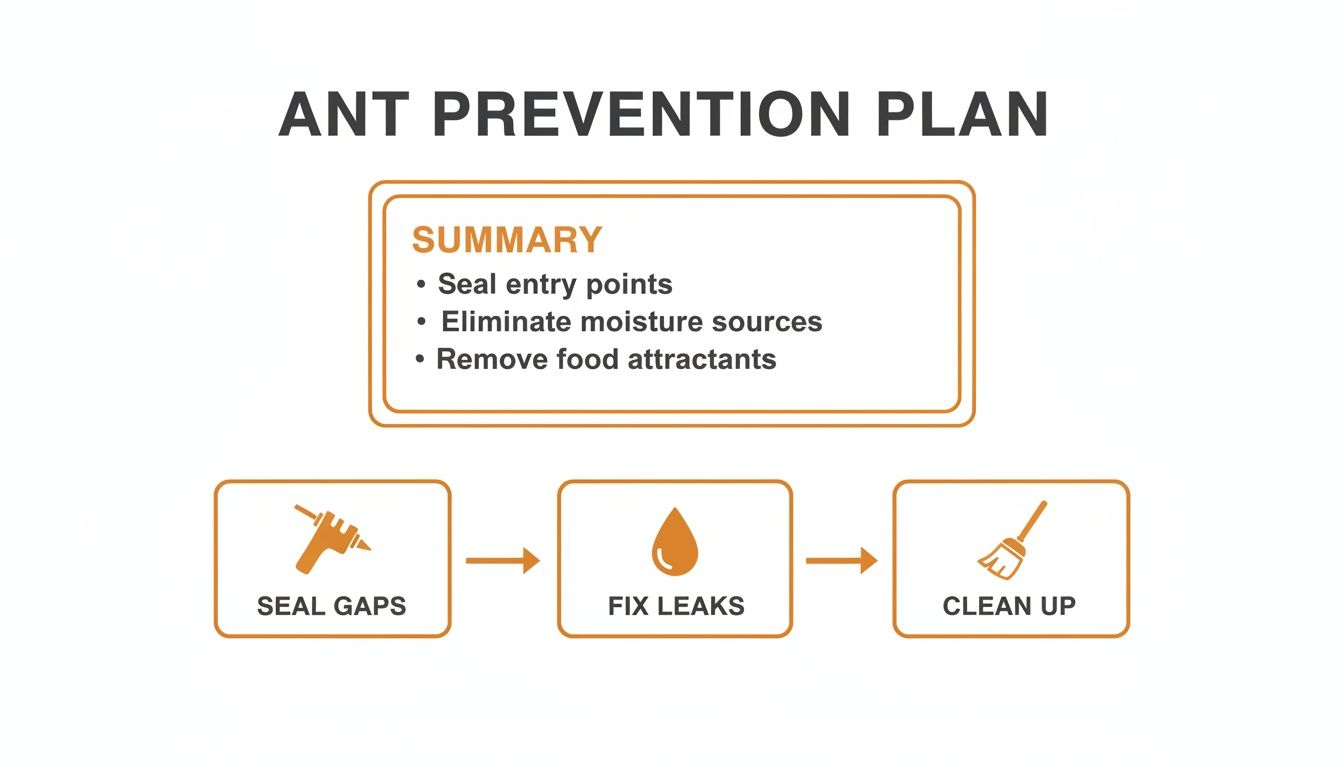
It really highlights how a multi-pronged approach—sealing entry points, fixing leaks, and staying on top of cleaning—is the foundation for long-term success.
To help you get started, here's a quick-reference guide to some of the most effective homemade ant control solutions you can whip up with common household ingredients.
Natural Ant Control Recipes at a Glance
| Solution Type | Key Ingredients | How It Works | Best For |
|---|---|---|---|
| Pheromone Spray | White Vinegar, Water | Erases the invisible scent trails ants use to navigate, confusing the colony. | Wiping down surfaces immediately after spotting an ant trail. |
| Scent Repellent | Essential Oils, Water | Overwhelms ants' sense of smell with strong scents they find repulsive. | Spraying along baseboards, windowsills, and other potential entry points. |
| Physical Barrier | Diatomaceous Earth | Abrasive powder damages ants' exoskeletons, leading to dehydration. | Creating a protective line in dry, out-of-the-way areas like behind appliances. |
| Slow-Acting Bait | Borax, Powdered Sugar, Water | Worker ants carry the sweet, toxic mixture back to the nest, eliminating the colony. | Targeting the source of a persistent infestation to get rid of the queen. |
These simple recipes are your go-to tools for managing ants without resorting to harsh chemicals. Let's dig a little deeper into how to use them.
Creating Natural Ant Repellents and Sprays
Repellents are your active first line of defence. The goal is simple: make surfaces and entry points so unappealing that ants take one whiff and turn right back around. These are perfect for immediate action when you spot a trail forming or for treating specific hotspots like window sills and door thresholds.
One of the easiest and most effective tools is a vinegar and water spray. Just mix equal parts white vinegar and water in a spray bottle. Spray it directly on ants to deal with them on contact, then wipe down the whole area to obliterate their pheromone trail. This one simple step throws the rest of the colony into confusion and stops reinforcements from following the same path.
Essential oils offer another powerful, and much more pleasant-smelling, alternative. Ants rely heavily on their sense of smell, and these strong scents completely overwhelm their receptors.
- Peppermint Oil: Ants absolutely hate this smell. Add 15-20 drops of peppermint essential oil to a spray bottle filled with water. Spray it along baseboards, in corners, and anywhere you've seen ant activity.
- Tea Tree Oil: Similar to peppermint, its strong, medicinal scent is a potent deterrent. Use the same ratio of oil to water.
- Citrus Oils: The compound d-limonene, found in citrus peels, is actually toxic to ants. You can rub fresh lemon or orange peels directly on surfaces or make a spray with lemon juice and water (a 1-to-3 ratio works well).
Pro Tip: With any spray, consistency is everything. You'll want to reapply it daily for the first few days, especially after cleaning, to make sure the repellent scent stays strong enough to keep the ants away.
Using Barriers to Block Ant Pathways
While sprays repel, physical barriers stop ants dead in their tracks. These are typically powders that you can use to create a line that ants either won't or physically can't cross. They are perfect for applying in out-of-the-way places where a liquid spray isn't practical, like behind appliances or inside wall voids.
Food-grade diatomaceous earth (DE) is the star player here. It’s a fine powder made from fossilized algae that, to an ant, feels like walking through razor-sharp glass. It works by absorbing the oils from their exoskeleton, which causes them to dehydrate. Use a duster or gently puff a very light layer of DE into cracks, along the back of cabinets, and around the foundation of your home. It's crucial to use only the food-grade version, which is safe for homes with pets and kids, though you should still avoid inhaling the dust.
Other effective powder barriers you might have on hand include:
- Cinnamon: The strong smell messes with their pheromone trails. You can sprinkle ground cinnamon directly or use a few drops of cinnamon oil on a cotton ball.
- Cayenne Pepper: Its intense heat is a major irritant for ants, making them steer clear of any area where you've sprinkled it.
- Chalk: The calcium carbonate in chalk is believed to interfere with an ant's ability to follow a scent trail. Drawing a thick chalk line can be a surprisingly effective temporary barrier.
The Ultimate Solution: DIY Ant Baits
Repellents and barriers are great for managing the scout ants you see, but to really solve a persistent ant problem, you have to target the entire colony. That’s where baits come in. A good bait is slow-acting by design. This gives worker ants enough time to carry the poison back to the nest and share it with the rest of the colony, eventually eliminating the queen and bringing the whole operation down from the inside.
The most proven natural bait combines something sweet with borax.
Homemade Borax Ant Bait Recipe:
- Mix one part borax with three parts powdered sugar. The sugar is the lure, and the borax is the slow-acting poison.
- Add just enough water to form a thick, syrupy paste. You want it to be easy for the ants to eat and carry.
- Spoon small dabs of the mixture onto little pieces of cardboard, wax paper, or into bottle caps.
Place these bait stations along known ant trails, but make sure they're out of reach of children and pets. Good spots are under the fridge, behind the stove, or deep inside a cabinet. You might see more ants at first—this is a good sign! It means the bait is working, and they're calling their friends over. Resist the urge to spray them. Just let them do their work. Within a few days to a week, you should see a massive drop in their numbers as the colony collapses.
Keeping Ants Away Through Smart Sanitation and Habits
Using natural baits and repellents is a powerful way to handle an active ant problem, but the real victory is making your home an undesirable place for them to begin with. Long-term success isn't about reacting to an invasion; it's about proactively removing the reasons they show up in the first place.
Ants operate on a simple mission: find food, water, and shelter. When you consistently cut off their access to these resources, you turn your home from a five-star resort into a barren wasteland from their perspective. This is how you win the war, not just a single battle.
Eliminating Hidden Food Sources
The number one reason ants march into our homes is the promise of an easy meal. You might be great at wiping down counters, but scout ants are absolute experts at finding the crumbs and spills we often overlook. A few simple habits can make a massive difference.
- Pantry Lockdown: Forget cardboard boxes and flimsy plastic bags—they're no match for a determined ant. Transfer your pantry staples like cereal, flour, and sugar into airtight glass or plastic containers. It keeps ants out and your food fresher, too.
- Sticky Situations: Jars of honey, jam, and syrup are ant magnets. After you use them, just give the outside of the container a quick wipe with a damp cloth. It removes that sticky residue that scout ants can't resist.
- Pet Food Management: Leaving a full bowl of pet food out all day is like rolling out the red carpet for ants. It's better to set specific feeding times, then clean the bowls and the area around them right after your pets are finished.
For a truly clean slate, especially if you're dealing with stubborn pests, a professional deep cleaning can eliminate grease buildup behind appliances and other hidden spots where ants love to forage.
Managing Moisture and Modifying Habitats
Beyond food, many ant species—especially the ones we see here in Alberta—are drawn to moisture. Damp areas in your home don't just give them the water they need to survive; they can also create ideal nesting conditions for destructive pests like carpenter ants.
Controlling humidity is a critical part of ant prevention that often gets missed. A damp basement or a poorly ventilated bathroom can quickly become a pest sanctuary. Running a dehumidifier in basements and crawl spaces can dramatically lower moisture levels, making the environment far less hospitable.
A simple habit like running the exhaust fan during and after a shower does more than just prevent water damage—it's an active part of your pest control strategy. The same goes for promptly fixing that tiny leak under the sink.
It's no surprise that kitchens and bathrooms are the epicentres of ant activity in Canadian homes. In fact, over 90% of pest professionals report that kitchens are the top source of ant complaints, with bathrooms not far behind. These two rooms reliably offer both food and water.
The Power of Consistent Habits
At the end of the day, the most effective way to get rid of ants naturally and keep them gone is consistency. It’s the small, daily actions that build up over time to create a fortress against pests.
Think of it as creating an environment that’s clean and comfortable for you, but sterile and uninviting for them. A routine of wiping, sweeping, and sealing up food is your best defence. For more ideas on building a pest-proof home, check out these DIY pest prevention tips. By making these habits part of your daily life, you disrupt the very things ants need to thrive, ensuring your home stays your own.
Recognizing When DIY Methods Aren't Enough
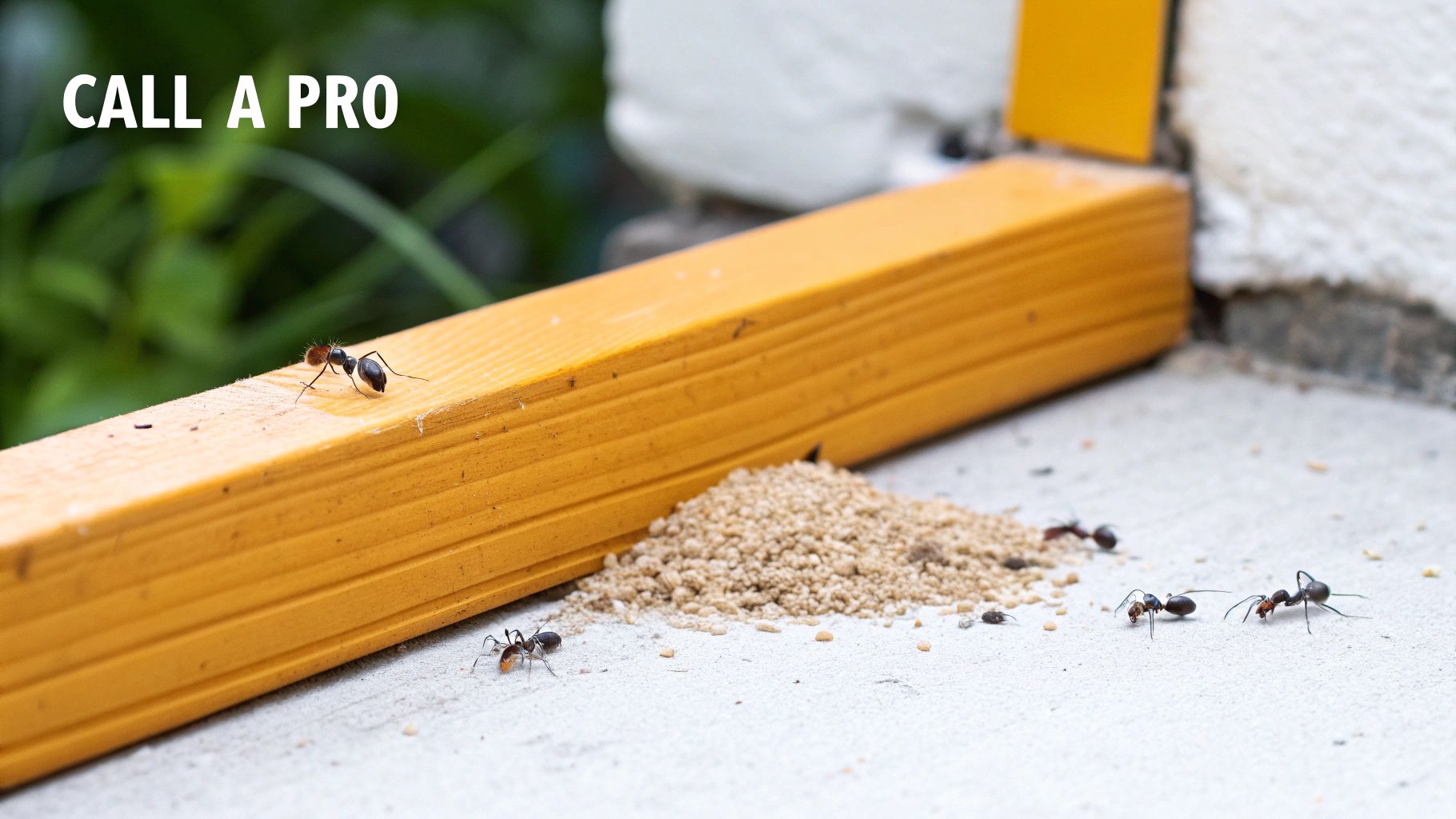
Learning how to handle ants naturally gives you a fantastic sense of control over your home. For most common household invaders, like the pavement ants we see everywhere, a combination of smart sanitation, natural repellents, and homemade baits is usually more than enough.
But I've seen enough situations to know there are times when persistence and DIY effort just aren't the right answer. Knowing the difference between a minor nuisance and a serious infestation is critical. Sometimes, sticking with home remedies just wastes valuable time, allowing a small issue to spiral into a costly nightmare.
Recognizing the red flags that signal you need a professional ensures you protect your home and get the problem solved efficiently.
Red Flags That Demand Professional Attention
If you spot any of the following signs, it’s time to put down the vinegar spray and pick up the phone. These aren't just indicators of a stubborn colony; they point to a problem that has likely grown way beyond what surface-level treatments can handle.
Here are the clearest signs you're out of your depth:
- You're Seeing Winged Ants Indoors. A few winged ants outside in the summer? Normal. But if you start seeing them crawling out from inside your walls, vents, or windowsills, you're looking at "swarmers." These are the reproductive members of a mature, well-established colony. Their presence indoors is a dead giveaway that the nest is probably inside your home's structure.
- You're Finding Piles of Fine Sawdust. This is the classic, undeniable sign of carpenter ants. Those little piles of wood shavings, known as frass, look just like fine sawdust and often show up near baseboards, in crawl spaces, or under windows. It means ants are actively chewing through your home's wooden framework to expand their nest.
- They Keep Coming Back, No Matter What. You've cleaned meticulously, sealed every crack you can find, and consistently put out baits and repellents, but the ants just keep marching on. This kind of resilience often means you're only tackling a tiny fraction of a much larger super-colony. The main nest, or even multiple nests, could be hidden deep within your walls where no DIY bait can ever hope to reach.
Why Some Infestations Require a Pro
Professional pest control technicians bring tools and knowledge that go far beyond household solutions. For a destructive pest like carpenter ants, they can use specialized equipment to locate the nest inside a wall without having to tear everything apart. They also have access to targeted, low-toxicity treatments that can eliminate the entire colony right at its source.
A licensed professional doesn't just get rid of the pests you can see; they deal with the entire life cycle of the infestation. This means finding hidden nests, destroying the queen and her colony, and giving you expert advice on how to prevent them from ever coming back.
Ultimately, while natural methods are powerful for everyday ant issues, a major infestation requires a whole different level of intervention. The goal is always to protect your home. Recognizing when to call for backup is one of the smartest moves in any homeowner's playbook, especially when dealing with the unique pest challenges we face here in Alberta.
Your Questions on Natural Ant Control Answered
When you start tackling an ant problem the natural way, a few questions are bound to pop up. We hear them all the time from homeowners in Red Deer and across Alberta—everything from how long a bait will take to work to why a spray isn't stopping the ants for good.
Let's get into the most common queries we get. Getting the details right on timing, safety, and strategy is what turns a good effort into a successful, ant-free home.
How Long Do Natural Ant Remedies Take to Work?
The timeline for natural ant control really boils down to the method you're using and what you're trying to accomplish. Not all solutions are designed for speed, and knowing the difference is key to avoiding frustration.
Some methods are built for the here and now, while others play the long game.
- Instant Action: A spray made from white vinegar and water will stop foraging ants in their tracks. It's perfect for wiping up a trail you just found, as it also erases the pheromone scent they leave behind. The catch? It only deals with the ants you can see.
- Short-Term Barriers: Physical barriers, like a line of food-grade diatomaceous earth, can start thinning out ant traffic within a day or two. Any ant that crosses it will eventually dehydrate, but this tactic won't touch the colony's source.
- Long-Term Colony Control: Baits are where you win the war, but they demand patience. A homemade borax and sugar bait is intentionally slow-acting. You need to give the worker ants time—anywhere from several days to over a week—to carry that bait back to the nest and share it with the queen and the rest of the colony.
Are Natural Solutions Safe for Pets and Kids?
Just because something is "natural" doesn't automatically mean it's harmless if a curious pet or child gets into it. While these options are much safer alternatives to synthetic pesticides, you still need to be smart about how you use them.
For example, food-grade diatomaceous earth is non-toxic, but its fine dust can irritate the lungs if inhaled. It's best to apply it gently in low-traffic areas. The one to really watch, though, is borax.
While borax is a naturally occurring mineral, it is toxic if ingested by pets or children. Always place borax-based baits inside sealed containers with small, ant-sized entry holes. Tuck these bait stations where your family can't get to them—think deep inside cabinets, behind heavy appliances, or under the sink.
Why Do I See More Ants After Putting Out Bait?
Seeing a sudden swarm of ants right after you've set out a bait can be unnerving, but it’s actually the best sign you could hope for. It means your bait is a hit.
That initial surge in traffic is proof that scout ants found your bait, raced back to the nest, and laid down a powerful pheromone trail to call in their nestmates. The busy line you see is the colony’s workforce doing exactly what you want: carrying the bait back home.
Whatever you do, don't spray them! It’s critical to resist the urge to kill these ants. Let them do their job. After this first rush, you should see the ant numbers drop off dramatically over the next few days as the bait starts working on the colony from the inside out.
My Natural Sprays Aren't Working. What Am I Doing Wrong?
If you feel like you're constantly spraying ants but they just keep coming back, you're probably only treating the symptom, not the source. A repellent spray is a temporary fix—it kills or deters the foragers you see, but the colony is safe and sound in its nest, ready to send out more workers.
To get real results, you need a multi-pronged attack. First, make sure you're wiping down all surfaces with a vinegar solution to completely erase their chemical trails. More importantly, you have to find and seal their entry point. If you keep spraying ants near a windowsill but never seal the tiny crack they're using, you're fighting a battle you can't win. Combine your sprays with diligent sanitation and physical exclusion to make a real difference.
For those stubborn or large-scale infestations that just won't quit, professional help is the next logical step. Dragon Pest Control offers proven, safe solutions to protect your home. If you're ready to get rid of ants for good, contact us for a quote.