

That sinking feeling you get when you spot a tiny, reddish-brown insect crawling on your bed is something else. But before you start tearing the room apart, take a deep breath. Panic is your enemy in this fight; a clear head is your greatest ally.
The first few moments after you find a bed bug are the most important. They set the stage for whether you’ll get rid of them quickly or fight a long, drawn-out battle. Your goal right now isn’t to kill every single bug at once—it’s to stop the problem from getting any worse.
Your Immediate Game Plan After Finding Bed Bugs
Finding a bed bug can trigger instant stress, but a fast, effective response starts with a calm, methodical plan. The first things you absolutely must do are confirm you have an infestation, contain the affected items, and avoid common mistakes that will only spread the problem. Nailing these initial actions is the key to taking back control.
Confirm You Are Dealing with Bed Bugs
Are you sure it's a bed bug? Misidentification is a surprisingly common—and costly—mistake. We've seen homeowners in Red Deer spend a fortune treating for bed bugs when they actually had carpet beetles, booklice, or even certain types of roach nymphs.
Before you do anything else, you need solid proof. One bug isn't enough; you need to look for the other tell-tale signs they leave behind.
Quick Bed Bug Identification Checklist
Use this checklist to quickly confirm if the signs you're seeing point to a bed bug infestation.
| Evidence | What It Looks Like | Where to Find It |
|---|---|---|
| Live Bugs | Small, flat, oval-shaped, and reddish-brown. About the size of an apple seed. | Mattress seams, box springs, headboards, cracks in furniture, behind picture frames. |
| Fecal Spots | Small, dark brown or black specks that look like someone dotted a marker. They will bleed on fabric. | Sheets, pillowcases, mattress, walls near the bed. |
| Shed Skins | Translucent, hollow shells that look just like a bed bug. A sure sign of a growing population. | Along mattress seams, in furniture joints, and stuck to fabric surfaces. |
| Eggs | Tiny, pearly-white ovals about 1 mm long. Often found in clusters. | Tucked into tight, hidden crevices like screw holes, fabric seams, and behind wallpaper. |
Looking for these signs will help you be certain you're fighting the right battle.
For a more detailed walkthrough, our guide on how to check for bed bugs has an in-depth checklist and photos to help you out.
This infographic breaks down the essential first moves after you suspect you have a problem.
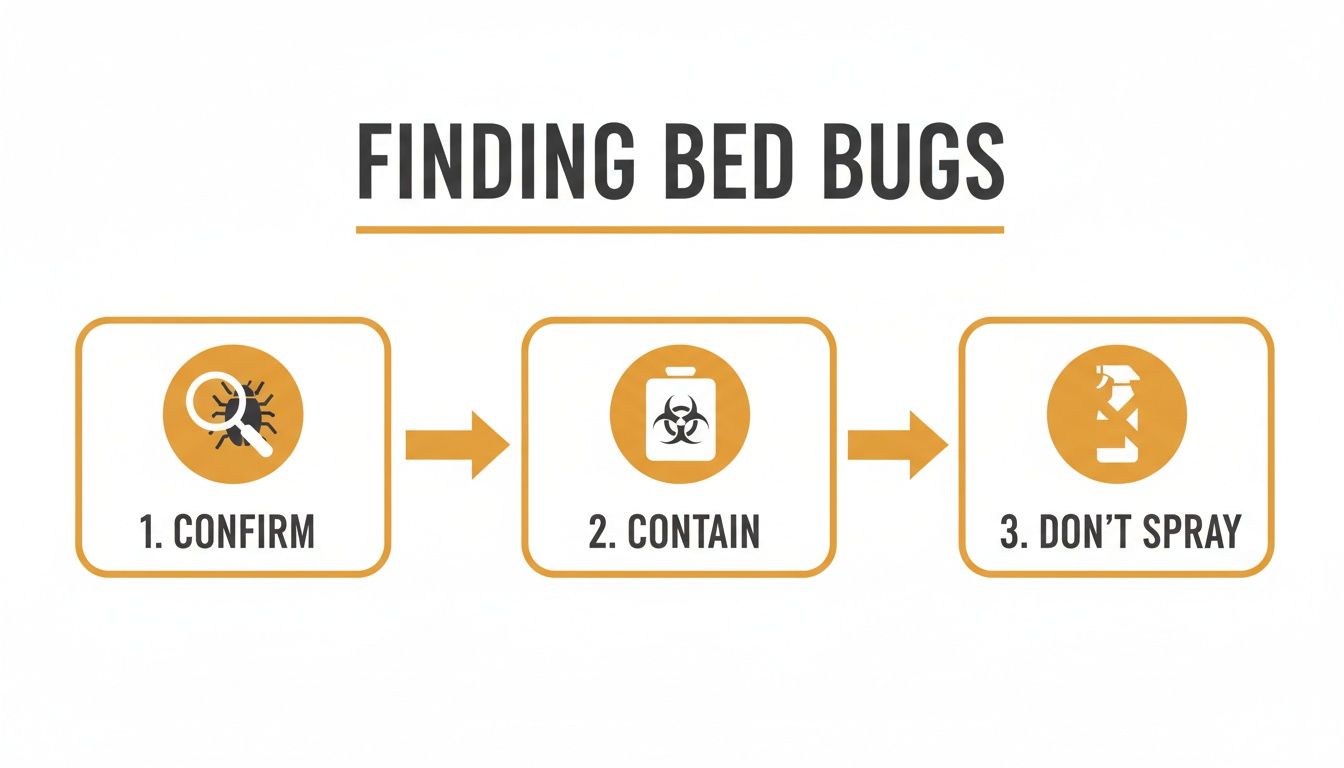
As you can see, the key is to be careful and strategic—not just reactive.
Contain the Infestation Immediately
Okay, you've confirmed it's bed bugs. Now, your top priority is containment. You have to stop them from spreading to other parts of your home.
Start by carefully gathering up all bedding, clothes, curtains, and any other fabrics in the room. Don't just carry them through the house! Seal everything tightly in plastic garbage bags before you move them. This one simple step is crucial for preventing bugs and their eggs from dropping off and starting a new infestation in another room.
Your mattress is ground zero, so it needs to be locked down immediately. Get a high-quality, zippered encasement that’s specifically designed to be bite-proof and escape-proof. This traps any bugs still on the mattress inside, where they'll eventually starve. Taking the time for choosing the best mattress protector is a small investment that pays off big time.
Honestly, the biggest mistake we see people make is moving infested furniture or blankets from one room to another without sealing them first. A single pregnant female hitching a ride can infest a whole new room in just a few weeks.
Avoid Counterproductive Actions
When you're panicking, it's so tempting to reach for the first can of bug spray you find at the store. Please don't. This almost always makes things worse.
Here’s what you absolutely should not do:
- Do Not Use "Bug Bombs" or Foggers: These things are practically useless against bed bugs. The mist they create almost never gets into the deep cracks and crevices where bed bugs hide. Even worse, the chemical irritant often causes them to scatter, spreading the infestation deeper into your walls and even into neighbouring apartments.
- Avoid Generic Store-Bought Sprays: Most over-the-counter pesticides you’ll find are repellent-based. That means they just push the bed bugs away instead of killing them. This scatters the population, making them much harder for you (or a professional) to find and treat effectively later on.
Effective DIY Methods You Can Start Right Now
Finding bed bugs doesn't mean you're powerless. While a professional is often the final word on an infestation, there are some powerful steps you can take immediately to cut their numbers down and start taking back your home. Think of these methods as your first line of defence—a way to fight back while you figure out your next move.
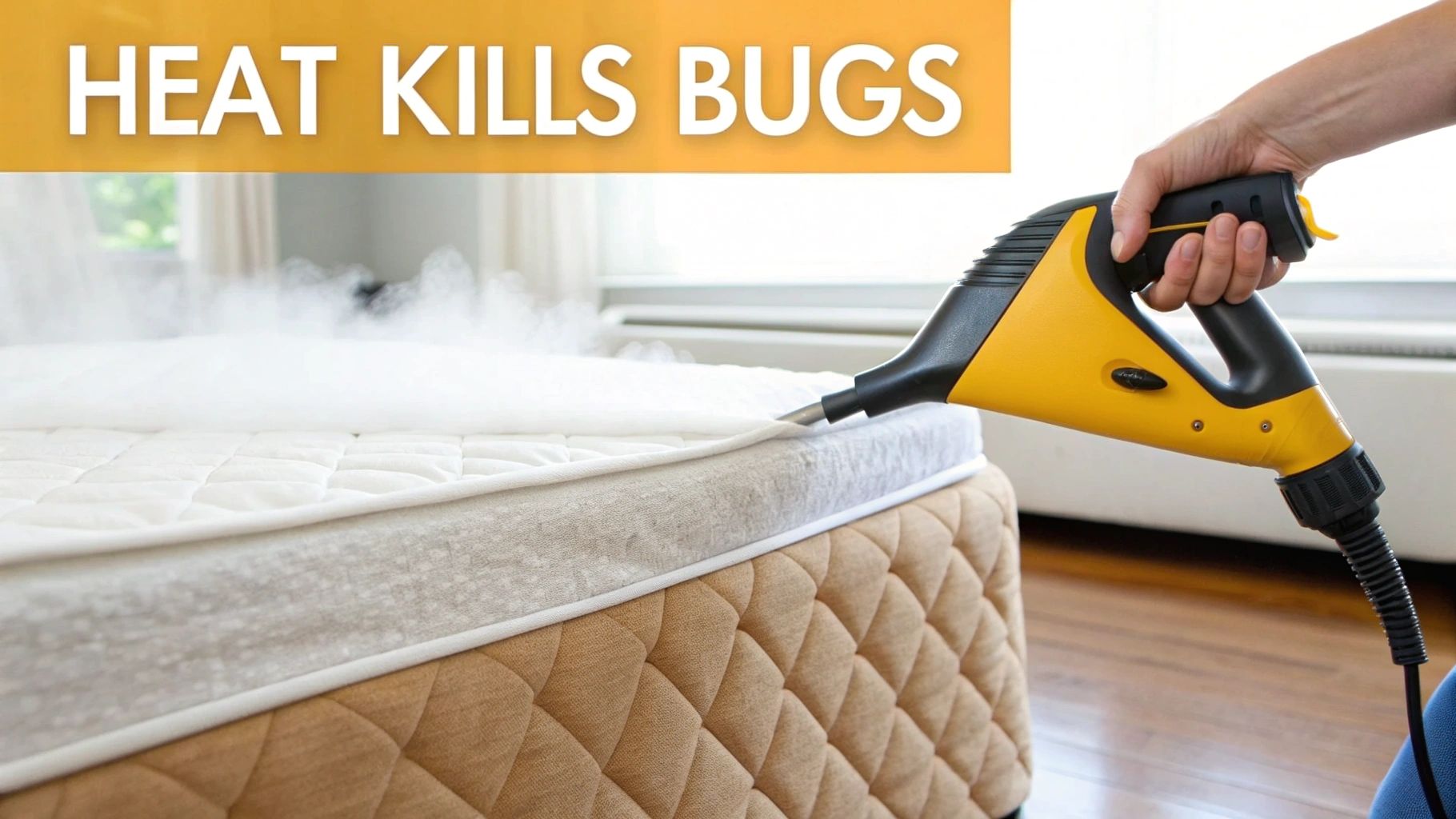
These tactics hit bed bugs where it hurts, targeting their biggest weaknesses: a vulnerability to extreme heat and their desperate need for hiding spots. It takes some real diligence, but when you apply these techniques methodically, you can throw their life cycle into chaos and make your home a much less welcoming place for them.
Weaponize Heat with Your Laundry
You might not realize it, but your washer and dryer are two of the best weapons you have against bed bugs. From tiny eggs to full-grown adults, they simply can't survive high temperatures. All it takes is a sustained temperature of 49°C (120°F) to kill them.
Start by carefully gathering up every washable fabric in the infested room—bedding, clothing, curtains, even stuffed animals. Anything that can go in the machine, should. Just be sure to seal everything in plastic bags before you move it through your home to avoid dropping bugs or eggs along the way.
- Wash everything on the highest heat setting the fabric can handle.
- Dry on high heat for at least 30-45 minutes after the cycle finishes and the items are fully dry. This is the crucial step; the intense, penetrating heat of the dryer is what truly ensures nothing survives.
- Once laundered, immediately put the clean items into new, sealed plastic bags until the room has been completely treated to prevent them from getting re-infested.
This process is absolutely essential. Don't skip it.
Meticulous Vacuuming to Remove Bugs and Eggs
Next, grab your vacuum. A good vacuum with strong suction and a crevice tool becomes your best friend in this fight. It lets you physically remove live bugs, their shed skins, and many of their tiny, sticky eggs from surfaces where they hide.
The secret is to be incredibly thorough. Go over every single surface in the room, paying extra close attention to their favourite hiding spots. This means getting deep into mattress seams, inside the box spring and bed frame, along every inch of your baseboards, and around the edges of carpets.
When you're finished, how you dispose of the contents is critical. If you use a bagged vacuum, take the bag out right away, seal it inside another plastic bag, and get it into an outside garbage bin. For bagless models, empty the canister into a sealable bag outdoors, then give the canister a good wash with hot, soapy water.
Harness the Power of Steam
For all the things you can't just toss in the dryer—your mattress, box spring, bed frame, and upholstered furniture—a steamer is a fantastic tool. The direct blast of high-temperature steam kills bed bugs and their eggs instantly on contact.
A common mistake is moving the steamer too quickly. You need to move the nozzle slowly—about one inch per second—to ensure the heat penetrates deep enough into the fabric or crevice to be effective.
Use a commercial-grade steamer that can produce "dry" steam hitting at least 100°C (212°F) right at the tip. Target the same areas you vacuumed: seams, tufts, folds, and joints. Just be careful not to make things too wet, as that can lead to mould problems down the road.
The Final Lockdown: Mattress Encasements
After you’ve laundered, vacuumed, and steamed, the final DIY step is to lock everything down. Get some high-quality, bed bug-proof encasements for both your mattress and your box spring. These aren't just mattress protectors; they're specially designed zippered covers that trap bugs inside and keep new ones out. Learning what bed bugs look like at all their life stages will help you understand why these specialized covers are so important.
An encasement accomplishes two critical things:
- It traps any bugs or eggs you might have missed inside, where they will eventually starve and die.
- It eliminates thousands of hiding spots, which makes future inspections much easier and denies new bugs a place to set up camp in your bed.
You need to leave these encasements on for at least a year. Bed bugs can survive a surprisingly long time without a meal. This one simple step provides incredible peace of mind and is a solid barrier against future problems.
Why Professional Treatment Is Your Fastest Solution
So, you’ve tried every DIY trick in the book, and it’s still happening. You find yet another live bed bug, and the frustration is overwhelming. Here’s the hard truth: while DIY methods can certainly knock down the population, they almost never solve the root problem. For a genuinely fast, final solution, calling in a professional is the only way to go.
It’s tempting to think you can handle an infestation on your own. We get it. But bed bugs are exceptionally resilient pests. They hide in places you’d never dream of looking—inside electrical outlets, behind peeling wallpaper, and deep within the frames of your furniture. Professionals are trained to think like a bed bug, which lets them find and wipe out those hidden pockets of infestation that DIY efforts always seem to miss.
This isn’t just about finding the bugs; it’s about outsmarting their biology.
The Problem of Rapid Reproduction
The number one reason DIY methods fail is the sheer speed at which bed bugs multiply. They aren't just a nuisance; they're a rapidly expanding army setting up camp in your home. If you miss even a handful of hidden eggs, the entire nightmarish cycle can start all over again in just a few weeks.
A single fertilized female can lay between 200-500 eggs in her lifetime. Depending on the temperature, each of those eggs hatches in as little as 6-17 days. That explosive growth means a small problem can become a full-blown infestation of thousands before you even realise what you’re up against.
We've seen situations where homeowners thought they had it under control, only to find out the bugs were breeding inside the walls. A professional doesn't just treat the bed; they treat the entire environment to break the life cycle for good.
Killing What You Cannot See
The single biggest advantage a professional brings is the ability to kill bed bugs at every single life stage. Most DIY treatments, like steaming or vacuuming, work pretty well on the adult bugs you can see. The problem is, they’re often completely useless against the microscopic, incredibly resilient eggs tucked away in tiny crevices.
Professional technicians come armed with a combination of methods designed to target these invisible threats.
- Whole-Room Heat Treatments: This is the gold standard. By raising the temperature of an entire room to over 49°C (120°F) for several hours, every single bug and egg—no matter where it's hiding—is eliminated.
- Targeted Chemical Applications: Professionals use commercial-grade insecticides that are far more effective and safer than anything you can buy at the store. They apply these directly into cracks, wall voids, and other hiding spots where eggs are laid.
- Integrated Pest Management (IPM): This isn’t just one method; it’s a comprehensive strategy. It combines heat, targeted chemical treatments, physical removal, and preventative measures into a multi-pronged attack that leaves no room for survival. You can learn more about our different approaches in our pest control services.
Why Expertise Matters in Multi-Unit Buildings
In Red Deer and across Alberta, many of us live in apartments, condos, or townhouses. In these shared buildings, a bed bug problem is rarely isolated to just one unit. These pests are expert travellers, moving between apartments through wall voids, electrical conduits, and shared plumbing.
Trying a DIY treatment in one suite often just pushes the bugs into your neighbour's place, only for them to march right back a few weeks later. A professional pest control company can coordinate treatment across multiple units, creating a solid barrier that truly solves the problem for the entire building. Just like with pests, understanding when professional help is crucial for persistent home issues is the key to getting your home back.
Ultimately, getting rid of bed bugs fast is about being more strategic and more powerful than the bugs themselves. That’s exactly what professional pest control is designed to do.
What to Expect When You Call in the Pros
Deciding to call a professional is a huge step toward getting rid of bed bugs for good, but it's natural to wonder what happens next. Understanding the different treatment options and knowing what to ask will help you choose the right company and ensure the job gets done right the first time. Not all treatments are the same, and the best method really depends on your specific situation.
A qualified technician won’t just show up and start spraying. Their first move is always a thorough inspection to figure out how bad the infestation is, find all the hiding spots, and get the lay of the land. This initial assessment is critical—it's what separates a quick fix from a lasting solution.
Understanding Your Treatment Options
When you work with a professional pest control company in Red Deer, they'll likely recommend one of two main methods, or sometimes a combination of both: targeted chemical applications or a whole-room heat treatment. Each has its own strengths and is designed for different scenarios.
Targeted Chemical Applications use commercial-grade insecticides that are far more powerful and effective than anything you can buy yourself. Technicians apply these products with precision, getting deep into the cracks, crevices, wall voids, and furniture joints where bed bugs live and breed. This method is meticulous and truly takes an expert's eye to be successful.
On the other hand, Whole-Room Heat Treatments are often called the gold standard for wiping out bed bugs quickly and completely. This process involves bringing in specialized equipment to raise the temperature of the entire room to over 49°C (120°F) and holding it there for several hours. At that temperature, bed bugs and their eggs simply can't survive, no matter where they’re hiding.
The real power of professional heat treatment is its ability to penetrate everything in a room at once. It kills the eggs you can't see hidden deep inside a mattress or behind a baseboard, which is something sprays can easily miss. This is the key to breaking their reproductive cycle instantly.
Making an Informed Choice
So, which treatment is right for you? A pest control expert will guide you, but it helps to understand why they might recommend one over the other.
Comparing Professional Bed Bug Treatment Options
To make sense of the pros and cons, here’s a quick look at the key differences between professional methods so you know what to expect.
| Treatment Method | How It Works | Best Suited For | Key Considerations |
|---|---|---|---|
| Heat Treatment | Raises room temperature above 49°C to kill all life stages instantly. | Severe or widespread infestations; situations needing immediate, guaranteed results. | Requires significant prep (removing heat-sensitive items) and is typically more expensive upfront. |
| Chemical Treatment | Applies residual insecticides to kill bugs on contact and over time. | Localized or early-stage infestations; more budget-conscious situations. | May require multiple visits to kill newly hatched bugs; some bugs may have resistance to certain chemicals. |
Often, the most effective approach is an Integrated Pest Management (IPM) strategy, which combines heat with a targeted application of residual chemicals in key areas. This gives you the immediate knockdown of a heat treatment plus the long-lasting protective barrier of an insecticide.
Questions to Ask Any Pest Control Company
Before you agree to any service, you need to vet the company. A reputable provider will welcome your questions and give you clear, confident answers. Arm yourself with this list to make sure you're hiring a true professional.
- Are your technicians licensed and insured in Alberta? This is non-negotiable. It protects you and ensures they meet provincial standards.
- What's your success rate with the treatment you're proposing? Ask about their experience with infestations similar to yours.
- Do you offer a guarantee? Get the details. What does it cover? Does it include follow-up visits if bugs reappear? How long does it last?
- Can you give me a detailed prep sheet? A professional company will provide a clear checklist of what you need to do before they arrive to make the treatment as effective as possible.
- What safety precautions do you take for children and pets? They should be able to explain their safety protocols and the products they use without hesitation.
Choosing a professional is about more than just eliminating pests; it’s about restoring your peace of mind. Taking the time to understand the process and ask the right questions is the most important step on your journey to a bed bug-free home.
Staying Bed Bug Free After Treatment
Getting rid of bed bugs is a massive win, but don't let your guard down just yet. The treatment is done, which is a huge relief, but the final phase is all about shifting from reacting to an infestation to proactively preventing a new one. Your goal now is to make sure all that effort wasn't for nothing by turning your home into a place where bed bugs just can't get a foothold again.
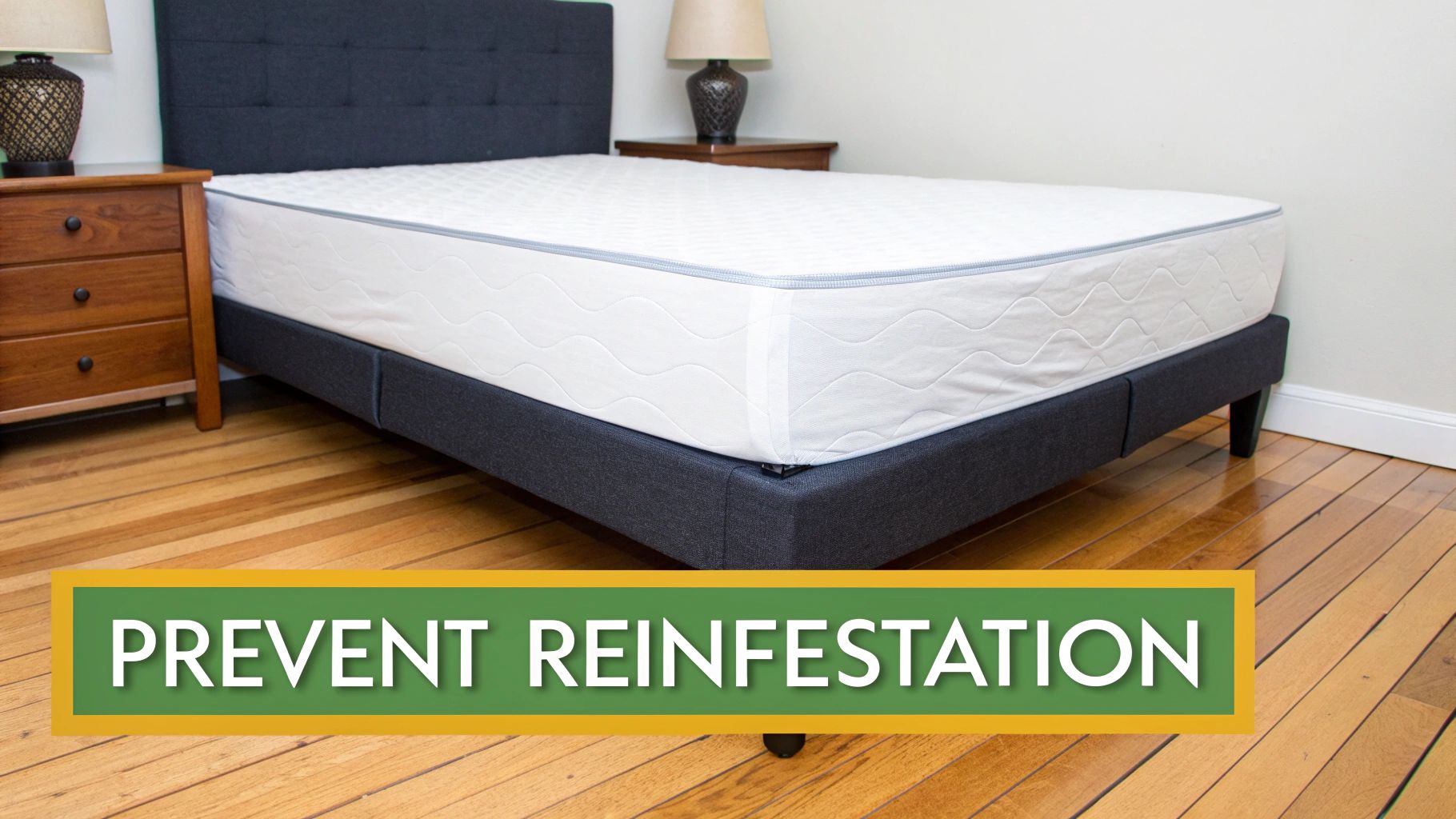
This last stage comes down to being vigilant and making a few smart tweaks to your daily life. It’s about creating an environment that’s just plain unwelcoming for these pests—the absolute best long-term strategy for staying bed bug free for good.
Creating Your Post-Treatment Monitoring Plan
Think of yourself as a detective in your own home for the next few weeks. Consistent monitoring is your best bet for catching any stragglers before they have a chance to multiply and kick off a whole new problem. It’s your early-warning system.
One of the simplest, most effective tools for this is a set of interceptor traps. These are just little plastic dishes you place under each leg of your bed frame. Any bed bug trying to climb up for a meal gets stuck in the slippery inner well. It’s undeniable proof if any are still lurking around.
Here’s a practical checklist to keep you on track:
- Weekly Visual Sweeps: Once a week, grab a good flashlight and methodically check all the high-risk spots. That means the seams of your mattress, the box spring, the headboard, and any furniture right next to the bed. Keep an eye out for live bugs, shed skins, or fresh fecal spots.
- Check the Interceptors: Give your traps a quick look every few days. Finding even a single bug is a clear signal that you might need to take further action.
- Leave the Encasements On: Whatever you do, don't take off the mattress and box spring encasements. They need to stay on for at least 12-18 months. This ensures any bugs that were trapped inside will starve long before they have a chance to escape.
The consistent increase in bed bug control services since travel and social gatherings resumed has been striking, creating far more opportunities for them to spread. This resurgence highlights why fast, professional treatment is essential, as delaying action allows infestations to spread rapidly through everyday activities. Discover more insights about this trend in pest control services.
With this spike in activity across Alberta, ongoing prevention has never been more critical.
Smart Habits to Prevent Re-infestation
It’s always easier—and a whole lot cheaper—to prevent a new infestation than it is to treat one. Most of the time, a re-infestation happens when bed bugs are accidentally brought into your home from somewhere else. A few cautious habits can make a world of difference.
It all comes down to being mindful of how these pests travel. They are master hitchhikers, so you need to be aware of their favourite ways to get around.
Controlling What Comes Indoors
- Secondhand Furniture Scrutiny: Never, ever bring used furniture into your home without giving it a forensic-level inspection first. This is especially true for upholstered items or mattresses. Check every seam, crevice, and screw hole with a flashlight before it even crosses the threshold.
- Smart Travel Practices: When you’re travelling, always inspect your hotel room before you even think about unpacking. Check the mattress, headboard, and luggage rack. A great tip is to keep your suitcase on a hard surface—like in the bathroom—not on the floor or the spare bed. For extra peace of mind, you can even keep it in a large, sealed plastic bag.
- After You Get Home: Unpack your luggage outside or in the garage if possible. Throw all your travel clothes—even the clean ones—directly into the laundry on a hot water cycle, followed by a high-heat dry. Give your suitcase a thorough vacuuming before you store it away.
Making Your Home Less Inviting
Finally, you can make your home a much less appealing target for bed bugs simply by taking away their hiding spots. These pests thrive in clutter because it gives them an endless supply of undisturbed places to hide and breed right next to their food source: you.
Just reducing clutter, especially in the areas around your bed, is one of the most powerful preventative steps you can take. Go a step further and seal any cracks in your baseboards and walls with caulk. A tidy, well-maintained home makes it incredibly difficult for an infestation to establish itself and much easier for you to spot the early warning signs if one tries. It’s simple housekeeping that makes your home a safer, more peaceful place to be.
Answering Your Top Bed Bug Questions
When you discover bed bugs, your mind starts racing. It’s a stressful situation, and the questions and worries can feel just as overwhelming as the pests themselves. After years of helping homeowners across Red Deer, we’ve heard every question imaginable.
Let’s get you some clear, straightforward answers to the most common ones. Knowing the facts about timelines, DIY limitations, and treatment safety will help you make the right call for your family.
How Long Does It Really Take To Get Rid of Bed Bugs Completely?
This is always the first question, and the honest answer is: it depends. The goal is always to get rid of bed bugs fast, but "fast" is relative. A small infestation caught within the first couple of weeks might be completely handled with a single, professional visit.
But if the infestation has been brewing for a while and has spread from the bedroom into the living room, it's going to take longer. The treatment method is a huge factor, too. A whole-room heat treatment can often solve the entire problem in one day. On the other hand, chemical treatments typically require two or three follow-up visits, spaced a few weeks apart, to ensure we catch any newly hatched bugs.
The biggest variable is how widespread the problem is before we start. A minor issue on one mattress is a one-day fix for a pro. An infestation that has crept into wall voids and multiple rooms becomes a multi-week campaign.
Ultimately, we know the job is done not just after the treatment, but after several weeks of no new activity—no bites, no live bugs, no new spots. That monitoring period is a crucial last step.
Can I Realistically Get Rid of Bed Bugs Without an Exterminator?
It's tempting to try and handle it yourself, especially when you're thinking about the cost. While the DIY steps we covered are great for knocking back the population and are a vital part of any treatment plan, achieving 100% eradication on your own is incredibly tough.
The hard truth is that bed bugs are survival experts. They hide in places you would never dream of checking, and their eggs are resistant to most over-the-counter sprays. If you miss just a handful, the whole nightmare starts all over again. Our experience in the field, backed by industry studies, consistently shows that professional treatments have a much, much higher success rate than DIY methods alone.
Think of it like this: DIY methods are like fighting the soldiers you can see. A professional treatment takes out their hidden command centre and cuts off their supply lines. You might win a few battles alone, but a pro is equipped to win the war. The risk of failure with DIY is high, often leading to more time, more stress, and more money spent in the long run.
Are Professional Bed Bug Treatments Safe for My Kids and Pets?
This is a critical question, and one we take very seriously. The great news is that professional pest control has made huge leaps in safety. Any reputable company will put the well-being of your family first, using products and methods that are tough on pests but have a low impact on people and pets when applied correctly.
Here’s what you should know about the safety of modern treatments:
- Low-Toxicity Products: Many modern insecticides are engineered to target an insect's specific biology, which makes them significantly safer for mammals.
- Targeted Application: Professionals don't just "fog" a room. We apply products with precision directly into the cracks, crevices, and wall voids where bed bugs hide—places your kids and pets can't get to.
- Heat Treatments: A whole-room heat treatment is a 100% chemical-free option. It uses superheated air to kill bed bugs and their eggs, leaving zero residue behind. It's a fantastic choice for anyone with chemical sensitivities or young children.
- Clear Safety Protocols: Your technician will always give you clear, simple instructions for what to do before, during, and after a treatment. This usually involves being out of the house for a few hours until everything is dry and settled.
Always work with a licensed and insured pest control company that is transparent about their methods and safety procedures. With a true professional, you can rest easy knowing every precaution is being taken to protect your family while getting rid of the bed bugs for good.
When you need fast, effective, and safe bed bug removal in Red Deer, trust the experts. Dragon Pest Control guarantees our work, ensuring your home is protected and your peace of mind is restored. Don't let bed bugs take over another night—contact us today for a consultation.