

Getting rid of bed bugs for good isn’t about a single magic bullet. It’s a full-on campaign that involves immediate containment, a thorough treatment that hits every life stage—eggs, nymphs, and adults—and consistent prevention afterwards. Just spraying the bugs you see won't cut it. You have to eradicate the entire infestation with proven methods and then seal up your space to keep them from ever coming back.
Your First 24 Hours Uncovering a Bed Bug Infestation
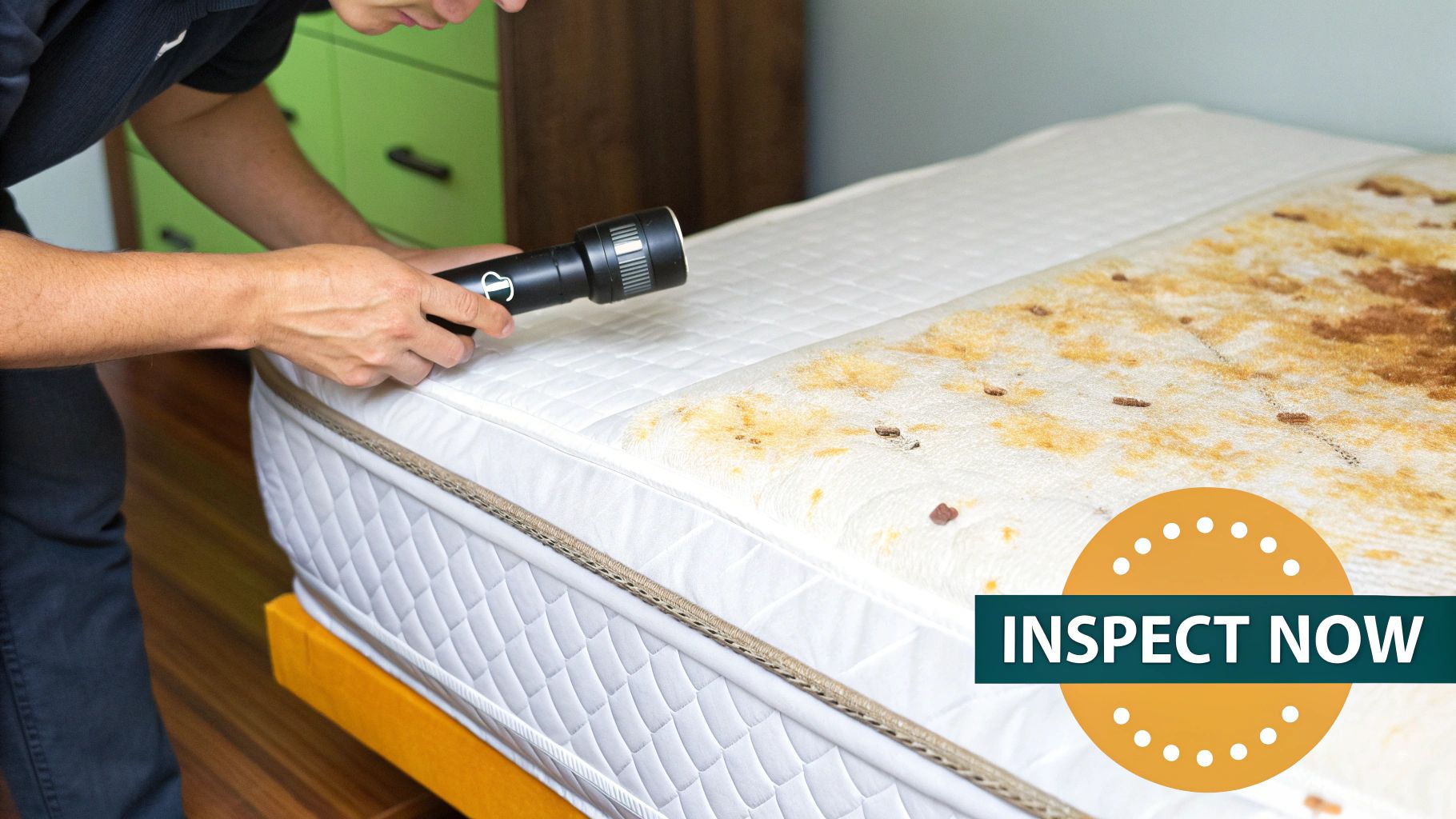
The second you think you have bed bugs, panic can take over. I’ve seen it a hundred times. But those first 24 hours are your chance to move from fear to a solid action plan. Before you even think about treatment, you absolutely must confirm what you’re up against. A wrong guess means wasted time, money, and a bigger problem down the road.
This first phase is all about investigation. You need to be calm and methodical, gathering evidence to understand how bad the situation really is. Tearing your room apart in a frenzy is the worst thing you can do—it just scatters the bugs and makes our job harder. Instead, grab a flashlight and get ready to play detective.
Moving Beyond the Bites
Waking up with itchy, red welts is the classic alarm bell, but bites alone aren't proof. Fleas, mosquitoes, and even allergic reactions can cause similar marks. Plus, some people don't react to bed bug bites at all, meaning an infestation can grow silently for months.
To really know what you're dealing with, you need to find hard physical evidence. These telltale signs don't lie.
The Telltale Signs of Bed Bugs
A proper inspection means looking for more than just live bugs, which are masters of hiding during the day. Get a bright flashlight and a magnifying glass if you have one, and start checking these key areas for the clues they leave behind:
- Rust-Coloured Stains: See little reddish-brown specks on your sheets or mattress? That’s often from a bug that got crushed after feeding.
- Dark Fecal Spots: Look for tiny black dots that look like someone dotted a fine-point marker on the fabric. This is digested blood, and it will bleed into the material like ink.
- Shed Skins (Exoskeletons): As young bed bugs grow, they shed their skin. These casings are translucent, empty shells that look just like a bed bug and are often found in their hiding spots.
- Tiny White Eggs: Bed bug eggs are about the size of a pinhead, pearly white, and usually found in tiny clusters tucked into dark cracks and crevices.
Finding even one of these signs moves your problem from a suspicion to a confirmed infestation. Don't wait for it to get worse. This is your cue to take immediate action.
Your Inspection Checklist for Hotspots
Bed bugs are lazy; they like to stay close to their food source—you. Most of the time, they hide within a few feet of where you sleep. Focus your search on these prime locations, checking every single seam and crack. For a deeper dive, you can learn more about how to check for bed bugs in our dedicated guide.
- The Mattress and Box Spring: Strip all the bedding and carefully go over every seam, tuft, and tag on the mattress. Flip it over and repeat. Pay special attention to the box spring—you'll often need to remove the fabric dust cover on the bottom, as that's a five-star hideout for them.
- The Bed Frame and Headboard: These spots offer countless hiding places. Check every joint, screw hole, and crack in your bed frame. If the headboard is mounted to the wall, take it off and inspect the space behind it.
- Nearby Furniture: Don’t just stop at the bed. Pull out the drawers in your nightstands and dressers, examining them inside and out. Check any upholstered chairs or couches in the room.
- Room Perimeters: Get down on your hands and knees. Check along the baseboards, behind any peeling wallpaper, under the edges of the carpet, and even inside electrical outlet covers.
This initial diagnosis is the most important part of the whole process. It tells you exactly what you're facing and sets the stage for every step you'll take to get your home back.
Containing the Infestation to Stop the Spread
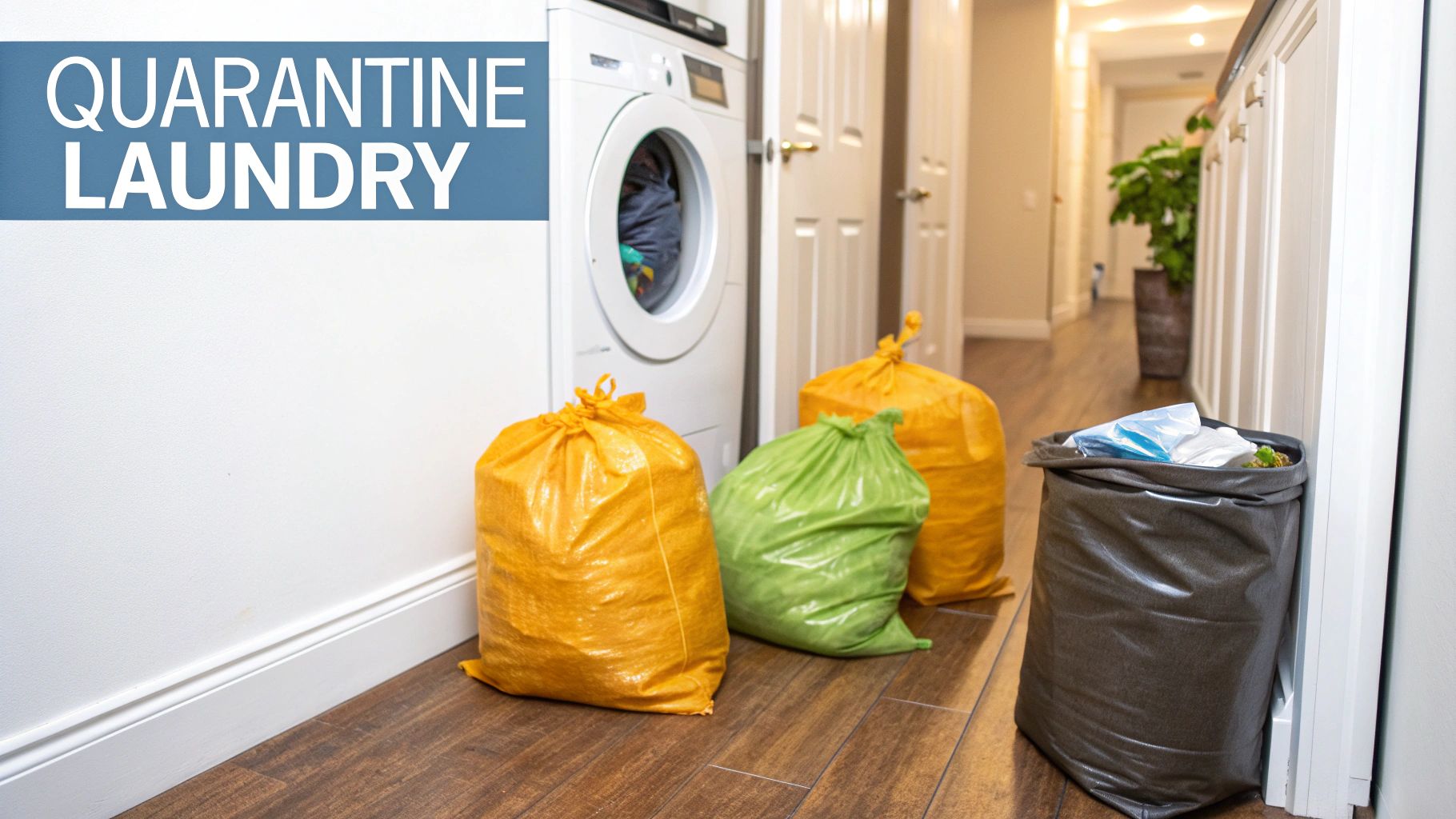
So, you’ve confirmed you have bed bugs. Your immediate mission is to stop them from claiming more territory in your home. These pests are expert hitchhikers, easily spreading from room to room on clothes, in laundry baskets, or even by crawling under a door.
Think of this as setting up a quarantine zone. The goal is to trap them in the main infested area before you begin any treatment. Skipping this critical step is like trying to put out a fire while embers are still being tossed around your house. It's a non-negotiable first step.
Isolate and Launder with Extreme Heat
Heat is a bed bug’s number one enemy. It kills them at every stage of life, from nearly invisible eggs to resilient adults. Your first move should be to systematically bag and treat every fabric item in the infested room—this includes bedding, clothing, curtains, and even stuffed animals.
To avoid cross-contamination, this process must be meticulous.
- Bag Everything Securely: Get some heavy-duty plastic bags (contractor bags work great) and seal every fabric item inside the infested room. Don't carry loose laundry through your home.
- Wash and Dry on High: Take the sealed bags directly to your laundry machine. Wash everything on the highest heat setting the fabric allows. The most crucial part is drying everything on high heat for at least 30 minutes after the items are fully dry. The dryer’s heat is what really does the job.
Once an item is clean, don't bring it back into the infested room. Store it in a fresh, sealed plastic bag somewhere you know is a "safe" zone until the entire treatment is finished.
A quick tip from our experience: bed bugs can actually survive a wash cycle. It’s the sustained high heat from the dryer that kills them and their eggs for good. This is one of your most powerful tools for killing large numbers of them at once.
Declutter to Eliminate Hiding Spots
Bed bugs love clutter. Piles of books, clothes, and boxes give them an endless supply of dark, undisturbed places to hide and lay eggs. Decluttering is essential, but you have to do it carefully to avoid accidentally moving the bugs to a new room.
Sort everything right there inside the infested area. Decide what to keep, treat, or discard on the spot.
- Items to Discard: Anything you're throwing away needs to go into a heavy-duty plastic bag. Seal it tightly and, if possible, label it "Bed Bugs" to stop anyone else from picking it up.
- Items to Keep: Non-fabric items like books or electronics need to be inspected very carefully. These can often be treated with other methods, which we’ll get into later.
By clearing out the clutter, you expose their common hiding spots like baseboards and furniture joints, making any chemical or heat treatment much more effective.
The following checklist can help you stay organized during these crucial first steps. Following it methodically will prevent the infestation from spiraling out of control.
Immediate Containment Checklist
| Action Item | Why It's Critical | Pro Tip from Dragon Pest Control |
|---|---|---|
| Isolate the Room | Stops bugs from migrating to other areas of the house. | Place a damp towel at the base of the door to block their path. |
| Bag All Fabrics | Prevents eggs and bugs from falling off and spreading during transport. | Use clear bags when possible so you can see what's inside without reopening them. |
| Wash & Dry on High Heat | Sustained high heat kills all life stages, including eggs. | The 30-minute high-heat dry cycle is the most important part of this step. |
| Thoroughly Vacuum | Physically removes live bugs and eggs from surfaces for immediate reduction. | Use a crevice tool for seams and cracks. Dispose of the vacuum bag outside immediately. |
| Encase Mattress & Box Spring | Traps existing bugs inside and prevents new ones from infesting the mattress. | Invest in high-quality bed mattress protectors that are certified bed bug-proof. Cheaper versions can tear easily. |
| Declutter the Area | Reduces hiding spots and makes treatment more effective. | For items you can't launder, seal them in a bag for several months to a year. Bed bugs can't survive that long without a meal. |
Completing this checklist gives you a solid foundation for the next stage of treatment and significantly increases your chances of successfully getting rid of them for good.
The Power of a Thorough Vacuuming
A good vacuum with a HEPA filter is one of your best friends in this fight. It physically sucks up live bugs and eggs from surfaces, giving you immediate results. Focus on the hotspots you found during your initial inspection.
Make sure you use the crevice tool to get deep into every possible hiding spot:
- Mattress and Box Spring: Go over every inch, paying close attention to seams, tufts, and folds.
- Furniture and Carpet: Vacuum all upholstered furniture, along the edges of carpeting, and all baseboards.
- Immediate Disposal: This part is critical. As soon as you’re done, the vacuum bag is filled with live pests. Remove it, seal it inside another plastic bag, and get it into an outdoor trash bin right away. For bagless vacuums, empty the canister into a sealed bag outdoors and then wash the canister thoroughly.
The Reality of DIY Bed Bug Treatments
When you spot the first sign of bed bugs, the gut reaction is to hit the store or search online for a quick-fix solution. The internet is flooded with "guaranteed" home remedies, from essential oils to foggers, all promising a cheap and easy way out. But here’s the hard truth from someone who’s seen it all: most of these at-home treatments simply don't deliver permanent results.
Bed bugs aren't like ants or spiders. They are incredibly resilient, masters of hiding, and they breed at an alarming rate. This makes them one of the toughest household pests to get rid of without professional-grade tools and deep expertise. A failed attempt doesn't just waste your time and money; it gives the infestation a golden opportunity to grow and spread.
Common DIY Methods and Their Limitations
Many popular DIY methods can certainly help knock down the number of bed bugs you see, but they almost never solve the root of the problem. Knowing their limits is the first step toward a realistic battle plan.
- Diatomaceous Earth (DE): This powder, made from fossilized organisms, kills insects by dehydrating them. It only works if a bed bug walks right through it, but DE is slow-acting and messy. For it to be effective, you need a very fine, almost invisible layer in cracks and crevices—not big piles that bugs will just avoid.
- Steam Cleaning: High-heat steam is fantastic for killing bed bugs and their eggs on contact. It’s a great tool for surfaces like mattresses, couches, and carpets. The catch? The steam has to reach a lethal temperature and it won't penetrate deep into walls or thick furniture where bugs love to hide.
- Interceptor Traps: These simple devices go under your bed legs to catch bugs trying to climb up for a meal. They are excellent for monitoring how bad the infestation is, but they're a passive tool. They trap bugs, they don't eliminate the source.
These methods can be useful parts of a larger strategy, but they are rarely a complete solution on their own. You can find more tips on combining initial steps in our guide on how to get rid of bed bugs fast.
Why Bug Bombs and Sprays Often Backfire
Over-the-counter bug bombs—also called total release foggers—and generic insecticide sprays feel like a powerful weapon, but they're notoriously ineffective for bed bugs. In fact, they usually make the situation much worse. These products spray a mist that settles on open surfaces, but it rarely gets into the deep cracks, wall voids, and hidden spots where bed bugs live.
Worse yet, the chemicals often act as a repellent. Instead of killing the bugs, it makes them flee the area and scatter into other rooms or deeper into the walls. This spreads the infestation, making it far more difficult and costly to treat down the road.
A scattered infestation is an exterminator's nightmare. What was once a contained problem in one bedroom can quickly become a multi-room crisis, all because of a single, misused bug bomb.
On top of that, many bed bug populations have built up a resistance to the common pyrethroid insecticides found in store-bought sprays. For any stubborn pest problem, it's worth understanding why DIY cleaning fails and professional care succeeds in getting the job done right.
The Challenge of Complete Eradication
At the end of the day, DIY treatments usually fail because they can't achieve the total wipeout needed for permanent removal. Bed bugs are just too tough. A single female can lay up to 500 eggs in her lifetime, so if you miss even a few, the infestation will roar back to life.
In CA, professionals use advanced heat treatment technology, raising room temperatures to 120°F+ to kill all life stages—from eggs to adults. This is often combined with targeted chemical applications and follow-up visits, a strategy that can reduce the chances of recurrence by 80-90%.
Unless every single bug and egg is destroyed, the cycle starts all over again in just a few weeks. That’s the difference professional equipment and experience make: it’s about moving from temporary relief to a truly bug-free home.
Choosing a Professional Path to a Bug-Free Home
When your DIY efforts aren't cutting it and the stress of a relentless infestation is mounting, it’s time to call in the pros. Professional pest control is about more than just stronger chemicals; it's about deploying strategic, science-backed methods designed for one thing: total eradication.
For anyone serious about getting rid of bed bugs for good, this is the most reliable path. Choosing a professional is an investment in a guaranteed solution. Licensed technicians have access to treatments and equipment the public can't get, letting them hit an infestation from every angle to ensure no bug—or egg—is left behind.
The Power of Professional-Grade Heat Treatments
One of the most effective tools in a professional's arsenal is thermal remediation, better known as heat treatment. The idea is simple but devastatingly effective. Technicians use specialized industrial heaters to slowly raise the temperature in infested rooms to between 49°C and 60°C (120°F and 140°F).
This level of heat is lethal to every stage of a bed bug's life, from nearly invisible eggs to the toughest adults. The heat gets everywhere—deep inside mattresses, behind baseboards, within wall voids, and inside furniture. These are all places sprays and powders could never hope to reach. Best of all, a typical heat treatment can solve a major bed bug problem in a single day, usually within six to eight hours. You can get a full breakdown of heat treatment for bed bugs in Toronto to see exactly how the process works.
This flowchart helps visualize the key decision points when weighing DIY efforts against professional intervention.
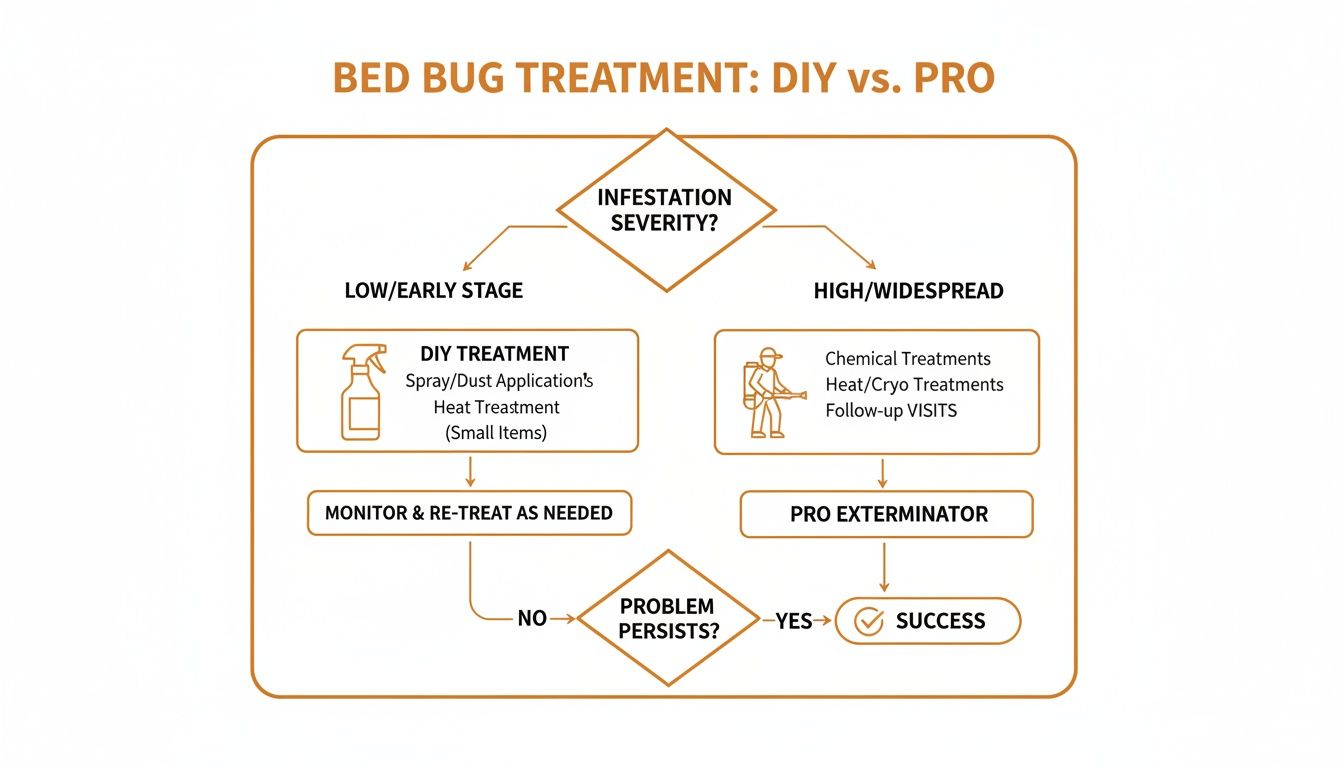
As you can see, while DIY methods might handle a tiny, localized issue, a professional approach is non-negotiable for any widespread or stubborn infestation.
Conventional Chemical Treatments Explained
Alongside heat, targeted chemical treatments are still a cornerstone of professional bed bug control. Forget the generic bug bombs from the hardware store. Professionals use a precise combination of commercial-grade liquid insecticides, dusts, and aerosols applied exactly where bed bugs hide.
These products are chosen for their proven effectiveness against pesticide-resistant strains and their low toxicity to people and pets when applied by a licensed technician. They'll strategically treat cracks, crevices, furniture joints, and other hiding spots, creating a residual barrier that keeps killing bugs long after they've left. This method often requires follow-up visits to catch any newly hatched nymphs.
Embracing Integrated Pest Management (IPM)
The most successful professional strategies don't just rely on one trick. Instead, they follow a philosophy called Integrated Pest Management (IPM). It's a smarter, more holistic approach that combines multiple tactics for maximum impact and long-term prevention.
An IPM plan for bed bugs is a complete battle strategy. It involves a thorough inspection, educating the client on how to prep, using non-chemical methods like steaming and vacuuming, applying targeted chemicals, and following up to monitor. It’s about solving the problem from every angle, not just spraying and hoping for the best.
With an IPM approach, the technician becomes your partner in the fight. They guide you through the entire process, making sure every step works toward a successful, bug-free outcome.
To help you understand the options, here's a quick look at the most common professional methods.
Professional Bed Bug Treatment Comparison
| Treatment Method | How It Works | Best For | Key Advantage |
|---|---|---|---|
| Heat Treatment | Raises room temperature to 49°C-60°C, killing all life stages in a single session. | Widespread infestations, sensitive environments (e.g., hospitals), and quick results. | Eradicates all life stages, including eggs, in one go without residual chemicals. |
| Chemical Treatment | Application of professional-grade insecticides to cracks, crevices, and hiding spots. | Targeted infestations, budget-conscious situations, and as a follow-up to heat. | Creates a long-lasting residual barrier to kill bugs that emerge later. |
| IPM Approach | A combined strategy using inspection, heat, steaming, vacuuming, and targeted chemicals. | Complex or persistent infestations that require a multi-faceted attack plan. | The most comprehensive and sustainable solution for long-term eradication. |
Each method has its place, but an Integrated Pest Management (IPM) approach that combines multiple tactics is almost always the most effective path to permanent relief.
How to Prevent Bed Bugs from Coming Back
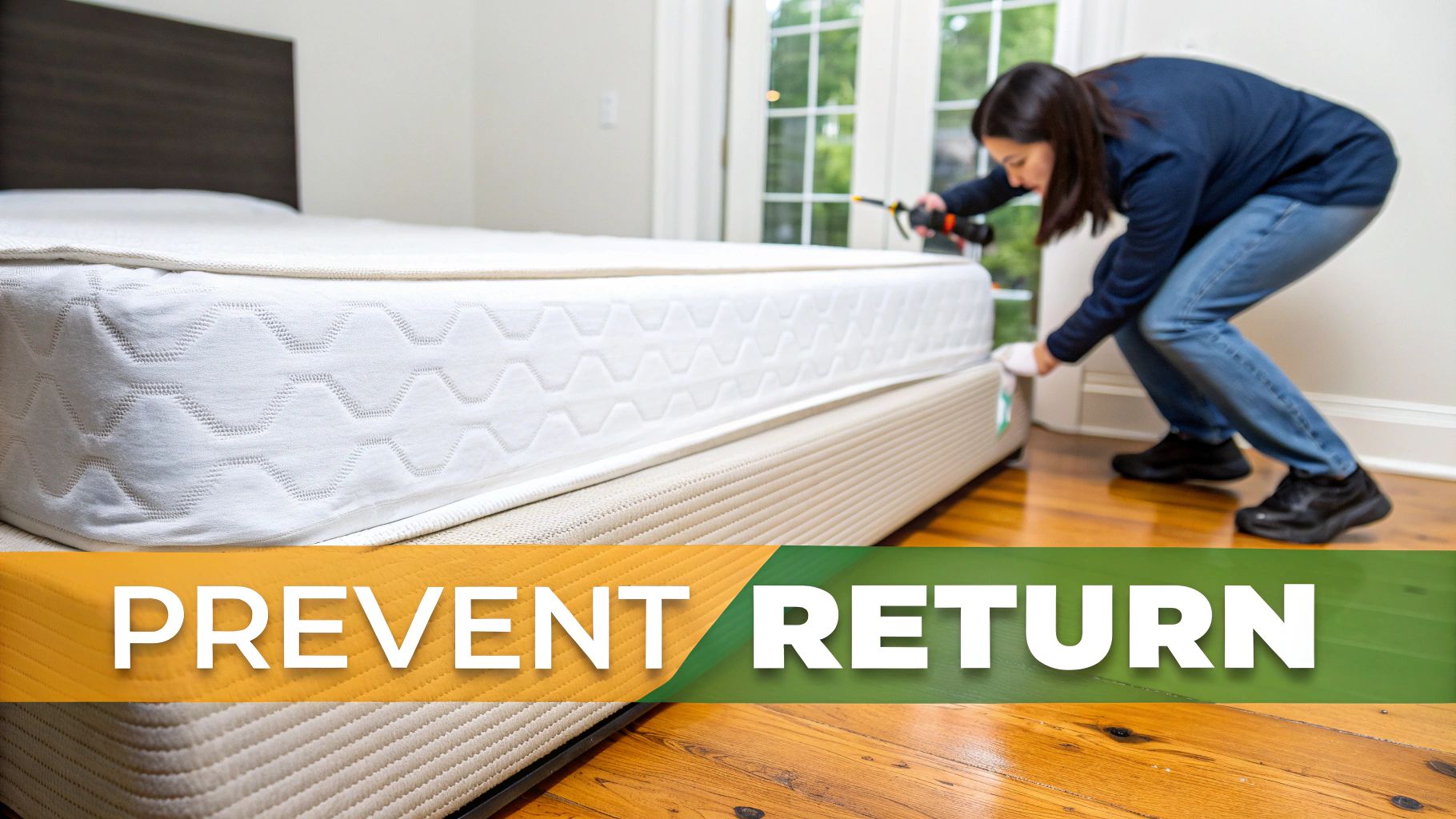
Finally getting rid of a bed bug infestation is a huge relief, but the battle isn't quite over. The real secret to keeping them gone for good is switching from an extermination mindset to a prevention mindset. Without a solid long-term strategy, you’re just leaving the door open for these stubborn pests to hitch a ride right back into your home.
This final phase is all about building a fortress around your home and tweaking a few habits. It takes some ongoing vigilance, but a few simple, consistent actions are what will keep your home a true sanctuary, free from the stress of another invasion.
Make Your Home Inhospitable
Your best defence is making your home a terrible place for bed bugs to live. They thrive by hiding in tiny, dark cracks and crevices, so your job is to take away as many of those hiding spots as you can. It’s simple home maintenance, but it’s incredibly effective.
Grab some high-quality silicone caulk and get to work sealing any gaps you find.
- Seal the cracks along baseboards and around window mouldings.
- Fill in the gaps around electrical outlets and where utility lines come through the walls.
- Fix any peeling wallpaper—that space behind it is a five-star hotel for bed bugs.
This simple step denies them the shelter they need to breed and multiply, forcing them out into the open where they're much easier to spot and handle.
The Power of Protective Encasements
One of the single most effective tools in your prevention arsenal is a set of high-quality, certified bed bug-proof encasements for your mattress and box spring. These zippered covers do two critical jobs: they trap any stragglers that might have survived treatment inside (where they’ll eventually starve), and they block new bugs from getting into your mattress in the first place.
Don't cheap out here. A flimsy cover can tear, making it completely useless. Invest in a durable one. It completely eliminates the hundreds of potential hiding spots inside a mattress and box spring, which are always a bed bug's primary target.
Encasements are a non-negotiable part of long-term prevention. Think of them as 24/7 security guards for your bed, making it nearly impossible for a new infestation to establish itself where it matters most.
Be Smart When Travelling
Hotels and motels are notorious hotspots for picking up bed bugs. A quick, five-minute inspection when you arrive can save you from a months-long nightmare later. Before you even unpack, leave your luggage on the tile floor of the bathroom and do a quick check of the room.
Pull back the sheets and look closely at the mattress seams, especially near the headboard. You’re looking for telltale rust-coloured stains or tiny black dots. If you spot anything suspicious, don't hesitate—ask for a different room on a completely different floor.
When you get home from your trip, follow this routine to make sure no unwanted hitchhikers come inside with you:
- Unpack Outside: If you can, unpack your suitcase in the garage, on the patio, or in the laundry room—not your bedroom.
- Launder Everything: Immediately wash all your clothes, even the ones you didn't wear.
- Dry on High Heat: Tumble dry everything on the highest heat setting for at least 30 minutes. It’s the intense heat that kills any bugs or eggs.
- Inspect and Store Luggage: Vacuum your suitcase thoroughly, inside and out. Then, store it away from your bedroom, ideally sealed in a large plastic bag.
Scrutinize Second-Hand Items
Bringing used furniture into your home, particularly upholstered pieces or bed frames, is a huge gamble. You must inspect second-hand items with extreme care before they cross your threshold. Use a bright flashlight to check every seam, crack, and joint for any sign of bed bugs.
If you have even the slightest doubt, walk away. It's far better to miss out on a bargain than to risk importing a full-blown infestation into your home. This simple precaution is a cornerstone of permanent bed bug prevention.
Your Questions About Permanent Bed Bug Removal
After you’ve dealt with the shock of finding bed bugs, a lot of questions start to pop up. It’s natural. Getting a handle on how these pests operate is a huge part of feeling in control again and making sure they're gone for good.
Here, we'll tackle the most common questions we hear from homeowners, with clear, no-nonsense answers. Remember, finding bed bugs has nothing to do with being "dirty" — they are equal-opportunity pests. Having the right info is the first step toward a permanent solution.
How Did I Get Bed Bugs in a Clean Home?
This is easily the most common question we get, and it stems from a major myth. Bed bugs couldn't care less about dirt or grime; they're drawn to warmth, the carbon dioxide you breathe out, and, above all, a blood meal. An immaculate, minimalist condo is just as appealing to them as any other home.
Their presence is about bad luck, not bad housekeeping. Bed bugs are world-class hitchhikers and can sneak into your home in countless ways:
- On luggage after a stay in an infested hotel or rental.
- Tucked away inside a piece of second-hand furniture.
- Carried in on a backpack from school or a purse from a movie theatre.
- On clothing after visiting an infested home, even if you didn't know it.
Once they’re inside, they simply find a quiet, dark spot close to their next meal—which is you.
Are Bed Bug Bites Dangerous?
The bites are incredibly upsetting, but the good news is that bed bugs aren't known to transmit any diseases to people. That’s a key difference between them and pests like mosquitoes or ticks. However, that doesn't mean they're harmless.
The real issues are the bites themselves and the mental toll they take.
The biggest threat from bed bugs often isn’t physical, but psychological. The constant stress, sleepless nights, and feeling of being invaded in your own home can seriously affect your quality of life.
The bites often cause intensely itchy, red welts. If you scratch them too much, you risk breaking the skin, which can lead to secondary infections like cellulitis or impetigo. Some people also have more severe allergic reactions, resulting in larger welts or hives.
How Long Does Professional Bed Bug Treatment Take?
The timeline really depends on the treatment method and how bad the infestation has gotten. A licensed technician first needs to do a thorough inspection to figure out the best plan and give you a precise schedule.
A heat treatment is usually the fastest way to achieve complete eradication. The entire process—heating the home to a lethal temperature, holding it there, and then cooling it down—typically takes a full day, usually between 6 to 8 hours. The best part is you can often return to a completely bug-free home that same evening.
A chemical treatment involves a quicker initial visit, but it almost always requires follow-up appointments. These are generally scheduled a few weeks apart to catch any newly hatched nymphs that might have survived the first round as eggs.
Is It Safe to Stay in My Home After Treatment?
Yes, absolutely. A professional pest control company’s number one priority is the safety of you, your family, and your pets. Every procedure follows strict safety regulations.
For a heat treatment, you'll need to leave the house while the service is happening because the high temperatures are unsafe for people and pets. But as soon as the home has cooled back down to normal, you can return—usually later that same day.
With chemical treatments, the technician will give you a specific time when it's safe to re-enter. This is typically a few hours after they finish, which allows the products to dry and settle. Professionals use targeted applications in cracks and crevices, which minimizes your exposure to treated surfaces. They'll always provide clear, easy instructions to ensure everything is both safe and effective.
Going through a bed bug infestation is stressful, but you don't have to face it alone. If you're ready for a guaranteed, permanent solution, the licensed technicians at Dragon Pest Control are here to help. We use proven, professional methods to protect your home and give you back your peace of mind. Request your free quote today and take the first step toward a bug-free life.