To truly get rid of flies, you have to break their lifecycle. This isn't just about swatting the ones you see; it's a three-pronged attack: identify the specific type of fly buzzing around, eliminate their food and breeding grounds, and then seal up every possible entry point into your home. This is the fastest way I've seen to stop an infestation cold and make sure they don't come back.
Your First Steps to a Fly-Free Home
When you realize you've got a fly problem, the gut reaction is to just get them gone—fast. But that buzzing fly is more than just an annoyance; it's a symptom of a deeper issue that needs to be tackled at the source. For homeowners here in Alberta, the first few moves you make are the most critical for getting a lasting solution.
Identify Your Unwanted Guests
Before you can fight back effectively, you need to know exactly what you're up against. Different flies are drawn to different things, so a one-size-fits-all approach just doesn't work. The strategy for fruit flies is completely different from how you'd handle house flies.
Here's a quick rundown to help you figure out which common pest has moved in. This table breaks down the usual suspects we see in Alberta homes.
Quick Guide to Common Flies in Alberta
| Fly Type | Appearance | Where to Find Them | Primary Attractant |
|---|---|---|---|
| House Fly | Grey body, 4 dark stripes on the back, 6-7 mm long. | Kitchens, garbage bins, compost piles. | Decaying organic matter, food waste, feces. |
| Fruit Fly | Tiny (3-4 mm), tan body, often with red eyes. | Around ripe or fermenting fruit, drains, garbage disposals. | Sugary substances, overripe produce, alcohol. |
| Drain Fly | Small, moth-like, fuzzy appearance, weak fliers. | Bathrooms, kitchens, basements—near drains. | Organic sludge and buildup inside pipes. |
| Cluster Fly | Larger than a house fly, dark grey with golden hairs, sluggish. | Attics, wall voids, sunny exterior walls in fall/winter. | Earthworms (outdoors); warmth and shelter (indoors). |
Knowing the difference is half the battle. Once you've identified your pest, you can zero in on what's attracting them and where they're breeding.
Pro Tip: Don't just swat and forget. Pay close attention to where you see the flies most often. Are they hovering over the kitchen bin? Swarming the bathroom sink? Bumping into the attic window? Their location is your biggest clue to their identity and their breeding ground.
Eliminate Their Food and Water Sources
Flies are survival machines driven by two simple needs: a meal and a place to lay eggs. Your best defence is making your home as uninviting as possible by cutting off their supply chain.
And this goes way beyond just taking out the garbage on time. To really create a fly-free zone, it's crucial to follow strict food safety sanitation guidelines. This is the foundation of any solid pest control plan.
Here are the key actions to take:
- Wipe up spills, grease, and crumbs the second they happen.
- Store all your food in airtight containers. Don't forget the pet food!
- Make sure your indoor and outdoor rubbish bins have lids that seal tightly.
- Clean your drains and garbage disposal regularly to get rid of the gunk they love.
Seal Off All Entry Points
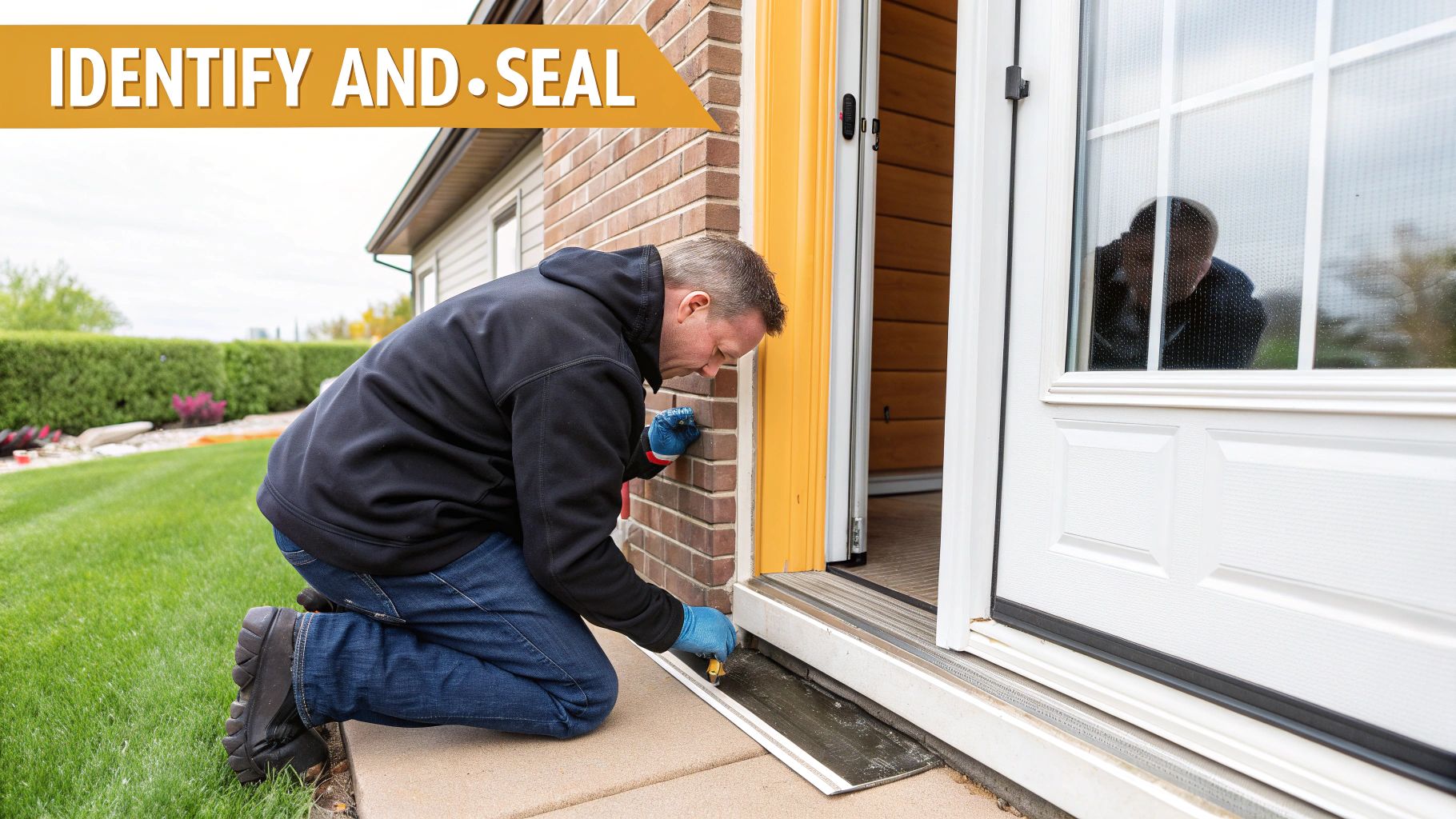
Finally, it's time to fortify your home. Flies are experts at finding tiny, overlooked ways to get inside. A small tear in a window screen or a paper-thin gap under a door is like a wide-open invitation.
Do a walk-around of your property and look for these weak spots. In Alberta homes, the most common entry points are gaps around utility pipes, worn-out weather stripping on doors and windows, and unscreened vents. Sealing these up with caulk, mesh, or new stripping isn't just a good idea—it's a non-negotiable step to prevent the next invasion.
Finding and Eliminating Hidden Fly Breeding Grounds
Swatting flies feels like a losing battle, doesn't it? To actually solve the problem, you have to think like a pest detective and figure out where they're coming from. A single female house fly can lay up to 500 eggs in her short life, so finding and destroying those breeding grounds is the only way you'll get any real relief.
An overflowing kitchen bin is an obvious magnet for flies, but the most stubborn infestations I've seen usually trace back to less obvious sources. You've got to look beyond the main garbage can and hunt for those hidden pockets of moisture and gunk that flies need to reproduce. A great first step is understanding what organic waste is and how to manage it effectively, because that's what flies are really after.
Your Indoor Inspection Checklist
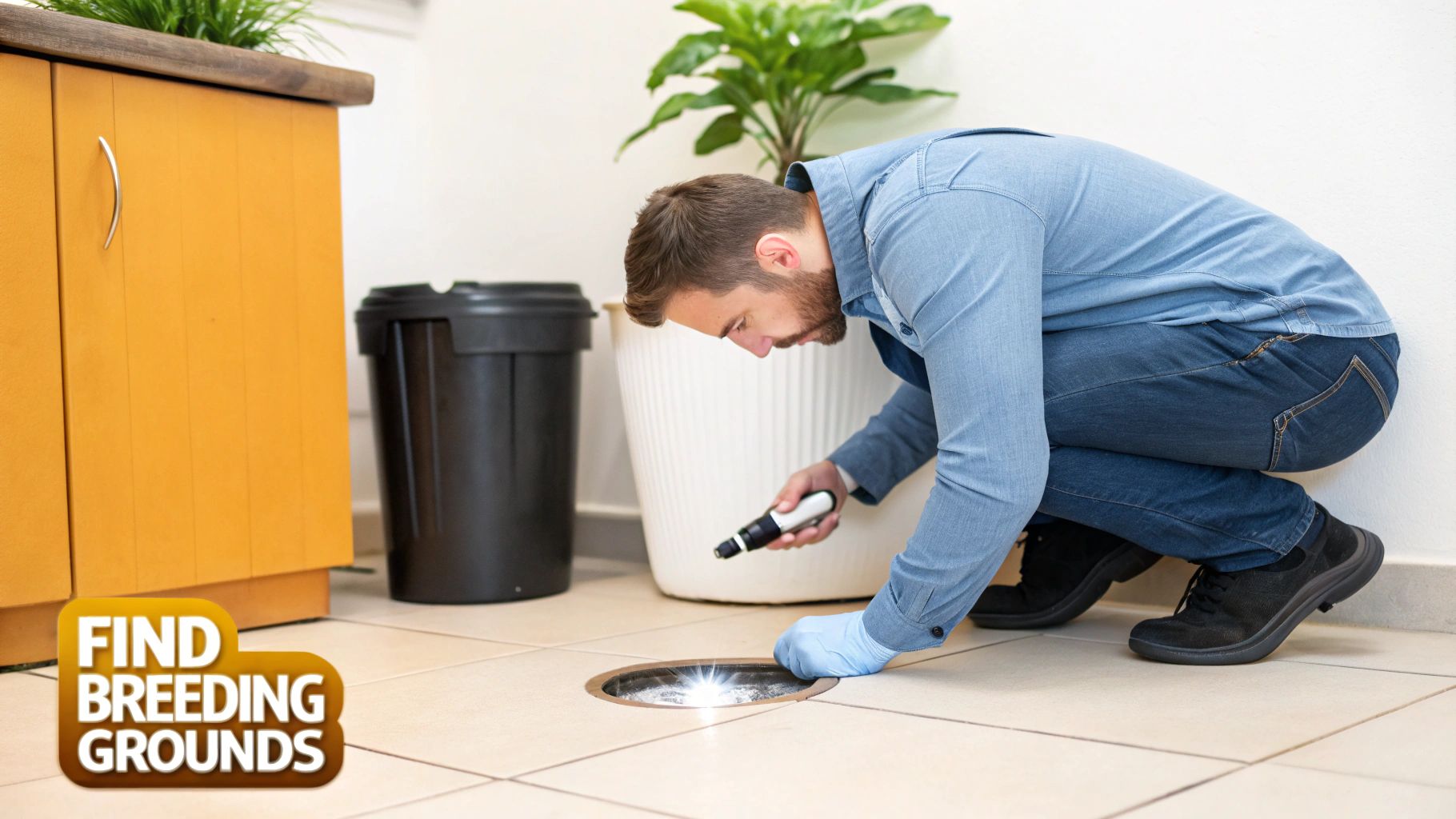
Let's start the search inside. You'll want to focus on areas where moisture and forgotten food bits can quietly accumulate. Grab a good flashlight and get ready to check some of these common, but often missed, hotspots.
- Under and Behind Appliances: Seriously, pull out your fridge, stove, and dishwasher. You'd be amazed at what forgotten spills or crumbs can be hiding back there, creating a perfect fly nursery.
- Floor Drains: Those drains in your basement or utility room? They can dry out or fill with nasty gunk, making them an ideal spot for drain flies. Pouring water down them helps, but sometimes they need a deep clean.
- Potted Plants: If your houseplants are constantly sitting in damp soil, you might be attracting fungus gnats, which many people mistake for fruit flies.
- Garbage Disposals and Sinks: The unseen sludge lining your drain pipes is a five-star restaurant for drain flies.
We had a client in Red Deer with a relentless drain fly problem. After weeks of frustration, we finally traced the source to a barely-used basement floor drain. The water trap had evaporated, allowing flies to breed in the sludge deep inside the pipe.
Taking the Hunt Outdoors
Sometimes, the source of your indoor fly problem is actually right outside your door. Flies can travel a good distance, and a breeding ground in your yard can easily lead to a full-blown invasion inside.
Expand your search to these key areas outside:
- Clogged Gutters: Gutters choked with wet, decaying leaves are a fly paradise. Keep them clean.
- Compost Bins and Wood Piles: An unmanaged compost pile can quickly become a massive fly factory. Make sure you're turning it regularly and keeping it from getting too soggy.
- Standing Water: Check for any spot where water pools—old tires, forgotten buckets, birdbaths, you name it. It's a breeding site waiting to happen.
- Pet Waste Areas: Animal feces are a primary food source and egg-laying spot for many types of flies. Cleaning up pet waste in the yard daily is non-negotiable.
By methodically checking these hidden zones, you stop just reacting to the flies you see and start proactively taking apart their entire lifecycle.
DIY and Natural Ways to Tackle a Fly Problem
Before you reach for heavy-duty chemicals, take a look in your kitchen pantry. You’d be surprised how many powerful, safe, and cheap fly control solutions are already sitting on your shelves. These methods are fantastic for getting a handle on smaller fly problems, especially if you use them consistently.
The most well-known DIY trick is the apple cider vinegar trap, and it’s famous for a reason—it’s a magnet for fruit flies. That sweet, fermented smell is just too good for them to pass up.
The Classic Apple Cider Vinegar Trap
It's simple to make. Just pour an inch or so of apple cider vinegar into a jar or a small bowl. Now for the secret weapon: add a few drops of dish soap. This is the most important part, as it breaks the vinegar's surface tension. Without it, flies can just land, take a sip, and fly away. With the soap, they sink and drown.
For a little extra trapping power, you can stretch some plastic wrap over the top and poke a few small holes in it. This makes it a one-way trip.
Set these traps up wherever you see the most fruit fly action—near the fruit bowl on the counter, by the kitchen sink, or next to the garbage bin. You’ll see it start working faster than you think.
Another old-school but effective tool is sticky fly paper. Let's be honest, it’s not the most stylish home accessory, but hanging a few of these ribbons where flies hang out (near windows and light fixtures) can trap a surprising number of house flies. It’s a simple, set-it-and-forget-it approach.
Using Scents That Flies Hate
Trapping is one thing, but you can also make your home less inviting by using scents that flies can't stand. Many essential oils contain natural compounds that act as repellents, and they make your house smell great at the same time.
- Peppermint Oil: Flies hate its strong, clean scent.
- Lavender Oil: We find it calming, but flies find it repulsive.
- Eucalyptus Oil: A powerful aroma that keeps many pests from getting comfortable.
- Lemongrass Oil: It contains citronella, a classic, well-known insect repellent.
You can mix a few drops with water and a bit of witch hazel in a spray bottle. Give it a shake and lightly mist it around your window frames, doorways, and countertops. Another easy trick is to put a few drops on cotton balls and place them in small dishes around the house. Just be mindful if you have pets, as some essential oils can be too strong for them.
For more tips on keeping pests out before they get in, check out these DIY pest prevention tips.
Here’s a key takeaway from years in the field: the right DIY method depends entirely on the type of fly you’re dealing with. An apple cider vinegar trap is useless against cluster flies, and sticky paper won’t do much for tiny drain flies flitting around your sink.
Comparing DIY Fly Control Solutions
To help you pick the best tool for the job, I've put together a quick comparison of the most popular homemade fly control methods.
| Method | Best For (Fly Type) | Effectiveness Rating | Cost & Effort |
|---|---|---|---|
| Apple Cider Vinegar Trap | Fruit Flies | High | Low Cost, Minimal Effort |
| Sticky Fly Paper/Traps | House Flies, Cluster Flies | Moderate | Low Cost, Very Low Effort |
| Essential Oil Repellents | General Deterrent | Low to Moderate | Low Cost, Minimal Effort |
| Dish Soap & Water Spray | House Flies (Direct Contact) | High (on contact) | Very Low Cost, Active Effort |
Each of these gives you a practical way to cut down the number of flies buzzing around your home. When you combine them with good cleaning habits and sealing up entry points, you create a really strong defence against these annoying pests.
A Year-Round Fly Prevention Plan for Alberta
Dealing with flies in Alberta isn’t a one-off battle; it’s a year-round campaign that requires a smart, seasonal strategy. The fly buzzing around your kitchen in July is a completely different character than the one bumping lazily against your window in October. Adapting your plan to the seasons is the secret to keeping your home fly-free.
This means you have to think ahead. Instead of just reacting when you’re already swatting at a swarm, you’re building a fortress that flies can’t get into, no matter the time of year. For example, spring is the perfect time to patch up those window screens, while late summer is your last chance to seal exterior cracks before cluster flies start looking for a warm place to spend the winter.
Aligning Your Efforts with Fly Seasons
Knowing the lifecycle of local flies gives you a massive advantage. Research from right here in southern Alberta shows that different pest flies peak at different times. Stable flies are most active from May to October, with their numbers exploding in August and September. House flies, on the other hand, tend to surge in June, July, and September.
What does that mean for you? It means you should concentrate your most intense fly control efforts from July through September, when several species are at their peak. Being strategic like this saves you a ton of time and works way better than just randomly swatting flies when you see them.
Key Takeaway: A successful fly control strategy in Alberta is proactive, not reactive. By understanding which flies are active during which season, you can target your prevention efforts for maximum impact and stop infestations before they even begin.
Your Seasonal Fly Prevention Calendar
Here’s a simple breakdown of what to do throughout the year to stay ahead of the flies. Think of it as a checklist for your property that lines up with the changing seasons and fly behaviours in our province.
- Spring (March – May): Get outside and do a thorough property inspection. Check every window and door screen for rips, replace worn weather stripping, and make sure your yard is clear of any leftover winter debris or pet waste that could become a breeding ground.
- Summer (June – August): This is prime time for flies, so you need to be relentless with sanitation. Keep your garbage bins sealed and clean, manage your compost pile properly, and dump out any standing water in your yard after those classic Alberta summer storms.
- Autumn (September – November): Now, the focus shifts to exclusion. As cluster flies start looking for shelter from the cold, seal any cracks or gaps in your home's exterior—pay close attention to eaves, siding, and where utility lines enter the house. This is your last shot at blocking overwintering pests.
- Winter (December – February): While you won't see many flies outside, indoor pests like drain flies can still cause trouble. Make a habit of cleaning your drains regularly and check for any hidden moisture problems in the basement or under sinks.
During the busy summer months, a simple DIY trap can be a great addition to your defence plan.
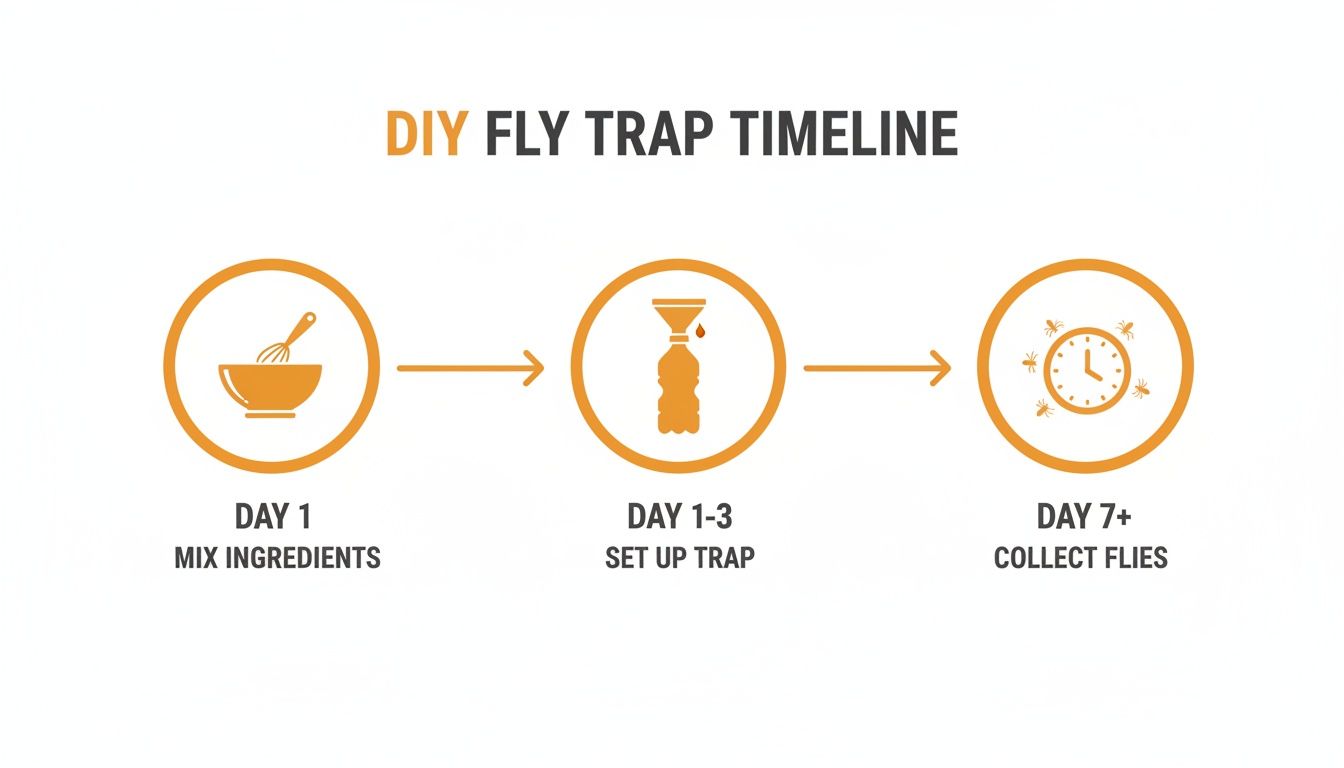
This visual guide breaks down a common DIY method into three simple actions: mixing the bait, setting up the trap, and letting it do its work. When you combine hands-on tactics like this with a broader seasonal strategy, you create a powerful defence. This is a core principle of what is Integrated Pest Management, an approach that uses multiple tactics for effective, long-term control.
When to Call in a Professional for Fly Control
DIY methods and diligent cleaning are fantastic first lines of defence against flies. But there comes a point where even the best efforts just aren't enough. It's incredibly frustrating to feel like you're doing everything right, only to see more flies buzzing around the next day.
Knowing when to switch from a DIY battle to calling in professional reinforcements is the key to actually winning the war.
A few persistent flies are one thing, but a sudden explosion in their population is a major red flag. If you go from seeing one or two to dozens of them almost overnight, that's a clear signal that a significant breeding source has established itself somewhere on your property. This isn't just a minor nuisance anymore; it's an active infestation.
Recognizing Critical Infestation Signs
Finding maggots is another undeniable sign that the problem has escalated beyond simple control measures. Maggots are fly larvae, and their presence means flies aren't just visiting your home for food—they're successfully reproducing inside it. This points to a hidden source of decaying organic matter that has to be found and professionally eliminated.
Another critical indicator is sheer persistence. Have you thoroughly cleaned, sealed every possible entry point, and set out traps, yet the flies still keep coming back? It's time for a professional assessment. This usually means the breeding ground is in a hard-to-reach or unexpected place, like inside a wall void, beneath a foundation slab, or deep within a plumbing system.
Waiting too long can turn a manageable issue into an overwhelming one. The reproductive capacity of flies is staggering; a single pair can produce over 1 million offspring in just six to eight weeks. When you understand how quickly their populations can explode, you see why prompt, professional action is so vital.
The Dragon Pest Control Advantage
This is where a professional service makes all the difference. At Dragon Pest Control, our licensed technicians don't just treat the flies you see; we act as pest detectives. We’re trained to identify the specific species plaguing your home, which tells us exactly what to look for and where.
Our team uses specialized tools and a deep well of experience to locate those hidden breeding sources you might have missed.
From there, we implement a targeted treatment plan that is both effective and safe for your family and pets. Instead of just spraying broadly and hoping for the best, we focus on eliminating the infestation at its source. This breaks the lifecycle and prevents future generations from ever emerging.
For homeowners in Red Deer struggling with a stubborn fly problem, our expert pest control services in Red Deer, Alberta, provide a definitive and lasting solution.
Your Alberta Fly Control Questions, Answered
Even with the best game plan, some fly problems just leave you scratching your head. Here in Alberta, our unique climate and local fly behaviours can lead to some pretty specific questions. We get these all the time, so we’ve gathered the most common ones to give you some quick, practical answers.
Think of this as your go-to guide for those weird fly situations that don’t seem to follow the usual rules.
Why Do I Suddenly Have So Many Flies in My House in the Autumn?
If you're seeing a sudden swarm of flies when the leaves start to turn, you're almost certainly dealing with cluster flies. This is a super common headache for Alberta homeowners. Unlike house flies that are after your garbage, cluster flies are just looking for a warm place to ride out the winter.
They love to gather in huge numbers on sun-baked walls and then wiggle their way inside through tiny cracks around windows, eaves, and vents. Once they're in, they usually go dormant in your attic or wall voids. But then, a warm chinook day in January can trick them into thinking it’s spring, and suddenly they emerge inside your house—often sluggish and buzzing around your lights.
Sealing up all those little exterior cracks in late summer is your best bet for prevention.
For an existing cluster fly problem, professional treatment is almost always the way to go. A technician can get into the hidden voids where these pests are overwintering, something that's nearly impossible to do with DIY methods.
Are Bug Zappers a Good Way to Get Rid of Flies?
Honestly, no. While a bug zapper will definitely kill some flies, it's not a great method for sanitary or effective control, especially indoors or on your patio. The big problem is they are indiscriminate, killing more harmless or beneficial insects than the pests you're actually after.
Even worse, the "zapping" action creates a fine mist of vaporized insect parts. This aerosol can float through the air and settle on nearby surfaces. That's a huge health concern if you're using one in your kitchen or near the barbecue. For targeted fly control, you're much better off with sticky traps, bait stations, or professionally applied treatments that focus only on the nuisance flies.
Can I Use Commercial Fly Spray Safely Around My Pets and Children?
You need to be extremely careful with any over-the-counter insecticide spray. The first and most important rule is to always read and follow the label directions precisely. Most of these aerosol products require you to clear people and pets out of the area during application and to air it out thoroughly before anyone comes back in.
Never spray these products directly onto food prep surfaces, kids' toys, or pet beds. We always recommend trying natural repellents or physical traps first.
If you feel a chemical treatment is unavoidable, calling a professional is your safest bet. We use professional-grade products that are applied strategically and safely by licensed technicians. This minimizes any risk to your family while making sure the treatment is actually effective against the infestation.
Still fighting a losing battle with a stubborn fly problem? The expert technicians at Dragon Pest Control have the tools and experience to wipe out infestations at the source, safely and effectively. Book your service today and reclaim your home.