

Getting rid of larder beetles is a four-part attack: a thorough inspection, a deep clean, sealing up any way they can get in, and using treatments where they count. The first mission is to correctly identify what you're up against—from the 7-9 mm dark adult beetle with its infamous yellow band to the hairy, worm-like larvae that actually cause the most damage to your home and pantry.
Understanding Larder Beetles in Alberta Homes
Finding larder beetles can be a bit of a shock, but knowing your enemy is the first real step toward getting them out for good. These pests aren't just a nuisance; they're usually a sign of a hidden food source somewhere in your home. Getting a handle on their lifecycle and habits is the only way to break the cycle permanently.
In central Alberta, including right here in Red Deer, we've seen larder beetle infestations spike by 35% in homes during the harsh winters of 2023-2024. These beetles, Dermestes lardarius, are smart—they spend the winter as adults tucked away in protected spots like wall voids and attics. When spring hits, they emerge ready to lay over 135 eggs near high-protein food sources. Think cured meats, pet food, or even dead rodents and insects trapped inside walls—a surprisingly common issue in Alberta where our homes are sealed up tight against -30°C temperatures. You can learn more about larder beetle behaviour and biology from pest management experts.
Identifying the Invaders
You need to be sure you're dealing with larder beetles, because the treatment for other pantry pests can be quite different. The adult is a small, dark, oval-shaped insect, usually about 7 to 9 mm long. Its most obvious feature is a pale yellow or tan-coloured band across the top half of its wing covers, which is dotted with six black spots.
But honestly, the real troublemakers are the larvae. They look like tiny, bristly worms and are reddish-brown to black. These guys are eating machines and will chew through a huge range of organic stuff. As they grow, they shed their skins, and finding these empty casings is often the first clue you have an infestation brewing.
To help you quickly tell them apart, here's a simple guide.
Larder Beetle Identification At a Glance
| Life Stage | Appearance | Size | Common Hiding Spots |
|---|---|---|---|
| Adult | Oval, dark brown/black with a distinct yellowish band featuring 6-8 black spots. | 7-9 mm | Near windows, light fixtures, pantries, and food storage areas. |
| Larva | Hairy, reddish-brown to black, worm-like with two small spines at the tail end. | Up to 12 mm | Inside food packages, pet food bags, under carpets, and in wall voids. |
| Pupa | Creamy-white, inactive stage, often hidden inside burrowed tunnels. | 6-8 mm | Tunnels burrowed into wood, insulation, drywall, or even books. |
| Eggs | Tiny, white, and laid in clusters directly on or near a food source. | ~1 mm | In cracks and crevices of food storage areas or on items like cured meats. |
Remember, spotting any of these, especially the larvae, means it's time to take action.
Key Takeaway: The presence of hairy, worm-like larvae is a definitive sign of an active larder beetle infestation. The adults lay the eggs, but it's the larvae that cause contamination and damage by feeding relentlessly.
Why Alberta Homes Are a Perfect Target
Alberta’s climate and the way our homes are built create a unique environment that larder beetles have learned to exploit. Our homes are sealed up tight to keep the cold out, but that also traps pests inside.
- Overwintering Sites: Attics, wall voids, and crawl spaces offer perfect, undisturbed spots for adult beetles to wait out our harsh winters.
- Hidden Food Sources: Unfortunately, those same spaces can hide other problems. A mouse that died in a wall void or a collection of dead cluster flies in an attic becomes a five-star meal for emerging larder beetle larvae.
- Structural Damage Risk: Here's where it gets serious. Once the larvae are done eating, they need a safe place to pupate. They often burrow into soft wood, insulation, or even drywall. Over time, this burrowing can cause real structural damage, turning a simple pantry pest problem into a much bigger home repair headache.
A classic scenario we see in Red Deer homes might start with a forgotten bag of high-protein dog food in the back of a pantry. The adult beetles find it, lay their eggs, and soon hundreds of larvae are feasting. Once they mature, they start migrating, burrowing into the wooden shelving or baseboards to start their transformation into adults. This cycle can repeat itself, creating a stubborn and damaging infestation.
For a complete guide to other common household invaders, browse our comprehensive pest library to identify what might be bugging you. Understanding what you're up against is the first step toward reclaiming your home.
Your Immediate Action Plan for an Infestation
Finding larder beetles in your home is definitely unsettling, but a calm, methodical approach is your best line of defence. The key is to act quickly to contain the problem before a few beetles turn into a full-blown infestation. Your immediate goal is simple: cut off their food supply, get rid of the adults and larvae you see, and erase the pheromone trails they use to invite their friends over. This initial blitz is all about decisive cleaning and targeted removal to stop the breeding cycle dead in its tracks.
The first thing to do is a thorough inspection. You have to think like a beetle and zero in on areas with high-protein foods. Your pantry is the obvious place to start, but don't stop there. You need to systematically check every single spot where food could be stored or, more likely, forgotten.
Pinpointing the Source of the Infestation
Your hunt should begin with the most likely suspects. In my experience, a larder beetle problem often starts with a single contaminated item. That forgotten bag of fancy dog food in the back of a closet, a bit of flour spilled behind a canister, or even an old box of crackers are classic ground zeros.
Be systematic as you search:
- Pet Food Areas: Check bags of dry dog or cat food, especially if they've been open for a while. Look right inside the bag for those hairy larvae and their shed skins. Don't forget to check underneath and behind the storage containers.
- Pantries and Cupboards: This is the big one. Pull every single item off the shelves. Look for adult beetles, larvae, or the papery skins they leave behind. Pay close attention to packages of grains, cereals, cured meats, and even spices.
- Hidden Spills: Pull out your fridge and stove and look behind and underneath them. Spilled food or a bit of grease can easily become a breeding ground.
- Unusual Locations: You have to think outside the kitchen. Check attics, basements, and wall voids. A dead mouse, a squirrel that didn't make it, or even a cluster of overwintering insects can be the primary food source for a larder beetle population.
Once you find the main source, the rest of the job gets a whole lot easier. Isolating and removing the heart of the problem is the most critical first step.
The Power of Thorough Cleaning and Removal
Now that you've found the infested items, it’s time for a serious deep clean. This isn't just about tidying up; it’s about getting every last beetle, larva, and egg out of there. Your best friend in this fight is your vacuum cleaner.
A vacuum with a HEPA filter is your best bet, as it traps tiny particles and prevents allergens from the beetles’ shed skins from being blasted back into the air. Use the crevice tool to get into every corner, shelf joint, and crack. Be meticulous and vacuum shelves, baseboards, and the floor.
Expert Tip: After vacuuming, immediately take the vacuum bag out or empty the canister. Seal the contents in a plastic bag and throw it in your outdoor garbage bin right away. This prevents any survivors from crawling back out and re-infesting your home.
After you've vacuumed, it's time to scrub everything down. Use warm, soapy water to wash all shelves, walls, and floors in the infested area. This does more than just clean up food bits—it also wipes away the invisible pheromone trails that larder beetles follow to find food sources. There's no need for bleach or harsh chemicals at this stage; good old soap and water do the trick. Any food you've confirmed is infested needs to be sealed in a bag and taken outside to the trash immediately.
This infographic breaks down the larder beetle's development, highlighting why catching them early is so important.
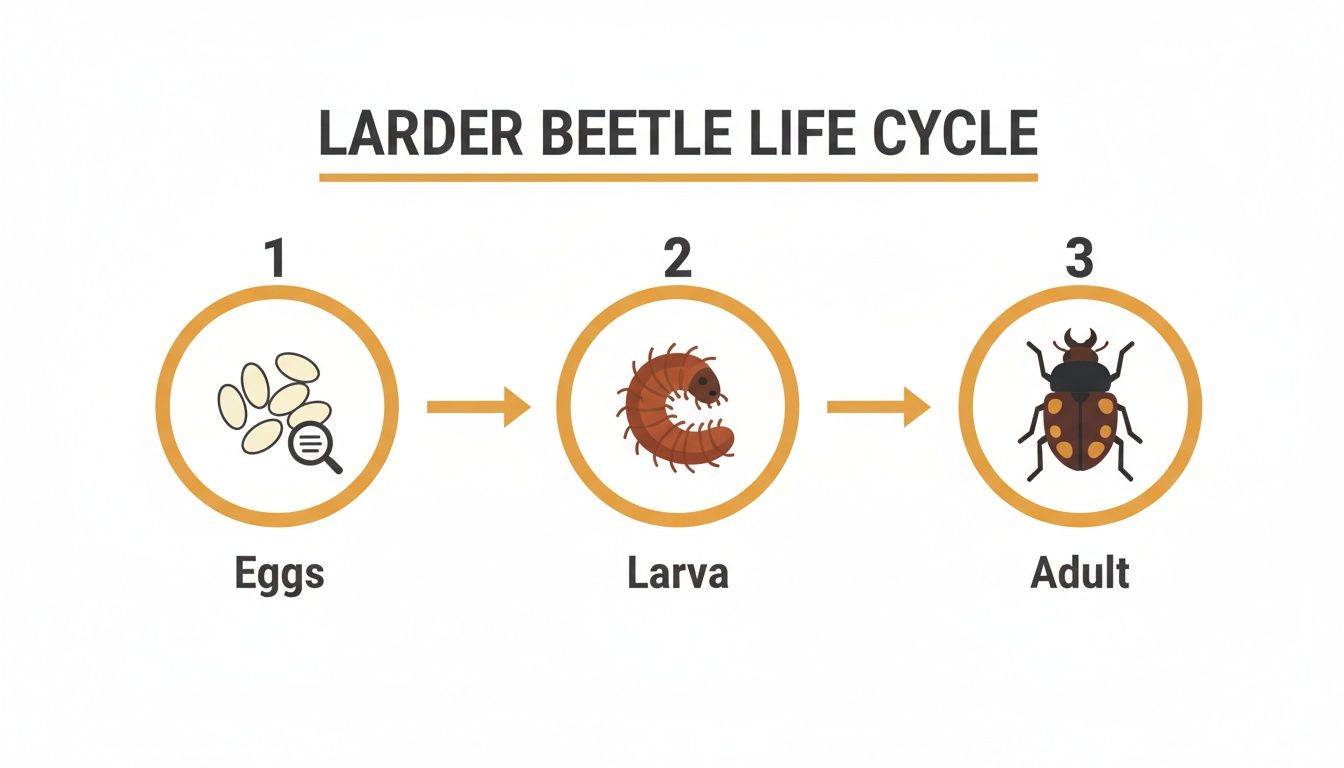
Understanding this cycle shows that removing just the adults isn't enough; you must also target the destructive larval stage to truly get rid of larder beetles.
To really get rid of them, you need to combine this deep clean with some proactive steps. Studies show that simply removing infested items and vacuuming crevices daily can capture as much as 90% of hidden eggs and larvae. Going a step further, sealing cracks with caulk is a proven strategy, with some Alberta homes seeing 40% fewer re-infestations. A simple change like storing dry goods in airtight glass jars can reduce attractants by an impressive 75%. You can explore more data on effective pest control strategies for a deeper understanding.
Safe and Effective DIY Treatment Methods
So, you’ve done the deep clean and tossed out the obvious sources of the infestation. Now it’s time to deal with the larder beetles that might still be hiding out of sight.
This next phase of your DIY plan bridges the gap between basic cleaning and calling in the pros. We're going to use treatments that go beyond the surface, targeting the pests you can’t see without reaching for harsh chemicals.
These methods are incredibly effective when done right. They’re designed to break the larder beetle lifecycle at its weakest points, so you’re not just getting the adults but also the eggs and larvae that could restart the whole problem in a few weeks.
Using Temperature to Your Advantage
Larder beetles, like most insects, really can't handle extreme temperatures. You can use this weakness to treat items you think are infested but don't want to throw out, like a big bag of expensive pet food or a decorative piece made from natural materials.
Freezing is a fantastic, non-toxic approach. Just place the suspect items in a deep freezer set to -18°C for at least 72 hours. Here at Dragon Pest Control, we know this deep freeze kills 100% of the eggs and larvae, stopping their lifecycle cold.
Heat works, too. A controlled heat treatment at 50°C can be effective in about 90% of cases. You can read more about the science behind these pest control protocols on Batzner.com.
Real-World Scenario: Let's say you find larvae in a large, pricey bag of dog food. Instead of tossing it, portion the kibble into smaller, sealed freezer bags. Pop them in your chest freezer for three full days. This ensures any hidden eggs or larvae are gone for good before you move the food back into an airtight container.
Applying Low-Toxicity Desiccants
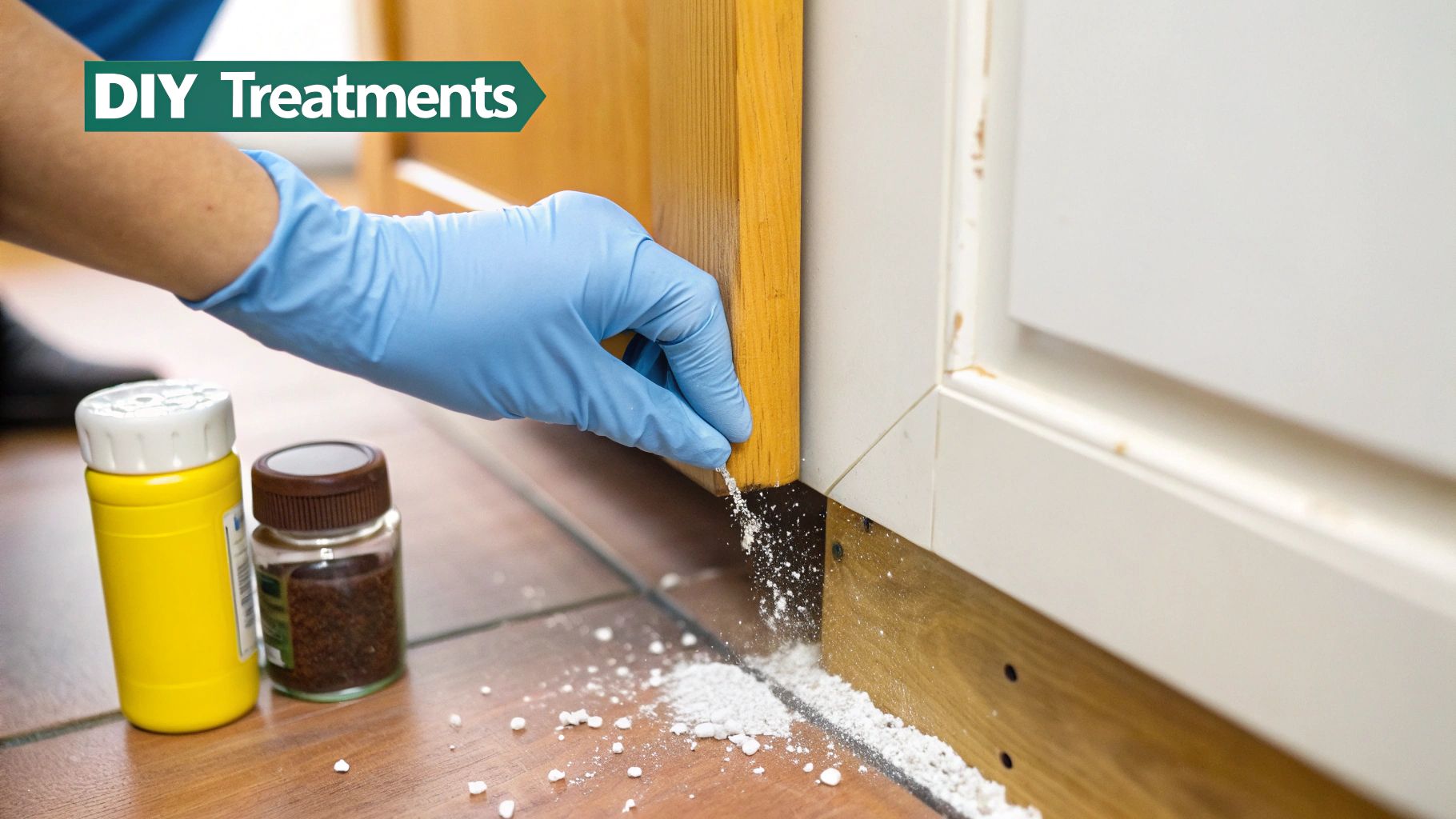
For all those cracks, crevices, and hidden spots where larder beetles love to retreat, a desiccant dust like diatomaceous earth (DE) is a game-changer. DE isn't a poison; it's made from the fossilized remains of tiny aquatic organisms. To an insect, crawling through it is like moving through microscopic shards of glass.
This fine powder works by scratching the insect's waxy outer layer and absorbing the oils and fats from its exoskeleton, which causes it to dehydrate and die. It's a mechanical killer, which means pests can't build up a resistance to it.
How to Use Diatomaceous Earth Safely:
- Target Hidden Areas: Grab a puffer or duster and apply a very light layer of food-grade DE into places where pests hide. Think behind baseboards, under appliances, inside wall voids where pipes come in, and in the dark corners of your attic.
- Safety First: Even though DE is low-toxicity, the fine dust can be an irritant if you breathe it in. Always wear a dust mask and gloves when you're applying it.
- Keep it Dry: DE only works when it's dry. Don't apply it in damp spots like under a sink unless you've already fixed any leaks.
The goal isn't to create big piles of powder, but a fine, almost invisible coating. As beetles and larvae crawl through these zones, they’ll pick up the dust and eventually perish, creating a long-lasting barrier that works 24/7.
For more proactive strategies, our guide on DIY pest prevention tips for effective pest control in Red Deer has plenty of other tips for protecting your home. These careful, targeted treatments give you the power to handle a larder beetle problem thoroughly.
Building a Beetle-Proof Home for the Long Term

Once you’ve dealt with an active infestation, your job isn't quite done. The real goal is to make sure they never come back. Winning the immediate battle is one thing, but winning the war means turning your home into a place where larder beetles simply can’t thrive.
This long-term strategy comes down to two simple ideas: cutting off their food supply and blocking every possible way they can get inside. It's less about endless cleaning and more about setting up a permanent, beetle-proof defence.
Seal Every Crack and Crevice
Larder beetles are masters of finding their way inside. An adult beetle needs only the tiniest gap to sneak in, a common problem during Alberta's colder months when pests are desperate for shelter. Your first line of defence is a thorough walk-around of your home's exterior to seal up these invitations.
Start at the foundation and work your way up. Look for small cracks in the concrete or any gaps where utility lines for hydro, gas, or plumbing enter the building. A simple tube of high-quality exterior caulk is your best friend here. It’s a small job that pays off big time in pest prevention.
Next, focus on your windows and doors.
- Repair Window Screens: A tiny tear is a wide-open door for pests. Patch or replace any damaged screens, especially on windows near your kitchen.
- Install Door Sweeps: The gap under your exterior doors is practically a welcome mat. Installing tight-fitting door sweeps creates a solid physical barrier.
- Check Vents: Make sure all vents leading outside, like the ones for your dryer or bathroom fan, are covered with a fine mesh screen.
This systematic sealing is a key part of what we in the industry call exclusion. It's a cornerstone of any effective Integrated Pest Management (IPM) strategy, which prioritizes long-term prevention over relying solely on chemical treatments.
Smart Food and Waste Management
Your pantry is either a larder beetle buffet or a fortress—it all depends on how you store your food. Cardboard boxes and thin plastic bags are completely useless. Larder beetle larvae will chew right through them without a second thought.
The only real solution is to transfer all dry goods into airtight containers. This is the most critical step for long-term prevention.
- Choose the Right Containers: Go for thick glass or hard plastic containers with secure, locking lids. This goes for everything—flour, pasta, grains, cereals, and even spices.
- Don't Forget Pet Food: A big bag of kibble is often ground zero for a major infestation. Store pet food in a dedicated, sealed container, not in its original paper bag.
- Do a Seasonal Pantry Audit: At least once a season, pull everything out of your pantry. Wipe down the shelves and check expiration dates. This simple habit helps you spot potential issues before they escalate.
Proper waste management is just as important. Your indoor garbage and compost bins should have tight-fitting lids and be emptied often. The smell of decaying organic matter is a powerful magnet for all sorts of pests, larder beetles included.
Eliminating Hidden Food Sources
Sometimes, the source of a larder beetle problem isn't in the kitchen at all. These pests are protein scavengers, and they aren't picky. In many Alberta homes, a stubborn beetle problem can be traced back to a hidden food source you'd never suspect.
Common culprits include:
- Dead Insects: Cluster flies or other bugs that die in your attic or wall voids over the winter provide a perfect meal for newly hatched larder beetle larvae.
- Old Nests: A forgotten bird or rodent nest in a chimney, attic, or crawl space can sustain a beetle population for years.
- Deceased Rodents: An unfortunate reality is that a mouse that dies inside a wall becomes a breeding ground for these beetles.
If you have a recurring beetle problem but your kitchen is spotless, it's time to investigate these out-of-the-way places. Getting rid of these hidden food sources permanently removes the root cause of the infestation.
To help you stay on top of things, we've put together a simple checklist. Think of it as your roadmap to a permanently beetle-proof home.
Larder Beetle Prevention Checklist
This table breaks down the essential tasks for keeping larder beetles out for good, combining exclusion tactics with smart sanitation.
| Area of Focus | Action Item | Frequency / When to Do It |
|---|---|---|
| Home Exterior | Inspect and seal cracks in foundation and around utility lines. | Annually (Fall is ideal) |
| Windows & Doors | Repair torn screens and install tight-fitting door sweeps. | Annually (Spring) |
| Vents & Chimneys | Ensure all exterior vents are screened and chimneys are capped. | Once, then check annually. |
| Pantry & Kitchen | Transfer all dry goods to airtight glass or hard plastic containers. | Immediately |
| Pantry & Kitchen | Conduct a full pantry clean-out and inspection. | Quarterly / Seasonally |
| Pet Areas | Store all dry pet food in a dedicated, sealed container. | Immediately |
| Waste Management | Use bins with tight lids and empty them frequently. | Daily / As needed |
| Hidden Areas | Inspect attic, crawl space, and wall voids for old nests or dead insects. | Annually or if issues persist |
| Hidden Areas | Remove any discovered nests, carcasses, or insect accumulations. | Immediately upon discovery |
Following this checklist systematically will dramatically reduce the chances of larder beetles ever bothering you again. It’s about creating an environment where they simply can't find what they need to survive.
When to Call a Pest Control Professional
While you can often get a handle on a small larder beetle problem with some diligent cleaning and trapping, there are definite times when it's best to call in a professional. A stubborn, widespread, or recurring infestation usually points to a deeper issue that surface-level treatments just won't touch.
Knowing when to throw in the towel on DIY is key to protecting your home and your peace of mind. If you’ve deep-cleaned your pantry multiple times only to see those beetles show up again a few weeks later, it’s a clear sign the source is somewhere you can't see. We've seen it all—from a dead rodent in a wall void to an old bird's nest tucked away in an attic. Professionals have the tools and experience to trace these infestations back to their hidden origins.
Signs You Need an Exterminator
When your best cleaning efforts fail and the beetles keep coming back, that’s a major red flag. Another tell-tale sign is when you start seeing larder beetles in rooms far from the kitchen, like bedrooms or bathrooms. This means you're likely dealing with a large, well-established population that's spreading through your home.
Pay close attention to any signs of structural damage. If you spot small, burrowed holes in wooden shelves, baseboards, or even old books, the larvae have started to pupate inside your home's structure. This is a problem that requires immediate professional attention to stop the damage from getting worse.
The Tipping Point: An infestation that returns year after year is not a coincidence. It signals an underlying environmental factor or a hidden, permanent food source that DIY methods will never resolve. This is the point where professional intervention becomes essential.
At Dragon Pest Control, our licensed technicians use treatments that are far more potent and targeted than anything you can buy at the store. We know Alberta's specific pest pressures inside and out, and we can build a plan to eliminate the entire larder beetle lifecycle—safely and for good.
If you decide that calling in the experts is the right move, you might find it interesting to see how pest control companies connect with clients, a topic covered in guides on effective marketing for exterminators. Choosing a professional service gives you guaranteed results and, most importantly, a definitive end to your pest worries.
Your Larder Beetle Questions, Answered
Even after you've cleaned up, a few questions about these stubborn pests usually pop up. Getting to know their odd habits is the key to staying one step ahead and making sure they're gone for good. Let's tackle some of the most common things we hear from homeowners.
Are Larder Beetles Harmful to People?
The short answer is no, not directly. Adult larder beetles are a nuisance, but they do not bite or sting. The real issue comes from their larvae. Those tiny, bristly hairs on their bodies can break off and cause skin irritation or even an allergic reaction if you’re particularly sensitive.
The biggest concern, though, is food contamination. An infestation means your pantry goods are littered with shed skins, droppings, and the insects themselves. Once that happens, the food is spoiled and absolutely not safe to eat.
Why Are There Larder Beetles in My Bathroom?
Finding those hairy little larvae in a bathroom or bedroom—far from any food source—is a classic larder beetle puzzle. It's a tell-tale sign that the larvae have finished their feeding stage and are now looking for a quiet, protected spot to pupate into adults.
Bathrooms often give them exactly what they need:
- A bit of moisture: The slightly higher humidity is often just right.
- Lots of hiding spots: They love to burrow into undisturbed places, like the gap behind a baseboard or inside a wall void near plumbing pipes.
When you see larvae migrating like this, it means the infestation probably started somewhere else (like your kitchen) and has now grown. It's a strong signal that the population is spreading and it’s time to act.
Can Larder Beetles Fly?
Yes, they absolutely can. Adult larder beetles are surprisingly good fliers, which is a major reason infestations can seem to appear out of nowhere. They are also attracted to light, which explains why you might spot them buzzing around windows or light fixtures in the evening.
Because they can fly right in, sealing up your home is a critical part of prevention. Any gaps around windows, unscreened vents, or cracks in the foundation are an open invitation for an adult beetle looking for the perfect place to lay its eggs.
If a stubborn larder beetle problem has you at your wit's end, don't go it alone. Dragon Pest Control has the targeted, professional solutions to eliminate the entire infestation and give you back your peace of mind. Request your free quote today.