Seeing a trail of ants marching across your kitchen floor is a classic headache for homeowners here in Red Deer. The real secret to keeping them out for good isn't just about spraying the ones you see. That’s a temporary fix, not a solution. To truly win the war, you need a multi-layered strategy: cut off their food supply, block their secret entrances, and erase the invisible maps they use to navigate.
Your First Line of Defense Against Ants
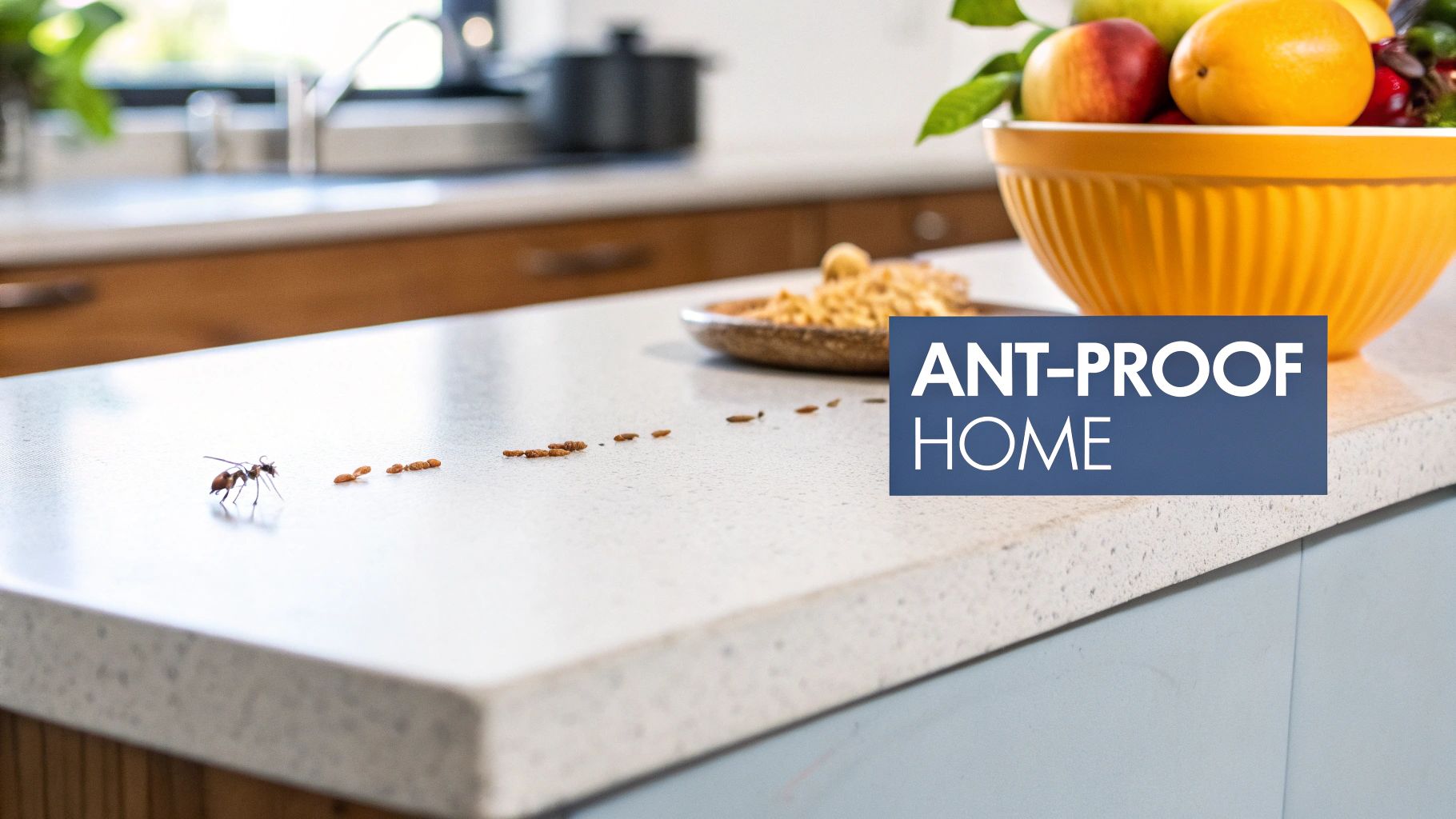
If you've spotted ants inside, it means a scout has already cased the joint, found something it likes, and has already reported back to the entire colony. Getting a handle on this behaviour is the first real step toward taking back control. Your goal needs to shift from simply reacting to an invasion to proactively making your home an unattractive target in the first place.
This proactive mindset is what separates a home that's constantly under siege from one that's pest-free. It’s less about fighting endless battles and more about building a fortress that ants just don’t bother trying to breach.
Before we get into the nitty-gritty, let's break down the core of any successful ant prevention plan. It all comes down to three key pillars.
At-a-Glance Ant Prevention Checklist
| Prevention Pillar | Key Actions | Why It Works |
|---|---|---|
| Sanitation | Secure food, clean spills, manage waste. | Removes the "why" for ants entering your home. No food, no interest. |
| Exclusion | Seal cracks, gaps, and entry points. | Physically blocks their path, making it impossible for them to get inside. |
| Disruption | Clean surfaces to remove pheromone trails. | Erases the chemical "road map" scout ants leave for the rest of the colony. |
Mastering these three areas is the foundation for keeping your home ant-free for the long haul.
The Three Pillars of Ant Prevention
Let's dig a little deeper into what each of these pillars means in practice. A truly effective approach combines sanitation, exclusion, and disruption into a single, cohesive strategy.
Eliminate Food Sources: This is more than just wiping up crumbs. We're talking about securing pet food in sealed bins, transferring pantry items like cereal and sugar into airtight containers, and deep-cleaning those forgotten spots, like underneath the toaster or behind the microwave.
Block Entry Points: Ants are masters of exploiting the tiniest vulnerabilities. Get down on their level and do a thorough inspection of your foundation, window seals, and any spots where utility lines or pipes enter your home. A little bit of caulk goes a long way in denying them access.
Disrupt Scent Trails: When a scout ant finds food, it leaves an invisible pheromone trail for its buddies to follow. You can easily erase this trail with a simple solution of vinegar and water. Wiping down the countertops and floors where you’ve seen ants effectively scrambles their GPS, confusing the colony and stopping reinforcements in their tracks.
It's no surprise that a staggering 96% of ant infestations happen in the kitchen, where a few crumbs or unrinsed recyclables can feel like an all-you-can-eat buffet. This really drives home how critical diligent sanitation is as your primary defence.
The most common mistake homeowners make is focusing only on the ants they can see. The real problem is the hidden colony, which can number in the thousands. A successful strategy has to target the entire nest, not just the few workers you catch foraging on your counter.
This integrated approach—combining rigorous cleaning with physical barriers—creates a robust defence system that works. It's the core principle behind professional pest management, which you can learn more about in our article on what is Integrated Pest Management.
Mastering Your Indoor Sanitation Strategy
Let’s be honest, the main reason ants march into your house is for the free buffet. They’re on a constant mission for food and water. So, instead of just wiping up the occasional crumb, we need to think bigger. A truly effective plan involves a room-by-room sweep to make your home totally unappealing to these foraging scouts.
Think like an ant for a second. That tiny bit of grease behind the stove? A few sugar crystals in the back of the cupboard? That’s a five-star feast for them. Our job is to close the restaurant before they even find it.
The Kitchen: Ground Zero for Ant Invasions
Your kitchen is the main battlefield. It’s warm, it’s got moisture, and it's loaded with food. A solid, disciplined routine here is your absolute best defence.
Start with the basics, of course. Wipe up every spill and crumb from countertops, tables, and floors right away. Don’t let dirty dishes linger in the sink—they’re a magnet for pests. Wash them immediately or get them into a sealed dishwasher.
But you have to go deeper than that. Ants are experts at finding the forgotten messes.
- Under the Appliances: When was the last time you looked under your toaster or microwave? Pull them out. You'll probably be shocked at the crumb graveyard hiding there.
- Grease and Grime: That sticky film on the backsplash behind your stove or on the range hood filter? It's a powerful ant attractant. A good degreasing will work wonders.
- Trash Management: Take out the garbage and compost every single day. Make sure your indoor bins have lids that seal tightly, and give them a rinse every so often to get rid of any sticky residue.
If you’re looking to pair a strong cleaning game with some non-chemical tactics, our guide on how to get rid of ants naturally has some great tips that will complement your efforts.
Beyond the Kitchen: Other Ant Hotspots
While the kitchen is the primary draw, ants will absolutely explore the rest of your home, especially if there's a water source or a stray snack waiting for them. Your sanitation plan has to cover these secondary spots, too.
Pet food is a huge one. Don't just leave the kibble bag open on the floor. Store it in an airtight plastic or metal container. You'll want to clean your pet's food and water bowls daily and wipe up any spills around them.
Bathrooms are another key area, mostly because of the moisture. A tiny, slow leak under a sink or a bathmat that never quite dries out is all the water an ant colony needs to set up shop nearby.
A huge part of keeping your house ant-free is managing moisture. Fix leaky taps and pipes as soon as you spot them, make sure your bathroom has good ventilation, and keep an eye out for any water damage. It doesn't just attract ants; it's an open invitation for all sorts of other pests.
Building Your Ant-Proofing Routine
The real secret here is consistency. A massive cleaning blitz once a month isn’t nearly as effective as a steady, daily routine. The best way to stick with it is to break it down.
- Daily Chores: Wipe down counters, sweep the kitchen floor, do the dishes, clean pet bowls, and take out the trash.
- Weekly Chores: Mop the floors, do a deeper clean under small appliances, and wipe down cabinet fronts and the backsplash.
- Monthly Chores: Clean out the pantry, pull out the big appliances (stove, fridge) to clean behind them, and check under all your sinks for any new leaks.
This kind of systematic approach turns your home from a welcoming haven into a barren wasteland for ants. It’s a significant step, especially when you consider that a staggering 80% of single-family homes deal with ant problems. By keeping your home clean and dry, you’re taking away their number one reason for coming inside in the first place.
How to Block Every Ant Entry Point
Even with a spotless kitchen, ants can still march right in if you haven't secured your home's perimeter. These pests are masters of infiltration, squeezing through the tiniest cracks and gaps you might not even notice. To truly keep them out, you have to think like an ant and turn your home into a fortress.
This isn't just a quick glance around; it's a mission. Start by walking the entire exterior of your home, paying close attention to the foundation. Look for small fissures in the concrete, gaps where siding meets the foundation, and any openings around outdoor taps or vents. Honestly, even a hairline crack is a welcome mat for an entire colony.
Your Sealing Toolkit and Where to Use It
Having the right stuff on hand makes all the difference. Not all sealants are created equal, and using the right one for the job ensures you create a durable, ant-proof barrier.
- Silicone Caulk: This is your best friend for sealing gaps around window and door frames. It’s also perfect for openings where utility lines—like pipes and wires—enter your home. It's flexible, waterproof, and stands up to our tough Alberta weather.
- Steel Wool: For larger gaps or holes, especially around pipes under your sinks, steel wool is a fantastic choice. Ants and other pests simply can't chew through it, making it a powerful physical barrier. Just pack it in tightly and seal over it with caulk for extra protection.
- Weather Stripping: Take a hard look at the seals around your doors and windows. If they're worn out or damaged, they're not just letting in drafts; they're creating a superhighway for ants. Replacing it is a simple fix that pays off big time in pest prevention.
Remember, an ant only needs a gap of less than a millimetre to get inside. A thorough sealing job is one of the most effective, proactive steps you can take to keep your house ant-free.
Common but Overlooked Entry Points
Okay, you've covered the obvious spots. Now it's time to investigate the less apparent weak points. In homes around Red Deer, we often find ants exploiting places homeowners never even thought to check.
This infographic breaks down the core steps for indoor prevention, really hammering home how sanitation and sealing work together.
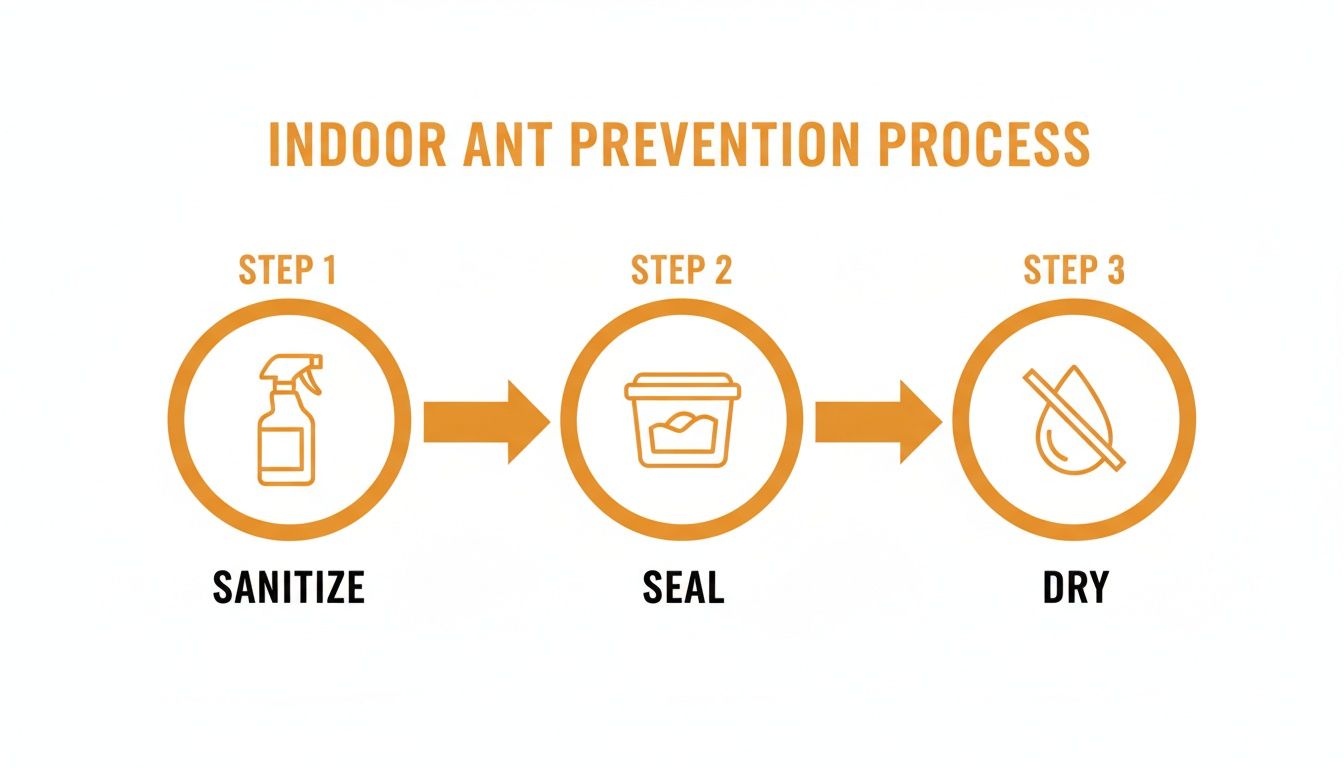
It’s a simple but powerful cycle: sanitize to remove things that attract them, seal up food containers and entry points, and keep everything dry to make your home an awful place for ants to live.
Pay close attention to ripped window screens, as they offer effortless access. Also, inspect the seal where your deck attaches to the house; this is a common area for moisture and decay, which is a magnet for carpenter ants. Beyond sealing cracks, it's also a good idea to know how to stop pests from coming up drains, as that's another hidden highway into your home.
By dedicating an afternoon to this "exclusion" work, you're physically blocking the paths ants rely on. This proactive defence, combined with a strong sanitation routine, makes your home a much tougher target. You’re not just cleaning up after them; you’re locking the doors for good.
Creating an Ant-Repellent Yard
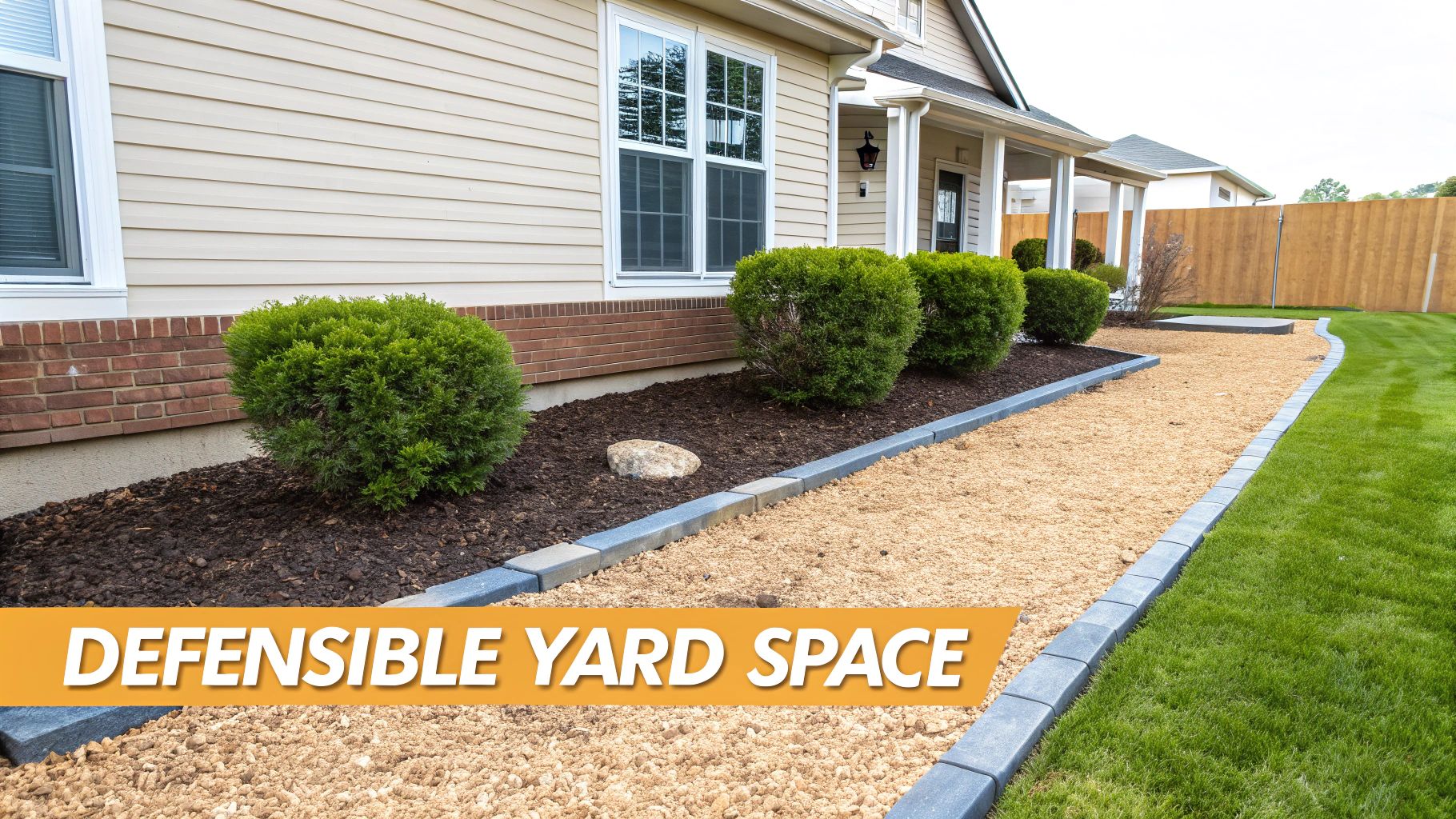
Long before you find that first ant in your kitchen, the invasion has already started right outside your door. Your yard is the staging ground where colonies build their numbers and scout for opportunities. Making this space less inviting to them is one of the most effective things you can do to keep your house ant-free.
The idea is to create a "defensible space" around your home's foundation. Think of it as a moat—not with water, but by removing all the convenient bridges and hideouts ants rely on to get inside.
Eliminate Ant Highways and Hideouts
Ants are expert climbers, and they’ll use anything touching your house as a direct route inside. That overhanging tree branch? It's an ant superhighway leading right to your roof.
Start by grabbing your trimmers and cutting back any vegetation so there’s at least a foot of clearance between plants and your house. It’s a simple fix that cuts off their easiest access. Pay special attention to bushes pressed up against window frames or tree limbs hanging over the siding.
Next, think like an ant. Where would you set up a home? Some of their favourite outdoor spots include:
- Firewood Piles: Stacking firewood right against the house is like rolling out the welcome mat for ants, especially the destructive carpenter ants. Keep your woodpile elevated on a rack and store it well away from your foundation.
- Mulch and Debris: Mulch is fantastic for garden beds, but when it’s piled thick against your foundation, it traps moisture and creates a perfect nesting site. Rake it back to create a clear, dry barrier around your home.
- Leaf Litter and Yard Waste: That pile of leaves you meant to bag up is another five-star ant hotel. Keeping your yard tidy by promptly removing grass clippings and other debris makes a huge difference.
A well-maintained yard does more than just look good—it actively disrupts the pest lifecycle. By eliminating shelter and access points, you make your property a much harder target for foraging colonies.
Manage Water and Moisture Sources
Just like us, ants need water to survive, and they're always on the lookout for it. A leaky outdoor tap, clogged gutters, or garden beds that stay soggy create the exact damp conditions they love. Make sure your downspouts are directing water far away from the foundation.
Fix any dripping hoses or spigots, and try to avoid letting water pool near the house after you water the lawn. Making the area immediately around your home dry and inhospitable is a powerful deterrent.
Thoughtful landscaping can also give you an edge. Beyond just physical barriers, you can explore a variety of pest-repelling plants that act as a natural layer of defence in your garden beds. Many of these are most effective during the warmer months when pest activity is at its peak.
Turning your yard into an ant-repellent zone is a key piece of the puzzle. For more tips tailored to our local climate, check out our guide to https://dragonpest-control.com/warm-weather-pest-control-how-to-manage-ants-box-elder-bugs-wasps-and-bees-effectively/. When you combine smart yard maintenance with indoor sanitation and sealing entry points, you create a comprehensive defence that keeps ants right where they belong—outside.
Knowing When to Call a Professional
While DIY strategies are a great first line of defence, some situations just call for professional expertise. It’s one thing to handle a few ants on the counter, but it’s another thing entirely to fight a hidden, well-established colony.
Knowing when you’re out of your depth can save you a ton of time, frustration, and even prevent serious property damage. It’s about recognizing when you’re just treating the symptoms instead of solving the root problem.
If you’ve scrubbed every surface, sealed every crack you can find, and put out bait, but the ants just keep marching back, that’s a huge red flag. A persistent, recurring issue often means you're up against a massive colony—or even multiple nests—that store-bought products simply can't touch. When a couple of weeks go by with no real improvement, it's time to call for backup.
Indicators You Need Professional Help
Some signs are more than just a red flag; they're a giant, flashing neon sign telling you to pick up the phone. If you spot any of these, it's time to get a professional assessment.
- Evidence of Carpenter Ants: Have you seen big, black ants inside your home? Found little piles of what looks like fine sawdust along baseboards, in the basement, or in your crawl space? That "sawdust" is actually frass, and it's a classic sign of carpenter ants. These pests tunnel through wood to build their nests, and they can seriously compromise your home's structural integrity over time.
- A Nest Inside Your Walls: Hearing faint rustling or scratching sounds coming from inside a wall is a deeply unsettling experience. If you see ants marching out of electrical outlets, light fixtures, or cracks in the drywall, you can be sure there's a nest tucked away inside your home's structure. Surface sprays will never reach them.
- Dealing with Difficult Species: Not all ants are created equal. Some species, like Pharaoh ants, are notoriously tricky. If you try to spray them with a typical over-the-counter repellent, they can react by "budding"—splitting their colony into multiple new ones. You just turned one problem into three or four.
Professional pest control isn't just about using stronger chemicals. It's about strategy. A licensed technician can accurately identify the ant species you're dealing with and use targeted methods that are not only more effective but also much safer for your family and pets.
What a Professional Brings to the Table
Calling in an expert from a company like Dragon Pest Control takes the guesswork out of the equation. A pro will conduct a thorough inspection to find the exact location of the nest(s), identify the specific species, and pinpoint the entry points you might have missed. This diagnostic approach ensures the treatment plan gets right to the source of the colony for complete, long-term elimination.
Research actually shows that 61% of ant infestations happen in bedrooms and living rooms—not just the kitchen. This really highlights the need for the kind of whole-home approach that professionals are equipped to provide. You can learn more about how different pests act throughout the seasons on The Bugman's blog.
When your own efforts aren't cutting it, professional intervention is the fastest and most reliable path to getting your home truly ant-free.
Your Ant Prevention Questions Answered
Even with a solid plan, specific questions always pop up when you're trying to keep ants out of your house. Every home in Alberta is different, and so is every ant problem. Let’s dig into some of the most common questions we hear from homeowners so you can get your strategy just right.
Winning the battle against ants isn't just about what you do, but understanding why you're doing it.
Are Natural or Pet-Safe Ant Repellents Effective?
This is a huge concern for anyone with kids or pets, and rightfully so. Things like vinegar, lemon juice, or peppermint oil definitely have their place, but it's critical to know what they can and can't do. These are mostly repellents and trail-disruptors, not colony killers.
They work by messing with the pheromone trails that scout ants leave for their nestmates to follow. When you wipe a counter with a vinegar solution, you're essentially scrambling the ants' GPS. But the effect is temporary. Once that scent is gone, the ants might just find another way in, and you haven't done a thing to solve the real problem: the nest.
Natural repellents are best used as a cleaning sidekick after you’ve dealt with the source of the infestation. They aren't the main solution. For a truly effective and safe approach, professionals use targeted, low-impact baits placed where pets and children can't get to them.
Why Do I See More Ants Inside When It Rains?
You're not imagining it. Extreme weather is one of the biggest triggers for ant invasions. When we get a heavy downpour, ant colonies living in the soil can get completely flooded out. This forces them to run for higher, drier ground to survive—and your warm, dry house starts looking like a five-star hotel.
The same thing happens in reverse. During a drought or a serious heatwave, their natural food and water sources outside dry up. All of a sudden, a tiny drip under your sink or a few crumbs on the kitchen floor becomes an irresistible oasis. This is why you'll often see a sudden rush of ants after a big weather shift here in Red Deer. A well-sealed home and a clean kitchen are your best lines of defence.
I Only See One or Two Ants. Should I Be Concerned?
Yes, absolutely. Seeing just one or two ants isn't a minor thing—it's a warning shot. Those are scout ants. Their entire job is to explore new territory for food and water. If they hit the jackpot in your kitchen, they head straight back to the nest, leaving that invisible chemical trail for the rest of the colony to follow.
Think of a single scout as the advance team for a full-scale invasion. The best thing you can do is kill it on sight, then immediately clean the entire area where you saw it to wipe out any trail it might have left. Your next mission is to figure out how it got in and seal that spot up. Acting fast can stop a tiny scouting mission from turning into a major headache.
What Is the Difference Between Ant Baits and Sprays?
Getting this right is crucial for actually getting rid of ants. Baits and sprays work in completely different ways, and choosing the wrong one can make your problem drag on for weeks.
Sprays: These are contact killers. They're great for zapping the few ants you see crawling on the counter. While it feels satisfying, it does absolutely nothing to the thousands of ants—and the queen—hiding back in the nest. In some cases, spraying can even fracture the colony, causing it to split into multiple new nests in a process called "budding." You just turned one problem into three.
Baits: This is the strategic, long-game solution. Baits are made of a slow-acting insecticide mixed into a food source that ants love. The worker ants find it, think it’s a meal, and haul it back to share with the entire colony, queen included. It uses the ants' own social behaviour against them to wipe out the nest from the inside.
For any persistent ant issue, baits are almost always the better choice. They attack the root of the problem, not just the symptoms you can see.
If you've tried everything and the ants keep coming back, it's time to let the experts handle it. Dragon Pest Control offers professional, safe, and effective solutions to eliminate ant colonies for good. Request your free quote today and take back your home.