

If you've started seeing more of those shield-shaped, brownish insects crawling on your walls or sunning themselves on your window sills, you're not alone. The Brown Marmorated Stink Bug (BMSB) has become a real headache for homeowners in Red Deer and across Alberta, turning what used to be a rare sighting into a full-blown seasonal invasion.
The real problem starts in the fall. As the temperature drops, your warm, sheltered home looks like the perfect five-star resort for stink bugs looking to survive the winter. They're experts at finding their way inside through the tiniest cracks and gaps, hiding out in wall voids, attics, and other quiet spaces. Then, they pop out in the spring—or even on a surprisingly warm winter day—often in startling numbers.
Why You Need a Proactive Strategy
Just dealing with the stink bugs you happen to see is a losing game. To get the upper hand, you need a plan that involves killing the ones you find and stopping the next wave from getting in. This isn't just about a smelly nuisance; this invasive species can damage local agriculture and completely overwhelm a home if left unchecked.
Key Takeaway: The stink bugs crawling on your curtains are often just the tip of the iceberg. A truly effective plan has to tackle the visible pests, the hidden ones, and most importantly, seal off their entry points for good.
Choosing the Right Method
Knowing how to get rid of stink bugs is one thing, but picking the right tool for the job is what really counts. A single bug on a lampshade calls for a different tactic than a swarm gathering on your home's siding.
Before you jump into action, think about these key factors:
- How bad is it? Are you finding one or two here and there, or is it a daily parade of dozens?
- Where are they? Are they inside your living spaces, or are they congregating on exterior walls and windows?
- What's your safety situation? Do you have pets or small children? This will influence whether you can use certain treatments.
- What time of year is it? Your focus should be on prevention in late summer and early fall, while removal is the priority once they're already inside.
A quick comparison can help you decide what to do right now.
Quick Guide to Killing Stink Bugs
| Method | Effectiveness | Best For | Safety Notes |
|---|---|---|---|
| Soapy Water Trap | High for individual or small groups | Capturing bugs indoors without odour | Non-toxic and safe around kids/pets. Dispose of the contents outside. |
| Vacuum Cleaner | High for quick removal of multiple bugs | Clearing bugs from walls, ceilings, curtains | Use a dedicated bag or canister you can empty immediately to contain the smell. |
| Diatomaceous Earth | Moderate (works slowly) | Creating a barrier at entry points (indoors) | Use food-grade DE. Avoid inhaling the dust; a mask is recommended. |
| Professional Pesticide | Very High | Large-scale infestations, exterior treatment | Applied by a licensed professional to ensure safety for your family and pets. |
No matter which method you choose, consistency is key. We'll walk through the best approaches for each scenario, helping you take back your home from these unwelcome guests.
Identifying the Brown Marmorated Stink Bug
Before you can tackle a stink bug problem, you need to be 100% sure what you’re up against. Not every shield-shaped insect crawling on your window is the invasive Brown Marmorated Stink Bug (BMSB), and knowing the difference is the first step to getting rid of them for good.
It's an easy mistake to make, but using the wrong methods for the wrong bug is just a waste of time. Luckily, the BMSB has a few dead giveaways that set it apart from native Alberta insects.
What to Look For
At a glance, you’ll notice their classic shield or kite shape. Adults are about 1.7 cm long with a mottled, marbled pattern of brown and grey—perfect camouflage for hiding on tree bark or the side of your house.
But the real proof is in the details. Zero in on these three key features to make a positive ID:
- Banded Antennae: This is your most reliable clue. A true BMSB has very distinct white bands on its otherwise dark antennae. Native stink bugs don't have this specific pattern.
- Checkered Edges: Look at the flared edges of their abdomen. You'll see an alternating pattern of dark and light markings, almost like a checkered border.
- Smooth "Shoulders": Some local bugs have spiky or jagged points just behind their head. The BMSB, however, has smooth, rounded shoulders.
Once you learn to spot those banded antennae, you’ll be able to identify them in seconds. This is critical because they are so often mistaken for other local insects. For example, a study from UC ANR found that after the BMSB arrived in Sacramento County, residents misidentified them 70% of the time.
Understanding Their Seasonal Behaviour
Ever wonder why stink bugs suddenly show up in the fall and then seem to disappear all winter? It all comes down to a survival instinct called overwintering. They spend the warmer months outside, happily feeding on plants and laying eggs.
But as the days get shorter in the autumn, a switch flips. They start looking for a safe, warm place to ride out the winter, and your house is the perfect five-star hotel. They’re drawn to the sunniest side of your home, which is why you’ll often see them clustered on south-facing walls in September and October, searching for any tiny crack or gap to squeeze through.
Once they're inside, they aren't looking to hang out in your living room. They’re heading for quiet, undisturbed spots to go dormant, such as:
- Attics and crawlspaces
- Voids inside your walls
- Behind baseboards and window casings
- Tucked away in storage boxes
They’ll hide there all winter. If you see one sluggishly crawling across the floor on a mild winter day, it’s usually just a straggler that was woken up by your furnace and is now confused, trying to get back outside.
Expert Insight: Stink bugs you find inside your home are not breeding there. They are simply using it as a shelter. The real problem is the sheer number of them that can get in, creating a huge nuisance when they all try to leave in the spring.
This overwintering cycle is the same pattern we see with other common pests in Alberta, like box elder bugs. Understanding this behaviour is key—it’s far more effective to seal up your home in late summer than it is to chase the bugs you see inside all winter. If you're interested, you can learn more from our guide on how to break the annual box elder bug invasion cycle. By knowing their habits, you can stop reacting to the problem and start proactively preventing it.
Proven DIY Methods to Kill Stink Bugs Indoors
When you spot that first stink bug crawling up your curtain, you know the invasion has officially moved indoors. At this point, you need solutions that work right away, without you having to chase bugs around the house all day. The good news is some of the best tools for the job are probably sitting in your kitchen or closet already. The key is to act fast without making the problem worse.
Here's the single most important rule when dealing with stink bugs inside: do not squish them. Crushing a stink bug releases a foul-smelling chemical that people say smells like anything from burnt rubber to cilantro. To make matters worse, that scent acts as a signal, potentially attracting even more stink bugs to that same spot. Every method we’ll go over is designed to avoid that smelly mistake.
The Vacuum Cleaner Method
One of the fastest and, let's be honest, most satisfying ways to get rid of a group of stink bugs is with your vacuum cleaner. It’s perfect for clearing them off high ceilings, curtains, or window sills without ever having to touch them.
You’ll want to do a little prep to keep the odour contained, though. If you have a bagged vacuum, just dedicate one bag to bug duty. As soon as you’ve collected the pests, take the bag out, seal it up tight in a plastic bag, and toss it in your outdoor garbage bin. For bagless models, empty the canister into an outdoor bin immediately after you're done and give it a quick rinse.
Expert Tip: To help neutralize the smell inside the vacuum, try sucking up a tablespoon of cornstarch or baking soda first. It can help absorb some of the odour the bugs release as they get tumbled around inside.
This is a surprisingly effective removal technique. In fact, professional pest management guidelines often recommend vacuuming as a top non-chemical control method. Research even confirms that vacuuming, followed by sealing the bag and freezing it for 48 hours, can kill 95-100% of the captured bugs. While freezing might be a bit much for just a few bugs, it shows how effective this approach is, which you can read more about in the detailed UC IPM guidelines.
The Soapy Water Trap: A Nighttime Solution
If you're looking for a hands-off approach that works while you sleep, the soapy water trap is a brilliant and easy solution. Stink bugs are drawn to light, and you can use that instinct against them. This method works especially well in a dark room where your trap is the only light source available.
Setting it up is simple. Fill a wide, shallow pan—a foil baking tray or a large dish works great—with a few centimetres of water. Add a good squirt of dish soap and give it a gentle stir. Next, set up a small desk lamp or nightlight so it shines directly onto the water.
The bugs will head toward the light, fall into the soapy water, and get stuck. The soap breaks the surface tension of the water, so they can't escape and drown quickly and without any smell. In the morning, you can just flush the whole mess down the toilet.
Before setting any traps, it’s a good idea to confirm what you're dealing with. This simple visual guide will help you spot the key features of the Brown Marmorated Stink Bug.
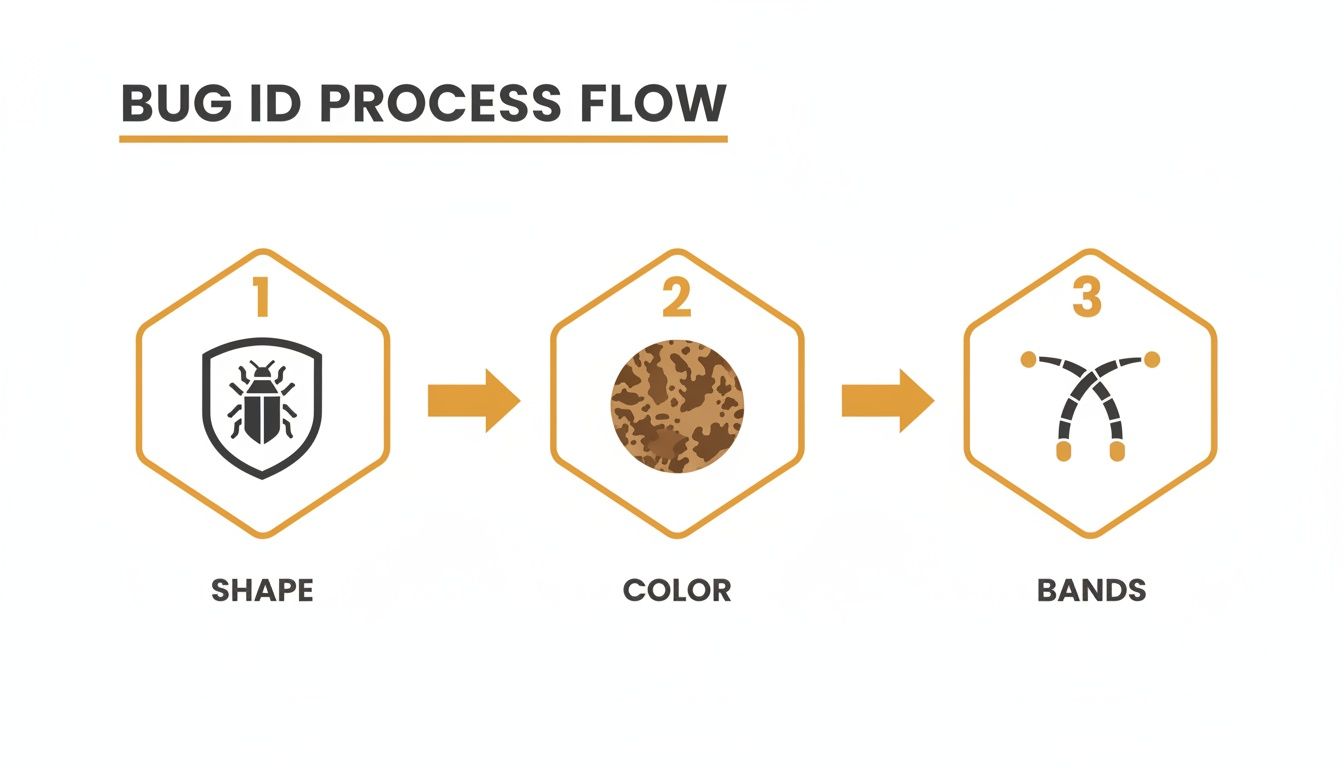
This chart highlights how the unique white bands on the antennae are the most reliable way to know for sure you have the invasive BMSB and not one of our native, harmless lookalikes.
Building Your DIY Soapy Water Stink Bug Trap
This simple trap uses items you already have to create an effective, overnight solution for stink bugs congregating in a specific room.
| Item or Ingredient | Instructions | Why It Works |
|---|---|---|
| Wide, Shallow Pan | A foil baking pan, pie plate, or large dish works perfectly. | Provides a large surface area for bugs to fall into. |
| Water | Fill the pan with 2-3 cm of water. | The medium for the trap. |
| Liquid Dish Soap | Add a generous squirt (about 1 tbsp) and stir gently. | Breaks the water's surface tension, preventing bugs from climbing out or floating. |
| Light Source | Position a desk lamp, book light, or nightlight to shine directly on the water. | Stink bugs are attracted to light, especially in a dark room. |
Set this up before you go to bed in an area where you've seen activity, turn off all other lights, and let it do the work for you. By morning, you should find any active bugs trapped in the water.
On-Contact Soapy Water Spray
For a more direct approach, a spray bottle filled with soapy water is your best friend. This is a great on-the-spot solution for bugs you see on walls, floors, or furniture. It works for the same reason the trap does but gives you immediate results.
Here’s the simple recipe:
- Grab any clean spray bottle.
- Fill it with water.
- Add about one tablespoon of liquid dish soap for every cup of water.
- Shake it gently to mix everything together.
When you spray a stink bug, the soapy water clogs its spiracles—the tiny pores it breathes through. It's a non-toxic and fast way to kill individual bugs without any harsh chemicals or lingering odours in your home. It’s a good idea to keep a bottle mixed and ready in rooms where you see the most stink bug traffic.
The Ultimate Stink Bug Prevention Strategy
If you're finding stink bugs inside, you're already playing catch-up. The absolute best way to handle an infestation is to stop it before it even starts. This means switching your focus from chasing them around the house to making your home an impenetrable fortress against these seasonal invaders. A little proactive work now is always cheaper—and a lot less frustrating—than fighting a full-blown pest problem later.
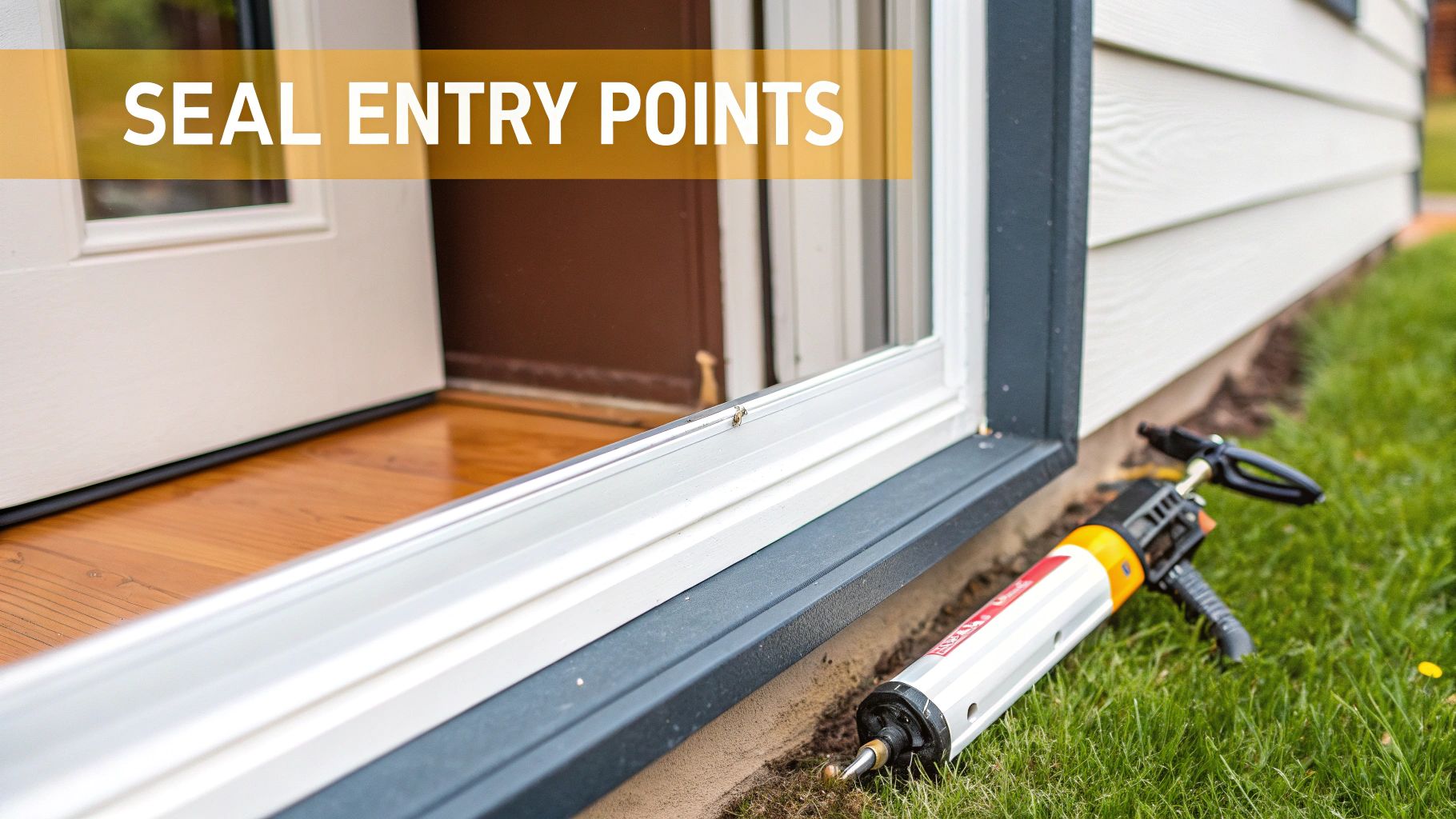
The core of this strategy is a thorough walk-around of your property to find and seal every potential entry point, no matter how tiny it seems. Stink bugs can flatten their bodies and squeeze through some surprisingly small gaps, so you can't afford to miss anything.
Your Bug-Proofing Checklist
Grab a notepad and walk the perimeter of your home with a critical eye, looking specifically for any cracks or openings. Pay extra attention to spots where different materials meet, like where your siding meets the foundation. These areas often settle over time, creating the perfect bug-sized doorways.
Make sure your inspection covers these key vulnerability points:
- Foundation: Look for any cracks in the concrete or masonry.
- Siding: Check for gaps in vinyl or wood siding, especially around corners.
- Utility Lines: This is a big one. Inspect where pipes, electrical wires, and cables enter the house.
- Windows and Doors: Examine the frames for any wear, tear, or visible gaps.
Sealing Common Entry Points
Once you’ve mapped out the weak spots, it’s time to seal them up for good. Using the right materials is key to making sure your repairs hold up against Alberta’s seasons and create a durable barrier.
For smaller cracks and gaps (anything less than a centimetre), a high-quality silicone caulk is your best friend. It’s flexible, waterproof, and ideal for sealing around window frames, door casings, and utility lines. For larger holes, especially in the foundation or around pipes, stuff the opening with steel wool before you seal it with caulk or expanding foam. Pests can’t chew through steel, making it a fantastic deterrent.
Thinking about the bigger picture, you might also consider these essential home energy efficiency tips, as improving your home's seals and insulation does double duty by keeping out pests and lowering your energy bills.
Fortifying Windows and Doors
Your windows and doors are the most obvious entryways for pests. Even when they look closed, worn-out seals can leave just enough space for a determined stink bug to slip right through.
Start with your window screens. A tiny tear is a wide-open invitation, so repair or replace any damaged screens right away. Next, check the weatherstripping around all your exterior doors and windows. If it’s cracked, brittle, or flattened, it’s not sealing properly. Replacing it is a quick and inexpensive fix that makes a huge difference. While you're at it, check the door sweep at the bottom of each door—if you can see daylight, a stink bug can get in.
These mechanical fixes are incredibly effective. In fact, research shows that properly weatherstripping doors and windows can block up to 80% of potential entry points for stink bugs.
Taking these preventative steps is vital for year-round protection, especially as winter gets closer. To get a head start on winterizing your home against all pests, check out our December pest control guide on keeping winter pests out. The best time to do all this is in late summer or early fall, before stink bugs start their search for a warm place to hide. It's the single most effective thing you can do for a pest-free home.
When Your Stink Bug Problem Needs a Professional
DIY methods are fantastic for tackling the odd stink bug that wanders inside. But there's a tipping point where a few stragglers turn into a full-blown infestation, and your soapy water traps just can't keep up.
Knowing when to draw that line is the key to stopping a minor annoyance from becoming a major headache. If you’re spotting dozens of these pests every single day, the problem is almost certainly bigger than what you can see. The bugs crawling on your walls are just the scouts for a much larger population hiding out in your home’s structure.
Signs It's Time to Call an Expert
It's easy to get caught in a reactive cycle—vacuuming up a few bugs here, catching a few there. But if any of these scenarios sound familiar, it’s a clear signal the infestation has grown beyond a simple DIY fix.
- Constant Sightings in Multiple Rooms: Finding stink bugs in the kitchen, living room, and the bedrooms? That means they're well-established and moving freely through your house.
- A Springtime Exodus: When the weather warms up and you suddenly see a surge of stink bugs emerging from vents, light fixtures, or baseboards, it confirms they successfully spent the winter inside your walls.
- Overwhelming Numbers Outside: A massive swarm covering the sunny side of your house in the fall is a preview of the invasion to come. A pro can apply an exterior treatment to stop them before they breach your defences.
When DIY tactics aren't enough, it's time to bring in professional pest control services. Understanding what an expert can do helps you make the right call for a large-scale issue.
The Limitations of Store-Bought Pesticides
It’s tempting to grab an over-the-counter pesticide spray, but these products often fall short. They typically only kill on contact, which does nothing about the hundreds of bugs hiding in your attic or wall voids.
Worse, improper application can pose risks to your family and pets. Professionals are trained to use targeted treatments that are both safe and effective, hitting the source of the problem without endangering your household.
Key Insight: Calling a professional isn't admitting defeat—it's the most strategic move for a large-scale infestation. It shifts your approach from endlessly reacting to proactively solving the root cause for good.
What a Pest Control Professional Can Do
A licensed technician brings a level of expertise and equipment that DIY solutions just can't match. They don't just zap the visible bugs; they roll out a complete strategy to wipe out the entire population and prevent them from coming back.
Here’s what their process usually looks like:
- A Thorough Inspection: An expert will pinpoint exactly how stink bugs are getting in, locating those hidden entry points you might have missed.
- Targeted Treatment Plans: They use specialized products designed to reach pests in inaccessible spots like wall voids, ensuring the hidden population is dealt with.
- Long-Term Prevention: A crucial part of their service is creating a protective barrier around your home's exterior, stopping the next wave of stink bugs before they even get close.
This approach is rooted in a scientific understanding of pest behaviour. For example, in agricultural settings, timed insecticide applications can cut crop damage by 70-80% by targeting pests when they are most vulnerable. A professional applies that same strategic thinking to your home.
Ultimately, a professional service buys you peace of mind. Instead of spending your autumn chasing bugs, you get a guaranteed, long-term solution. Many professionals now focus on sustainable methods that are both effective and environmentally responsible. You might be interested in learning more about what Integrated Pest Management is and how it offers a smarter, more holistic approach to keeping your home pest-free.
Got Questions About Stink Bugs? We've Got Answers
Even with a solid game plan, stink bugs can be confusing and persistent pests. There are a lot of myths floating around, so getting clear, straightforward answers is the final piece of the puzzle in taking back your home. We’ve pulled together the most common questions we hear from homeowners across Alberta to help you handle these invaders with confidence.
Does Killing a Stink Bug Really Attract More?
This is one of the most common—and most accurate—beliefs about stink bugs. The short answer is a definite yes.
When you crush a stink bug, it releases an alarm pheromone as a last-ditch defence. That pungent odour isn't just unpleasant; it's a chemical SOS that alerts other stink bugs to danger. In some cases, it can actually draw them in. That's precisely why squashing them is the worst thing you can do inside. Methods that contain or kill them without the crunch, like vacuuming them up or dropping them into soapy water, are always the better choice.
The Brown Marmorated Stink Bug (BMSB), an invasive species, has a scent that can be up to 300 times stronger than our native stink bugs. When threatened, it releases an odour from glands in its abdomen containing compounds that act as both a defence mechanism and an aggregation pheromone, potentially attracting even more bugs. You can dive deeper into the science behind their powerful scent on IPM.ucanr.edu.
What Time of Year Are Stink Bugs Most Active in Alberta?
In Alberta, you'll notice two distinct peaks of activity. The big one happens in the late fall, usually from September through October. This is when stink bugs are desperately searching for a warm, sheltered spot to ride out the winter, which is why you’ll suddenly see them all over the sunny sides of your house.
The second, smaller wave comes in the early spring. As things warm up, the bugs that successfully overwintered inside your walls or attic start to wake up and try to find their way back outside to feed and reproduce.
Are Stink Bugs Harmful to Humans or Pets?
Thankfully, stink bugs pose no real danger to you, your kids, or your pets. They don't bite, they don't sting, and they don't transmit any diseases. They’re considered a nuisance pest simply because of their awful smell and their habit of invading homes in huge numbers.
While they aren’t toxic, a curious dog or cat that decides to eat one might get a bit of an upset stomach. For the most part, though, they're just an annoying and smelly houseguest.
Why Do I Have So Many Stink Bugs in My House?
If you're dealing with a full-blown invasion, it's a clear signal that your home has one or more entry points they’ve managed to find. Stink bugs are drawn to warmth and light, and once a few pioneers find a good overwintering spot in your home, they can effectively "invite" others using those same pheromone trails.
A heavy infestation means your home’s exterior defences have been breached. This is exactly why a proactive prevention strategy focused on sealing up cracks and gaps is far more effective in the long run than just dealing with the bugs you see inside.
Dealing with a persistent stink bug problem can be frustrating, but you don't have to handle it alone. For a professional, long-term solution that protects your home and family, contact Dragon Pest Control. Our licensed technicians offer targeted treatments that eliminate infestations at the source and prevent them from returning. Book your service online at https://dragonpest-control.com and get peace of mind today.