
When it comes to wasps, an ounce of prevention is truly worth a pound of cure. The most straightforward, effective strategy is a proactive one: inspect your property in the spring, seal up any potential entry points, and get rid of things that attract them, like easy food and water sources.
This early-season approach catches the queen wasp right when she's looking for a new home, disrupting her nesting cycle before a full-blown colony can take root. Honestly, it’s the best way to keep your home and family safe all summer long.
Your Early Season Wasp Prevention Playbook
Nobody wants wasps crashing their summer barbecue. The smartest way to manage wasps here in Alberta is to get ahead of them, and that starts long before the peak heat of summer arrives.
That critical window is between April and June. This is when queen wasps wake up from hibernation and start scouting for the perfect spot to build their new kingdom. If you take action during this time, you can make your property a very unappealing option, encouraging them to move on.
The Spring Scouting Season
Once the snow melts and temperatures start to climb, wasp activity begins to ramp up. Across Canada, we see a huge spike in wasp problems in late summer, which is exactly why this early prevention work is so important for homeowners.
According to Environment and Climate Change Canada, Red Deer’s average daily high jumps from about 10°C in April to 17°C in May. These are the perfect conditions for a queen to start her search, checking out eaves, sheds, and wall voids for a safe place to build.
It's a scary thought, but a single yellowjacket nest can explode to house 3,000–5,000 adult wasps by August. This really drives home how crucial early intervention is. That brief spring window is your best chance for an easy win. A lone queen is far less of a threat and much easier to deter than an entire colony of thousands of defensive workers.
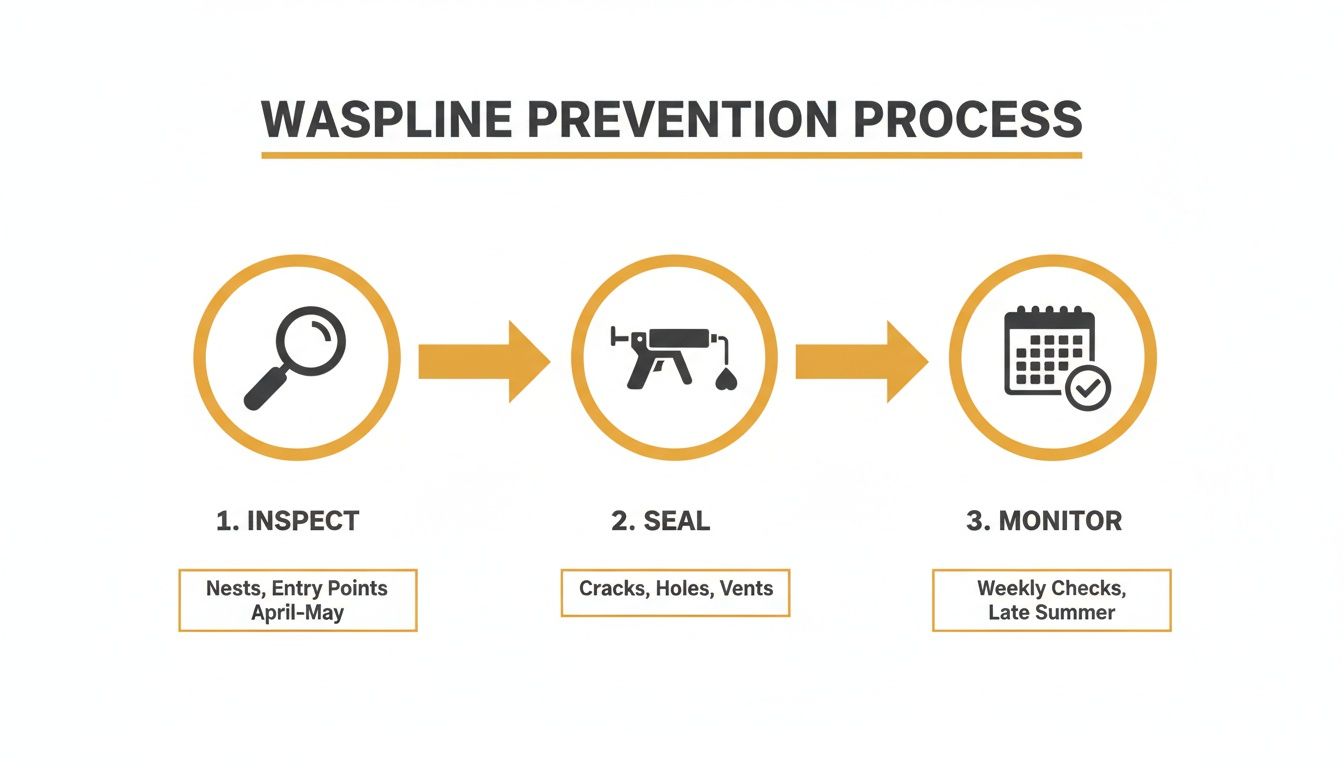
The key thing to remember is that prevention is a cycle, not a one-and-done task. You have to stay on top of it.
Where to Focus Your Efforts
When you do your spring walk-around, you need to think like a wasp. They're looking for sheltered, elevated spots that are protected from the wind and rain. These are prime real estate for a queen.
To give you a head start, I've put together a quick checklist of the most common trouble spots I see on properties around Red Deer.
Spring Wasp Prevention Checklist
| Inspection Area | What to Look For | Preventive Action |
|---|---|---|
| Eaves & Soffits | Gaps where the roof meets the walls; peeling paint; holes in vents. | Caulk gaps; repair damaged screens on soffit vents. |
| Porch Ceilings | Corners, light fixtures, and behind railings. | Clean away any old cobwebs or debris; check fixture bases. |
| Sheds & Garages | Rafters, high corners, and behind stored items or shelving. | Keep sheds tidy; seal gaps around windows and doors. |
| Decking & Stairs | The underside of deck planks and staircases. | Screen off large voids; check for tiny paper-like starter nests. |
| Outdoor Structures | Play structures, gazebos, mailboxes, and BBQ covers. | Regularly inspect these areas; knock down any new nests early. |
Focusing on these high-traffic areas early in the season means you can spot a tiny, golf-ball-sized starter nest and deal with it before it becomes a serious hazard.
This proactive mindset is the foundation for managing all sorts of pests that pop up when the weather gets warmer. It’s about making your home less inviting from the get-go.
For year-round protection, creating a comprehensive preventive maintenance schedule for your entire home is a fantastic idea, and it goes well beyond just pest control. You can also check out our guide on how to handle other common pests during the warm season here: https://dragonpest-control.com/warm-weather-pest-control-how-to-manage-ants-box-elder-bugs-wasps-and-bees-effectively/
Securing Your Home Against Hidden Wasp Nests
A determined queen wasp can get into almost anything. She can exploit the tiniest weakness in your home’s exterior, turning a small gap into a hidden highway for building her nest. Fortifying your property's 'building envelope' is a critical step in preventing wasp nests, especially those that pop up unseen inside your walls or attic.
This whole process starts with a detailed walk-around of your home’s exterior. Think of it like looking for drafts on a cold day, but with a more menacing pest in mind. Wasps only need a tiny opening—often just 6 mm wide—to gain access. Your mission is to find and seal these vulnerabilities before they do.

Fortifying Common Entry Points
Start your inspection by focusing on the areas where different building materials meet. These junctions are notorious for developing small gaps over time due to weather and the natural settling of your house.
Your best friend for this job is going to be a high-quality, exterior-grade silicone caulk. It's flexible, durable, and perfect for creating a permanent, wasp-proof seal that can handle Alberta’s weather.
Key Areas to Seal and Secure:
- Window and Door Frames: Carefully inspect the perimeter where the frame meets the siding or brick. Run a consistent bead of caulk to fill any visible cracks.
- Utility Penetrations: Check where pipes, electrical wires, and vents enter your home. These spots are often sealed poorly from the start, leaving a perfect entry point.
- Soffits and Fascia: Look for gaps where the roofline connects to your home’s walls. Damaged or warped boards can create inviting voids for wasps.
- Vents and Exhausts: Dryer vents, attic vents, and exhaust fans must be covered with fine-mesh screening. This blocks wasps but still allows for proper airflow.
This methodical approach to sealing your home is a core principle of modern pest control. In fact, understanding how to modify a structure to deny pests entry is a major component of what is integrated pest management. It’s really all about creating an environment where pests simply can't set up shop.
Don't Overlook The Small Details
While sealing the major gaps is crucial, don't forget the smaller, less obvious spots. A loose piece of vinyl siding or a small crack in the foundation can be all a queen wasp needs to get started.
I once worked with a homeowner in Red Deer who had wasps getting in through a tiny gap behind an outdoor electrical outlet cover. It was a spot they had walked past a thousand times but never would have considered a potential gateway for pests.
Remember, you aren't just patching holes. You are actively taking the "vacancy" sign down from your property. Every sealed crack tells a scouting queen that this is not a safe or suitable place to build her home.
By making your home a fortress, you dramatically reduce the chances of a dangerous nest forming inside its structure. This not only helps you avoid painful stings but also protects your property from the potential damage that a large, hidden nest can cause down the road.
Making Your Yard Less Attractive to Wasps
A wasp nest doesn't just pop up out of nowhere. If you've got one, it's a sure sign your property is offering the perfect mix of shelter, food, and water. To really prevent nests from forming, you have to start thinking like a wasp scout and take away the resources they're hunting for. This is about more than just plugging a few holes—it’s about making your entire yard less of a five-star resort for these pests.
Turning your property into a place they'd rather skip means taking a good, hard look at your daily habits and your landscaping. Wasps are opportunistic. They're drawn to easy meals and reliable water sources, especially during those hot, dry spells we get here in an Alberta summer.
Eliminating Food and Water Sources
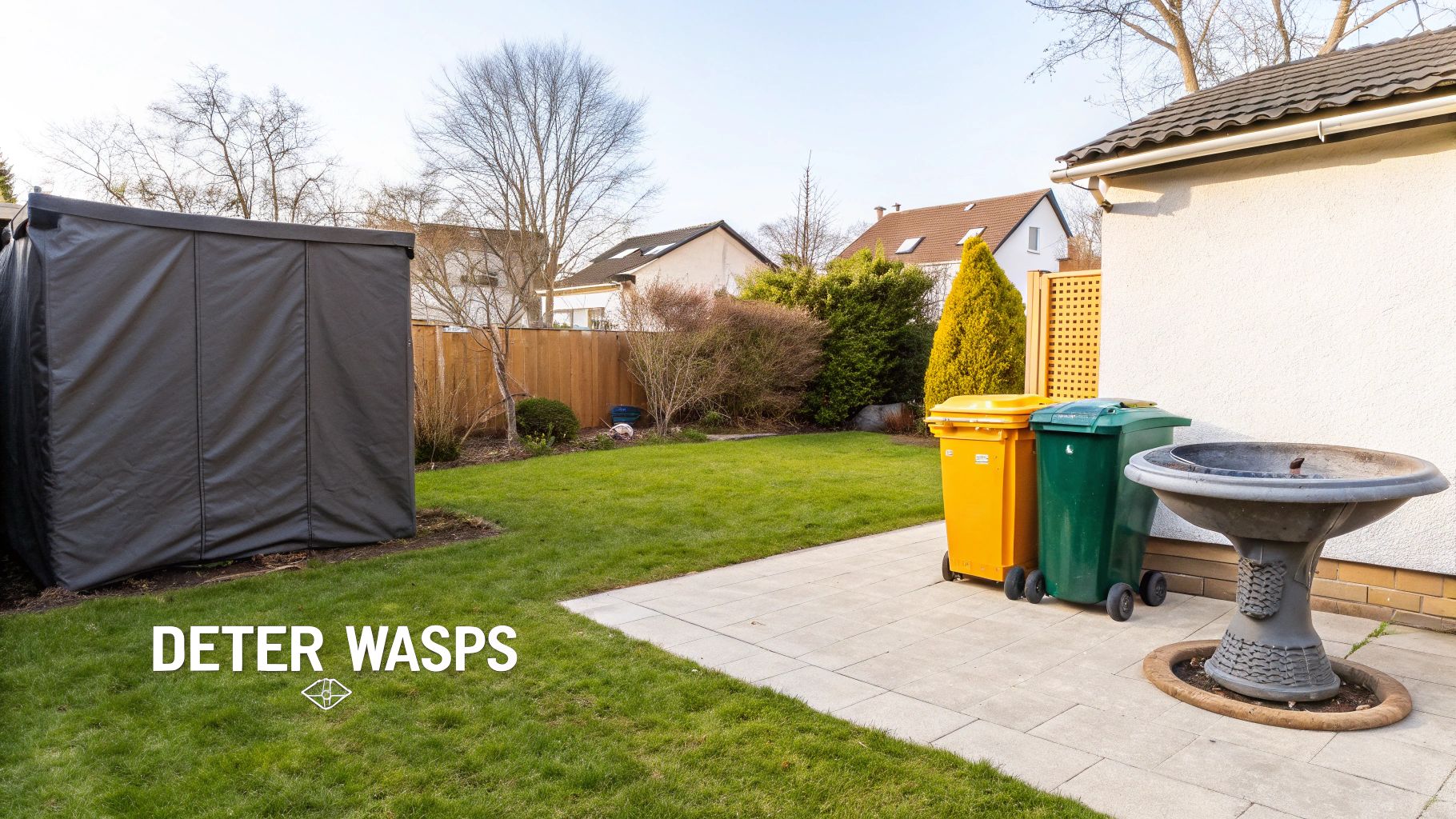
First things first: close the buffet. Wasps love proteins and sugars, which means your summer barbecues, overflowing recycling bins, and even the dog's food bowl can become major hotspots.
You can make a huge difference by getting into a few simple but highly effective routines:
- Secure Your Bins: Make sure all your garbage, compost, and recycling bins have tight-fitting lids. A bin left even slightly ajar is an open invitation.
- Manage Pet Food: If you feed your pets outside, don't leave their bowls out all day. Pick up any leftover food as soon as they're done eating.
- Clean Up After Meals: After eating on the deck or patio, bring all the food, dishes, and sugary drink containers inside right away. A quick wipe of the table can make a world of difference.
Water is just as critical for a wasp colony to thrive. They use it to cool down the nest and feed their larvae. The trick is to eliminate any sources of standing water, which often hide in plain sight.
A leaky hose spigot, a perpetually damp spot under an air conditioner, or a saucer beneath a potted plant can provide all the water a growing nest needs. Regularly inspect your yard for these small, overlooked puddles.
Birdbaths can also become a popular wasp hangout. If you notice a lot of wasp traffic, think about moving it to a far corner of your yard, away from your doors and patio. Clogged gutters are another prime culprit, creating stagnant pools that are perfect for thirsty wasps.
Landscaping and Structural Modifications
The layout and upkeep of your yard can either roll out the welcome mat for wasps or send them packing. Overgrown trees and dense shrubs offer fantastic, sheltered spots for building a nest, keeping it safe from predators and the elements.
To keep wasps from finding these prime nesting spots, make sure your landscape plan includes regular tree pruning and removal services to deal with dead or overgrown branches.
Think about the plants near your home, too. While wasps are pollinators, they are especially drawn to sweet-smelling flowers and fallen fruit. If you have fruit trees, be diligent about picking up any dropped fruit before it starts to rot and ferment. This one simple chore removes a powerful sugar source that can attract hundreds of yellowjackets.
By taking away these easy resources, you make your property a much less appealing target for a queen looking to set up her colony.
Effective DIY Wasp Deterrents and Traps
Once you’ve sealed up entry points and tidied your yard, you might need a more direct way to discourage scouting wasps from even considering your home. This is where DIY deterrents and traps can play a role, but let’s be honest—it’s crucial to know which ones work and which are just old wives' tales.
Think of these methods as a secondary layer of defence. They’re meant to support your main prevention plan, not to take on an angry, established colony by yourself.
The Great Decoy Nest Debate
You’ve probably seen them: those papery, lantern-like orbs hanging from porch ceilings and eaves. Many homeowners swear by these decoy nests. The theory is that wasps are territorial creatures and will steer clear of building a new home if they think a rival colony is already set up nearby.
So, do they work? The truth is, their effectiveness is highly debated and seems to change depending on the wasp species and even your specific location in Alberta.
They might deter some paper wasps early in the season when queens are looking for a spot. However, they're unlikely to fool aggressive yellowjackets, which often nest underground anyway. Consider them a low-cost, zero-risk tool that could help, but don’t rely on them as your only line of defence.
A Quick Look at Common DIY Deterrents
When you're trying to make your patio less appealing to wasps, a few common household items get recommended. Here’s a realistic breakdown of what you can expect.
| Method | How It Works | Effectiveness Rating | Best For |
|---|---|---|---|
| Decoy Nests | Simulates a rival colony, deterring territorial wasps. | Low to Medium | Potentially deterring paper wasps early in the season. |
| Peppermint Oil | The strong scent is believed to repel wasps. | Low | Creating a temporary "no-fly zone" in small, enclosed areas. |
| Clove, Geranium & Lemongrass Oil | A blend of essential oils that wasps dislike. | Low | Spraying on outdoor furniture right before use; needs frequent reapplication. |
| Cucumber Slices | The acidic properties are said to be a natural deterrent. | Very Low | A short-term, unproven method for a picnic table; attracts other pests. |
Ultimately, while some of these methods might offer a fleeting moment of relief, they aren’t a permanent fix for a persistent wasp problem.
Getting Strategic With DIY Wasp Traps
A more active approach is setting up your own traps, but timing and bait are everything. A trap set in May needs a completely different lure than one set in August. The goal is to target the right wasps at the right time.
Early Spring Trapping (April-May)
- The Target: The queen. Every single queen you catch in the spring means one less nest on your property this summer. It's a huge win.
- The Bait: Right now, she needs protein to produce her first batch of eggs. Use baits like a small piece of hot dog, a spoonful of cat food, or some deli meat.
Summer Trapping (July-August)
- The Target: Worker wasps. At this stage, your goal is simply to reduce the number of foraging workers buzzing around your patio, deck, or outdoor kitchen.
- The Bait: The colony's focus has shifted to high-energy food. Switch to sugar-based baits. A simple mix of sugar water, fruit juice, or even a bit of flat pop is irresistible to them.
Making a trap is easy. Just cut the top third off a two-litre plastic bottle, flip it upside down to create a funnel, and place it back into the bottom section. Add your bait and a little water. Place these traps along the perimeter of your yard, away from where people gather.
For more hands-on ideas, check out our guide to DIY pest prevention tips for effective pest control in Red Deer.
A Critical Safety Warning
Never, under any circumstances, should you attempt to seal an active wasp nest into a wall void. Trapped and desperate, the wasps will chew their way to freedom—and that often means they’ll emerge inside your house. This turns a manageable outdoor issue into a full-blown indoor emergency.
It’s also incredibly important to avoid dangerous "remedies" like spraying nests with gasoline or WD-40. These products are not designed for pest control. They pose a massive fire hazard to your home and are terrible for the environment. Always stick to products specifically labelled for wasp control, and follow the directions to the letter. Nothing is more important than your safety.
Of course. Here is the rewritten section, crafted to sound completely human-written and natural, following the expert tone and style of the provided examples.
Knowing When to Call a Pest Control Professional
While a proactive defence and a few smart DIY tricks can make a big difference, the most important part of dealing with wasps is knowing your limits. Being able to spot the red flags—the signs that a DIY job has become too dangerous—is critical for keeping yourself, your family, and even your neighbours safe.
Some situations are just non-negotiable. They demand the expertise and equipment that only a licensed professional has. Trying to tackle these scenarios on your own can quickly turn into an aggressive swarm attack, multiple painful stings, and a problem that's far worse than when you started.
The Point of No Return
It’s one thing to knock down a tiny, golf-ball-sized starter nest in early May with just a queen buzzing around it. It’s a completely different—and far more dangerous—situation when a colony is fully established and on the defensive.
You absolutely need to call a professional if you run into any of these scenarios.
Critical Signs You Need an Expert:
- Nest Size: If the nest is bigger than a golf ball or your fist, the colony is active, growing, and full of worker wasps whose only job is to defend it. And they do it aggressively.
- High-Traffic Areas: Is the nest near a doorway, on your deck railing, in the kids' play structure, or along a path you use all the time? This is an immediate threat. The daily vibrations and activity are more than enough to provoke an attack.
- Structural Nests: See wasps disappearing into a crack in your siding, a gap in the soffit, or any opening in your home? That means the nest is inside your walls or attic. Never try to block this entrance.
- Known Allergies: If anyone in your house has a known allergy to wasp or bee stings, don't even think about taking the risk. A professional service takes the danger out of the equation for everyone.
These aren't just suggestions; they are serious safety warnings. The risk of injury and severe allergic reactions is just too high to justify a DIY attempt once a nest reaches this stage.
The most common mistake we see is a homeowner completely underestimating a nest's population. What looks like a quiet, melon-sized paper nest from a distance can easily house hundreds, if not thousands, of agitated wasps ready to defend their home.
The Value of a Proactive Program
At Dragon Pest Control, we do more than just emergency removals. Our whole approach is built on proactive prevention programs designed specifically for the unique challenges of Alberta's climate. This isn't about waiting for a crisis—it's about making sure one never happens in the first place.
A seasonal plan means our licensed technicians visit your property at key times of the year to inspect for and neutralize nests when they are still small and manageable. This strategy isn't just safer; it's far more effective in the long run.
In fact, professional pest firms report that clients on seasonal prevention plans experience up to 50% fewer urgent wasp interventions year-over-year compared to those who only call when a huge nest is discovered. You can read more about how experts are handling the growing wasp threat on abc7news.com. Intercepting a nest when it’s just a queen and a few workers is the single best way to prevent a full-blown infestation later in the summer.
Choosing a professional service like ours gives you a peace of mind that DIY methods just can't match. Our technicians use targeted, professional-grade treatments applied safely and effectively, and our work is backed by an industry-leading guarantee. Protecting your property from wasps isn't just about removing one nest—it's about having a sound strategy to keep them from coming back.
Answering Your Top Wasp Prevention Questions
Even the best prevention plan can leave you with a few nagging questions. Over the years, our technicians have heard just about everything from homeowners in Red Deer and across Alberta trying to keep wasps at bay.
Let's tackle some of the most common ones we hear out in the field. Think of this as getting some expert insight to fine-tune your strategy and handle those tricky "what if" moments that always seem to come up.
Do Wasp-Repellent Plants Actually Work?
Yes and no. It’s a common bit of advice, but the effectiveness of these plants is often blown out of proportion. While some strongly scented plants can deter a curious wasp, they’re definitely not a magical forcefield for your property.
Plants like mint, eucalyptus, and citronella can make a small space, like your patio table, a little less inviting. But they won’t stop a determined queen from building a nest under your deck just a few metres away. It’s best to see them as one small part of a much bigger strategy, not a standalone solution.
Why Do Wasps Keep Coming Back to the Same Spot?
This is an incredibly common—and frustrating—problem. Wasps are creatures of habit and are drawn to prime real estate. If they found a perfect, sheltered corner on your porch last year, it's because that spot offered great protection from wind and rain.
Once a nest is removed, pheromones can linger on the surface. This chemical trail acts like a glowing "vacancy" sign for new queens, telling them it's a proven, safe place to build.
The only way to break this cycle is to make that spot completely inhospitable. After scraping away the old nest, give the area a thorough scrub with soap and water to break down those residual pheromones. Then, change the environment. Screen off the corner, apply a fresh coat of slick paint, or even hang a wind chime to create movement.
What's the Best Time of Day to Remove a Small Nest?
Timing is absolutely critical. If you've caught a tiny starter nest—no bigger than a golf ball—early in the season and feel confident you can handle it, your window of opportunity is either very early in the morning or late in the evening.
During these cooler times, the entire colony is inside the nest and much less active. They're sluggish and less likely to become aggressive. Trying to tackle it in the middle of a hot afternoon is just asking for trouble. Foraging wasps will be flying in and out, and the whole colony will be on high alert. Your safety always comes first.
Still have questions, or are you looking at a nest that's well past the "golf ball" stage? The licensed professionals at Dragon Pest Control are ready to help. We offer safe, guaranteed wasp nest removal and proactive prevention across Red Deer and Central Alberta. Don't risk it—get a free quote and make your home safe today.