

The thought of bed bugs is enough to cause sleepless nights, but ignoring the early warnings can turn a minor nuisance into a major infestation. In Alberta, from bustling Red Deer apartments to quiet family homes, these pests are an unfortunate reality. The key to effective control is early, accurate identification. This guide provides a detailed breakdown of the definitive signs of bed bug infestation, moving beyond generic advice to give you actionable inspection techniques and a clear understanding of what to look for.
We will cover everything from the most common physical evidence, like fecal spots and shed skins, to more subtle but equally important clues such as musty odours and specific bite patterns. You will learn not just what the signs are, but precisely where to find them, from mattress seams to furniture joints and even behind picture frames.
By learning to confidently recognise these eight critical signs, you can take control of the situation quickly, accurately assess the severity of the problem, and know precisely when to call for professional help. Let’s get started on the essential steps to protect your home, your family, and your peace of mind.
1. Fecal Spots and Dark Stains on Bedding and Furniture
One of the most definitive and common signs of bed bug infestation is the discovery of small, dark stains on mattresses, bedding, and furniture. These marks are not dirt but are actually bed bug feces, which consists of digested blood. They typically appear as tiny, round black or dark brown dots, resembling the tip of a felt pen bleeding into the fabric.
You'll often find these stains in clusters or trails along the seams of mattresses, on pillowcases, sheets, and even on the headboard or nearby nightstand. Because bed bugs excrete this waste after feeding and while resting in their harbourage areas, the concentration of these spots is a strong indicator of where the infestation is centred. This evidence is a primary diagnostic tool used by professionals, including the technicians at Dragon Pest Control, to confirm an active infestation.
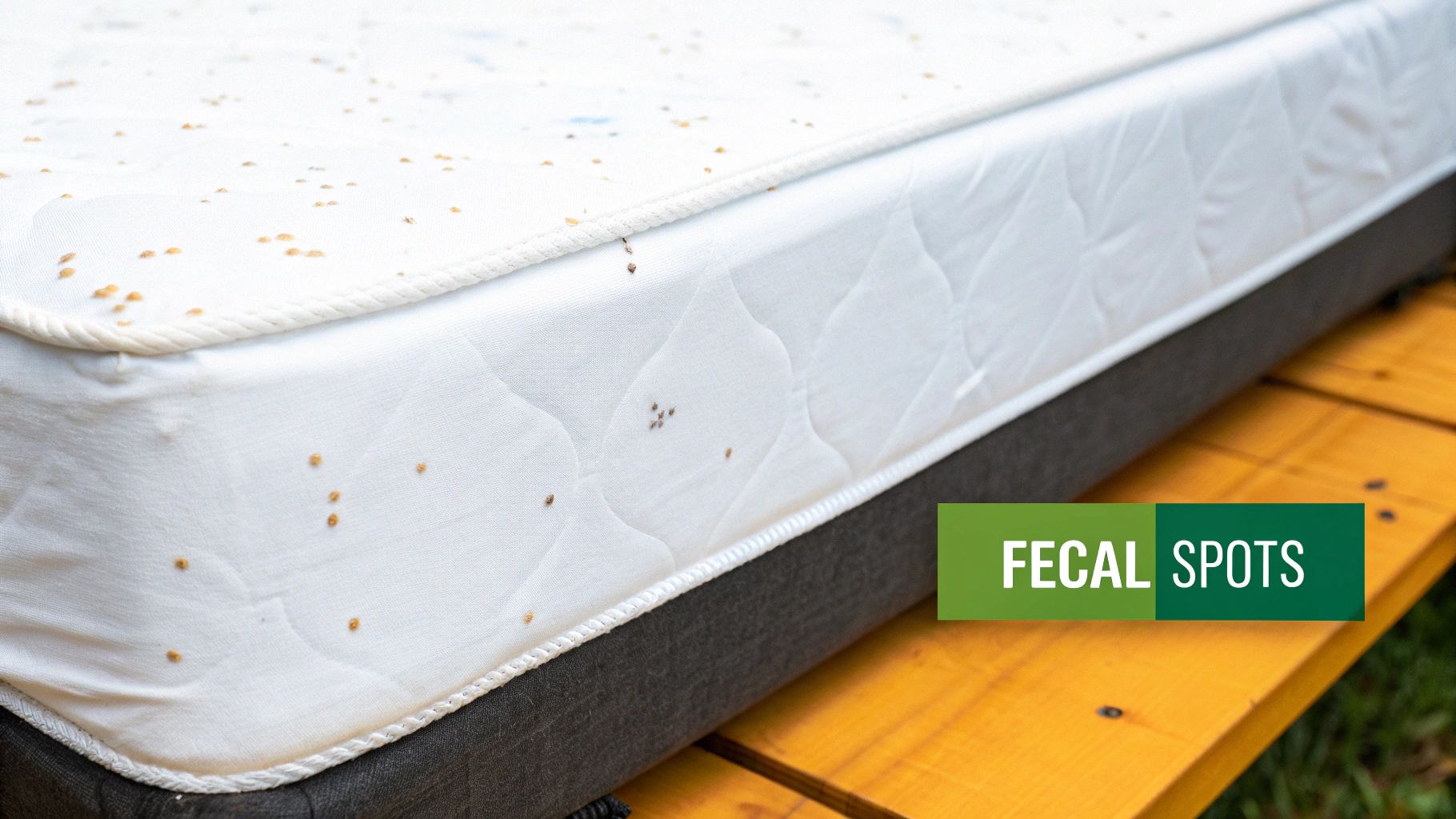
How to Identify and Document Fecal Spots
Distinguishing bed bug fecal spots from simple lint or dirt is crucial for accurate identification. These stains have a unique characteristic that sets them apart.
Pro Tip: Unlike a piece of lint that can be brushed away, bed bug fecal matter soaks into the fabric fibres. If you wipe a suspected spot with a damp cloth or a wet wipe, it will smudge in a dark, rusty-brown streak, much like ink.
Here are actionable steps for homeowners and property managers in Red Deer and across Alberta:
- Conduct Routine Inspections: At least once a month, strip the bed and use a bright flashlight to meticulously check mattress seams, tufts, and tags. Pay close attention to the corners of the box spring and the crevices of the bed frame.
- Check Beyond the Bed: Bed bugs don't just stay on the mattress. Extend your inspection to upholstered chairs, sofas, curtains, and even behind picture frames and along baseboards near the bed.
- Document Everything: If you find suspicious stains, take clear, dated photographs. This documentation is invaluable when you contact a professional, as it provides them with a preliminary assessment of the situation before they even arrive.
For landlords and hospitality managers, training staff to recognize these specific patterns during room turnover or move-out inspections can lead to early detection, preventing a small problem from escalating into a building-wide infestation. This proactive approach is a cornerstone of effective commercial pest management.
2. Live Bed Bugs or Shed Exoskeletons
While fecal spots are a strong indicator, the most undeniable sign of bed bug infestation is the physical presence of the pests themselves. Finding either a live, crawling bed bug or the empty shells they leave behind provides absolute confirmation of an active or recent problem. These shed skins, known as exoskeletons or casings, are left behind as a bed bug molts and grows. They look like hollow, translucent, light-brown versions of the actual insect.
Discovering these specimens confirms that you are not dealing with another pest. A live adult bed bug is reddish-brown, flat, oval-shaped, and roughly the size of an apple seed (4-5mm). Seeing one, especially in common hiding spots like mattress seams or furniture crevices, means an infestation is present. The professionals at Dragon Pest Control rely on this physical evidence as the ultimate confirmation when diagnosing a pest issue. For a detailed guide on their appearance, you can learn more about what bed bugs look like.
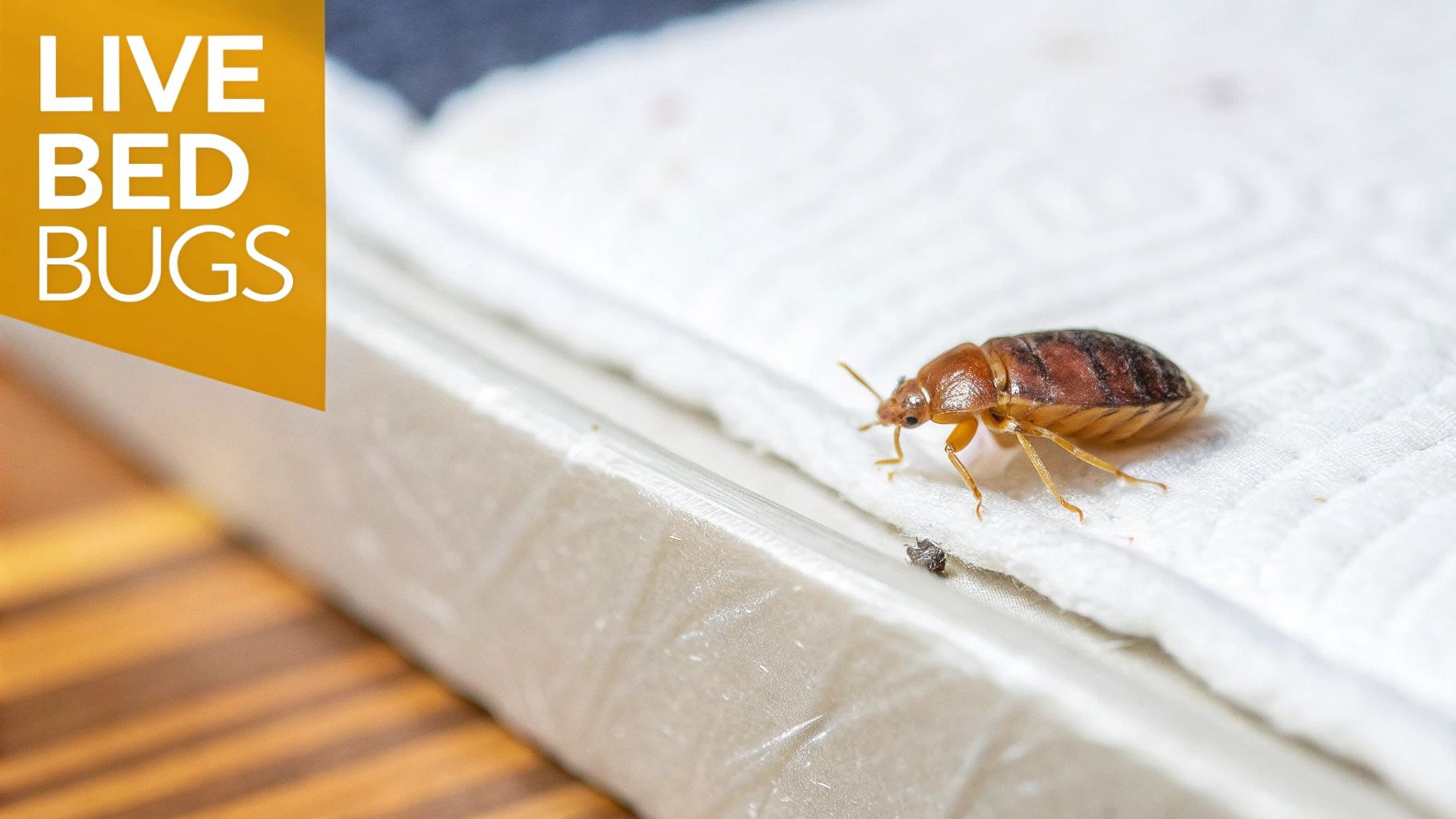
How to Find and Collect Physical Evidence
Locating live bugs or their casings requires a methodical and careful search, as they are experts at hiding in tiny, undisturbed spaces.
Pro Tip: Bed bugs are primarily nocturnal. Conduct your inspection late at night or in the early morning using a bright flashlight. This significantly increases your chances of spotting them as they move from their hiding places to feed.
Here are actionable steps for homeowners and property managers in Red Deer and across Alberta:
- Target Key Harbourage Areas: Use a credit card or thin, stiff tool to sweep through tight spaces. Focus on mattress piping, the underside of the box spring, cracks in the bed frame and headboard, and along baseboards near the bed.
- Use a Magnifying Glass: Bed bug nymphs and shed skins can be very small. A magnifying glass helps confirm that what you're seeing is a casing and not just a piece of debris or a different insect.
- Safely Collect a Specimen: If you find a live bug or a clear exoskeleton, use tweezers to carefully place it in a small, sealed container like a zip-top bag or a pill bottle. This sample is extremely valuable for professional identification.
For hotel and property managers, training housekeeping staff to look for these signs during room turnovers is critical. Finding even a single casing can trigger an immediate professional inspection, preventing a minor issue from spreading to adjacent rooms and protecting your reputation.
3. Musty or Sweet Odour in Affected Areas
One of the more subtle but telling signs of a bed bug infestation is a distinct and persistent odour in the affected room. While less common than visual cues in minor cases, this smell becomes increasingly apparent as the pest population grows. The odour is produced by a combination of alarm pheromones released by the bugs, the accumulation of their fecal matter, and the decay of shed exoskeletons.
This unique scent is often described as musty and slightly sweet, sometimes compared to the smell of overripe raspberries or coriander. For property managers in Red Deer or hotel staff, noticing this unusual smell in a specific room can be the first clue that a deeper inspection is required. Because it points to a more established colony, detecting this odour is a critical indicator of a potentially severe infestation that needs immediate professional attention from a team like Dragon Pest Control.
How to Identify and Act on Bed Bug Odours
Your sense of smell can be a powerful tool for early detection, but it's important to distinguish the specific bed bug scent from other common household smells like mildew or stale air.
Pro Tip: The bed bug odour will be strongest in and around their primary harbourage areas. If you detect a strange, sweet smell, try to pinpoint its source by smelling along the mattress seams, headboard, and nearby furniture. Unlike mould, the scent won't have a damp, earthy undertone.
Here are actionable steps for homeowners and commercial operators across Alberta:
- Trust Your Nose: If you enter a bedroom or a hotel room and notice a persistent, unidentifiable musty-sweet odour, do not dismiss it. It is a legitimate sign of bed bug infestation worth investigating.
- Combine Scent with Visuals: Use the odour as a guide. If the smell is strongest near the headboard, focus your visual inspection with a flashlight on that specific area, checking every crack and crevice.
- Document and Differentiate: When reporting the issue, describe the smell and its location. Note if it differs from typical odours like mould or dampness. This information helps a professional technician accurately diagnose the problem and its severity before treatment.
For commercial settings like warehouses or multi-unit residential buildings, training maintenance staff to recognize this specific odour during their rounds can trigger an early warning system, preventing the infestation from spreading to adjacent units or goods.
4. Itchy Bite Marks and Skin Reactions
For many people, the first warning sign of a bed bug problem is waking up with itchy, red welts on their skin. Bed bug bites often appear on areas of the body that are exposed during sleep, such as the arms, legs, neck, and face. These bites are the result of bed bugs feeding on human blood, and while they are often painless at the moment, the subsequent skin reaction can cause significant discomfort.
A classic telltale sign is the pattern in which these bites appear. They are frequently arranged in a line or a small cluster of three to five bites, a pattern often called "breakfast, lunch, and dinner." This linear arrangement happens as the bed bug moves along the skin while feeding. However, it's crucial to remember that individual reactions vary greatly; some people may have a severe allergic reaction with large, painful welts, while others may show no visible signs at all. This variability makes bite marks a strong indicator but not definitive proof on their own.
How to Identify and Document Bed Bug Bites
Since bite reactions can be mistaken for other insect bites like those from mosquitoes or spiders, proper identification and documentation are key. Corroborating bite patterns with other physical evidence is essential for confirming a bed bug infestation.
Pro Tip: While an individual experiencing bites is a clue, multiple household members waking up with similar bite patterns significantly strengthens the case for bed bugs. This shared experience helps rule out isolated allergic reactions or other skin conditions.
Here are actionable steps for homeowners and property managers in Red Deer and across Alberta:
- Document Bite Patterns: When you discover bites, take clear photographs. Document their location on the body, the pattern (linear or clustered), and their appearance over several days. This visual log helps professionals at Dragon Pest Control assess the situation. You can learn more about what bed bug bites look like to help with identification.
- Track the Timeline: Note when new bites appear. Consistent new bites appearing every few days suggest an active, feeding population within your home.
- Avoid Scratching: Urge anyone with bites to avoid scratching them, as this can lead to secondary skin infections. An over-the-counter anti-itch cream can help manage discomfort.
- Combine with a Physical Search: Use the appearance of bites as a trigger to perform a thorough inspection for other signs, such as fecal spots, shed skins, or live bugs. Never rely on bites alone for a diagnosis.
For those in hospitality or healthcare, training staff to discreetly ask about and recognize these bite patterns can lead to early intervention, protecting both guests and the facility's reputation.
5. Blood Stains on Mattresses and Bedding
Another highly indicative sign of a bed bug infestation is the presence of small, unexplained blood stains on your sheets, pillowcases, and pyjamas. These spots occur when a fully fed, engorged bed bug is accidentally crushed by you shifting or rolling over in your sleep. Unlike the dark, digested fecal matter, these stains are typically reddish or rusty-brown and indicate a very recent feeding event.
Finding these small smears of blood, especially when no obvious cut or scrape can explain them, is a significant clue. They are often found in the same areas as other evidence, such as along mattress seams or near the head of the bed where bed bugs congregate to be close to their host. The presence of these stains, combined with other signs, provides compelling evidence of an active and feeding bed bug population.
How to Identify and Differentiate Blood Stains
Properly identifying blood stains is a key step in diagnosing an infestation. It's important to distinguish them from fecal spots or other common marks to build an accurate picture of the pest problem.
Pro Tip: Fresh bed bug blood stains will appear brighter red and will smear easily if rubbed, while older stains will be a darker, rust colour. They are distinct from fecal spots, which are black, more circular, and soak into the fabric like an ink dot rather than smearing.
Here are actionable steps for homeowners and property managers in Red Deer and across Alberta:
- Use Light-Coloured Bedding: White or light-coloured sheets and pillowcases make new blood stains much easier to spot during daily bed-making or weekly laundry.
- Perform Weekly Linen Checks: When changing bedding, take a moment to carefully inspect the entire surface of sheets, blankets, and pillowcases for any small, unusual reddish spots before putting them in the laundry.
- Document and Compare: Take clear photos of any blood stains you find. This is especially useful for tenants reporting to landlords or for homeowners contacting a professional like Dragon Pest Control, as it helps build a comprehensive case for treatment.
- Handle Infested Linens Carefully: If you suspect an infestation, carefully remove bedding and place it directly into a sealed plastic bag to prevent any stray bugs from spreading to other areas of your home on the way to the washing machine.
For hospitality and healthcare managers, training housekeeping staff to recognize and report these specific stains immediately is a critical part of an early detection protocol. Prompt action based on this evidence can contain an issue to a single room and prevent a much larger, more costly infestation.
6. Mattress and Furniture Seam Clustering and Congregation Areas
Beyond isolated stains or shed skins, one of the most compelling signs of bed bug infestation is the discovery of the insects themselves clustered together in their hiding spots. Bed bugs are gregarious and instinctively congregate in protected crevices, known as harbourage areas. These clusters often contain live adults, nymphs, eggs, and a dense accumulation of fecal spots and cast skins.
Finding these congregation areas, typically along mattress seams, piping, box spring folds, and headboard joints, confirms an active and established infestation. Professionals at Dragon Pest Control prioritize locating these central harbourage zones, as treating them directly is the most effective way to dismantle the pest population at its source. A large cluster signifies a primary hiding spot where the bugs rest after feeding.
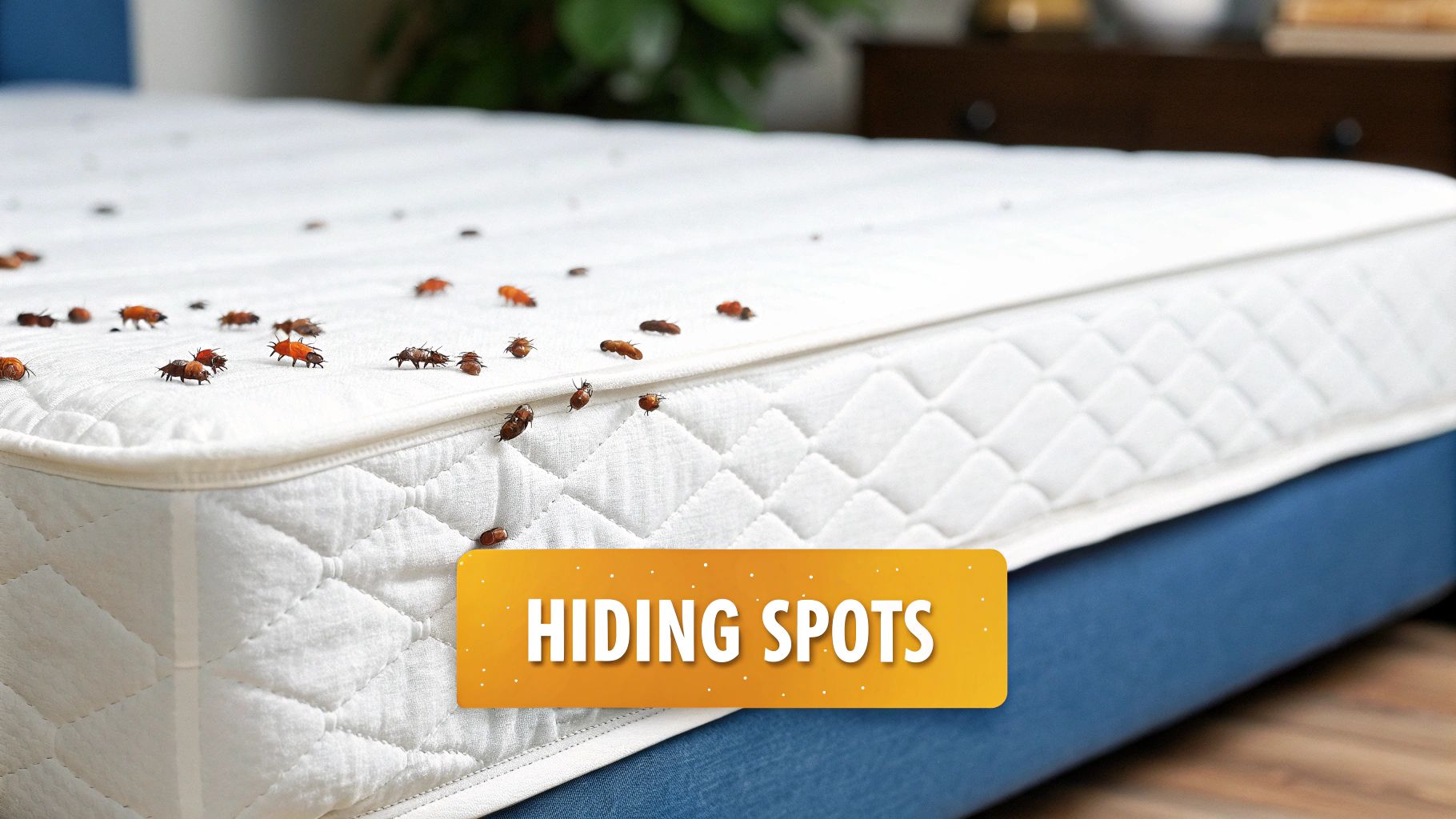
How to Identify and Document Congregation Areas
Locating these hidden clusters requires a systematic and thorough inspection of all potential harbourage sites near the sleeping area. Unlike a single roaming bug, these groups indicate a significant problem.
Pro Tip: Bed bugs often wedge themselves deep into the piping or seams of a mattress. Gently pull back the piping or fabric along the seams with a thin, flat tool (like a credit card) to reveal bugs that are not immediately visible on the surface.
Here are actionable steps for homeowners and property managers in Red Deer and across Alberta:
- Systematically Inspect Seams: Using a bright headlamp or flashlight, slowly trace every seam on your mattress, box spring, and pillows. Pay extra attention to corners, tufts, and where any labels are stitched on.
- Deconstruct and Examine: Carefully remove the headboard from the bed frame and inspect all cracks, screw holes, and joints. Similarly, check the joints and underside of nearby nightstands, dressers, and upholstered chairs.
- Document and Mark Locations: When you find a cluster, take clear photos to show the extent of the infestation. You can even mark the spots with a small piece of tape to guide technicians during treatment, ensuring no area is missed.
For a comprehensive guide on performing these checks, you can learn more about how to check for bed bugs. Identifying these key clustering zones is critical for developing a targeted and effective treatment plan.
7. Aggregation Pheromone Markers and Fecal Trail Evidence
Beyond isolated spots, bed bugs often create distinct, visible trails of fecal matter as they travel between their hiding places and feeding areas. These dark, linear patterns serve as a roadmap of the infestation, outlining their primary routes. While the chemical aggregation pheromones they deposit to attract others are invisible, they are often laid down along these same fecal trails, turning these pathways into active "highways" for bed bug movement and congregation.
These trails are a critical forensic sign of a bed bug infestation, allowing professionals to understand the infestation's history, scope, and direction of spread. Finding a fecal trail leading from a mattress seam along a baseboard to an adjacent room, for instance, confirms that the infestation is no longer localized. This evidence is a key part of the comprehensive mapping methodology used by Dragon Pest Control to ensure all affected areas are identified and treated.
How to Identify and Document Fecal Trails
Unlike scattered fecal spots, trails show direction and intent, providing invaluable intelligence for effective treatment. Identifying these pathways is essential for understanding the full extent of the problem.
Pro Tip: Use a bright flashlight held at a low, grazing angle to the surface you are inspecting. This technique creates shadows that can make faint or thin fecal trails much more visible, especially on textured surfaces like wood grain baseboards or carpets.
Here are actionable steps for homeowners and property managers in Red Deer and across Alberta:
- Trace the Pathways: When you find evidence on a bed, don't stop there. Follow the lines of fecal spots from the mattress seams, down the bed frame, and along the intersecting baseboards to see where they lead.
- Check Between Rooms: For property managers in multi-unit buildings, it's crucial to inspect hallways and shared walls. Fecal trails along baseboards connecting apartments are a definitive sign of cross-unit contamination.
- Document the Entire Route: Photograph the complete trail from its starting point to its end. This visual evidence is extremely useful for a pest management professional, as it helps them map the infestation and justify the need to treat areas beyond the primary bedroom.
For hotel operators and landlords, training staff to recognize and follow these trails can be the difference between treating a single room and managing a building-wide crisis. This advanced sign of bed bug infestation indicates a more established population that requires immediate and thorough professional intervention.
8. Infestation Evidence in Multiple Rooms and Furniture Pieces
Discovering signs of bed bug infestation in more than one room or on multiple pieces of furniture is a clear indicator that the problem has progressed beyond an early, isolated stage. When bugs, exoskeletons, or fecal spots are found on a living room couch as well as the master bedroom mattress, it signifies a more established and widespread infestation that has likely been active for several weeks or months.
This multi-location spread often happens when bed bugs are transported on clothing, or when an initial harbourage area becomes overcrowded, forcing them to seek new shelter. For property managers in Red Deer and across Alberta, finding evidence in multiple apartment units or common areas is a critical sign that a building-wide response may be necessary. The technicians at Dragon Pest Control use the scope of the infestation to determine the appropriate treatment intensity and strategy, as a multi-room issue requires a far more comprehensive approach than a single-room problem.
How to Identify and Map a Widespread Infestation
Identifying the full extent of a bed bug problem is crucial for successful eradication. A limited treatment that misses satellite populations will only lead to a re-infestation.
Pro Tip: Do not assume the problem is contained to where you first saw evidence. Bed bugs are excellent hitchhikers. A systematic, property-wide inspection is the only way to understand the true scale of the infestation.
Here are actionable steps for homeowners and property managers dealing with a suspected multi-room infestation:
- Conduct a Systematic Inspection: Begin in the room where the first signs were discovered, then methodically inspect every other room. Check all upholstered furniture, including sofas, office chairs, and curtains, not just beds.
- Create a Visual Map: As you inspect, document your findings with dated photographs for each location. Create a simple floor plan or sketch of the property and mark every spot where you find evidence. This map is incredibly valuable for a pest control professional.
- Inspect Adjoining Units: For apartment buildings or multi-unit properties, it is essential to inspect neighbouring units (above, below, and on all sides). Bed bugs can easily travel through wall voids and utility lines, and one tenant's problem can quickly become a building-wide issue.
For hospitality and property managers, documenting the spread pattern is a key part of an effective outbreak response protocol. It helps justify comprehensive treatment measures and prevents the cycle of re-infestation that can damage a property's reputation and finances.
8-Point Comparison of Bed Bug Infestation Signs
| Sign / Indicator | Implementation Complexity 🔄 | Resource Requirements ⚡ | Effectiveness (Confirmation) ⭐ | Expected Outcomes 📊 / Ideal Use Cases 💡 |
|---|---|---|---|---|
| Fecal Spots and Dark Stains on Bedding and Furniture | 🔄 Low — visual inspection along seams | ⚡ Low — flashlight, camera | ⭐⭐⭐⭐ — strong visual evidence but can be confused | 📊 Confirms recent/recurrent activity; ideal for routine housekeeping, homeowner checks, documentation 💡 |
| Live Bed Bugs or Shed Exoskeletons | 🔄 Moderate — systematic searching, nighttime checks | ⚡⚡ Moderate — flashlight, magnifier, specimen containers (or detection dogs) | ⭐⭐⭐⭐⭐ — definitive confirmation | 📊 Absolute ID and severity assessment; ideal for professional diagnosis, legal/insurance documentation 💡 |
| Musty or Sweet Odor in Affected Areas | 🔄 Low — sensory detection, subjective | ⚡ Low — none or trained detector dogs | ⭐⭐ — useful in heavy infestations, subjective | 📊 Alerts to hidden or heavy infestations; useful for preliminary screening in cluttered/dark spaces 💡 |
| Itchy Bite Marks and Skin Reactions | 🔄 Low — reported by occupants, pattern recognition | ⚡ Low — photos, medical consult if needed | ⭐⭐⭐ — suggestive but not specific | 📊 Triggers investigation; useful for occupant reports, healthcare screening; combine with visual evidence 💡 |
| Blood Stains on Mattresses and Bedding | 🔄 Low — visual inspection of bedding creases | ⚡ Low — camera, light-colored linens help | ⭐⭐⭐⭐ — indicates recent feeding activity | 📊 Confirms recent feeding and urgency for treatment; useful in linen inspections (hotels, homes) 💡 |
| Mattress and Furniture Seam Clustering and Congregation Areas | 🔄 Moderate — systematic, may require disassembly | ⚡⚡ Moderate — flashlight, tools, magnifier | ⭐⭐⭐⭐⭐ — highly reliable when clusters found | 📊 Identifies infestation source and treatment targets; ideal for professional targeted treatments 💡 |
| Aggregation Pheromone Markers and Fecal Trail Evidence | 🔄 Moderate–High — careful tracing of linear trails | ⚡⚡ Moderate — angled light, documentation; expertise to interpret | ⭐⭐⭐⭐ — reveals movement and spread patterns | 📊 Maps infestation routes and secondary areas; ideal for multi-room investigations and treatment planning 💡 |
| Infestation Evidence in Multiple Rooms and Furniture Pieces | 🔄 High — whole-property assessment required | ⚡⚡⚡ High — multiple inspectors, time, possibly specialized equipment | ⭐⭐⭐⭐⭐ — indicates established, widespread infestation | 📊 Necessitates comprehensive treatment and cost estimation; critical for multi-unit properties, hotels, property managers 💡 |
From Identification to Eradication: Your Next Steps
Recognising the subtle yet definitive signs of bed bug infestation is the crucial first step on the path to reclaiming your space. Throughout this guide, we've detailed the primary indicators, from the telltale reddish-brown fecal spots on your mattress seams to the musty, coriander-like odour that can permeate a heavily infested room. Understanding these signs moves you from a state of uncertainty and suspicion to one of informed awareness, which is the most powerful position to be in when dealing with these resilient pests.
The key takeaway is that evidence of bed bugs is rarely a single, isolated sign. More often, it's a combination of clues: perhaps you've noticed unexplained itchy welts on your skin, found tiny blood stains on your pillowcase, and then discovered shed exoskeletons along the baseboards. Each piece of evidence builds a more complete picture, helping you gauge the potential severity of the problem. Remember, these pests are experts at hiding, so a thorough inspection of mattresses, box springs, furniture, and even electrical outlets is not just recommended, it's essential for early detection.
Actionable Steps for a Suspected Infestation
If your investigation has confirmed the presence of bed bugs, immediate and decisive action is your best defence against a small issue escalating into a widespread infestation. While professional help is paramount, you can take several immediate containment steps:
- Isolate and Launder: Carefully bag all infested bedding, curtains, and clothing in sealed plastic bags. Wash them in the hottest water possible and dry them on high heat for at least 30-40 minutes to kill all life stages of the bugs.
- Declutter and Vacuum: Reduce clutter in the affected areas to eliminate hiding spots. Thoroughly vacuum all carpets, upholstery, and crevices, paying close attention to mattress tufts and furniture seams. Immediately dispose of the vacuum bag in a sealed plastic bag outside your home.
- Assess Your Mattress: A heavily infested mattress can be nearly impossible to salvage. If the infestation is severe, with numerous bugs, eggs, and stains deeply embedded, replacement might be the most effective long-term solution. To help you make an informed decision on whether your mattress has reached the end of its life, it's useful to review the Top Signs That Indicate Its Time To Replace Your Current Mattress.
Critical Insight: DIY containment measures are crucial for slowing the spread, but they are not a substitute for professional eradication. Bed bugs are notoriously difficult to eliminate completely without specialized equipment and treatments.
Ultimately, mastering the identification of these signs empowers you to protect your home, business, and peace of mind. Catching an infestation early saves you significant time, money, and stress. Don't dismiss the small signs; they are your early warning system. By acting swiftly and seeking expert guidance, you can ensure the problem is handled correctly the first time, preventing a frustrating cycle of re-infestation.
Don't let bed bugs disrupt your life any longer. If you've identified any of the signs in your Red Deer or central Alberta property, the expert technicians at Dragon Pest Control are ready to provide a definitive solution. Visit Dragon Pest Control to schedule a professional inspection and take the final, most important step toward a pest-free environment.