
Have you spotted weird, winding trails of dead grass snaking across your lawn? If so, you've probably got an unwelcome guest: voles. Here in Alberta, these little mouse-like rodents are a huge pain for homeowners, digging elaborate tunnel systems right under the surface that chew up lawn roots and ruin gardens.
What Are Voles and Why They Wreck Alberta Lawns
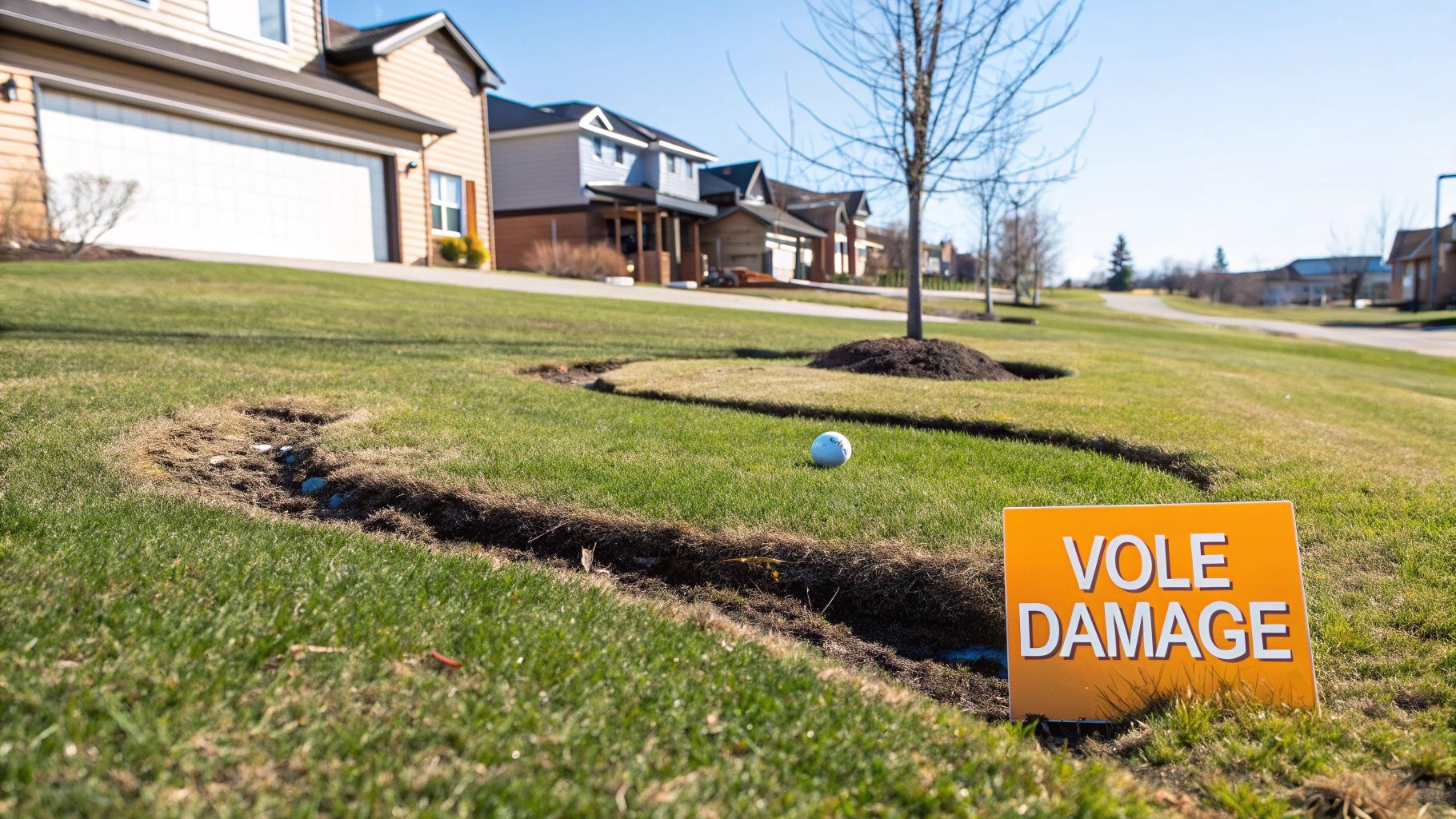
You can think of voles as nature's tiny, destructive landscapers. They create a hidden highway of runways through your turf, munching on grass stems and roots all winter long, safe and sound under the snow. Once spring hits and the snow melts, the full scale of their winter feast is revealed, leaving you with a scarred, sad-looking lawn.
Telling Voles From Other Rodents
It's easy to mix up voles and mice, but there are some clear giveaways. Voles have a much stockier build, a shorter tail, tiny ears, and a blunt, rounded snout. Mice, on the other hand, are lankier with long tails and prominent ears. Knowing who you're dealing with is half the battle, as their habits are quite different. For a deeper dive, check out our post on the differences between mice and other rodents.
To make it even easier, here's a quick reference guide to help you spot the difference at a glance.
Vole vs Mouse Quick Identification Guide
This table helps Alberta homeowners quickly distinguish between voles and mice, focusing on the key physical traits you're likely to see.
| Feature | Voles | Mice |
|---|---|---|
| Body Shape | Stocky, compact, almost round | Slender, longer body |
| Tail | Short (about 1/3 of body length) | Long (often as long as the body) |
| Ears | Small, barely visible above fur | Large, prominent, and easily seen |
| Snout | Blunt and rounded | Pointed and triangular |
| Eyes | Small and somewhat beady | Larger and more noticeable |
| Colour | Typically greyish-brown to dark brown | Can range from light brown to grey or black |
Getting a positive ID is the first step toward reclaiming your yard.
These critters are active all year and breed like crazy, so a small vole problem can blow up into a full-blown infestation before you know it. Their diet is almost entirely plants, which is exactly why they're so devastating to lawns, gardens, and young trees.
The worst of the vole damage almost always happens in winter. Tucked away under the snow cover—in a space called the subnivean zone—they can tunnel and feed on your lawn's root system completely unseen until the spring thaw.
The Impact on Your Property
The fallout from a vole infestation is more than just an ugly lawn. Their constant gnawing can girdle and kill young trees and shrubs by stripping the bark clean around the base. Their burrowing can also make the soil in your garden beds and along walkways unstable.
For homeowners fed up with the constant battle, some even consider extreme solutions like installing artificial turf for a maintenance-free lawn. For most of us, though, the goal is simply to manage the vole population effectively. Catching the signs early is your absolute best defence against costly and frustrating landscape repairs down the road.
Common Vole Species in Central Alberta
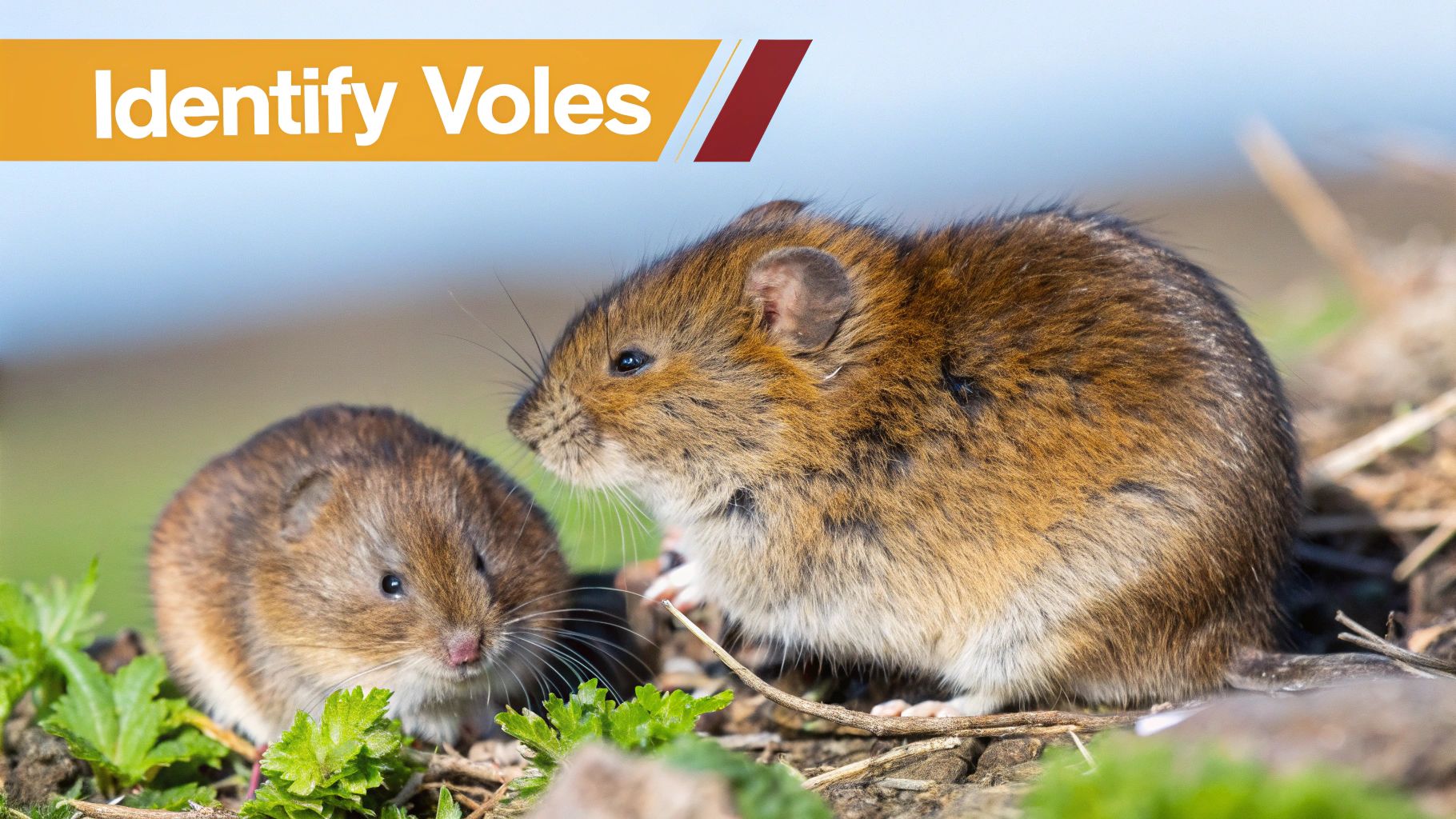
To win the battle for your yard, you first have to know your enemy. While there are several types of voles in Alberta, homeowners around Red Deer usually end up dealing with a few specific culprits. Figuring out which species you're up against is the first step, as it helps you anticipate their next move and build a smarter defence.
Think of it this way: a farm with irrigation ditches is facing a totally different challenge than a suburban home that backs onto a wooded ravine. Each environment invites a specific kind of vole, and your game plan has to match that reality.
The Forest Dweller: Southern Red-Backed Vole
If your property borders a forested area or has lots of cover like woodpiles and thick shrubs, you’ve probably met the southern red-backed vole (Myodes gapperi). This little guy is easy to spot, thanks to the reddish-brown stripe running down its back that stands out against its greyish sides.
These voles are true forest specialists. They thrive in the older stands of Alberta’s mixedwood forests where there’s plenty of cover to hide from predators. When conditions are right, their populations can absolutely explode, reaching densities of up to 64 voles per hectare. This is why areas with lots of old-growth shrubs, fallen logs, and leaf litter become vole hotspots, creating a reservoir population that can easily spill over into your yard. You can learn more about how forest features influence their numbers here.
For you, this means focusing on yard cleanup. Getting rid of debris that mimics their natural forest floor habitat is critical.
The Water Lovers: Prairie and Water Voles
For properties near streams, ponds, or even agricultural irrigation systems, two other species are the usual suspects: the prairie vole (Microtus ochrogaster) and the much bigger water vole (Microtus richardsoni).
- Prairie Vole: This is your classic grassland species. It’s responsible for most of the chewed-up runways you see crisscrossing open lawns and fields across central Alberta.
- Water Vole: As Canada’s largest vole, this hefty rodent loves moist, streamside environments. Its tunnelling habits are no joke—they can easily destabilize creek banks and wreck irrigation infrastructure.
The bottom line is that your property’s unique features directly impact your vole risk. A perfectly manicured lawn might be a magnet for prairie voles, while a nearby creek makes you a prime target for water voles. Identifying the habitat is just as crucial as identifying the vole itself.
By understanding the habits of these common voles in Alberta, you can stop guessing and start building a targeted, effective control strategy. The first and most powerful move you can make is to assess your own landscape—whether it offers forest-like cover or easy access to water—and get ahead of the problem before the damage is done.
How to Spot the Telltale Signs of Vole Damage
Catching a vole problem early is like finding a small leak in your roof before it turns into a major disaster. The trick is knowing what to look for. Think of yourself as a property detective, piecing together the subtle clues these critters leave behind. The evidence is usually clearest in the spring, right after the snow melts and reveals everything they've been up to all winter.
The most obvious giveaway? A network of surface runways. Picture a tiny, winding highway system crisscrossing your lawn. These paths are usually 2.5 to 5 centimetres wide and connect the small, golf-ball-sized holes that lead to their burrows. Voles carve out these trails by chewing the grass right down to the roots and packing down the soil as they scurry back and forth.
Damage Above and Below Ground
It's not just your lawn you need to worry about—voles often go after more valuable plants. Take a close look at the base of your young trees and shrubs. If you find irregular gnaw marks and patches of stripped bark near the ground or snow line, you're looking at girdling. This is serious business. Girdling chokes off the plant's ability to move nutrients, and it can kill an expensive tree surprisingly fast.
Another classic sign is finding little piles of clipped grass or plant stems near their burrow entrances. These are basically their meal leftovers, and it's a dead giveaway that they're actively feeding on your property.
Think of these signs as a vole's calling card. A runway here, a gnawed sapling there—each clue points to an active population that's busy undermining the health and look of your landscape. Ignoring them just gives the voles more time to multiply.
Recognizing Vole Activity Near Water
If your property is near one of Alberta's creeks or wetlands, the damage can be even more dramatic. The constant burrowing from species like the water vole (Microtus richardsoni) can cause serious erosion and make stream banks unstable. In these spots, vole populations can explode in the summer, with numbers climbing to over 12 voles per hectare. All that digging can weaken the structural integrity of banks, dikes, and even nearby farm fields. To learn more about how these specific voles operate, you can dig into the findings on small mammal distributions in Alberta.
By learning to spot these different types of damage—from runways in the lawn to girdled trees and collapsing creek banks—you can figure out how bad your vole issue really is and take action before things get out of hand.
Understanding Seasonal Vole Behaviour and Population Cycles
If you want to get a handle on voles in Alberta, you have to think like they do. These little rodents don't just show up in the spring; they have a distinct annual schedule and multi-year population cycles that can easily catch you off guard. Understanding their rhythm is the first step to staying ahead of them.
Unlike many other critters, voles do not hibernate. In fact, our harsh Alberta winters give them the perfect cover to cause chaos. They spend the cold months living and eating in the subnivean space—a protected network of tunnels and pockets between the frozen ground and the snowpack above. Shielded from predators and insulated from the bitter cold, they have months to tunnel through your lawn and chew on plant roots, completely hidden from sight until the spring thaw reveals all the damage.
This timeline gives you a good idea of when different types of vole damage are most likely to show up throughout the year.
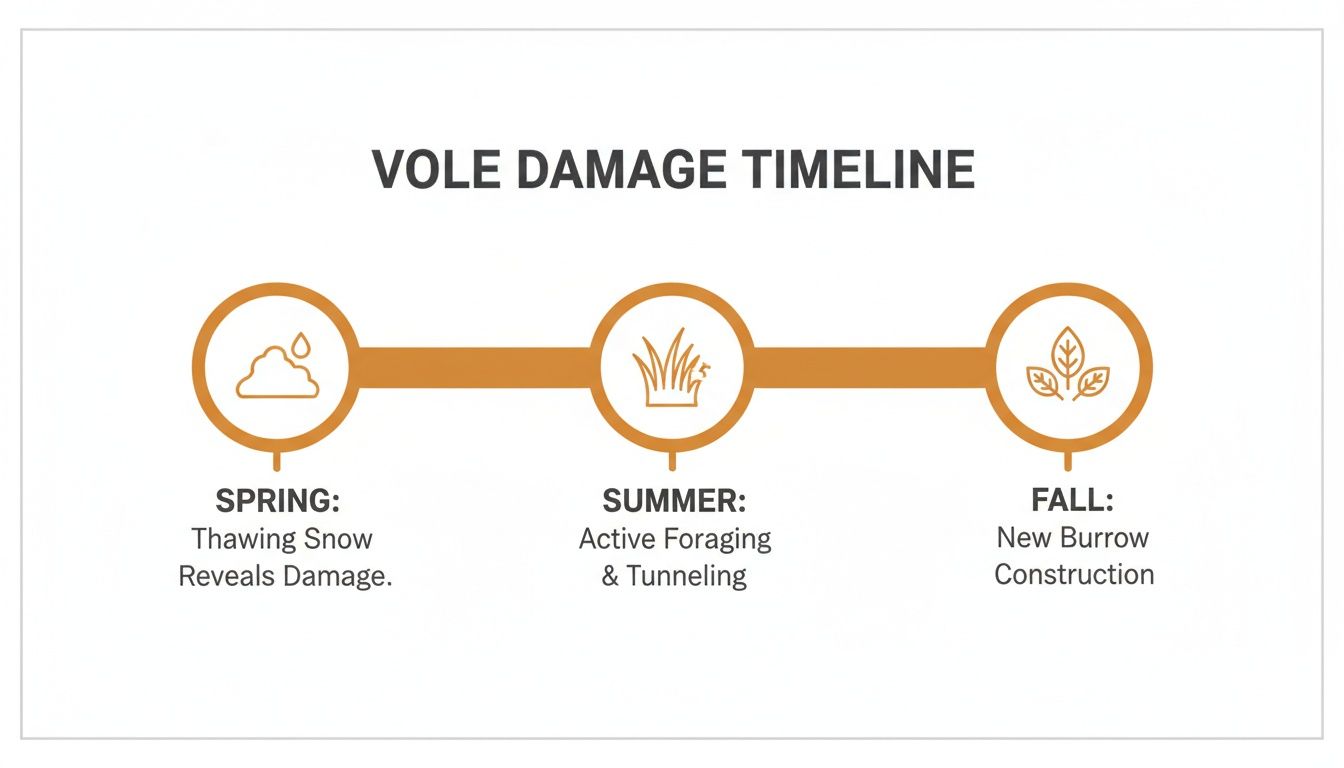
While the worst of the damage happens under the snow, any new activity you spot in the summer or fall is a major warning sign for what’s brewing for the winter.
The Boom-and-Bust Vole Population Cycle
Vole populations are famous for their cyclical "boom-and-bust" pattern. For a few years, you might barely notice them. Then, when conditions are just right—think mild winters, plenty of food, and not many predators—their numbers can explode, seemingly overnight. A minor vole issue one year can easily become a full-blown infestation the next.
This cycle is exactly why you can't let your guard down. Just because you didn't see many voles last year doesn't mean your property is safe this year. The 'bust' years can create a false sense of security right before a population 'boom.'
Research on southern red-backed voles near Alberta's boreal forests shows just how extreme these cycles get. A 21-year study found that populations peaked every 6-7 years, with fall numbers soaring as high as 25 voles per hectare. These booms are often followed by winter population crashes, which can send desperate voles scurrying toward homes and sheds looking for food and shelter. You can find more details on these long-term population studies.
Realizing that voles are active all year long, unlike other rodents who might take a winter break, is critical. When you recognize their seasonal habits and long-term cycles, you can switch from reacting to damage to proactively protecting your property before the next population boom hits.
Effective Prevention and Humane Vole Control Methods

When it comes to dealing with voles in Alberta, the best offense is a good defence. You want to make your yard as uninviting as possible. By taking a few proactive steps, you can convince them to set up camp somewhere else and avoid the headache of dealing with damage later on. Think of it as simply rolling up the welcome mat.
A really simple but effective first step is to clean up your landscape. Voles are timid and absolutely love cover that hides them from predators like hawks and owls. Keeping your lawn mowed short, especially right before the first big snowfall, takes away the tall grass they rely on for both protection and food. This one chore ruins their favourite winter hideout—that cozy, hidden space they create under the snow.
Beyond the lawn, take a look around for other potential hiding spots. Are there piles of firewood stacked against the house? Is there debris or thick, overgrown vegetation near your foundation or garden beds? These are five-star hotels for voles. Clearing these areas and keeping a clean perimeter around your property creates a wide-open space that voles will steer clear of.
Creating Physical Barriers and Denying Food Sources
Once you've tidied up the yard, the next move is to physically block their access to your prize-winning plants. This is all about humane exclusion, a core principle of any good Integrated Pest Management (IPM) strategy. It's about being proactive, not reactive.
Here are a few practical, humane ways to put up a roadblock:
- Install Tree Guards: Young or thin-barked trees are especially vulnerable. Wrap their bases with plastic tree guards or a cylinder of hardware cloth. Make sure the guard goes a few centimetres below the soil and extends well above where the snow will pile up to stop them from girdling the trunk in winter.
- Protect Garden Beds: Surround your raised garden beds with 1/4-inch hardware cloth. You'll need to bury the mesh at least 15-25 centimetres deep and have it stick up above the ground, too. This stops them from tunnelling in from below or the sides.
- Manage Bird Feeders: That spilled seed under your bird feeder is a buffet for voles. Using a tray to catch the mess or switching to a no-waste feeder design can cut off this easy food source.
A proactive strategy is always more effective than a reactive one. By making your property less hospitable before voles become a problem, you prevent the cycle of damage and control from ever starting. This saves you time, money, and the frustration of repairing a chewed-up lawn and garden.
While you're focused on voles, it's worth noting that many of these same principles apply to other landscape issues. Exploring general pest and disease management strategies can give you a broader perspective. These preventative tactics don’t just deter voles; they help build a healthier, more resilient yard that can fend off all sorts of common problems.
When to Call a Professional for Vole Control
DIY vole control is a good place to start, but sometimes the problem is just too big for off-the-shelf solutions. If you’ve done everything right and those vole runways are still carving up your lawn, that's a sure sign it's time to bring in a professional. An infestation that gets worse despite your best efforts needs a more powerful response.
Think of it this way: a few stray voles might be a manageable issue, but a full-scale invasion requires a strategic, professional game plan. When you start seeing signs of a massive population—we’re talking dozens of burrow holes, extensive girdling on several trees, or damage that seems to pop up overnight—you're likely dealing with an established colony whose breeding rate will outpace any DIY trapping efforts.
The Limits of DIY Solutions
Consumer-grade baits and traps definitely have their place, but they come with real limitations. They're often less potent and need to be placed with precision to work, which is tough for the average homeowner to get right. More importantly, using them incorrectly can be a risk to pets, kids, and non-target wildlife like hawks and owls. This is a huge reason why a persistent vole problem is best left to licensed technicians.
Professional-grade products, on the other hand, are designed for targeted, effective application. A trained expert knows exactly what to use, where to put it, and how to apply it safely to minimize any risk to the surrounding environment.
Calling a professional isn’t giving up; it’s making a smart call to protect your property. When DIY methods aren’t cutting it, an expert brings the efficiency, safety, and guaranteed results you need to take back your yard from destructive voles in Alberta.
What to Expect from Dragon Pest Control
When you call a professional service like Dragon Pest Control, you can expect a thorough, methodical process. It all starts with a detailed inspection of your property to figure out the scale of the infestation, find their nesting sites, and identify any environmental factors that are helping them thrive. From there, we build a custom treatment plan that solves your specific problem. This is no one-size-fits-all approach; it’s a targeted solution for your yard.
Our licensed technicians use proven, effective control methods to get the job done right the first time. The goal isn’t just to remove the current vole population but to make sure they don’t come back. While voles require their own unique strategies, it can be helpful to see how professionals tackle other rodent issues; learn more about our approach to getting rid of mice in our detailed guide.
Still Have Questions About Voles?
Even with a solid game plan, it's natural to have a few lingering questions about these little lawn destroyers. We get calls from homeowners all over Alberta who are facing the same frustrations, so we've put together answers to some of the most common queries.
Are Voles Dangerous to People or Pets?
This is a big concern for families, and the short answer is: not directly. Voles are timid and aren't known for being aggressive or biting. The real risk comes from what they carry with them.
Like any wild rodent, they can be hosts for parasites like ticks and fleas, which can easily find their way to your pets. Voles can also carry diseases like salmonellosis and tularemia. While direct contact is rare, their droppings and urine can contaminate your yard, so it's always smart to wear gloves when you're cleaning up their messes or handling traps. Ultimately, though, the biggest threat they pose is to your property.
Can My Lawn Actually Recover From Vole Damage?
Yes, absolutely! It might look like a disaster zone right now, but in most cases, your lawn can bounce back with a bit of TLC. Vole runways are usually shallow, damaging the grass blades and crowns but often leaving the root system intact.
The key to recovery is to act fast. If you leave those bare patches alone, you're just rolling out the welcome mat for weeds to move in and take over.
Here’s a simple recovery plan to get your grass green again:
- Gently Rake It Out: Once the snow melts, take a light rake to the damaged spots. This clears out the dead grass and debris, letting air circulate and encouraging new shoots to pop up.
- Topdress and Overseed: Sprinkle a thin layer of topsoil over the bare areas and spread a high-quality grass seed. This will help fill in the gaps before the weeds can get a foothold.
- Water and Feed: Keep the new seeds moist and give your lawn a boost with a balanced fertilizer. This gives the grass the nutrients it needs to grow back thick and strong.
With a little effort, you can erase the evidence of their winter feasting.
How Can I Tell If I Have Voles or Gophers?
This is probably the most common question we get, since both critters dig and cause trouble. The good news is, they leave very different calling cards.
Voles create shallow, visible runways right on the surface of your lawn. They look like winding, snake-like paths of dead or trampled grass connecting their small, open entry holes, which are about the size of a golf ball.
Gophers are a whole different story. They're powerful diggers that create deep, complex tunnel systems underground. You'll know you have gophers when you see large, fan-shaped mounds of fresh dirt piled up on your lawn. You won't see the crisscrossing surface trails that are the signature sign of voles in Alberta.
Tired of playing detective and just want your lawn back? Dragon Pest Control is ready to step in. Our licensed technicians offer professional, effective vole control services for homes and businesses across Red Deer and Central Alberta. Request your free quote today and let's get your vole problem sorted for good.