
Waking up with a bunch of mysterious red spots on your skin is never a good feeling. While plenty of different insects could be the culprit, bed bug bites have a few unique calling cards that help them stand apart from the crowd. Figuring out what you're looking at is the first step toward dealing with an infestation.
Bed bug bites usually show up as small, red, raised welts that are incredibly itchy. They’re often confused for mosquito or flea bites at first glance, but the real giveaway is the pattern.
The Telltale Signs of Bed Bug Bites
The most famous sign is the bite pattern itself. Bed bugs often feed multiple times in one area as they move along exposed skin, leaving behind a telltale line or a cluster of three or more bites. This classic formation is often nicknamed "breakfast, lunch, and dinner."
Unlike a mosquito that bites once and flies away, a bed bug will crawl along your skin, taking a meal, moving a short distance, and then taking another. This is what creates that distinct linear or zigzag look.
Common Locations for Bites
Since bed bugs are all about easy access, they typically bite skin that isn't covered by your pyjamas or blankets. If you suspect bed bugs, these are the first places you should be checking:
- Arms and Shoulders: These are often exposed during the night, making them an easy target.
- Neck and Face: Almost always uncovered, these areas are prime real estate for a feeding bed bug.
- Hands and Legs: Just like your arms, your limbs are frequently left out from under the covers while you sleep.
Remember, the bites themselves are only one piece of the puzzle. To really know if you have a problem, you need to look for other physical evidence. You can learn more about what to watch for by checking out the common signs of bed bugs in your home.
Bite Appearance and Sensation
How a bite looks and feels can be different for everyone. For some people, they’re just small red dots. For others, they can swell up into larger, more inflamed welts. The one thing most people agree on is the intense, persistent itch, which can be far more irritating than your average mosquito bite.
To help you quickly identify what you're looking at, here's a simple guide to the key characteristics.
Quick Guide to Identifying Bed Bug Bites
| Characteristic | Description |
|---|---|
| Appearance | Small, red, raised welts or bumps. Can have a darker red spot in the centre. |
| Pattern | Often appear in a line, cluster, or zigzag pattern of three or more bites. |
| Location | Typically found on skin exposed during sleep, like the arms, legs, neck, and face. |
| Sensation | Intensely itchy. The bites themselves are painless when they happen. |
| Reaction Time | Itching and redness can be delayed, appearing hours or even days after the bite. |
Recognizing these signs can help you determine if bed bugs are the cause of your skin irritation, allowing you to take the next steps faster.
Here's a crucial clue: the reaction time. A flea bite starts itching almost right away, but the irritation from a bed bug bite can be delayed. It might take hours—or even up to two weeks—for the red bumps and itching to show up as your body reacts to the bug's saliva.
This delayed reaction is one of the main reasons an infestation can grow without anyone noticing. According to health authorities like the California Department of Public Health (CDPH), the bites are painless when they happen. Most people have no idea they’ve been bitten until the welts and itching start much later.
Bed Bug Bites vs. Other Common Insect Bites
Waking up with a patch of itchy, red welts is always unpleasant, but it’s a good idea to take a breath before jumping to conclusions. So many things can cause skin irritation, from run-of-the-mill insect bites to simple allergic reactions. Knowing how to tell bed bug bites apart from the others is your first step toward figuring out who your unwelcome guest is and getting the right solution.
The biggest giveaway is usually the pattern and the feeling of the bites. A mosquito tends to leave a single, random welt, and a flea often goes for your ankles. Bed bugs, on the other hand, are a bit more methodical. They typically leave their mark in distinctive lines or small clusters on skin that was exposed while you were sleeping.
This visual guide breaks down the three most common signs you’re dealing with bed bug bites.
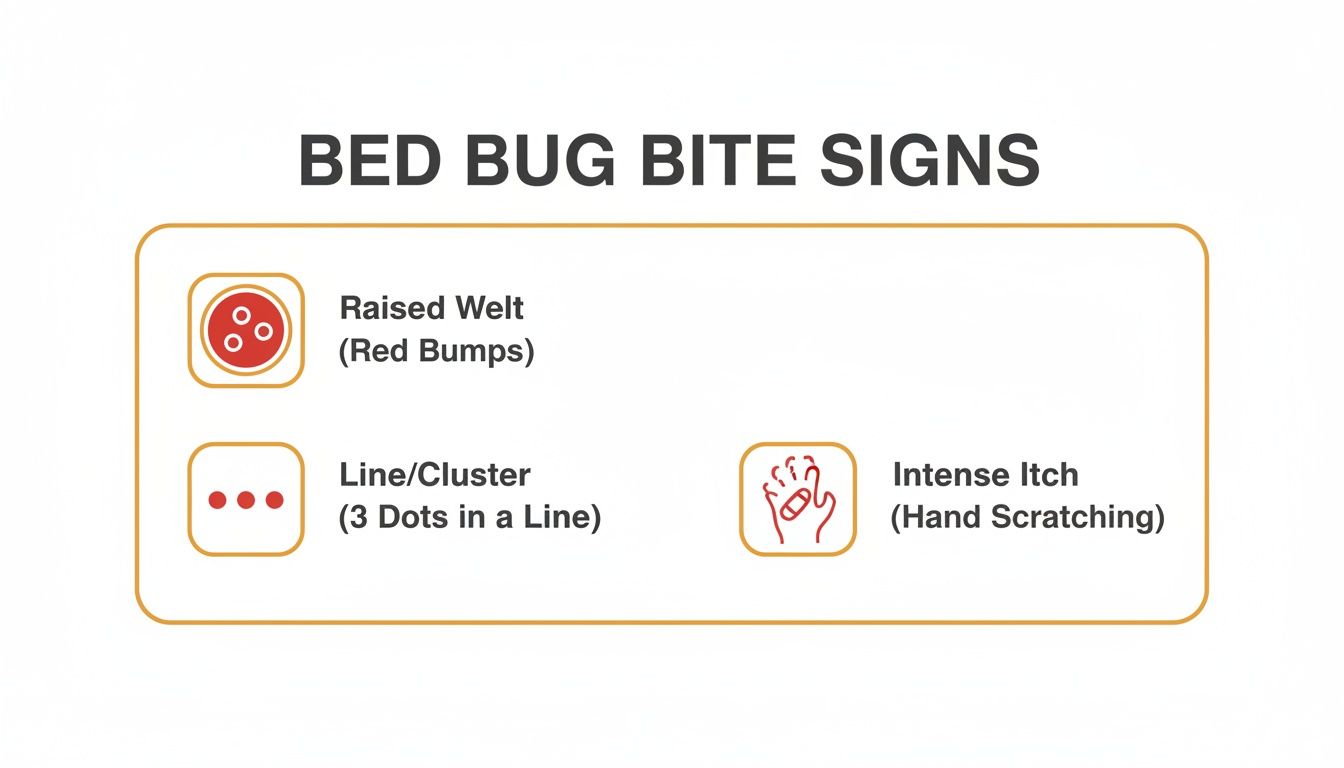
As you can see, that classic trio of raised bumps, a linear pattern, and an itch that just won't quit are the textbook indicators of a bed bug problem.
Spotting the Difference Among Pests
Telling one bite from another can feel like a bit of detective work. Flea bites, for example, are usually tiny, super-itchy red dots you’ll find grouped around your feet and ankles. Mosquito bites are those familiar puffy, isolated welts that can pop up anywhere you had skin showing. Bed bug bites stand out because of that signature grouped or "breakfast, lunch, and dinner" line formation.
Spiders get blamed a lot, but they usually only bite in self-defence. A spider bite is more likely to be a single, painful lesion—sometimes with two tiny puncture marks you can see up close. That’s a world away from the multiple, maddeningly itchy bumps left behind by bed bugs.
A key differentiator is the timing of the itch. Flea bites itch almost immediately. In contrast, the irritation from bed bug bites can be delayed by hours or even days, as your body slowly reacts to the anticoagulant in their saliva.
To make things a bit clearer, let’s put the usual suspects side-by-side in a simple chart. The real clues are in the pattern, location, and what the bites feel like—these details tell the story of what actually bit you.
Bite Identification Chart: Bed Bugs vs. Other Culprits
This table breaks down the key differences between bed bug bites and other common skin irritations.
| Bite Type | Appearance & Pattern | Common Location | Key Symptoms |
|---|---|---|---|
| Bed Bugs | Red welts in a line, cluster, or zigzag. Often has a red dot in the centre. | Exposed skin like arms, neck, shoulders, and face. | Intense, persistent itching; reaction can be delayed. |
| Mosquitoes | Puffy, white or reddish bumps appearing in random, isolated spots. | Any area of exposed skin. | Immediate itching and visible swelling. |
| Fleas | Small, very itchy red dots, often surrounded by a reddish halo. | Lower legs, ankles, and feet. | Immediate, severe itching; often in sporadic clusters. |
| Spiders | Typically a single, swollen, and sometimes painful red mark. May have two puncture marks. | Any part of the body. | Can range from mild irritation to sharp pain, depending on the spider. |
As the chart shows, context is everything. A few bites on your ankles after a walk through tall grass probably points to fleas, while one painful welt could easily be a spider. But if you keep waking up with new lines of itchy bumps on your arms and neck, that’s a very strong signal to start looking for other signs of bed bugs.
The Timeline of a Bed Bug Bite
One of the most confusing things about bed bug bites is figuring out when they actually happened. Unlike a quick, sharp mosquito bite that you notice right away, the reaction to a bed bug is almost always delayed. This confusing timeline is one of the main reasons infestations get out of hand before they're even discovered.
The whole process starts the moment a bed bug feeds, but you won't feel a thing. As it bites, it injects a tiny bit of saliva containing both an anaesthetic and an anticoagulant. The anaesthetic numbs the area so you don't wake up, and the anticoagulant keeps the blood flowing. It's a sneaky, efficient process that leaves you completely unaware.
The Delayed Reaction Phase
The real evidence—the red, itchy bumps—doesn't show up until your body starts reacting to the foreign proteins in the bug's saliva. This is a classic allergic reaction, and just like any other allergy, the timing can be wildly different from person to person. Some people might see red welts pop up within a few hours. For others, it could take up to two weeks for anything to appear.
This massive delay is a huge problem. You could get bitten during a weekend trip and not see a single mark until you're long back home, making it incredibly difficult to pinpoint the source of the infestation.
It's crucial to remember that some individuals never react at all. Just because one person in a bed has bites doesn't mean the other isn't being bitten; they may simply not show any symptoms.
Healing and Progression
Once the welts finally appear, the main complaint is intense itching, which can hang around for one to two weeks. The healing journey usually looks something like this:
- Initial Appearance: The bites show up as red, swollen bumps, often in those tell-tale lines or clusters.
- Peak Itching: The itch is usually at its worst for the first few days after the welts appear.
- Healing Stage: As long as you can resist scratching, the swelling and redness will slowly fade over the next week or two.
Of course, scratching is the biggest roadblock to healing. It can easily break the skin and lead to a secondary infection, which means more pain, a longer healing time, and even potential scarring. Public health data has long shown that bites can take anywhere from 1 to 14 days to appear after a bed bug feeds. You can find more detail on this from the California Department of Public Health.
Looking Beyond the Bites for Proof
Figuring out what bed bug bites look like is a great first step, but relying on skin reactions alone can send you down the wrong path. Everyone’s body reacts differently—some people won’t show any marks at all.
The only way to be 100% sure you have a bed bug problem is to find cold, hard evidence. Think of yourself as a home detective. The bites are your first clue, but now you need to find the suspects or the unmistakable signs they leave behind. This means you’ll have to put on your investigator hat and get ready for a thorough search.
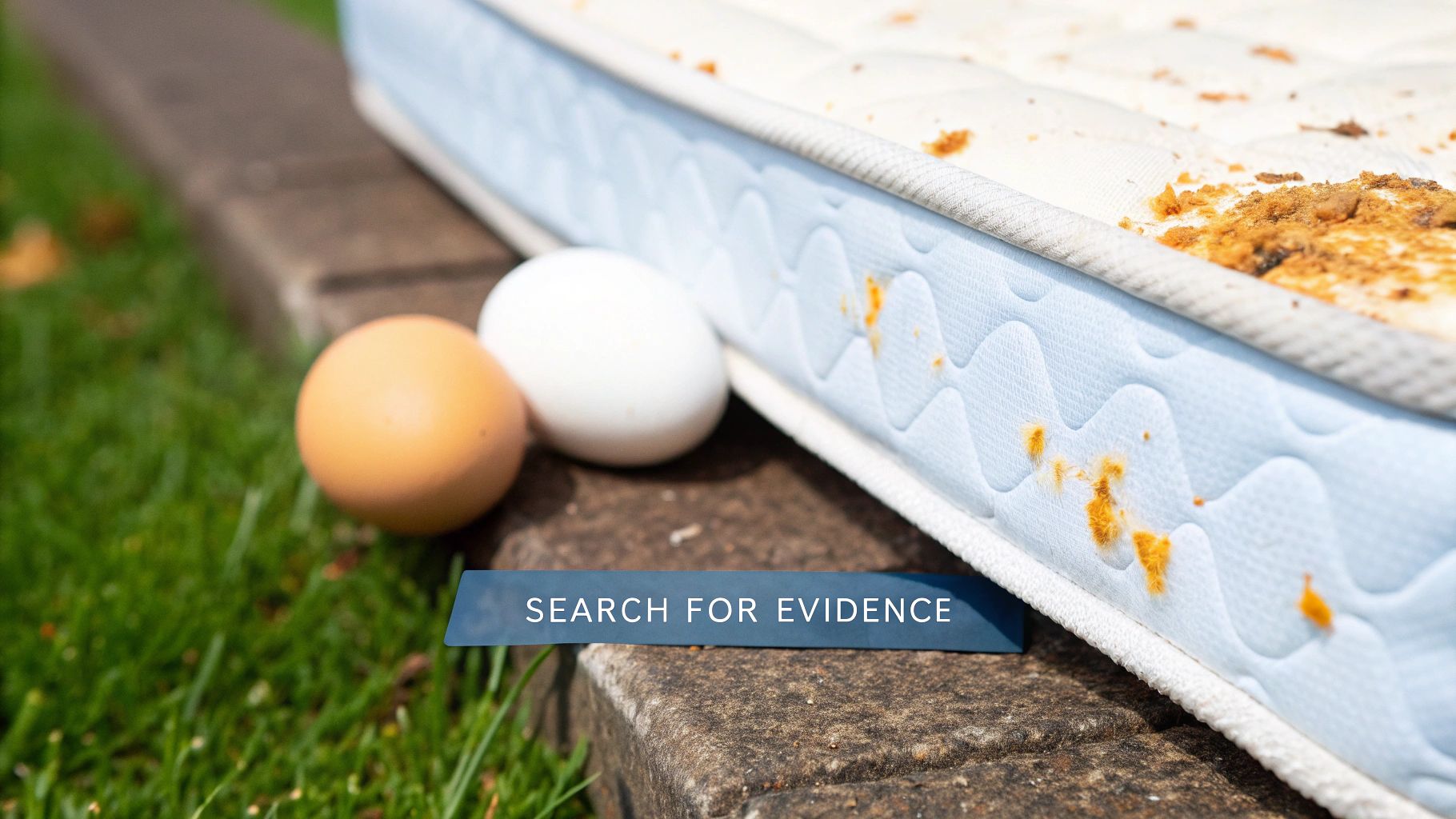
Your Evidence Checklist
When you start your search, you're looking for much more than just the bugs themselves. Keep a sharp eye out for these specific clues they leave in their hiding spots.
- Fecal Spots: These look like tiny black dots, almost as if someone took a fine-tipped marker to your sheets or mattress. It’s digested blood, so it will smear if you wipe it with a damp cloth.
- Shed Skins: As young bed bugs (called nymphs) grow, they shed their skin. You’ll find these translucent, empty bug-shaped casings left behind.
- Tiny Eggs: Bed bug eggs are incredibly small—about the size of a pinhead—and pearly white. They're often laid in tight little clusters, tucked away in fabric seams or hidden crevices.
Finding any one of these signs is a definite confirmation that you have an active infestation on your hands.
The biggest mistake people make is only checking the top of their mattress. A quick glance is never enough. Bed bugs spend most of their time completely hidden from view.
Prime Hiding Spots to Inspect
Bed bugs are smart; they like to hide close to their next meal—which is you. That’s why over 70% of infestations are found in and around the bed. Grab a flashlight and get ready to peer into every dark corner.
Your search should definitely include:
- Mattress and Box Spring: Check along every seam, tuft, and tag. You’ll need to flip the mattress over and inspect the underside. On the box spring, pay close attention to the plastic corner guards.
- Bed Frame and Headboard: If you can, take the bed frame apart. Look inside every joint, screw hole, and crack—especially where the headboard connects to the wall or the frame.
- Nearby Furniture: Don't stop at the bed. Nightstands, dressers, and even upholstered chairs are prime real estate. Pull out the drawers and check the undersides and joints.
- Around the Room: Think like a bug. Look behind picture frames, under any loose wallpaper, along the baseboards, and even inside electrical outlet covers.
Confirming you have these pests is the most important step before you can take action. For a more detailed guide on telling them apart from other bugs, check out our article on what do bed bugs look like for clear pictures of them at every life stage. Once you have proof, you can move forward with a treatment plan confidently.
How To Soothe Bites And Secure Your Home

Realizing you have bed bug bites is a pretty awful moment. That initial shock quickly turns into a two-pronged mission: stop the itching and stop them from biting you again. These first few steps are all about getting some immediate relief and putting up a basic defence to keep things from getting worse while you figure out your next move.
First things first, let's deal with those bites. The itch can be absolutely relentless, and scratching too much can break the skin and lead to a nasty secondary infection. A little proper care now goes a long way.
Immediate First-Aid For Bites
You don't need anything fancy to start. Simple, effective remedies you probably already have can calm your skin right down.
- Wash the Area: Gently clean the bites with some mild soap and lukewarm water. This is just to get any bacteria off the surface and lower the risk of infection.
- Apply a Cold Compress: Grab an ice pack, wrap it in a towel, and hold it on the bites for about 10-15 minutes at a time. The cold is great for numbing the area and bringing down that angry-looking swelling and redness.
- Use Anti-Itch Creams: An over-the-counter hydrocortisone cream or even some calamine lotion can be a lifesaver. A few applications throughout the day will make the whole healing process much more tolerable.
Securing Your Sleep Space
While you're treating the bites, you also have to tackle the source. Taking some quick action in the bedroom can slow down their spread and, honestly, just help you feel a bit more in control of the situation.
These initial steps are not a replacement for a professional exterminator. Think of this as damage control—it's about containing the problem while you wait for the experts to deliver a permanent solution.
Start by carefully stripping all your bedding—sheets, pillowcases, comforters, everything. Seal it all in a plastic garbage bag right there in the room so you don't accidentally drop any bugs on your way to the laundry. Wash it all in the hottest water setting your machine has, then dry it on high heat for at least 30 minutes. That heat will kill both live bugs and their eggs.
Next, get the vacuum out. Go over your mattress, box spring, bed frame, and the entire floor area around your bed. Really get into the seams, corners, and any little cracks you see—that’s exactly where they love to hide. Besides treating bites, securing your home starts with a deep clean, and knowing how to effectively clean a mattress is a crucial skill here. Lastly, clear away any clutter around your bed. Piles of clothes, books, or boxes are basically luxury condos for bed bugs.
Why Professional Help Is Essential for Bed Bugs
So, you’ve found evidence of bed bugs. That discovery is unsettling, and the next step you take is the most important one. It’s incredibly tempting to grab a can of bug spray from the local store and try to handle it yourself, but trust me, bed bugs are not a simple DIY problem. These pests are absolute masters of survival.
Bed bugs are unbelievably resilient creatures. They can flatten their bodies to an almost paper-thin profile, letting them hide in nearly invisible cracks in your walls, furniture, baseboards, and even inside electronics. This sneaky hiding ability makes them extremely difficult to track down and eliminate completely.
To make matters worse, many bed bug populations across North America have developed a significant resistance to the common pesticides found in consumer-grade products. Using these over-the-counter solutions often just scatters the bugs, pushing them deeper into your home and making the infestation far more difficult to treat later on.
The Value of Professional Methods
Professional pest control technicians don’t just show up, spray a few chemicals, and hope for the best. We use a systematic, multi-pronged attack built on years of experience and powerful tools that aren't available to the public. This is where you get real value and lasting results.
A trained expert from Dragon Pest Control understands bed bug behaviour inside and out. We know exactly where they hide, from the seams of your mattress to the back of picture frames and inside electrical outlets. This level of thoroughness is absolutely crucial for complete eradication.
In California, data indicates that 92% of infestations are first identified by the bites themselves. Individuals often seek help after noticing itchy, red welts, which can take up to 14 days to appear, leading to significant anxiety and lost sleep. Learn more about these bed bug statistics and facts.
Ultimately, bringing in a professional is the only truly reliable way to solve a bed bug infestation and get your peace of mind back. We use proven methods like targeted heat treatments or carefully applied, professional-grade insecticides to ensure every last bug and egg is destroyed for good.
Booking a professional pest control service is an investment in a guaranteed solution. It saves you the time, money, and immense stress of failed DIY attempts and ensures your Red Deer home is truly bed bug-free.
Have More Questions? Here Are a Few Common Ones
Even when you think you've found bed bug bites, a lot of questions—and myths—can start swirling around. Getting straight answers is the first step to tackling the problem and getting your peace of mind back.
Can Bed Bug Bites Transmit Diseases?
You can rest easy on this one. All the current evidence shows that bed bugs do not transmit diseases to people. The real health risks come from secondary skin infections if you scratch the itchy welts too much, along with the serious mental toll—like anxiety and insomnia—that an infestation can cause.
Why Am I The Only One Getting Bites?
This is a classic, and incredibly common, situation. How people react to bed bug bites is completely different from person to person. It’s entirely possible for one person to be covered in itchy red marks while the person sleeping right next to them shows no signs at all.
This doesn't mean they aren't being bitten; their body simply isn't having an allergic reaction to the bug's saliva. This is precisely why looking for physical signs of bed bugs is far more reliable than relying on bites alone.
How Long Does It Take to Get Rid of Bed Bugs?
Getting rid of a bed bug infestation for good is a process, and how long it takes really depends on the size of the problem and the treatment method. Professional treatments are, by far, the most effective route. A structured, multi-visit plan can typically solve the problem in a few weeks. DIY methods, on the other hand, often fail, can make the infestation worse, and drag out a stressful experience for months with no real success.
Don't let bed bugs disrupt your life. For guaranteed, professional extermination in Red Deer, trust the experts at Dragon Pest Control. Get your free quote and reclaim your home today.