

If you've ever asked yourself, what do bed bugs look like, the simplest answer is a tiny, flat apple seed. It's a surprisingly accurate comparison for a quick ID check, and it's what most people think of when they picture an adult bed bug.
A Clear Look At The Common Bed Bug
That "apple seed" comparison is a fantastic starting point, but knowing a few more details is what will help you confidently tell them apart from other common household pests. Their appearance isn't set in stone; it actually changes quite a bit depending on their age and, more importantly, whether they've recently had a meal.
An unfed adult is very flat and a lighter brown colour. But once it has fed, it becomes swollen, more elongated, and takes on a much deeper, rusty-red hue. It's a dramatic transformation.
Knowing the precise size and appearance is vital for proper identification. Adults are typically about 4-5 mm long, or roughly 1/5 of an inch. The real challenge comes with the nymphs (the young bed bugs). They are much smaller and can be nearly translucent or a pale yellowish-white, making them incredibly difficult to spot on bedding or furniture. As health officials often point out, it's these less-obvious stages that allow an infestation to grow unnoticed.
Key Visual Identifiers
To make identification a bit easier, let's break down the key visual traits you'll see across the main life stages. Each stage presents a different challenge for detection, so knowing exactly what to look for is crucial. If you're trying to differentiate them from other common household insects, our pest library has detailed profiles to help you out.
Here’s a quick reference table to help you recognize what you might be seeing on your property.
Bed Bug Identification Quick Guide
This table provides a quick comparison of the key visual traits of bed bugs at each stage of their life.
| Life Stage | Size | Colour | Key Features |
|---|---|---|---|
| Adult | 4-5 mm (like an apple seed) | Reddish-brown | Flat, oval-shaped body that becomes swollen and darker after feeding. |
| Nymph | 1.5-4.5 mm (pinhead to sesame seed) | Translucent to pale yellow-brown | A miniature, paler version of an adult; darkens with each molt. |
| Egg | ~1 mm (grain of salt) | Pearly white, slightly transparent | Tiny, barrel-shaped, and often found in sticky clusters in hidden cracks. |
Remember, seeing any of these signs is cause for a closer look.
The most common mistake people make is overlooking the nymphs and eggs. Because they are so small and pale, it's easy to dismiss them as specks of dirt, which allows an infestation to grow right under your nose. Always use a flashlight during an inspection to catch the light glinting off these harder-to-see stages.
Identifying Bed Bugs at Every Life Stage
Spotting a single adult bed bug is a sure sign you're only seeing the tip of the iceberg. To truly understand the scope of an infestation, you need to know what you’re looking for at every stage of their life. Their appearance changes drastically from egg to adult, and catching them early is your best defence.
This timeline shows just how quickly a few bugs can become a major problem.
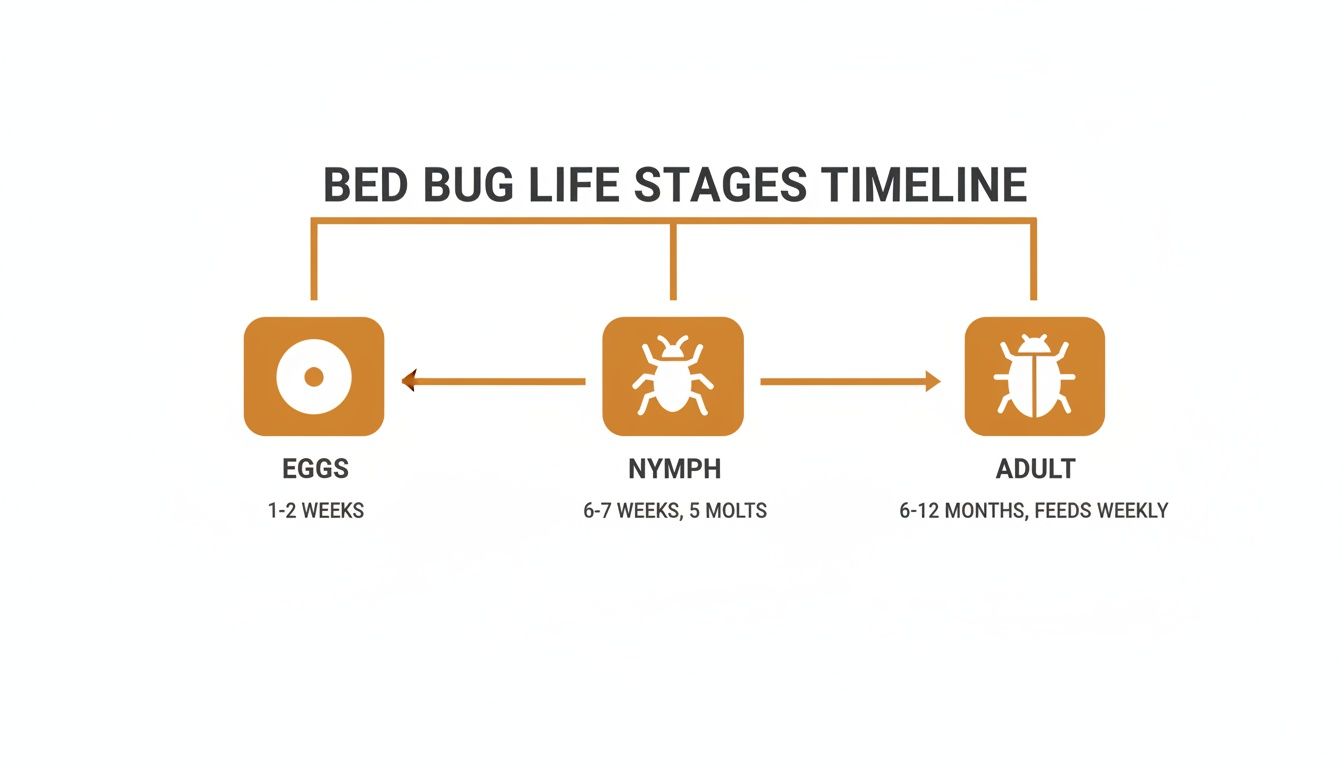
As you can see, the journey from egg to a reproducing adult can take as little as one month. This is why a small problem can get out of hand so fast.
The Overlooked Beginning: Bed Bug Eggs
Bed bug problems start with eggs that are incredibly easy to miss. They’re tiny, pearly-white specks, only about 1 mm long—roughly the size of a pinhead. Females lay them in tight, hidden clusters, using a sticky film to glue them to surfaces.
You’ll almost never find these out in the open. Instead, grab a flashlight and check inside:
- Mattress seams and piping
- Cracks in your bed frame and headboard
- Crevices in the joints of nearby furniture
Because they're so small and well-hidden, eggs are the most commonly overlooked sign of a new infestation. A bright light is your best tool for catching the slight glint of their shells in dark corners.
If a bed bug egg is more than five days old, you might see a tiny black dot inside—that's the developing nymph's eye. Spotting this is a dead giveaway that you have an active and growing population.
The Translucent Nymph Stage
Once an egg hatches, a bed bug nymph emerges. Think of them as miniature, see-through versions of the adults. Freshly hatched nymphs are nearly colourless, which makes them almost invisible on light-coloured bedding.
A nymph has to feed on blood before it can molt (shed its skin) and grow. It goes through five of these molting stages on its way to adulthood. With each blood meal and molt, it gets a bit bigger and darker, changing from translucent to a pale tan, and finally to a deeper brown. Right after feeding, a nymph will look bright red and swollen, making it much easier to spot.
Finding their shed skins is a huge clue. If you see these empty, translucent casings in various sizes, it’s a strong sign you have multiple generations of bed bugs living, feeding, and growing in your home. An experienced exterminator can tell a lot about an infestation just by looking at these lifecycle clues.
Common Pests Mistaken For Bed Bugs
Just because you see a small, brown bug doesn't automatically mean you have bed bugs. Misidentification is one of the biggest hurdles homeowners face, often leading to the wrong treatment and a whole lot of unnecessary stress. Many common household insects can look surprisingly similar at first glance, but knowing what to look for can save you a massive headache.
Before you panic, take a moment to get a closer look. Small differences in shape, colour, and even where you find the bug can tell you whether you're dealing with bed bugs or one of their common look-alikes. Getting this first step right is absolutely crucial.
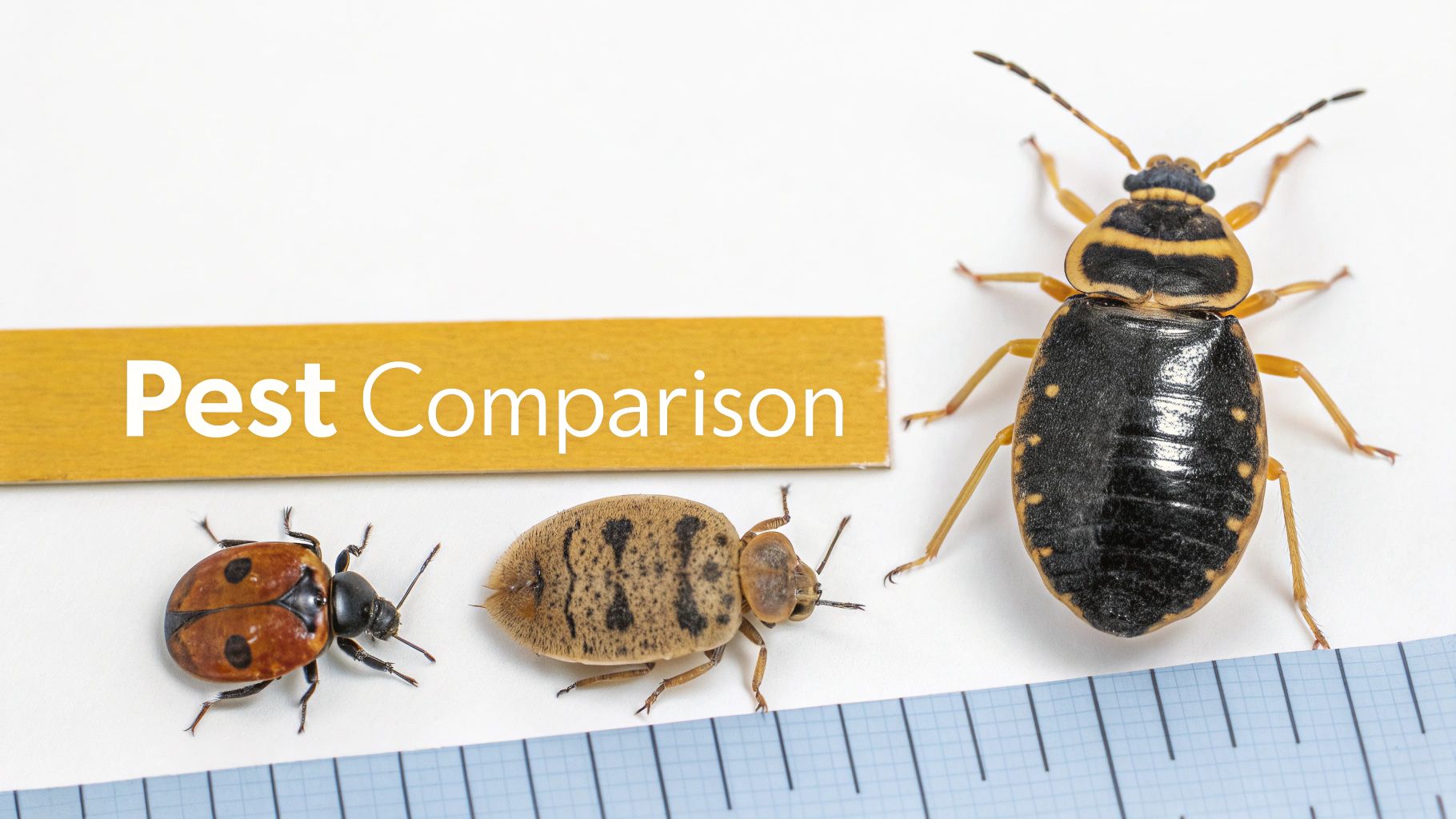
Carpet Beetles
Carpet beetles are probably the most frequent cause of bed bug false alarms. They are small and somewhat oval, but their body shape is much more rounded and dome-like, unlike the distinctly flat profile of a bed bug. Their colouring is another dead giveaway.
- Appearance: Carpet beetles usually have a mottled or speckled pattern of black, white, and brown or yellow scales.
- Behaviour: The damage they leave behind is another clue. Their larvae feast on natural fibres, so if you find tiny holes in wool carpets, clothing, or furniture, you're likely dealing with carpet beetles. They don't bite people.
Spider Beetles
A spider beetle can definitely trick you if you're not paying attention. They have long, spindly legs and a small, bulbous body that can be reddish-brown, much like a bed bug that has just had a blood meal. The body shape, however, is completely different.
A spider beetle's body is smooth, shiny, and almost perfectly round—like a tiny bead. This is a far cry from the flattened, wide oval shape of a bed bug. You'll typically find them scavenging in pantries or near stored food, not hiding out in your mattress seams.
Bat Bugs
Now, these are the true masters of disguise. Bat bugs are so closely related to bed bugs that they look nearly identical to the naked eye. They have the same size, reddish-brown colour, and flat, oval shape. Telling them apart requires a close, and I mean really close, look.
The only reliable way to distinguish a bat bug from a bed bug is to examine the tiny hairs on their upper thorax under a microscope. Bat bugs have hairs that are longer than the width of their eye, while a bed bug's are shorter.
Since that's nearly impossible without professional equipment, your best clue is location. If you know you have bats roosting in your attic or walls, there's a good chance you have bat bugs, not bed bugs.
Bed Bugs Vs Other Common Pests
When you’re not sure what you’re looking at, a side-by-side comparison can make all the difference. This table breaks down the key features to help you figure out what kind of bug you've found.
| Pest | Appearance | Size | Key Difference From Bed Bugs |
|---|---|---|---|
| Bed Bug | Flat, broad, and oval-shaped. Reddish-brown. | 4-5 mm | Extremely flat body (when unfed). Found in and around sleeping areas. |
| Carpet Beetle | Rounded, dome-like oval. Mottled black, white, and brown. | 2-4 mm | Speckled pattern and a rounder shape. Damages fabrics but doesn't bite. |
| Spider Beetle | Small, round, and bead-like with long legs. Shiny reddish-brown. | 1-5 mm | Bulbous, non-flat body. Usually found near stored food sources. |
| Bat Bug | Flat, broad, and oval-shaped. Reddish-brown. | 4-5 mm | Nearly identical; has longer body hairs (visible under magnification) and is associated with bats. |
At the end of the day, if there's any doubt, the safest bet is to carefully capture a sample of the pest and call in a professional. The experts at Dragon Pest Control can give you a definitive ID, ensuring you get the right treatment from the very start.
Finding The Hidden Signs Of An Infestation
Long before you ever lay eyes on a live bed bug, they'll leave behind a trail of subtle clues. Think of it like being a detective in your own home—learning to spot these signs early can stop an infestation before it truly takes hold. In most cases, it’s this secondary evidence, not the bug itself, that confirms you have a problem.
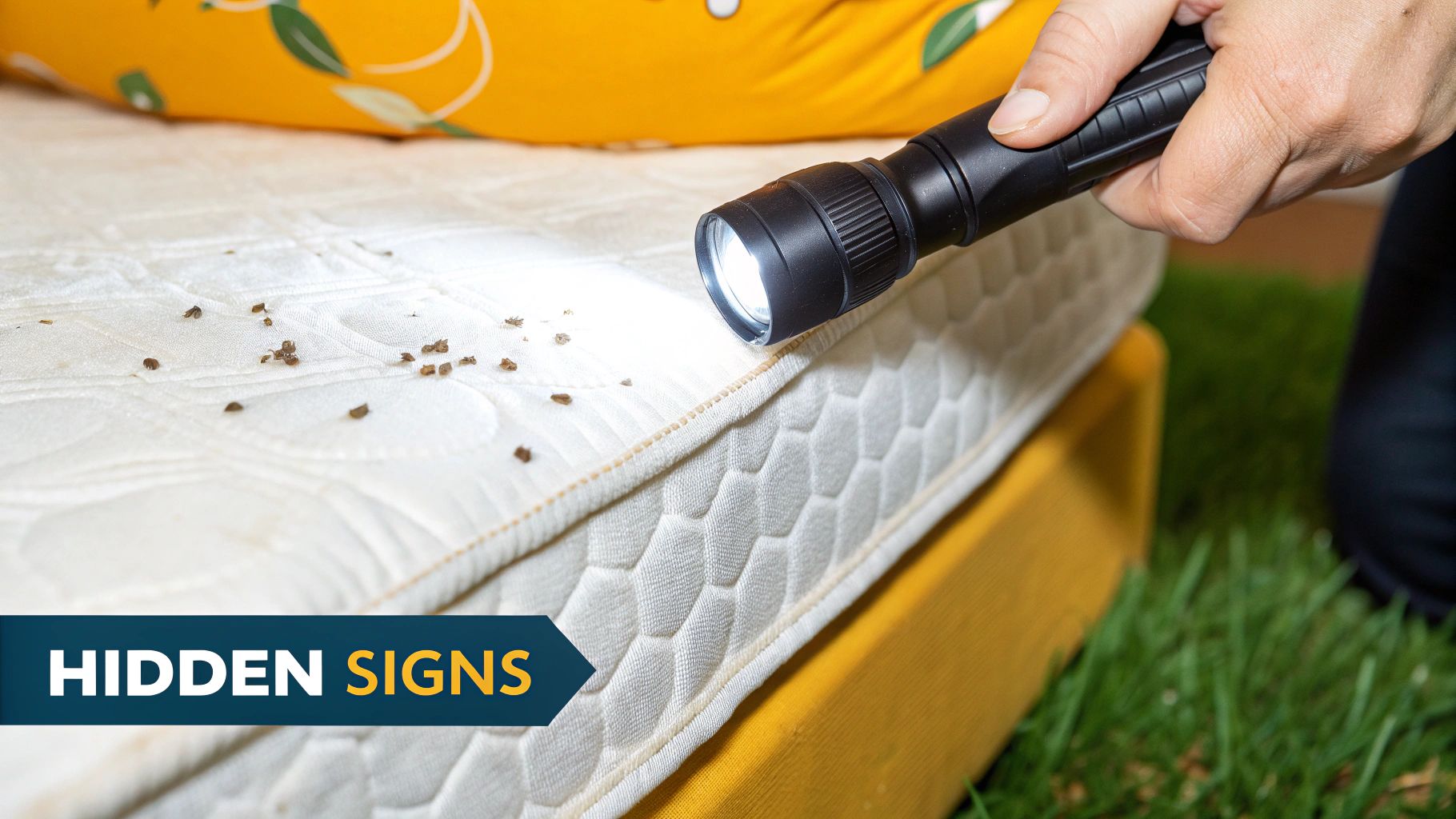
The most common and tell-tale sign is their fecal matter. These are tiny, dark spots that look like someone took a fine-tipped black marker and dotted it on your sheets, mattress, or furniture. When you find these little black or reddish-brown stains, especially clustered along mattress seams, you're looking at undeniable proof of bed bug activity.
Uncovering The Evidence They Leave Behind
Beyond just fecal spots, keep an eye out for shed skins. As nymphs grow, they moult and leave their empty, translucent exoskeletons behind. Finding these delicate, bug-shaped casings in different sizes is a clear signal that a population is not just present, but actively growing in your home. They tend to pile up in the same hidden spots where the bugs like to gather.
These tiny pests, which are easily mistaken for apple seeds or a bit of lint, are masters of hiding. They cram themselves into mattress seams, along baseboards, and deep within furniture cracks. Their uniquely flat bodies allow them to squeeze into the tightest spaces imaginable near where you sleep. A recent study on California's most infested cities gives you an idea of just how good they are at getting around and staying hidden.
Another piece of the puzzle is their eggs. While they are incredibly difficult to spot, finding them is a sure sign of an active infestation. The eggs are tiny, pearly-white ovals about 1 mm long and are often laid in sticky clusters inside dark cracks and crevices, like your bed frame or furniture joints. You'll need a bright flashlight to have any hope of catching the faint sheen of these hidden eggs.
One of the more unsettling signs is a very distinct odour. Large, well-established infestations can produce a musty, sweet smell that people often compare to coriander or old, damp laundry. If you notice this strange scent concentrated around your bed, it's a major red flag that calls for an immediate, thorough inspection.
When you start putting all these clues together—the fecal stains, the shed skins, the eggs, and that strange smell—it paints a pretty clear picture. A single sign is cause for concern, but finding several types of evidence means it’s time to take action. Don't brush these subtle signs aside; they are your best early warnings.
How To Conduct A Thorough Bed Bug Inspection
Thinking you have bed bugs is enough to make anyone lose sleep. But before you let your imagination run wild, a careful and methodical inspection can help you figure out what’s really going on. Instead of tearing your room apart in a panic, it’s time to play detective.
You don’t need a fancy kit for this. All it takes is a bright flashlight—the one on your phone will do just fine—and something thin and stiff, like a credit card or a playing card. This simple tool is perfect for sliding into tight seams and crevices where bed bugs are masters at hiding.
Starting Your Search Where They Live
It makes sense to start your hunt right where bed bugs are most likely to be found: the bed. In fact, over 70% of infestations are concentrated on the mattress, box spring, and bed frame. First, strip off all the sheets, pillowcases, and blankets, checking each piece carefully for live bugs or the little black dots that are their fecal spots.
With the bed bare, it’s time to get up close and personal with the mattress. You’ll want to pay special attention to a few key areas:
- Seams and Piping: Take your credit card and run it firmly along every single seam and edge. You're trying to push out any bugs, eggs, or papery shed skins that might be tucked away.
- Tufts and Folds: Every little button tuft or fold in the fabric is a five-star hotel for a bed bug. Check inside each one.
- Labels and Tags: Don't skip the manufacturer's tags. Lift them up and inspect the area underneath.
Next, turn your attention to the box spring. If you can, peel back or remove the fabric dust cover on the bottom to get a look at the wooden frame inside. This dark, quiet space is a favourite hiding spot and often where you'll find a major infestation. Finally, go over the headboard and bed frame with your flashlight, checking every crack, joint, and screw hole.
Expanding The Inspection Zone
Once you’ve given the bed a thorough once-over, it’s time to widen your search area. Bed bugs are willing to travel a few feet from their hiding spots for a meal, which means any furniture near the bed is prime real estate.
Work your way through the items closest to the bed—nightstands, dressers, and even upholstered chairs. Pull drawers completely out to inspect the joints and the undersides. Be sure to pick up lamps, alarm clocks, and picture frames; you’d be surprised by the tiny gaps they can squeeze into.
Don’t forget to check the less obvious places. Bed bugs have been found hiding behind peeling wallpaper, inside electrical outlets, and along the tack strips of carpeting right where it meets the baseboard. A proper inspection leaves no stone unturned.
By following this step-by-step process, you give yourself the best shot at finding hard evidence. If your search confirms your fears, don't wait. The best next step is to call a professional right away.
Why Professional Bed Bug Control Is Essential
Finding bed bugs is enough to make anyone's skin crawl, and it’s completely natural to want to tackle the problem yourself right away. The trouble is, DIY solutions almost always fall short against these incredibly stubborn pests, leading to a much longer, more frustrating battle.
Over-the-counter sprays just don't pack the punch they used to. Why? Because bed bugs have become impressively resistant to most common pesticides.
Then there's their hiding game. They are masters of concealment. Now that you know what they look like at every stage, you can appreciate just how tiny they are—small enough to vanish into the slightest crack or seam. Spraying the bugs you can see does nothing about the nests tucked away inside your walls, furniture, or box spring. The population will just bounce back, sometimes stronger than before.
Trust The Experts At Dragon Pest Control
This is exactly where calling in a professional makes all the difference. At Dragon Pest Control, our licensed technicians in Red Deer and across central Alberta don't just spray and pray. We use proven, industry-leading methods that get right to the source of the infestation. We know how they think, where they hide, and have the right tools to treat every last hiding spot.
Don't let a small issue turn into a full-blown nightmare. A half-hearted treatment often just scatters the bugs, making them even harder to track down and wipe out later. A professional approach ensures the entire population is targeted for complete elimination.
Our team provides comprehensive bed bug control services that are tough on pests but safe for your family and pets. It's also worth knowing that a complete strategy goes beyond just the treatment itself; for instance, understanding the broader role of carpet cleaning in pest control efforts can support the work we do. With our industry-leading guarantee, you can finally get the peace of mind that comes from knowing the job is done right.
Frequently Asked Questions About Bed Bug Identification
Even after reading a detailed guide, it's natural to have a few more questions pop up, especially when you're worried about bed bugs. Getting straight answers can make all the difference in staying calm and figuring out what to do next. Let's tackle some of the most common ones we hear.
Are Bed Bugs Big Enough To See With The Naked Eye?
Yes, you can definitely see adult bed bugs without any special equipment. A full-grown adult is about the size of a flat apple seed, roughly 4-5 mm long. While they're masters of hiding, if one is out in the open, you won't need a microscope to spot it.
The real challenge is seeing the younger ones. Nymphs (young bed bugs) and their eggs are incredibly small and almost translucent, so you'll likely need a good flashlight and a very close look to find them.
What Do Bed Bug Bites Look Like?
This is a tricky one because bed bug bites look different on everyone, which is why they aren't a reliable sign of an infestation on their own. For most people, they show up as small, red, and very itchy welts. You’ll often see them in a straight line or a zigzag cluster of three to five bites, a pattern some people call "breakfast, lunch, and dinner."
But here's the catch: some people have no reaction at all. That's why it's far more important to look for physical evidence of the bugs themselves—like the dark fecal spots or shed skins—to know for sure what you're dealing with.
I Think I Found A Bed Bug What Is The First Thing I Should Do?
If you've found what you believe is a bed bug, the very first thing to do is try to capture it. Carefully scoop it into a sealed plastic bag or a small, secure container. Having a physical sample is incredibly helpful for a professional to make a positive identification.
The most important thing to avoid is reaching for a can of bug spray or a fogger from the store. These DIY products rarely work and often just make the problem worse by scattering the bed bugs into deeper hiding spots throughout your home.
Your best move is to call a licensed pest control professional right away. They can perform a thorough inspection and tell you exactly what's going on. If other questions are on your mind, you can find more answers on our frequently asked questions page.
Don't let bed bugs take over your home and your peace of mind. For a definitive identification and a treatment plan that actually works, contact the experts at Dragon Pest Control. We offer fast, reliable, and guaranteed pest management to protect your home. Book your inspection online today at https://dragonpest-control.com.