

So, what do boxelder bugs actually eat?
Let's get right to it. These bugs are surprisingly fussy eaters. Their absolute favourite meal, hands down, is the female boxelder tree. They use their specialized piercing-sucking mouthparts to feed on the tree’s sap, developing seeds, and tender new leaves. This is exactly why you almost always find them swarming near these specific trees.
Your Quick Guide to the Boxelder Bug Diet
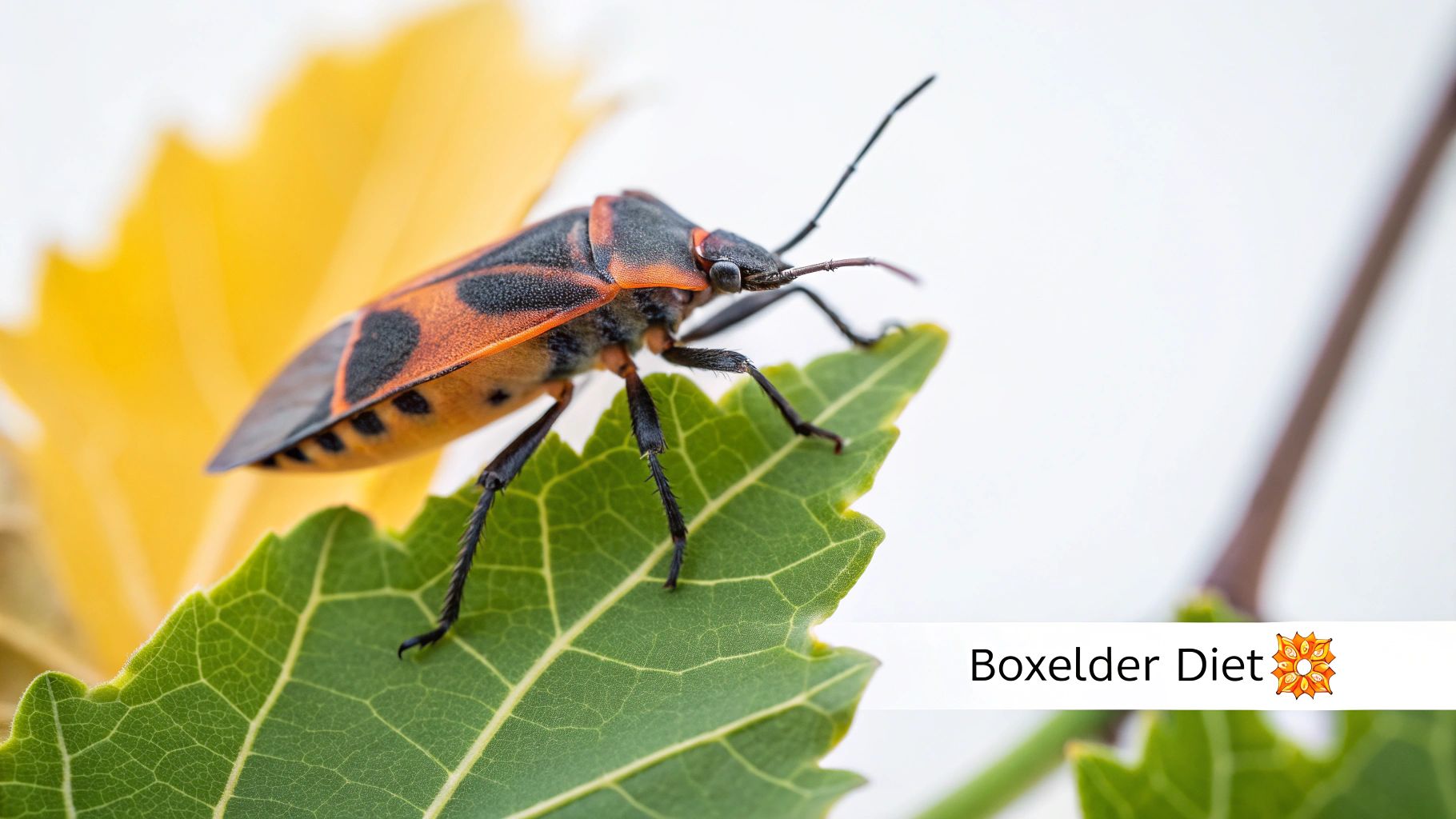
Think of the boxelder bug as a specialist. Its entire life is built around its main food source, which gives it all the nutrients needed to grow and multiply all summer long.
But what happens when their preferred tree isn't on the menu? While they are devoted to the boxelder, they aren't above snacking on other things if they have to.
Primary vs. Secondary Food Sources
We can break down their diet into two simple categories:
- Primary Hosts: The female boxelder tree is their number one pick. They'll also feed on other maple and ash trees if necessary, but it’s a distant second choice for them.
- Secondary Targets: When their main food sources are scarce, they might turn to soft fruits. Things like apples, plums, and even strawberries can become a target. This is when they can shift from just being an annoyance to a minor pest in your garden.
For a clearer picture, here’s a quick breakdown of what they target and what to expect.
Boxelder Bug Food Sources At A Glance
| Food Source | Part Eaten | Level of Attraction | Typical Damage |
|---|---|---|---|
| Boxelder Tree (Female) | Seeds, sap, new leaves | Very High | Minor leaf discolouration, some seed drop. Mostly cosmetic. |
| Maple & Ash Trees | Seeds, sap | Moderate | Very little to no noticeable damage. |
| Soft Fruits (e.g., apples, plums) | Fruit flesh | Low (Opportunistic) | Small blemishes or "cat-facing" on the fruit surface. |
This table gives you a good idea of their preferences. They're really only a significant issue for the trees they love most, and even then, the damage is rarely serious.
Understanding what boxelder bugs eat is the first step to figuring out why they're on your property. Now that you know their diet, we can dig into how this influences their behaviour throughout the seasons.
Why Boxelder Bugs Swarm Boxelder Trees
To get a handle on why boxelder bugs seem to invade out of nowhere, you need to understand their complete obsession with one specific tree: the female boxelder maple. This isn't just a slight preference—their entire lives are built around this tree.
Think of the female boxelder tree as an all-in-one life support system for these bugs. Its sap, leaves, and seeds provide the exact nutrients they need to grow, mature, and lay the next generation of eggs.
Their life cycle is even timed perfectly with the tree's own seasons. When the tree starts to wake up in the spring, adult bugs lay their eggs in the bark. As soon as the nymphs hatch, they have an instant buffet of tender new leaves and developing seeds waiting for them.
A Finely Tuned Relationship
This dependency is why infestations can feel so sudden and overwhelming. The bugs aren't just showing up randomly; they're gathering right on top of their main food source. This connection is especially strong in central Alberta, where boxelder trees are a common sight in many neighbourhoods.
In fact, this reliance is so strong that in communities like Red Deer, the sap, seeds, and leaves of female boxelder trees can make up 80-90% of their diet during the summer. Researchers have even counted up to 5,000 bugs on a single mature tree during this peak feeding time.
This intense summer feeding frenzy is a critical part of their survival. The bugs are basically bulking up and storing energy for the winter, which directly leads to them searching for shelter in our homes when the cold weather rolls in.
For homeowners, this is crucial information. Knowing that the swarm on your siding is directly linked to a specific tree helps you understand the root of the problem. Managing this connection is the key to preventing that yearly autumn invasion. For a deeper dive on this, check out our guide on how to break the annual boxelder bug invasion cycle.
What Boxelder Bugs Eat When Their Favourite Meal Is Gone
While boxelder bugs are pretty loyal to their namesake trees, they’re also survivors. Think of them like a picky eater who, when their favourite food isn't on the menu, will reluctantly try something else rather than go hungry.
When female boxelder trees are hard to come by, or when the bug population on one tree gets too crowded, they start to branch out. They don't have to wander far, usually just moving on to closely related trees in the neighbourhood.
Expanding to Other Trees and Plants
Their second-choice menu often includes other types of maple or even ash trees. They can still feed on the sap and seeds from these trees, but they don't exactly thrive on them, and the damage is almost always so minor you'd never notice. It's purely a survival tactic, not a new preference.
Studies show that boxelder bugs turn to ash and silver maple trees in about 10-15% of cases, just to supplement their diet. But where homeowners really start to notice their feeding habits is in the garden. For instance, in fruit-growing areas near Red Deer, Alberta, bugs were found to have punctured peaches and plums in 8% of sampled orchards, which led to deformation in about 15% of that fruit. You can dig deeper into their feeding habits and ecological impact.
This is where their diet becomes a direct problem for homeowners. When their go-to food source is limited, boxelder bugs are known to probe soft, ripening fruits, shifting from a simple nuisance into a minor garden pest.
Even though they might feed on various plants when they have to, this behaviour is driven by survival. The damage to fruit is typically just on the surface and rarely means a total loss for the garden.
Their mouthparts are designed for piercing and sucking juices. When they use them on fruits like apples, peaches, plums, or strawberries, they leave behind small blemishes or distorted spots. This kind of cosmetic damage is often called "cat-facing," where the fruit's skin looks puckered and scarred. While it's definitely frustrating for a gardener aiming for perfect produce, it's important to remember this rarely ruins the whole fruit or wipes out a significant part of your harvest.
How Their Diet Drives Them Into Your Home
Ever wonder why swarms of boxelder bugs suddenly plaster themselves all over your home every autumn? The answer is tied directly to what they’ve been eating all summer long. Their seasonal diet is the fuel that powers their fall migration straight toward your house.
After spending months feasting on the sap and seeds of their favourite trees, these insects have stored up a massive amount of energy. This feeding frenzy is basically their way of carbo-loading for the harsh Alberta winter. As soon as the temperatures start to drop, a powerful survival instinct kicks in, telling them it's time to find shelter.
From Feasting to Seeking Shelter
This is when they become drawn to the warmth radiating from the sunny, south-facing walls of your home. To a boxelder bug, that warmth feels just like a natural, safe haven—not unlike a sun-baked rock face or the protected bark of a big tree.
It's a common myth that boxelder bugs come inside to eat your house, your plants, or your food. They are not looking for a meal; they are simply uninvited guests seeking a warm, protected space to hibernate until spring.
This timeline shows how their diet expands from their preferred food to other opportunistic sources as the season progresses.
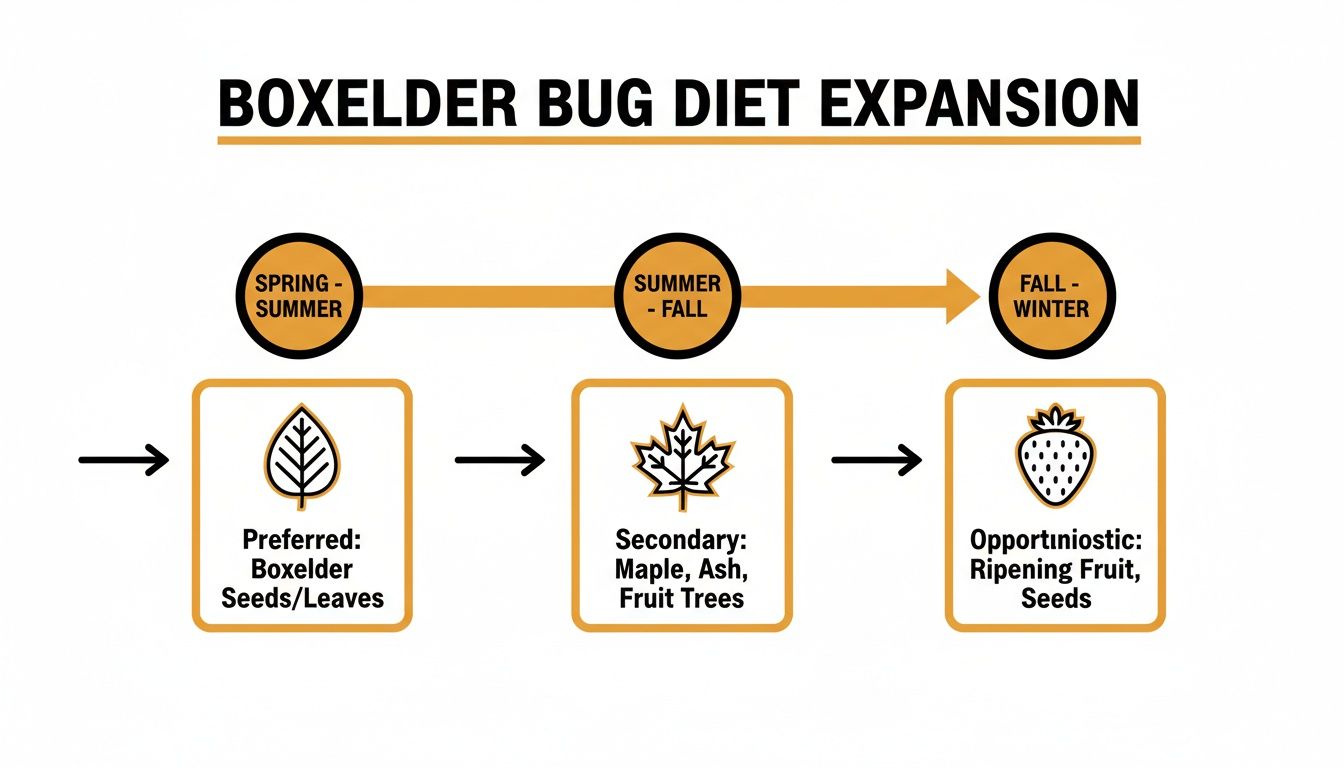
The visualization really highlights their primary reliance on boxelder trees, followed by a strategic shift to other maples and even fruits when their main food source becomes scarce.
Their one and only goal is to find tiny cracks and crevices to slip into, where they can wait out the cold completely undisturbed. Since boxelder bugs are driven to get inside, physical barriers are a key part of defence. You might find some useful general pest exclusion tips by researching the best window screens for your Florida home.
This overwintering behaviour is a critical part of their lifecycle, and our December pest control guide offers more advice on keeping winter pests out of the home.
Understanding the Real Damage Boxelder Bugs Cause
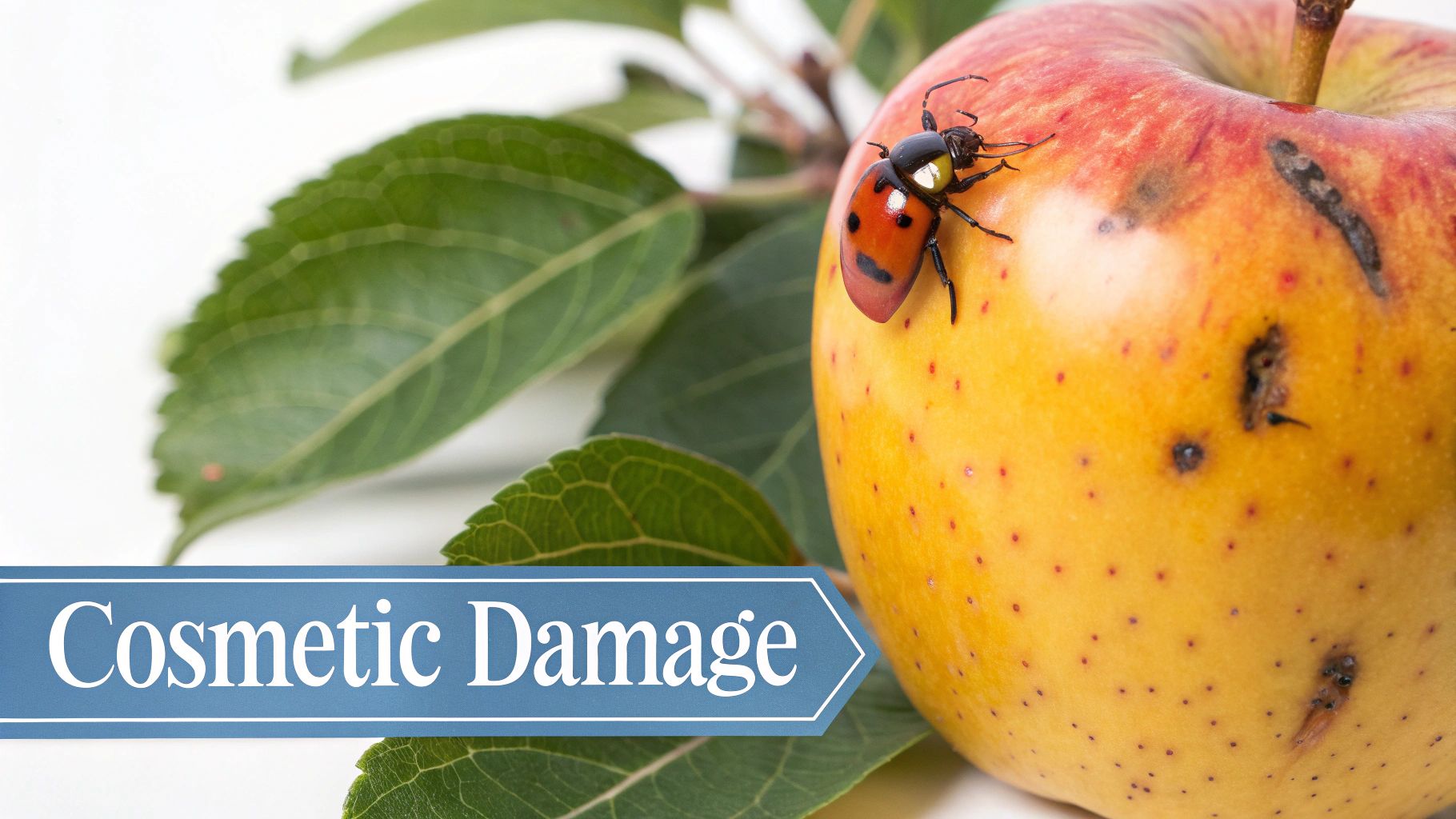
It’s completely understandable to see a huge swarm of bugs on your property and immediately worry about your trees and garden. But when it comes to boxelder bugs, you can breathe a little easier. The reality is that they're far less destructive than they look.
Their feeding habits are quite specific, and they rarely cause any serious, long-term harm to the healthy, mature trees they prefer.
On Trees and In The Garden
For their favourite host—the female boxelder tree—their feeding is almost entirely cosmetic. You might spot some minor leaf discolouration or see that some seeds don't develop properly, but it's not a threat to the tree's overall health. Think of it more like a few blemishes, not a serious illness.
The damage becomes a bit more of an issue for gardeners. While they won't decimate your crops, their feeding can leave cosmetic imperfections on soft fruits. In fact, historical data from Alberta's Integrated Pest Management Program notes that as boxelder bugs spread, their feeding has been found on raspberry and strawberry fruits in about 5% of home gardens near Red Deer. This has led to 10-20% of berries being misshapen, especially during wet seasons. For a deeper dive into their behaviour, you can explore some great insights on occasional invaders.
The Real Problem: The Indoor Mess
The most frustrating damage isn't what they eat, but what they leave behind. The true nuisance for homeowners is the indirect mess they create indoors.
The biggest complaints we hear at Dragon Pest Control almost always come down to two things:
- Staining: Their reddish-brown droppings can leave ugly, hard-to-remove stains on siding, window sills, curtains, and other light-coloured surfaces.
- Smell: If you crush one, it releases a pungent, unpleasant odour. This is a defense mechanism, and it makes cleanup a smelly chore you’d rather avoid.
The following table breaks down what to expect when boxelder bugs show up on your property.
Boxelder Bug Damage Assessment
| Affected Area | Type of Damage | Severity Level | Long-Term Impact |
|---|---|---|---|
| Boxelder & Maple Trees | Minor leaf discolouration, stippling, damaged seeds | Low | Almost none. Healthy trees are not significantly harmed. |
| Fruits (e.g., Berries) | Cosmetic blemishes, dimpling, misshapen growth | Low to Medium | Minimal. Affects the fruit's appearance but not plant health. |
| Siding & Exterior Walls | Reddish-brown fecal stains | Medium | Can cause permanent discolouration if not cleaned promptly. |
| Indoor Surfaces | Stains on curtains, walls, and furniture; foul odour | High (Nuisance) | No structural damage, but the mess and smell are a major annoyance. |
As you can see, the main issue isn't destruction—it's the annoyance and cleanup they cause when they decide to move into your personal space.
When to Call a Professional for Boxelder Bug Control
Knowing when to hang up your DIY hat and call in the pros is a key part of managing boxelder bugs. For many homeowners, a few simple prevention tactics can make a big difference in keeping their numbers down.
Things like sealing cracks in your foundation, patching up torn window screens, and even just raking up the seeds from nearby host trees are fantastic first steps. You're basically closing the door on them and taking away their food source. But sometimes, even the best efforts aren't enough to stop the yearly invasion.
Signs an Infestation Needs an Expert
So, when is it time to pick up the phone? You should seriously consider calling a professional when you start noticing these clear signs:
- Bugs are already inside: If you’re spotting them in your living room, kitchen, or finding them tucked away inside wall voids, the problem has officially breached your home's exterior defences.
- Swarms return every single year: A large-scale infestation that comes back like clockwork suggests a deeper, more persistent issue that simple surface sprays just won't fix.
- The numbers are just overwhelming: When the swarms covering your siding are too vast to handle with a vacuum or a garden hose, it’s time for a much stronger solution.
Once boxelder bugs have successfully overwintered inside your home, they often leave behind scent trails. These trails act like a beacon, attracting even more bugs the following year and creating a frustrating, endless cycle.
At this point, a targeted strategy from Dragon Pest Control becomes your most effective option. Our technicians don't just spray and leave; we use professional-grade treatments to establish a protective barrier around your home, stopping the bugs before they even get a chance to sneak inside. We believe in a holistic approach that gets to the root cause of the infestation. To see how this works, you can learn more about what is Integrated Pest Management and why it delivers such effective, long-term results.
Common Questions About Boxelder Bugs
To wrap things up, let's tackle a few of the most common questions we get from homeowners about these bugs. This should clear up a few myths and give you the confidence to deal with them.
Do Boxelder Bugs Bite Humans or Pets?
Thankfully, no. Boxelder bugs have mouthparts designed for piercing plant material and sucking sap, not for biting skin. While you might feel a slight "poke" if you're actively crushing one against your skin, they pose no real biting threat to you, your kids, or your pets. They are a nuisance, not a danger.
Will Removing My Boxelder Tree Solve the Problem?
Getting rid of a female boxelder tree on your property is by far the most effective long-term move you can make. It can single-handedly reduce the local population by over 80%. Keep in mind, though, that these bugs can fly for several kilometres, so you might still see some visitors if your neighbours have host trees.
Are Sprays a Good Solution for Boxelder Bugs?
Store-bought sprays offer a quick, temporary fix but they're not a lasting solution, especially for the large swarms you see on the side of your house. New bugs will simply show up to replace the ones you've killed. A professional perimeter treatment from an exterminator is much more effective, as it creates an invisible barrier that stops them from getting inside in the first place.
Why Do I Only See Them in Fall and Spring?
It's a great question. You spot them in the fall because they're gathering on sunny walls, soaking up warmth before they find a crack or crevice to hide in for the winter. In the spring, these same survivors emerge from their hiding spots and head back to the trees to feed and reproduce. They're active all summer, but they spend their time high up in the treetops, so they go mostly unnoticed.
If you're tired of seeing these swarms return year after year, it's time to call in the professionals. Contact Dragon Pest Control today for a targeted treatment plan that reclaims your home and stops future invasions before they start. Learn more and book online at https://dragonpest-control.com.