When you hear "pest control," what comes to mind? For a lot of people, it's a truck showing up to spray chemicals everywhere. It’s a reactive, sometimes endless, cycle of trying to stamp out a problem after it’s already taken hold. But what if we thought about it differently? What if, instead of just mopping up a spill, we focused on fixing the leak?
That's the core idea behind Integrated Pest Management (IPM). It's a smarter, more sustainable approach that shifts the focus from just killing pests to understanding why they’re showing up in the first place.
Rethinking Pest Control: A Smarter Approach
Think about it: pests don't just appear out of thin air. They're looking for something specific—food, water, or a safe place to shelter. Traditional pest control often feels like playing whack-a-mole; you get rid of one problem, and another pops up because the underlying invitation is still there.
IPM flips the script. It's a problem-solving mindset that treats your property like a detective would treat a crime scene. The goal is to figure out what conditions are attracting pests and then change those conditions to make your home or business less inviting.
From Reaction to Prevention
Instead of waiting for an infestation to explode, an IPM strategy is all about proactive, common-sense practices that make it tough for pests to even get a foothold.
- Understanding Pest Behaviour: Every pest has a motive. If you know what ants are searching for in your kitchen or why mice are trying to get into your garage, you're one step ahead.
- Modifying the Habitat: This is where the real work happens. Simple actions like sealing cracks in your foundation, fixing a leaky faucet in the basement, or storing pantry food in airtight containers can make a huge difference. You're removing the very things pests need to survive.
- Setting Action Thresholds: IPM isn’t about creating a sterile, zero-pest bubble. A single ant on the counter isn't necessarily a crisis. This approach helps you decide at what point a pest population is actually causing harm and needs a real response.
An IPM approach should not be considered as one specific action. Rather, it is a mindset and an attitude towards every decision taken, with its roots firmly anchored in good agricultural practice.
This method encourages a measured, tiered response. Chemical treatments aren’t off the table entirely, but they’re treated as a last resort—used only when absolutely necessary and applied with surgical precision. For a deep dive into these principles, our comprehensive pest management manual breaks down exactly how to build a successful IPM program.
To put it into perspective, here’s a quick comparison of the two philosophies:
IPM vs Traditional Pest Control At a Glance
| Aspect | Integrated Pest Management (IPM) | Traditional Pest Control |
|---|---|---|
| Philosophy | Proactive & preventative. Manages the environment to deter pests. | Reactive. Responds to existing infestations. |
| Focus | Long-term solutions addressing the root cause. | Short-term fixes, often relying on immediate kills. |
| Chemical Use | Last resort. Used sparingly and with targeted precision. | First line of defence. Often scheduled, broad-spectrum application. |
| Monitoring | Continuous observation to identify potential issues early. | Often triggered only when a pest problem is reported. |
| Goal | Sustainable pest management that minimizes risks to people and the environment. | Rapid elimination of visible pests. |
Ultimately, by embracing IPM, you move beyond the cycle of temporary fixes. You start building a resilient, long-term defence against common pests, working with nature instead of just against it. This forward-thinking strategy ensures that when you do need to take action, it’s both responsible and effective.
The Four Pillars of an Effective IPM Strategy
A solid Integrated Pest Management program isn’t a single action—it’s a complete framework built on four connected pillars. Picture them as the legs of a sturdy table. If you kick one out, the whole thing gets wobbly. Each pillar represents a logical, thoughtful step in managing pests with the least amount of risk and the best possible results.
This approach is all about shifting from just reacting to problems to building a proactive, long-term defense. When you understand and apply these four core principles, you start creating a property that’s naturally tougher against infestations.
This flowchart breaks down the core idea, showing how prevention and monitoring lay the groundwork for any control actions.
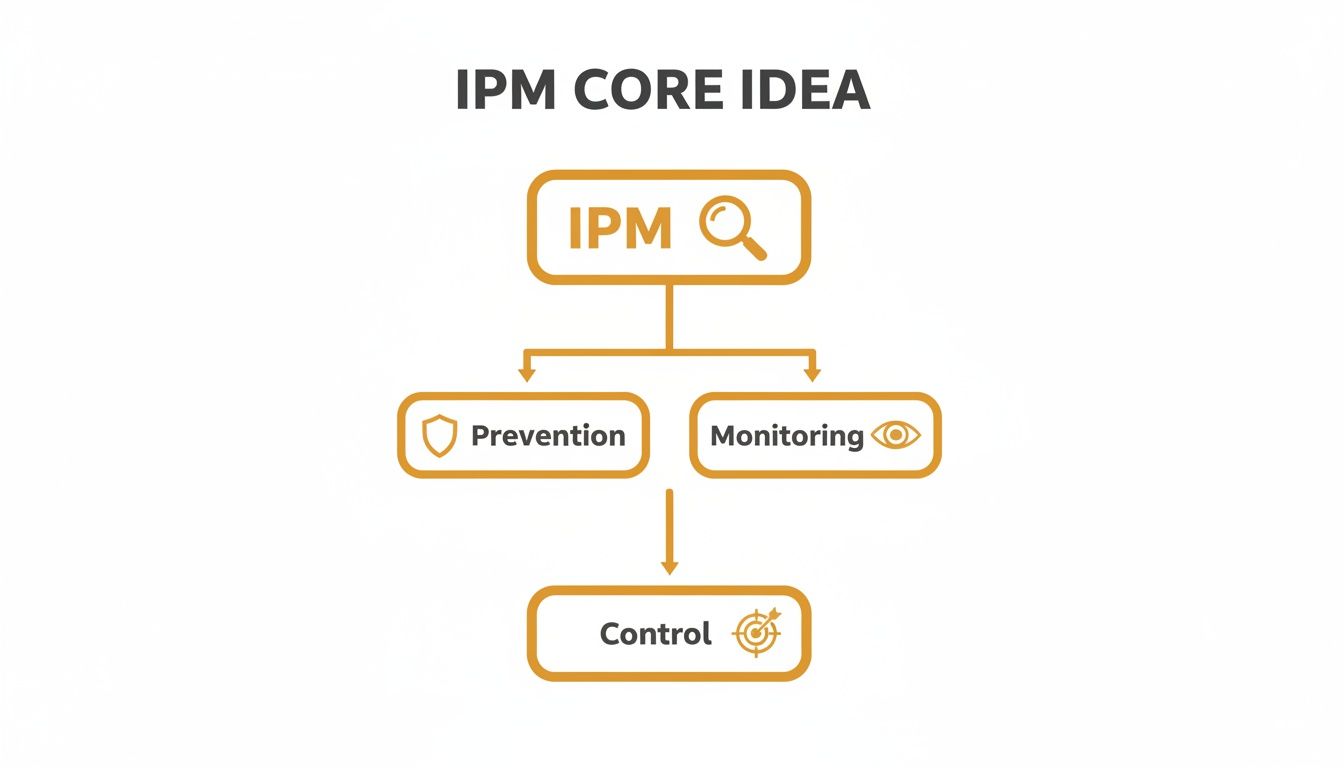
As you can see, control is the final piece of the puzzle, only brought in after prevention and careful monitoring have been put in place.
1. Set Action Thresholds
The first pillar challenges that old idea that seeing one bug means you have a crisis. An action threshold is simply the point where a pest population is big enough to cause real harm, justifying a direct response. Seeing a single ant on your kitchen counter doesn't mean you're infested; it's just an ant.
This mindset prevents unnecessary treatments and encourages a much more measured response. That threshold changes depending on the pest and the place:
- Health & Safety: For pests like wasps building a nest over your deck door or mice in the pantry, the action threshold is extremely low. The risk to your family is immediate and serious.
- Aesthetic Damage: A few aphids on a rose bush out in the garden? That might be perfectly tolerable. The threshold is higher because the damage is just cosmetic.
- Economic Impact: In a commercial kitchen, even a couple of cockroaches could ruin a restaurant's reputation and break health codes. In that case, the threshold is basically zero.
By defining these limits ahead of time, you can make clear-headed decisions instead of just reacting with panic.
2. Monitor and Identify Pests
You can’t solve a problem you don't fully understand. The second pillar, monitoring and identification, is all about becoming a detective on your own property. It means doing regular check-ins and correctly identifying any critters you find.
Getting the ID wrong is a common—and expensive—mistake. For example, trying to treat destructive carpenter ants with a bait made for common sugar ants is a complete waste of time and money. A professional technician can pinpoint the exact species, understand its habits and life cycle, and choose the most effective strategy.
"Prevention is always more effective than cure… Working with my BASIS-trained agronomist, we assess weed, disease and pest pressures and look at tolerances and thresholds before we apply PPPs [Plant Protection Products] to crops." – David Bell, Farmer
This principle holds just as true for a family home in Alberta as it does for a massive farm. Regular monitoring helps you spot potential issues early, long before they spiral into a full-blown infestation.
3. Focus on Prevention
This is arguably the most important pillar of them all. Prevention is all about making your property as uninviting to pests as you possibly can. If you take away their access to food, water, and shelter, they simply have no reason to stick around.
Effective prevention means actively changing the environment around your home. It’s the ongoing work that turns your property into a fortress against invaders.
Key Prevention Tactics:
- Seal Entry Points: Walk the perimeter of your home and inspect the foundation, siding, and roof for any cracks or gaps. Sealing even tiny openings can block entry for mice, ants, and box elder bugs.
- Eliminate Food Sources: Get serious about storing food in airtight containers, cleaning up crumbs right away, and making sure your garbage and compost bins have tight-fitting lids.
- Reduce Moisture: Fix leaky faucets and pipes, improve drainage so water flows away from your foundation, and make sure your basement or crawl space is dry and well-ventilated.
- Maintain Your Yard: Keep the grass trimmed, rake up leaf litter, and store firewood well away from the house to eliminate pest hiding spots.
This proactive work is the very heart of IPM. It gets to the root cause of the problem, not just the symptoms.
4. Implement Control Methods
Only when a pest population crosses your action threshold—despite all your prevention efforts—does the final pillar, Control, come into play. It's time to take direct action.
IPM prioritizes a clear hierarchy of control methods, always starting with the least disruptive options first.
- Mechanical & Physical Controls: These are the hands-on methods. Think setting traps for rodents, using a fly swatter, or installing screens on windows and doors.
- Biological Controls: Often used in agriculture and gardening, this involves using natural predators to manage pest populations, like releasing ladybugs to control aphids.
- Chemical Controls: Pesticides are the absolute last resort. When they are necessary, they should be targeted specifically to the pest and applied by a licensed professional to minimize risks to your family, pets, and the environment.
This careful, targeted approach is a hallmark of IPM. It's a practice that's been widely adopted in agriculture—for example, recent data from California showed that 75% or greater use rates of IPM practices were documented for vegetable crops. You can discover more insights about these agricultural IPM adoption rates to see how these smart principles are applied on a massive scale.
By following this four-pillar strategy, you create a powerful, intelligent system for managing pests that is both highly effective and responsible.
Applying IPM to Common Alberta Pests
Knowing the theory behind Integrated Pest Management is great, but putting it into practice is where the real magic happens. The power of IPM truly shines when you apply its principles to the specific pests causing you grief. In Alberta, we have a few usual suspects that consistently give homeowners headaches, but a smart IPM strategy can make all the difference.
Let's shift from theory to on-the-ground action. We'll break down how to use IPM—prevention, monitoring, and smart control—for some of the most common pests across the province, like mice, ants, and wasps. Remember, each pest has its own playbook, so your approach needs to be tailored to its behaviour and biology.
Tackling Mice with an IPM Mindset
The moment Alberta's weather turns cold, mice start their relentless hunt for warmth and food. Your home looks like the perfect five-star resort. An IPM approach is all about making your property an impenetrable fortress long before that first frost hits.
Prevention First
Honestly, the best way to deal with mice is to never let them get a foot in the door. They can squeeze through a hole the size of a dime, so your first line of defence is a thorough patrol of your home's exterior.
- Seal Every Entry Point: Check your foundation, siding, and where utility lines enter for any cracks or gaps. Stuff steel wool into these openings and then seal them with caulk—mice can't chew through the steel.
- Remove Outdoor Harbourage: Keep those firewood stacks at least 20 feet away from your house and get them up off the ground. Trim back any overgrown bushes or plants touching your foundation and clear away leaf piles.
- Eliminate Food Sources: Inside, all food needs to be locked down. Store pantry items, including pet food, in sealed, hard-plastic or glass containers. Make sure your garbage and compost bins have lids that fit snugly.
Monitoring and Action Thresholds
Your action threshold for mice should be zero. Seeing just one mouse is often a sign that a family has already moved in. Be on the lookout for droppings in cupboards, gnaw marks on food packages, or scratching sounds in the walls, which are most common at night. These are clear signals that your threshold has been crossed and it’s time to act.
Managing Ants with Smart Prevention
Ants, and especially carpenter ants, are a familiar nuisance in Alberta homes. They're on a mission for two things: moisture and food. A good IPM strategy cuts them off from both.
Prevention First
Ant control is all about moisture management and cutting off their food supply. A dry, clean home is your best weapon in the fight against an ant invasion.
- Control Moisture: Immediately fix any leaky faucets, pipes, or roofs. Make sure your gutters are clean and draining water far away from your foundation.
- Manage Your Kitchen: Be ruthless with crumbs and spills—wipe them up right away. Regularly clean under your appliances, and keep sweet things like honey and syrup in tightly sealed containers.
- Trim Landscaping: Don't give them a bridge to your house. Keep tree branches and shrubs trimmed back so they aren't touching your home.
IPM is about creating an environment where pests simply don't want to live. For ants, this means a home that offers no easy access to food or water. By removing these basic survival needs, you effectively hang a 'no vacancy' sign for any scouting ants.
Monitoring and Action Thresholds
Seeing a few stray ants in the spring isn't a crisis. But if you see a consistent, organized trail of them marching to a specific spot in your home, that’s a red flag. It means they've established a scent trail to a reliable food source. Once you spot that pattern, your action threshold has been met, and it's time to figure out where they're coming from.
The Special Case of Wasps and Bed Bugs
While IPM principles apply to every pest, some situations are too risky to handle on your own. When there are significant health and safety concerns, you need an immediate, professional response. Wasps and bed bugs fall squarely into this category.
Wasps and Bees
Trying to remove a wasp nest yourself is incredibly dangerous. It can lead to multiple painful stings, which can be life-threatening for anyone with an allergy.
- Action Threshold: The action threshold is immediate. The second you spot a nest in a high-traffic area—like near a doorway, on your deck, or in a kid's play area—it's time to call for professional help.
- Professional Control: Licensed technicians have the right protective gear and specialized products to remove the nest and its occupants safely and effectively. Dragon Pest Control offers quick, safe solutions for wasp and bee control, ensuring the threat is handled without putting your family at risk.
Bed Bugs
Bed bugs are notoriously tough to get rid of with DIY methods. They are masters of hiding, they reproduce at an alarming rate, and they can survive for months without feeding.
- Action Threshold: The threshold here is a single, confirmed bed bug. Because they breed so quickly, a tiny problem can explode into a massive infestation in just a few weeks.
- Professional Eradication: Getting rid of bed bugs for good requires a thorough inspection and specialized techniques, often including heat treatments that are impossible for a homeowner to do correctly. Professional intervention is the only way to guarantee they are completely gone.
This idea of adapting strategies to specific pests is a core concept in IPM, whether you’re on a farm or in your home. For instance, research on specialty crops reveals that a high percentage of growers use specific seasonal practices, like pheromone traps, that are tailored to the life cycle of a particular pest. You can read the full research about these advanced IPM implementations to see how this targeted thinking works on a much larger scale.
Ultimately, applying IPM means being a smart, proactive manager of your property. By understanding the unique behaviours of Alberta's common pests, you can implement targeted prevention strategies that work, while also knowing exactly when it's time to call for professional backup.
Your Seasonal IPM Checklist for Alberta Homes
Here in Alberta, dealing with pests isn't just a summer problem—it's a year-round reality. Each season throws a different challenge our way. A smart Integrated Pest Management plan isn't about a one-and-done spray; it’s an ongoing cycle that adapts as the weather changes. By thinking like a pest and aligning your efforts with the seasons, you can stay one step ahead and make your home a much less appealing place to invade.
This checklist breaks down the essential tasks for each season, helping you build a strong, consistent defence.

Spring Awakening and Inspection
As the snow melts and things start to warm up, pests like ants and wasps are on the move. Spring is the perfect time to give your home a thorough inspection for any weak spots left behind by the harsh winter.
- Foundation and Siding Check: Take a walk around the outside of your house. Look for any new cracks or gaps in the foundation and siding. Grab some caulk and seal those openings up to block an easy entryway.
- Roof and Gutter Maintenance: Glance up at your roof for damaged shingles or fascia. More importantly, clean out those gutters. You need water draining far away from your foundation to reduce the moisture that attracts pests like carpenter ants.
- Window and Door Screen Repair: Check all your screens for rips or tears. A quick repair or replacement is your number one defence against flies, wasps, and other buzzing intruders.
Summer Vigilance and Management
Summer brings the heat, backyard barbecues, and a massive spike in pest populations. Your focus now should be on managing the environment right outside your door so pests don't get too comfortable.
An effective IPM plan is built on consistency. Summer isn't the time to relax your efforts; it's when proactive landscape management and diligent monitoring pay the biggest dividends in preventing infestations.
Create a buffer zone. Keep your lawn mowed, trim back any bushes or tree branches that are touching your house, and make sure your firewood pile is at least 20 feet away. Keep an eye out for any standing water in your yard—it’s a breeding ground for mosquitoes.
Autumn Fortification and Exclusion
When the air turns crisp, pests like mice start a desperate search for somewhere warm to ride out the winter. Autumn is your most critical window to rodent-proof your home. This is when exclusion work matters most.
- Seal All Gaps: This is non-negotiable. Inspect your home’s exterior from top to bottom and seal any opening bigger than a dime. Pay close attention to where utility pipes and vents enter the house.
- Remove Food Incentives: Be meticulous. Clean up fallen fruit from trees and make sure your outdoor garbage and compost bins are shut tight.
- Inspect Basements and Attics: Poke around in these quiet areas for the first signs of rodent activity, like droppings or chewed-up materials.
Winter Monitoring and Indoor Focus
While things quiet down outside, winter is the time to watch for pests that have already snuck inside. Pests like mice and cockroaches are actively looking for food and warmth within your walls. For a deeper dive, you can find helpful tips in our December pest control guide on how to keep these unwelcome guests out.
Your winter focus should be on keeping a clean house, especially in the kitchen and pantry. Store food in airtight containers and regularly check for signs of trouble in cupboards and behind appliances. This constant watchfulness ensures your home stays yours, no matter the season.
The IPM Toolbox: From Eco-Friendly to Professional Solutions
When prevention just isn't cutting it and a pest population blows past your action threshold, it’s time to open the Integrated Pest Management (IPM) toolbox. This doesn't mean we immediately reach for the strongest chemical spray. Instead, IPM gives us a whole range of solutions, layered in a smart way from the least invasive to the most targeted.
Think of it like a doctor treating an illness. They don’t jump to major surgery for a common cold; they start with rest and simple remedies, only escalating the treatment if it’s absolutely necessary. IPM works the exact same way, always putting the safest, most effective options on the table first to protect your family and the environment.
This layered approach ensures that our actions are proportional to the problem, keeping unnecessary risks to a minimum.
Starting with Physical and Mechanical Controls
The very first tools we pull from the IPM toolbox are physical and mechanical controls. These are the hands-on, common-sense methods that physically remove or block pests without involving any chemicals. Honestly, they're often the most straightforward and eco-friendly options out there.
These methods hit the pest problem head-on in a very tangible way.
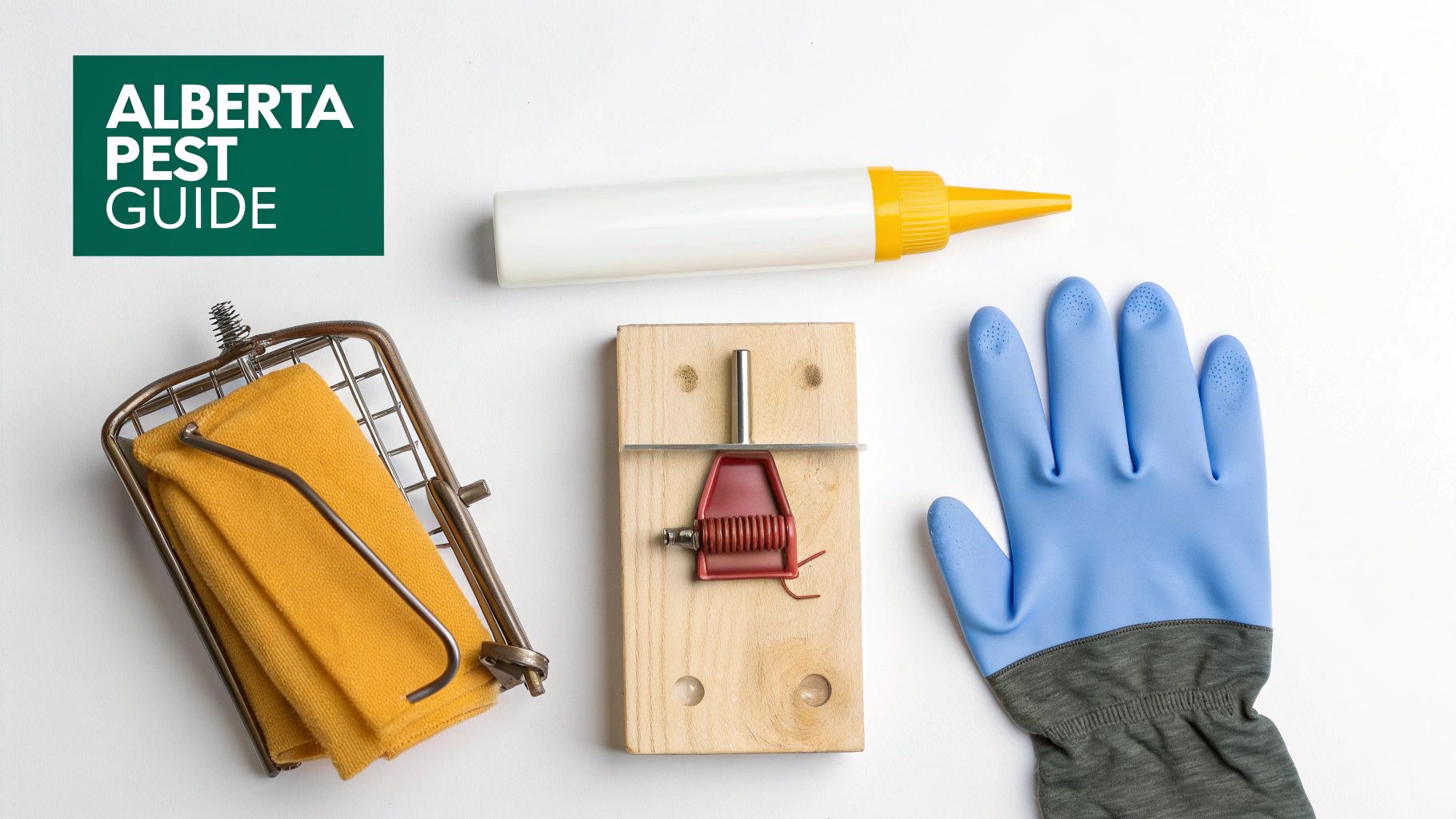
- Traps: Classic snap traps for mice or sticky traps for insects are prime examples. Placed correctly, they are incredibly effective.
- Barriers: Something as simple as installing fresh screens on your windows, adding door sweeps, or putting netting over garden plants creates a physical wall that pests just can't get through.
- Manual Removal: This can be as simple as vacuuming up a cluster of box elder bugs, pulling weeds by hand, or grabbing the trusty fly swatter.
For many minor pest issues, these simple actions are all it takes to get things back under control. You can find more practical, hands-on strategies in our guide to DIY pest prevention tips for effective pest control in Red Deer.
The Role of Biological and Chemical Controls
If physical methods aren't enough, we move up the ladder. Next up are biological controls, which is a fancy way of saying we use a pest's natural enemies against them. This is a big deal in agriculture and large-scale gardening—think releasing ladybugs to devour aphids. While it's less common for the pests inside your home, it’s a core principle of working with nature, not against it.
Finally, we get to chemical controls—pesticides. One of the biggest myths about IPM is that it’s strictly anti-pesticide. That couldn't be further from the truth. IPM is pro-responsible-pesticide-use.
In an IPM framework, pesticides are not the first response; they are a targeted, surgical tool used as a last resort. The goal is to get maximum effectiveness with minimal impact, a huge difference from the old days of widespread, indiscriminate spraying.
This responsible approach is absolutely critical. For example, a California study showed that while the use of certain high-risk pesticides dropped by an impressive 88% between 1993 and 2010, many were just swapped out for other chemicals instead of non-chemical methods. This highlights a dependency on chemicals that a true IPM strategy works hard to reduce.
Why Professional Application Matters
This is where the expertise of a licensed technician really shines. Over-the-counter products are often broad-spectrum, meaning they can harm beneficial insects and pose risks to your family and pets if they're misapplied. A professional from Dragon Pest Control, on the other hand, uses their training and knowledge to:
- Correctly identify the pest to choose the most effective, targeted product available.
- Apply the product precisely where pests live and breed, not just everywhere.
- Use the absolute minimum amount needed to solve the problem for good.
- Guarantee the safety of your family, pets, and the surrounding environment.
This methodical, knowledge-based approach is what sets IPM apart. It’s a smart, sustainable strategy that delivers effective, long-term results by using every tool in the toolbox wisely.
When to Partner with a Pest Control Professional
While the do-it-yourself spirit is at the heart of any great Integrated Pest Management plan, some pest situations just escalate beyond a homeowner’s toolkit. Knowing when to call for backup isn't admitting defeat—it's a crucial part of a smart IPM strategy that ensures problems are solved safely and for good.
Some infestations simply carry too much risk for a DIY approach. If you’re dealing with pests that pose a direct health threat, like a buzzing wasp nest hanging over your entryway or signs of rodents in your pantry, it’s time to call a licensed technician. These situations demand specialized equipment and knowledge to handle safely.
Then there are the pests that are notoriously difficult to eliminate. Bed bugs, for instance, are masters of hiding and can withstand many over-the-counter treatments. This often leads to recurring infestations and endless frustration for homeowners.
Key Indicators to Call a Professional
Knowing the signs can save you a ton of time, money, and stress in the long run. Think of a professional as your partner, someone who brings advanced diagnostic skills and targeted solutions to your home's unique challenges.
Here are some clear signs it’s time to make that call:
- Recurring Infestations: If the same pests keep coming back despite your best efforts, a pro can spot the root cause you might be missing.
- Large-Scale Problems: An infestation that seems widespread or is growing fast requires a much more aggressive and systematic approach than most homeowners can manage.
- Unidentified Pests: Getting the pest right is the first step to getting control. A professional can distinguish between similar species, ensuring the right treatment is used from the start.
- Complex Structural Issues: Sometimes pests are getting in through tricky, hard-to-reach places. Technicians are trained to trace these entry points and provide lasting exclusion solutions.
A licensed pest control professional doesn’t just eliminate the immediate problem; they integrate their expertise into your long-term IPM plan, strengthening your home's defences against future invaders and giving you back your peace of mind.
Ultimately, partnering with a company like Dragon Pest Control gives you access to proven, professional-grade methods and an industry-leading guarantee. To get a better sense of the operational side of the pros and what they offer, looking into different pest control industry marketing strategies can be insightful. It all comes down to ensuring your pest problem is handled right the first time.
Common Questions About IPM
Even with a solid game plan, you're bound to have a few questions about what an Integrated Pest Management approach actually looks like for your home and your wallet. We get it. Here are some of the most common things Alberta homeowners ask us about this smarter, more thoughtful way of handling pests.
Is IPM More Expensive Than Traditional Pest Control?
This is a great question. At first glance, setting up a strong IPM plan can sometimes have a higher initial cost, especially if it involves exclusion work like sealing up cracks in your foundation. But thinking long-term, the savings are huge.
The whole point of IPM is to focus on prevention, which dramatically cuts down on the need for expensive, last-minute emergency calls later on. Traditional pest control can easily lock you into a cycle of repeated chemical sprays that really add up. IPM is different—it’s an investment in a real, lasting solution that gets to the root of the problem, making it the smarter financial choice over time.
Are IPM Methods Safe for My Pets and Children?
Absolutely. In fact, safety is what IPM is all about. The entire philosophy is built around a pyramid of control methods, and we always, always start with the lowest-risk options first. That means we explore every non-chemical solution—like physical barriers, traps, and changing the environment to make it less inviting for pests—before we even think about pesticides.
The heart of IPM is simple: solve the pest problem with the least possible risk to people, property, and the environment. When a chemical treatment is the only option left, it's applied with surgical precision by a licensed professional. We target only the pests, minimizing any and all exposure to your family.
How Long Does an IPM Program Take to Show Results?
Think of IPM as a long-term strategy, not a one-and-done chemical blitz. While you'll see immediate relief from a current infestation after we take targeted action, the real win is in long-lasting prevention. You'll notice some results right away, like seeing fewer pests after we've sealed up their entry points.
But the full power of a good IPM program reveals itself over time. It's an ongoing process of making your property a place where pests simply don't want to be. This leads to sustainable, year-round protection, not just a temporary fix.
If you're ready for a smart, long-term solution to your pest problems, the licensed technicians at Dragon Pest Control are here to help. Request your free quote today and let's build a lasting defense for your home.