

It can feel like fruit flies just materialize out of thin air. One minute your kitchen is spotless, and the next, a cloud of tiny pests is hovering over the fruit bowl. But this sudden appearance isn't magic—it’s just a sign of how good these tiny infiltrators are at sneaking into our homes.
Fruit flies don’t just show up; they’re brought in. More often than not, they arrive as microscopic eggs laid on the fresh produce you bring home from the grocery store. From there, it doesn't take much for them to get established.
How Fruit Flies Get Inside Your Home
That feeling of being suddenly overrun is a testament to the fruit fly's remarkable ability to find its way inside. Understanding where they come from is the first step in taking back your space. They don't spontaneously generate from that browning banana on your counter—they follow very specific paths to get there.
These pests are experts at exploiting the smallest opportunities. Their size, often just a few millimetres, allows them to slip through openings you would never even notice.
The Most Common Entry Points
The number one way fruit flies enter your home is by piggybacking on groceries. That bunch of bananas or bag of apples from the store can easily carry nearly invisible eggs or larvae right onto your kitchen counter. Once they're in the warmth of your kitchen, those eggs hatch, and an infestation is born.
But they're also perfectly capable of flying in from outside, drawn by enticing smells from surprisingly far away.
Here’s a breakdown of their favourite routes:
- Groceries: Fresh fruits and vegetables are the ultimate Trojan horse.
- Window and Door Screens: Standard mesh screens often aren't fine enough to stop them. The smallest tear or gap is an open door.
- Cracks and Gaps: Tiny openings in your home's foundation, walls, or around utility lines are easy entry points.
- Drains: Gunk and organic sludge in kitchen and bathroom drains can serve as both a highway in and a breeding ground.
To make it even clearer, here's a quick summary of how these pests sneak their way in.
How Fruit Flies Sneak Into Your Home
| Entry Point | How They Use It | What Attracts Them |
|---|---|---|
| Produce from the Store | Eggs and larvae hitch a ride on the surface of fruits and vegetables. | The sugars in ripening or slightly damaged produce. |
| Window & Door Screens | They are small enough to pass through standard mesh or tiny tears. | The scent of fermenting foods, spills, or compost from inside. |
| Structural Gaps | Cracks in foundations, siding, or around pipes offer easy access. | Warmth and the promise of a food source inside your home. |
| Drains & Garbage Bins | They fly in from outdoors or travel between units through plumbing. | The smell of decomposing organic sludge and food waste. |
Once they've found a way in, their goal is simple: find a food source and start a family.
A single female fruit fly can lay up to 500 eggs in her short life. That means just one contaminated piece of fruit can trigger a full-blown swarm in a little over a week.
This mind-bogglingly fast life cycle is why a few flies can explode into a major problem so quickly. As soon as they're inside, they seek out moist, fermenting organic matter to lay their eggs, starting the whole cycle over again. The key is to remember they didn't appear from nowhere—they were invited in, even if you didn't know it. By understanding these entry points, you can start building a much stronger defence.
Understanding the Rapid Fruit Fly Lifecycle
To get a handle on where fruit flies come from and why they seem to take over your kitchen overnight, you need to understand their biggest advantage: speed. Their lifecycle is a masterclass in efficiency, allowing just a couple of unnoticed flies to explode into a full-blown swarm in what feels like the blink of an eye.
The entire process unfolds in four distinct stages, going from nearly invisible to annoyingly present in about a week under ideal warm conditions. Each stage is perfectly designed to exploit the resources sitting right there on your counter or in your drains.
The Four Stages of Fruit Fly Development
That one overripe banana on your counter isn't just a snack for them—it's a high-speed production factory for the next generation.
Here’s a quick look at how it all happens:
Egg: A female fruit fly can lay up to 500 eggs in her short life, usually on the moist surface of fermenting organic matter. These eggs are tiny, like microscopic grains of rice, making them impossible to spot on fruit from the grocery store. They typically hatch in a mind-boggling 24-30 hours.
Larva: Once hatched, the larvae (or maggots) get straight to work, burrowing into their food source. This could be the soft flesh of a peach, the gunk in your kitchen drain, or the sticky residue at the bottom of a recycling bin. This feeding frenzy lasts for about four days as they consume nutrients to fuel their rapid growth.
Pupa: After gorging themselves, the larvae crawl to a dry, safe spot to pupate. They form a hard, dark casing around themselves, much like a caterpillar’s chrysalis. Tucked away inside this shell, they transform into their adult form over another three to four days.
Adult: Finally, the fully formed adult fruit fly emerges, ready to find a mate and start the cycle all over again within just two days. With a lifespan of about 40 to 50 days, a single female can lay hundreds of eggs, leading to an exponential boom in population.
This turbocharged lifecycle means that in just over a week, one piece of forgotten fruit can unleash hundreds of new adult flies. Ignoring those first few buzzing pests gives them all the time they need to complete this cycle and establish a serious infestation.
This infographic shows the common ways these pests start their journey into your home, setting the stage for their rapid takeover.
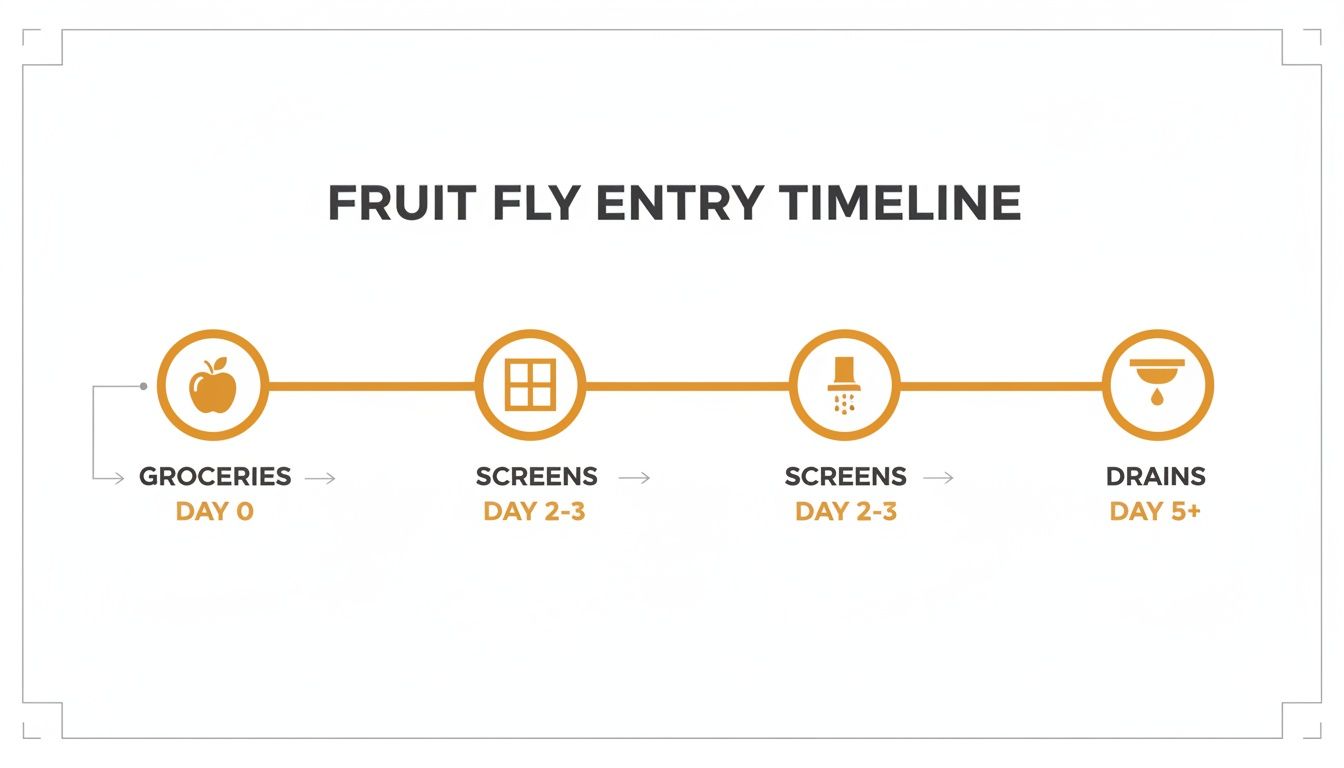
As you can see, their infiltration is a multi-pronged attack. It often starts with contaminated groceries and continues through weak spots like damaged window screens and dirty drains. Knowing how they get in is the first step, but understanding the speed of their lifecycle explains why immediate action isn't just a good idea—it's absolutely necessary to avoid being overrun.
Identifying Hidden Fruit Fly Breeding Grounds
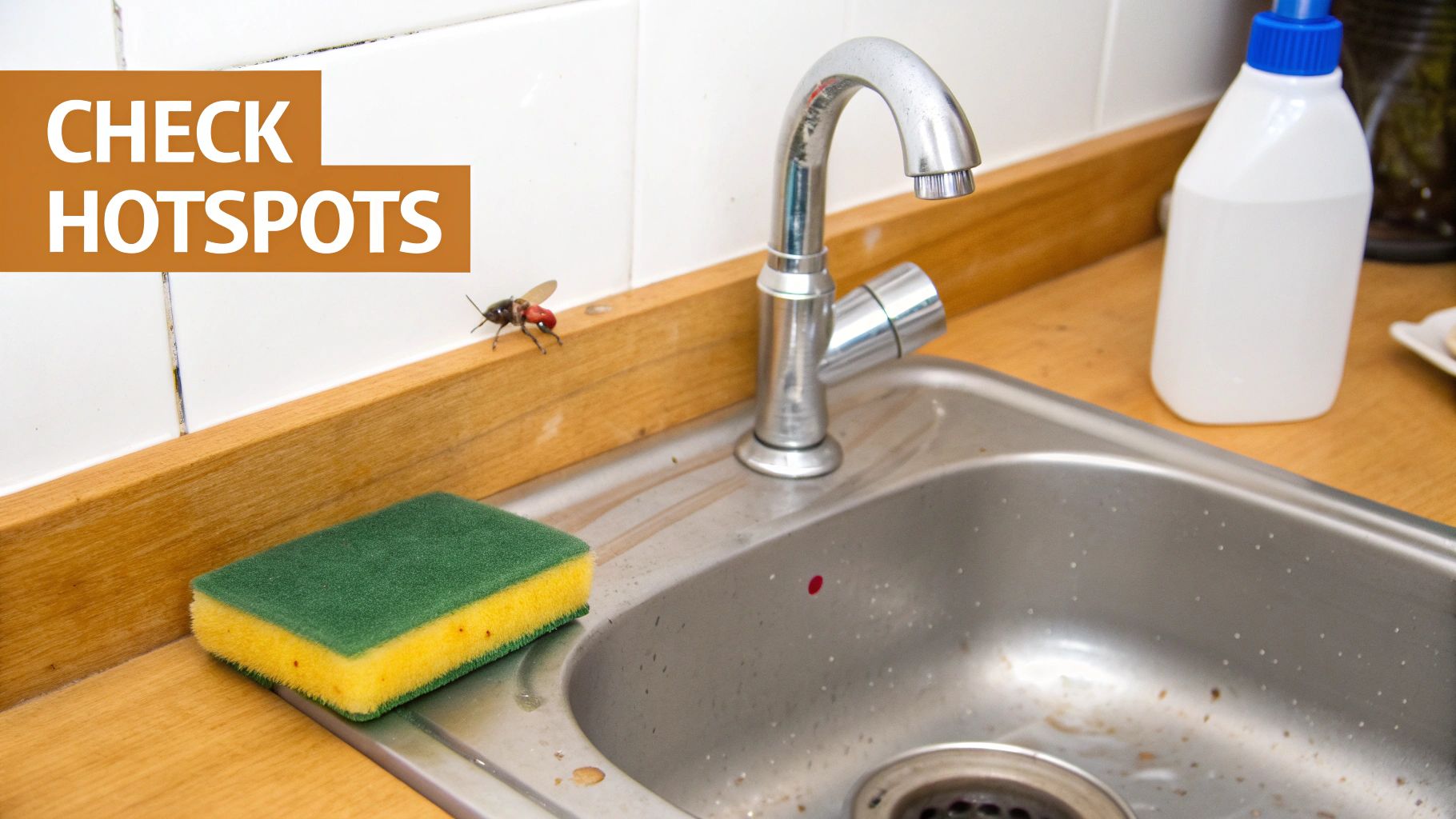
So you’ve tossed the overripe bananas and cleaned the fruit bowl, but those tiny, annoying pests are still hanging around. What gives?
The truth is, fruit flies are masters of finding hidden spots to lay their eggs. To get rid of them for good, you have to start thinking like a fruit fly and uncover the unexpected places they call home.
There's a great rule of thumb from a licensed sanitarian: if you see fruit flies, their breeding ground is almost certainly less than 20 feet away. That means the problem isn’t coming from your neighbour’s compost pile—it’s right under your nose. Your mission is to do a full "pest audit" of your home and shut down these secret fly factories.
Beyond the Fruit Bowl Hotspots
While a bowl of ripening fruit is their number one choice, fruit flies aren’t picky. Any scrap of moist, fermenting organic matter will do, which opens up a surprising number of possibilities in the average Red Deer home.
Let’s dig into some of the most common—yet easily overlooked—breeding grounds:
- Slow or Gunked-Up Drains: Your kitchen sink and garbage disposal are five-star hotels for fruit flies. Tiny food particles get trapped, creating a layer of organic sludge that’s constantly moist. It’s the perfect nursery.
- Damp Sponges and Dishcloths: That sponge left by the sink is basically a fruit fly paradise. It’s damp, warm, and holds onto tiny food particles, giving them everything they need to lay hundreds of eggs.
- Recycling Bins: Think those "empty" cans and bottles are harmless? Think again. The sugary dregs at the bottom of a pop can or the sticky film in a wine bottle is more than enough to fuel a whole new generation.
- Garbage Cans: A leaky bin bag can create a sticky, decomposing mess at the bottom of your garbage can. This hidden gunk stays moist and becomes a major breeding site that most people never think to check.
- Mops and Mop Buckets: A damp mop head stashed in a dark closet, especially if it wasn't cleaned and dried properly, can quickly become an unexpected hatchery.
This problem isn't just in our homes. For major agricultural areas, the constant transport of produce creates widespread issues. In California, for example, over 400 species of fruits and vegetables are threatened because these pests can complete their entire lifecycle inside a piece of fruit before it even hits the grocery store shelf. You can learn more about how agricultural diversity creates invasion opportunities for these pests.
The core idea is simple: if it's organic, damp, and starting to ferment, it can breed fruit flies. Adopting this mindset is the key to finding their secret hideouts.
Conducting Your Pest Audit
To shut down these breeding operations for good, you need to be systematic. Don’t just clean—investigate.
Your Action Plan:
- Inspect and Clean Drains: Pour a kettle of boiling water down your kitchen sink drain every day for a week. This will kill any eggs and larvae hiding in the pipes. For a deeper clean, use a stiff drain brush to scrub away that organic buildup.
- Manage Your Cleaning Tools: Never leave sponges or dishcloths sitting in a puddle. Wring them out completely and let them air dry. A great tip is to microwave a damp sponge for one minute to sanitize it.
- Rinse Your Recycling: Before you toss cans, bottles, or jars into the blue bin, give them a quick rinse. It only takes a second and removes the sugary residue they love.
- Deep Clean Your Bins: At least once a month, wash out your main garbage can and recycling bins with hot, soapy water. Pay special attention to the gunk that collects at the bottom.
- Check Under Appliances: Carefully pull out your fridge and stove. You’d be surprised what fallen food scraps might be decomposing just out of sight.
By tackling these hidden spots, you shift from just reacting to a fruit fly problem to proactively destroying the environment they need to survive. You’re no longer just swatting at the adults; you’re stopping the next generation before it ever takes flight.
Your Proactive Fruit Fly Prevention Plan
The absolute best way to win the war against fruit flies is to make sure a battle never even begins. Forget reacting to an infestation—a proactive prevention plan makes your home an entirely undesirable place for them to settle.
It’s all about cutting off their supply lines. By removing the food, moisture, and breeding sites they desperately need, you create an environment where they simply can't survive. This isn’t about non-stop deep cleaning; it’s about building simple, consistent habits that shut down fruit fly factories before they even think about opening for business. The goal is to make your kitchen, and your entire home, a no-fly zone.
Since these pests are drawn like magnets to ripening and fermenting produce, a key part of your plan is knowing how to store fruits for maximum freshness to keep them at bay.
Daily Prevention Habits
Consistency is your single greatest weapon. Weaving these small tasks into your daily routine will make a massive difference in keeping your home pest-free. Think of these as targeting the root of the problem.
- Wipe Counters and Spills Immediately: Don't let sugary messes from juice, pop, or even a few crumbs sit around. A quick wipe-down removes the scent trails that lead flies right to your door.
- Rinse Your Recyclables: Before you toss cans, jars, or bottles into the blue bin, give them a quick rinse. That sticky film left at the bottom is a five-star resort for breeding fruit flies.
- Manage Your Produce: Move ripe fruits and vegetables into the refrigerator instead of leaving them on the counter. Any overripe or damaged produce needs to go straight into a sealed bag and out of the house.
Remember this: a single forgotten, bruised apple is all it takes to launch a full-scale invasion. A female fruit fly can lay up to 500 eggs on its surface, creating a population explosion in just over a week.
Weekly Maintenance Checklist
Beyond the daily tidy-up, a few key weekly tasks will help you knock out those hidden breeding spots that can keep a fruit fly population going. These checks ensure you're covering all your bases.
- Take Out the Trash Regularly: Don’t let garbage bags, especially those with food scraps, sit for too long. Make sure both your indoor and outdoor bins have lids that seal tightly.
- Clean Your Drains: At least once a week, pour a kettle of boiling water down your kitchen sink drain. This will kill off any eggs and larvae that are hanging out in the organic gunk buildup.
- Inspect Window and Door Screens: Check for small rips, tears, or gaps. Fruit flies are tiny and can easily squeeze through standard mesh if there’s even the slightest opening.
- Wash Dishcloths and Sponges: Avoid leaving damp cloths or sponges festering in the sink. Toss them in a hot wash or sanitize them so they don't become a prime, moisture-rich breeding ground.
By making these habits part of your routine, you systematically dismantle the very environment fruit flies need to survive. For more in-depth strategies, take a look at our guide on DIY pest prevention tips for effective pest control in Red Deer. This proactive approach is, without a doubt, the most effective way to keep your home protected.
Building An Effective DIY Fruit Fly Trap
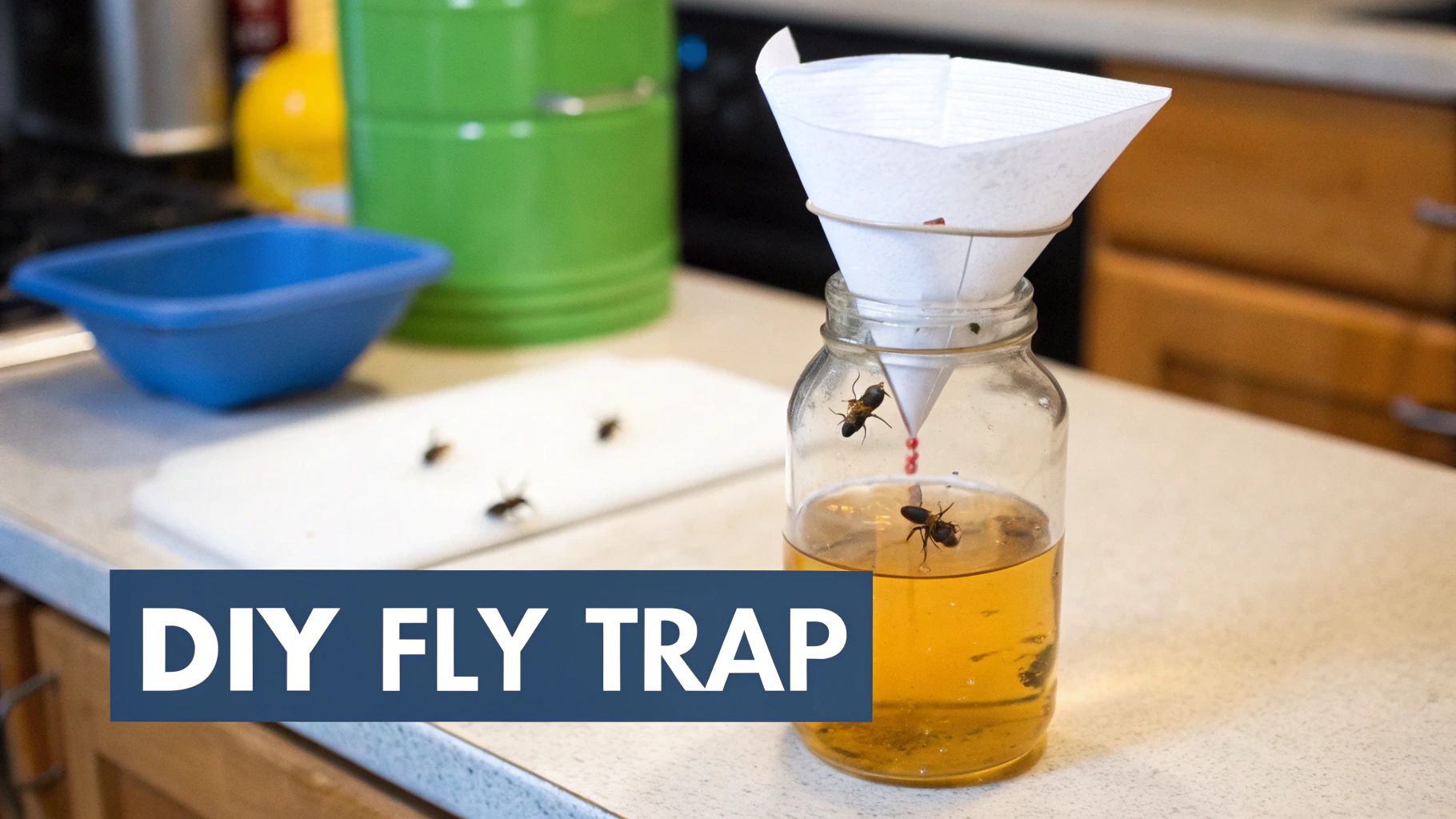
When you're facing a swarm of fruit flies, you need a quick way to get the numbers down while you figure out where they're breeding. The good news is you don’t need anything fancy. A surprisingly powerful trap can be put together in just a few minutes with stuff you already have in your kitchen.
The trick to these traps is pretty brilliant. Fruit flies find their way around by scent, and they absolutely cannot resist the smell of fermentation. By using bait like apple cider vinegar or a bit of overripe fruit, you’re creating an irresistible invitation. The final piece of the puzzle is a simple mechanism that lets them in but doesn't let them out.
The Classic Apple Cider Vinegar Trap
This is hands-down the most popular DIY method for a reason: it’s dead simple and it works incredibly well. The strong, fermented aroma of apple cider vinegar (ACV) is a perfect mimic of the decaying organic stuff that fruit flies are looking for to eat and lay their eggs in.
Here’s how to make one in three easy steps:
- Get the Bait Ready: Pour about an inch of apple cider vinegar into a small jar, glass, or bowl. To make it way more effective, add just a couple of drops of dish soap.
- Break the Surface Tension: That little bit of dish soap is the secret weapon. It breaks the surface tension of the vinegar, so when a fly lands to take a sip, it sinks right in and can't escape.
- Set Your Trap: Put the jar wherever you’re seeing the most action—usually near the fruit bowl on the counter, by the kitchen sink, or close to the garbage bin. You should start seeing results within just a few hours.
A quick heads-up: don’t try to substitute white vinegar in this trap. It just doesn't have that sweet, fermented smell that ACV does, and without that powerful scent, the flies won't even notice it.
Other Effective DIY Trap Variations
The ACV trap is a classic, but you’ve got other options depending on what’s in your pantry. They all work on the same basic principle: lure the flies in with something delicious and then make sure they can’t leave.
- The Paper Funnel Trap: Stick a piece of very ripe fruit (a chunk of banana is perfect) inside a jar. Next, roll a piece of paper into a cone shape, making sure there's a small opening at the tip. Pop the cone into the top of the jar. Flies will happily crawl down the funnel to get to the bait, but they aren't clever enough to figure out how to fly back up and out.
- The Wine or Beer Bottle Trap: Don't bother rinsing that last bit of wine or beer out of the bottle. Just leave it on the counter with a tiny amount of liquid still inside. The bottle's narrow neck works as a built-in trap, making it easy for flies to get in but nearly impossible to get out.
These homemade traps are a fantastic first line of defence. For more tips on handling flying insects, take a look at our complete guide on how to get rid of flies in your home.
Comparing DIY Fruit Fly Traps
Not sure which trap to build? Each has its own strengths. This quick comparison should help you decide which one is the best fit for your situation.
| Trap Method | Effectiveness | Ease of Setup | Best For |
|---|---|---|---|
| ACV & Soap | High | Very Easy | Quick, all-purpose trapping in any room. |
| Paper Funnel | High | Easy | Capturing a large number of flies without liquids. |
| Wine/Beer Bottle | Medium | Easiest | Using up leftovers with zero extra effort. |
Ultimately, any of these traps will help you make a serious dent in the fruit fly population. They are simple, effective, and a great starting point for taking back control of your kitchen.
When to Call a Pest Control Professional
DIY methods are great for catching a few stray fruit flies, but sometimes the problem gets bigger than a homemade trap can handle. You’ve scrubbed every surface, cleaned your drains, and set out vinegar traps, but the swarm just won't go away. This is usually the point where you realize the issue might be more complex than it seems.
When your best efforts don't make a dent, it’s a clear sign you’re only fighting the symptoms, not the source. A persistent, large-scale infestation means the flies have likely found a hidden breeding ground you can't easily get to.
Signs You Need an Expert
Knowing when to switch from DIY to professional help can save you a lot of time and frustration. If you’re still wondering where the fruit flies are coming from despite constant cleaning, an expert can find the answer.
Here are the signs that it's time to bring in the pros:
- The Infestation is Overwhelming: You're dealing with a constant cloud of flies, not just a few here and there. Even with daily trapping, their numbers don't drop, or they come right back.
- You Can't Find the Breeding Source: You've checked the fruit bowl, garbage, and drains, but the flies keep showing up. Professionals are trained to find cryptic breeding sites in places you wouldn't think to look, like in wall voids, under flooring, or deep inside plumbing.
- The Problem is Affecting Your Business: For any restaurant, café, or business in Red Deer, a fruit fly infestation isn't just a nuisance—it's a serious health code issue that can damage your reputation. Professional help is a must.
A fruit fly problem that won't go away means the pests have set up a deep-rooted breeding cycle. A professional can break that cycle by targeting every life stage—egg, larva, and adult—with methods that go far beyond what's available to homeowners.
The Advantages of Professional Pest Control
Calling a professional isn’t giving up; it’s a strategic move to fix the problem for good. A licensed technician brings specialized knowledge, tools, and a definitive solution to the fight.
The scale of a fruit fly invasion can be staggering. Research on invasive fruit flies in California showed that even after hundreds of eradication projects, multiple species became permanently established, highlighting just how tough large-scale control can be. Find out more about the challenges of fruit fly control.
A professional pest control service offers:
- Expert Identification: They will find all the breeding grounds, even the hidden ones, making sure the root of the problem is eliminated.
- Commercial-Grade Treatments: Professionals use more effective, targeted treatments that aren't sold in stores, giving you faster and more thorough results.
- Long-Term Prevention Plans: An expert will create a custom strategy to keep fruit flies from coming back, often using principles of Integrated Pest Management. You can learn more about Integrated Pest Management and how it offers a sustainable solution.
- Guaranteed Results: Professional services often come with a guarantee, so you can have peace of mind that the problem will finally be solved.
Don't let a stubborn fruit fly problem disrupt your home or business. For fast, effective, and guaranteed solutions in Red Deer and across Alberta, trust the experts at Dragon Pest Control. Book your service online today and let our licensed technicians bring peace back to your property.