

To get a handle on spider control, you first have to understand why they’re in your home. It almost always comes down to three things: food, shelter, and a place to mate. Once you start disrupting these factors, you can turn your home from a spider paradise into a place they’d rather avoid. This proactive strategy is far more effective than just dealing with spiders one at a time as you see them.
Your First Line of Defense Against Spiders
Finding spiders scurrying across the floor can be unnerving, but it’s rarely a sign that your house is dirty. Think of it this way: your home is a fortress, and spiders are just opportunistic critters looking for any gap in your defenses to find a safe, resource-rich territory. The reasons they show up indoors, especially here in Alberta, are simple and predictable.
Because they’re driven by basic needs, their behaviour is actually pretty easy to anticipate and counter. If you address the things that attract them in the first place, you can build a powerful, long-term spider control strategy that stops infestations before they even begin.
Why Spiders Enter Your Home
Getting to the root of a spider's motivation is the first real step toward managing them. Pretty much every spider you find inside is there for one of three reasons:
- Seeking Shelter: As the temperatures start to drop in Red Deer, particularly in late summer and autumn, spiders are on the hunt for warm, protected spots to ride out the winter. Unsealed cracks in the foundation, gaps around your windows, and cluttered basements offer the perfect escape from the harsh Alberta cold.
- Hunting for Food: A lot of spiders in your home is often a big clue that you have another pest problem. Spiders are predators, and they love to feast on other common household insects like flies, ants, and silverfish. If your home is serving up a reliable buffet, they will gladly move in and set up shop.
- Looking for a Mate: At certain times of the year, usually late summer and early fall, male spiders get a lot more mobile. They wander around searching for females, and that seasonal journey often leads them right through your front door.
Try to see your home through the eyes of a spider—a creature looking for warmth, a meal, and safety. When you do that, you can start to spot and eliminate the very things that make your house so attractive to them. This shift in perspective is the key to proactive pest control.
A solid strategy combines multiple tactics. It’s not about spraying the one spider you see today; it’s about making sure new ones can’t get in tomorrow. This integrated approach, blending prevention with targeted action, is the foundation of modern spider management. It puts you in control, letting you build a stronger defense by sealing entry points, cutting off their food supply, and clearing out their favourite hiding spots. This ensures your home remains your sanctuary, not theirs.
Identifying Common Spiders in Alberta Homes
Knowing what kind of eight-legged visitor you’re dealing with is the first step to smart spider control. It’s the difference between spotting a harmless nuisance and a potential threat that needs a professional touch. Think of this as your field guide for the spiders you're most likely to find in your Red Deer home, helping you tell a simple guest from a serious invader.
When you can recognize a few key features—like size, colour, and web style—you can make a calm, informed decision instead of just reacting. This knowledge empowers you to choose the right approach, whether that’s just grabbing the vacuum or calling for backup.
This simple flowchart can help you decide what to do next.
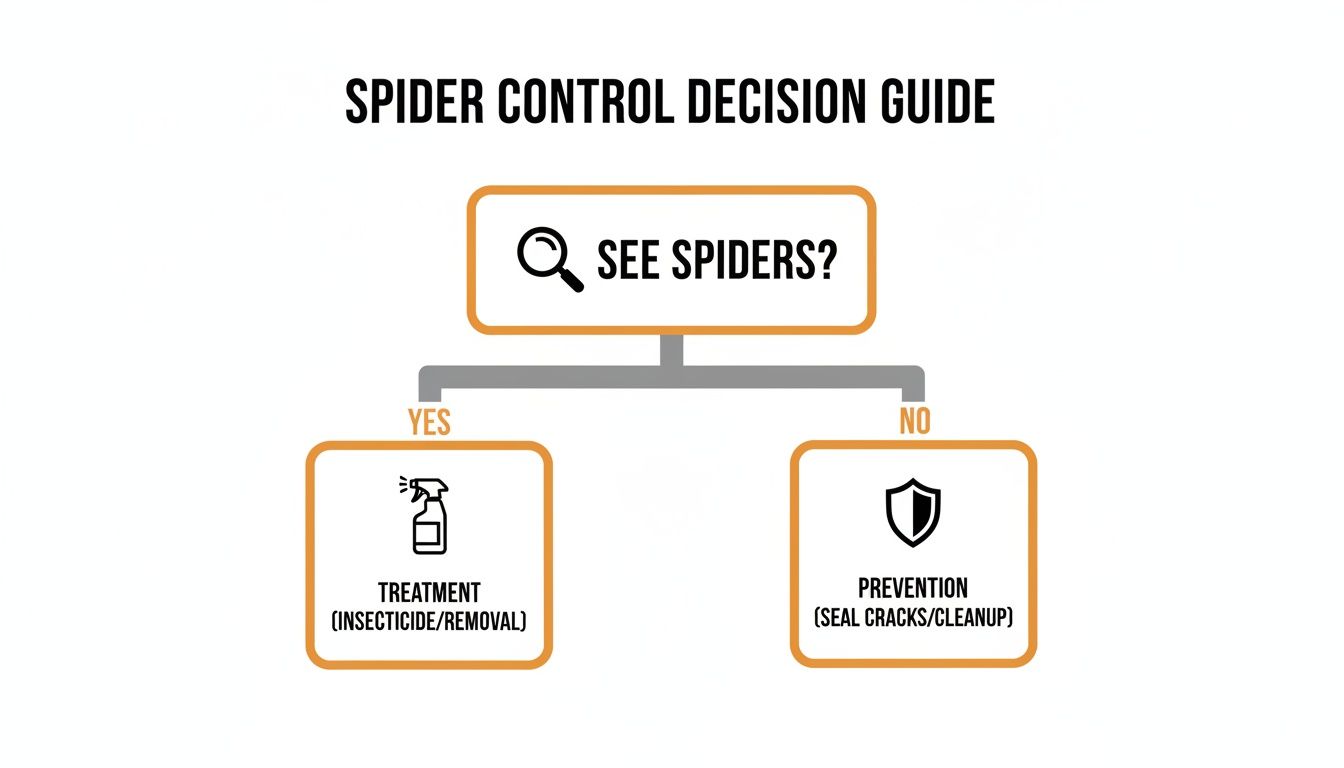
The key takeaway is that managing spiders is a two-part strategy. It's about dealing with the spiders you see now and taking steps to prevent more from showing up later.
The Most Common Indoor Spiders
While Alberta has many spider species, only a few really make themselves at home indoors. Most are completely harmless and even help out by eating other insects. Here are the main ones you'll likely run into.
House Spiders (Parasteatoda tepidariorum)
These are the artists behind those classic, messy cobwebs you find tucked away in corners, basements, and window frames. House spiders are usually small and brownish with a somewhat rounded abdomen. They’re quite shy and prefer to stay hidden, which is why you often see their webs long before you see them.
Cellar Spiders (Pholcidae family)
You probably know these as "daddy long-legs." They're impossible to miss with their incredibly long, skinny legs and tiny bodies. They build messy, tangled webs in dark, damp spots like cellars, crawl spaces, and garages. While their webs can look a bit chaotic, the spiders themselves are harmless to people.
Spiders That Prefer to Wander
Not every spider waits patiently in a web. Some are active hunters that you might spot scurrying across your floor, which can be a bit more startling.
Wolf Spiders (Lycosidae family)
Think of wolf spiders as the athletes of the spider world. They are nomadic hunters that chase down their prey instead of trapping it in a web. They’re often bigger than house spiders, typically brown or grey, and can have some distinct patterns on their backs. You're most likely to see them near doorways, windows, or in the basement where they’re on the hunt. Their speed is what usually catches people off guard, but they aren't aggressive.
Jumping Spiders (Salticidae family)
These little guys are small, stout-bodied spiders known for their almost curious nature and amazing leaping skills. They have large, prominent eyes that give them excellent vision for daytime hunting. You might see them on a sunny wall, windowsill, or out on the deck, where they stalk and pounce on their prey.
The One to Watch Out For
While most spiders in Alberta are nothing to worry about, there is one medically significant species you absolutely need to be able to identify. Encounters are pretty rare, but you should always be cautious.
Black Widow Spiders (Latrodectus species)
The Western Black Widow is the main spider of concern here in Alberta. The female is the one you need to recognize: she is shiny black with a very distinct, reddish hourglass shape on the underside of her abdomen.
Black widows build messy, irregular webs near the ground in dark, quiet places. Be extra careful around woodpiles, sheds, and cluttered garages, as these are their favourite hiding spots.
A bite from a female black widow is painful and requires medical attention, particularly for children and the elderly. If you think you’ve spotted a black widow, it is critical to keep your distance and call for professional spider pest control right away. Getting the identification right is key to keeping your family safe.
So, How Worried Should You Be About Spiders?
Finding a single spider in your home can be a bit startling, but it's usually nothing more than a nuisance. The real trouble starts when one or two turn into a full-blown infestation. Suddenly, you've got a problem that goes way beyond an occasional scare. Understanding what's at stake is the first step in realizing why being proactive about spider control is a smart move for your home and your peace of mind.
An unchecked spider population is more than just an inconvenience; it’s a symptom of a bigger problem. Spiders are predators, so if you're seeing a lot of them, it's a safe bet your home is serving up a steady buffet of other insects. This turns a simple spider issue into a red flag for a more complex pest ecosystem that needs to be sorted out.
Health Risks and When to Be Cautious
Let's be honest, the first thing most people worry about is getting bitten, especially by something venomous like a black widow. The good news is that most spiders you’ll run into in Alberta are harmless and would much rather run away than bite. Still, it's crucial to be aware of the genuine—though rare—dangers.
A bite from a female black widow is considered medically significant and needs immediate medical attention. While these incidents are not common around Red Deer, knowing the signs is just plain smart. Symptoms can go from bad to worse pretty quickly.
- Intense Pain and Swelling: Right away, the area around the bite might become red and painful.
- Muscle Cramps and Stiffness: Severe cramping, especially in the abdomen, is a classic symptom.
- Systemic Effects: As the venom spreads, you might experience nausea, fever, and chills.
While you should take a black widow sighting seriously, it's important to keep the risk in perspective. Most spiders you find are not a threat to your health.
The Bigger Picture: How Spiders Affect Your Property
Beyond the slim chance of a dangerous bite, a spider infestation creates real, tangible problems for homeowners and businesses. The most obvious issue is the constant buildup of webs. Seeing extensive webbing in corners, along the eaves, and around your light fixtures just makes a place look neglected and dirty, which can easily drag down its appearance and value.
This is especially damaging for a business, where a visible spider problem can sink a reputation fast.
For a restaurant, retail shop, or office, cobwebs and spiders scream "unclean." It's a surefire way to deter customers, earn negative reviews, and lose business. Keeping a pest-free environment isn't just about cleanliness; it's about protecting your brand.
It's also worth remembering that spiders are often a secondary pest issue. Their numbers explode when there's plenty of food—like flies, ants, or other insects—to go around. A spider infestation isn't just about spiders; it's a clear signal that your home's defenses have been breached by other pests. You’re looking at a layered problem that needs a smart, strategic solution.
For example, while black widow spider bites are more common in warmer places like California, the core principles of control are the same everywhere. Down there, bites are known to cause intense pain, muscle cramps, and nausea in 70% of cases, which really drives home the need for fast, professional help when a threat is found. The strategies used in those areas, like creating barriers with effective treatments, are similar to how Dragon Pest Control protects Alberta homes, drastically cutting the risk of an infestation. You can read more about these effective strategies for poisonous spiders to see how the pros handle serious threats.
A Practical Guide to Preventing Spiders Indoors
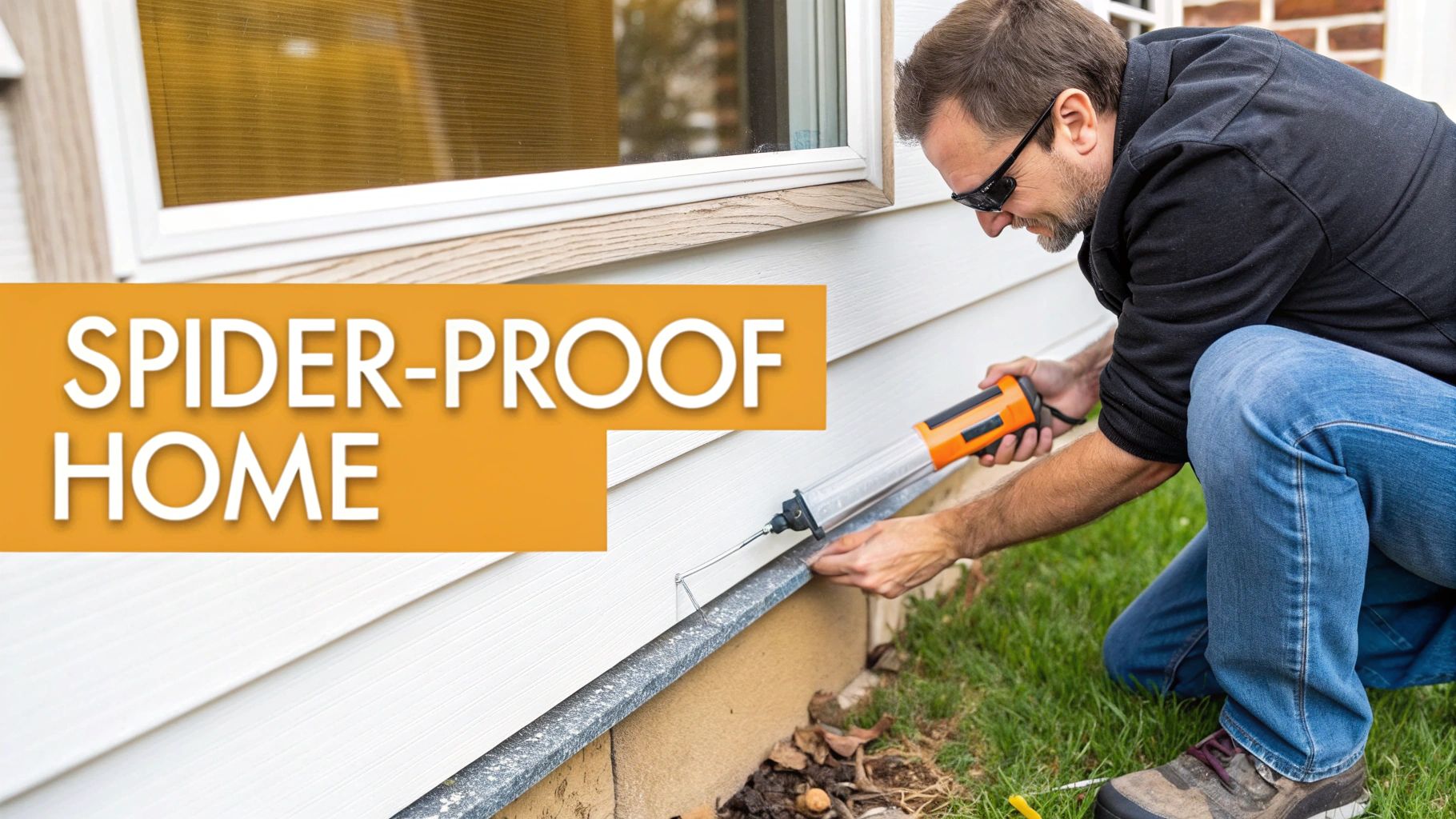
The best approach to spider pest control isn't reacting to spiders you’ve already found scurrying across the floor. It’s about stopping them from getting inside in the first place. This means turning your home into a fortress they simply can't breach.
Think of it this way: your home's exterior is its first line of defence. Spiders and the insects they hunt are masters at finding tiny, overlooked entry points. Your mission is to find and seal these little highways before they become a problem. This preventative mindset is the real key to a spider-free home.
Sealing Your Home's Exterior Perimeter
Your biggest wins in spider prevention will happen outside. A spider can squeeze through a crack you might not even notice, so a thorough inspection is the first, most crucial step. Start by walking the perimeter of your house with a keen eye.
Look for small gaps and cracks in the foundation, around utility pipes, and where siding meets the trim. Use a high-quality silicone caulk to fill these openings for good. Don’t forget to check the weather stripping around your doors and windows—if it’s worn or damaged, it’s time for a replacement.
A tiny gap under your door is like rolling out the welcome mat for a spider. Sealing these entry points is the single most impactful thing you can do to reduce indoor spider populations.
Well-maintained window and door screens are another non-negotiable. Even a small tear is more than enough for a spider to slip through. Repairing or replacing damaged screens is a simple fix that pays off big time in your pest control efforts.
Making Your Yard Less Inviting
What’s right outside your home can either attract spiders or send them packing. The goal is to create an environment that’s less appealing to both spiders and the bugs they love to eat.
Managing your exterior lighting is a surprisingly effective tactic. Bright, white outdoor lights are a beacon for moths, flies, and other insects that make up a spider’s buffet.
- Switch to Yellow Bulbs: Think about swapping standard white bulbs in your porch and security lights for yellow "bug lights." These are far less attractive to most flying insects.
- Use Motion Sensors: Instead of leaving lights on all night, install motion-activated ones. This cuts down the time they’re on, making them less of a bug magnet.
- Position Lights Strategically: Place lighting away from doorways and windows to draw insects away from your home’s main entry points.
This simple change can make a huge difference. Research shows that basic preventative measures are remarkably effective. For instance, sealing entry points can stop up to 80% of invasions, and using yellow bug lights can slash the number of insects drawn to your home by 50%.
Maintaining a Spider-Resistant Interior
Once you've fortified the outside, it's time to get rid of the hiding spots and food sources inside. A clean, clutter-free home is naturally less welcoming to spiders.
Focus your energy on the quiet, undisturbed areas where spiders tend to hang out, like basements, attics, closets, and storage rooms. Cardboard boxes are a favourite hiding spot, so consider switching to sealed plastic totes for anything you’re storing long-term. And when you're thinking about spider control inside, it's always smart to review a pet owner's guide to safe pesticides to keep everyone safe.
Finally, make your vacuum your best friend in the fight against spiders. Regular, thorough vacuuming does more than just keep your floors clean. It removes existing spiders, their webs, and most importantly, their egg sacs. By hitting the corners, getting behind furniture, and running along baseboards, you can wipe out a future generation of spiders before they even hatch. For more ideas, you might be interested in these DIY pest prevention tips for effective pest control in Red Deer. This consistent cleanup is a critical part of any successful spider control plan.
When Professional Spider Pest Control Is Necessary
Even the most diligent homeowner can find themselves in a losing battle against spiders. While all the DIY prevention tips are a powerful first step, there are definitely moments when the problem gets bigger than a few traps and some weatherstripping.
Knowing when to throw in the towel and call for backup is key to protecting your property and getting your peace of mind back.
Think of it this way: a dripping tap might just need a quick tighten with a wrench, but a burst pipe needs a plumber—and fast. The same logic applies here. When you start seeing signs that the spider issue is widespread, persistent, or potentially dangerous, it’s time to call in someone with the right tools and know-how.
Key Triggers for Calling a Professional
Sometimes the signs are subtle, but often they’re pretty obvious. If you notice any of the following, it’s a strong signal that your spider problem needs a professional touch. These are the clues that tell you the issue is either too big, too stubborn, or too risky to handle on your own.
-
A recurring infestation is probably the biggest one. You clean, de-web, and seal cracks, only to find new spiders and webs popping up just a few weeks later. This frustrating cycle usually means you’re only dealing with the symptoms, not the root cause—like a hidden entry point or a much larger population of other insects that are attracting the spiders in the first place.
-
Discovering multiple egg sacs is another major red flag. A single sac can hold hundreds of spiderlings. Finding several means you could be on the verge of a population explosion. Simply removing the sacs you can see often isn't enough to stop what's coming.
When Safety Becomes the Top Priority
The decision to call for help becomes urgent the moment you encounter a potentially venomous spider. If you think you’ve found a black widow in your home, garage, or woodpile, your first priority is safety. Do not attempt to handle it yourself.
A licensed technician has the right training and protective gear to safely remove dangerous pests and treat the area to keep them from coming back. Your family's well-being isn't worth the risk of a painful and medically significant bite. This is one of those times where professional help is non-negotiable.
Professional pest control is more than just spraying. It's about strategy. It involves identifying the specific spider species, locating their nests and entry points, and putting a plan in place that deals with the entire pest life cycle for a real, lasting solution.
What to Expect from Dragon Pest Control
When a Dragon Pest Control technician arrives, the first thing we do is a thorough inspection. We don’t just look for spiders; we look for the why. We're hunting for the conditions that are attracting them, like entry points, moisture issues, and other insect populations serving as a free buffet.
Based on that assessment, we create a treatment plan specifically for your property. This plan is built around the principles you can learn more about in our guide to Integrated Pest Management, which focuses on effective, long-term solutions while minimizing risks. We use targeted, family-safe products to eliminate the current infestation and apply preventative barriers to keep new spiders out.
Finally, we’ll give you expert advice tailored to your home to help you keep it spider-free. This partnership ensures you get a definitive solution backed by our guarantee, turning a frustrating pest problem into a thing of the past.
How Spider Behavior Changes with the Seasons
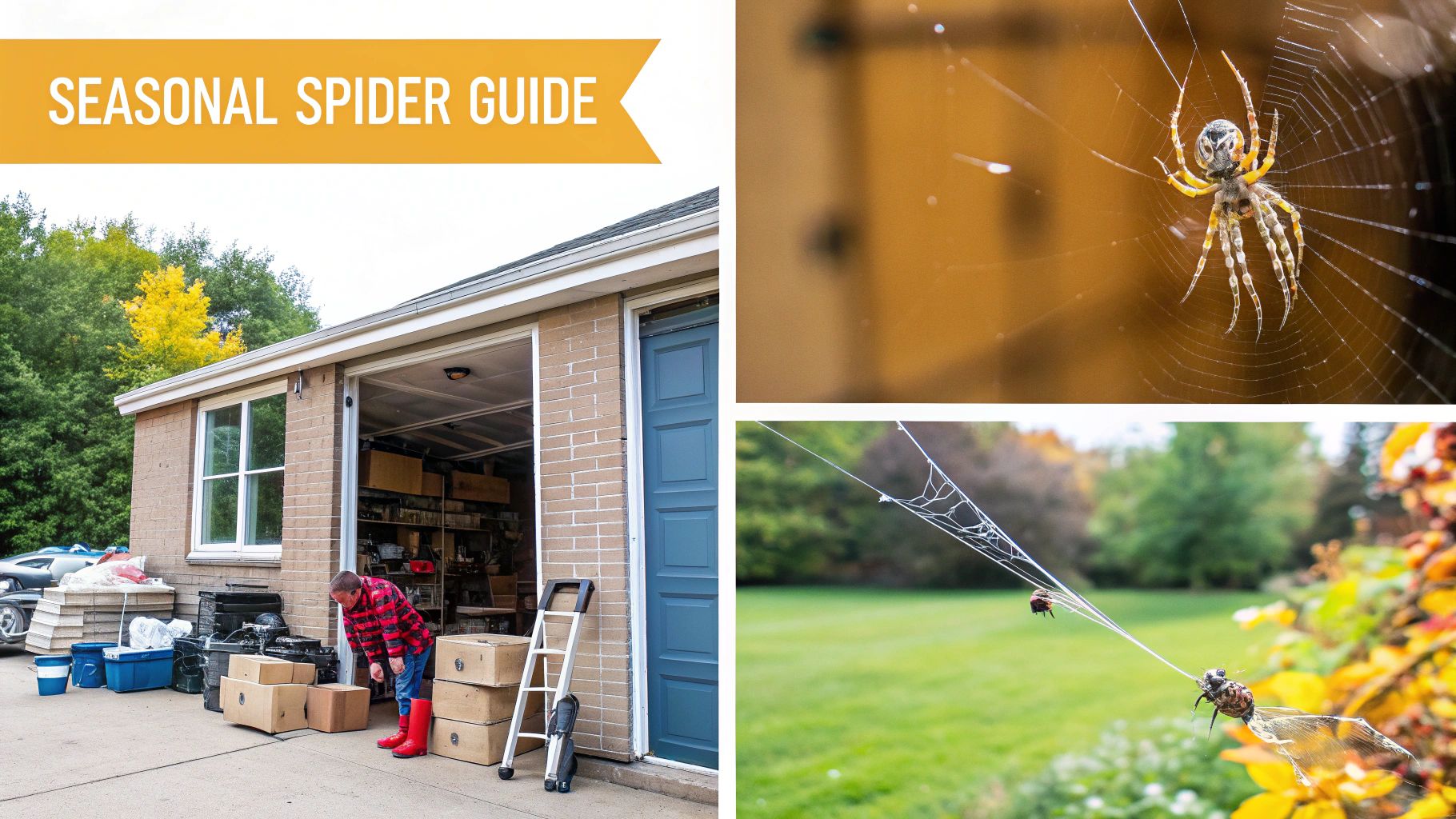
Spider activity in your home isn’t as random as it might seem. In fact, it follows a pretty predictable pattern that’s tied directly to our Alberta seasons. Once you understand this natural cycle, it’s like having a calendar for effective spider pest control. It lets you get ahead of their moves and beef up your defences when it really counts.
This whole rhythm is driven by their basic needs: finding food, mating, and escaping our harsh weather. Every season brings its own set of challenges and opportunities for them, so knowing what to expect means you can stay one step ahead all year.
Spring Awakening
When the snow finally melts and things start to warm up, the entire insect world comes roaring back to life—and spiders aren't far behind. Spring is when they emerge and get active again. Spiders that spent the winter hiding in your attic or wall voids start moving, and new spiderlings hatch from egg sacs laid last fall.
This is the perfect time to make de-webbing part of your spring-cleaning routine. A thorough sweep of garages, sheds, basements, and window wells to clear out old webs and visible egg sacs is a crucial first step. It really helps prevent a population boom come summertime.
Summer Surge and Autumn Invasion
Summer is prime time for insects, which means it’s a buffet for spiders. With so much food around, their populations can grow fast. While most will stay outside, you’ll definitely start seeing more webs and activity around your home's exterior.
The real shift happens in late summer and early autumn. This is when we get the most calls from homeowners who see a sudden, dramatic increase in spiders inside. There are a couple of good reasons for this.
- Mating Season: Many male spiders go on the move, searching for females. That journey often leads them right through an open door or a crack in your foundation.
- Seeking Shelter: As the nights get colder, spiders know winter is coming. They start looking for a warm, protected place to ride it out, and your house looks pretty inviting.
This isn't just an Alberta thing. Data from other regions shows that calls for spider control can jump by over 50% during this peak period. Experts point out that sealing up cracks and gaps—which can account for 70% of entry points—is the single best thing you can do to stop them.
Winter Hideout
Once a true Alberta winter sets in, it seems like the spiders just vanish. Most of the ones outside die off, but those that made it indoors simply find a quiet spot to hide. They enter a low-activity state in undisturbed places like wall voids, basements, or cluttered attics.
You might not see them, but the spiders that successfully moved into your home for the winter are just waiting for spring. This makes winter a critical—and often overlooked—time for interior pest prevention.
Even though they’re less active, ignoring them is a mistake. Keeping your home clean and clutter-free during these colder months makes it harder for them to find a good hiding spot. Our December pest control guide for keeping winter pests out of the home has more specific tips for this. A little effort now ensures you aren’t starting spring with a hidden spider population ready to multiply.
Common Questions About Spider Control
Even with a solid game plan, it's normal for questions—and a few myths—to pop up about spider control. Getting clear, straight answers is the best way to feel confident you're on the right track. Here are some of the most common things we hear from homeowners around Red Deer.
Do Natural Spider Repellents Actually Work?
Lots of people hope for a simple, all-natural fix, but things like peppermint oil just aren't a reliable solution for an active spider problem. While they might act as a very mild deterrent, their effects are temporary at best. The oils evaporate quickly, need to be reapplied constantly, and do absolutely nothing to fix what’s attracting spiders in the first place.
Think of natural repellents as a small supplement to a real control strategy, not the strategy itself. Effective spider pest control means sealing up the tiny cracks they use to get inside and dealing with the other insects they’re there to eat.
It’s a complete myth that killing a spider brings more. Spiders are solitary hunters, not social insects. They don't communicate deaths or "seek revenge." Killing one simply means you have one less spider in your house.
Is Professional Treatment Safe for My Family and Pets?
Absolutely. Safety is our number one priority. Professional technicians use carefully selected products and apply them in a targeted way, designed for maximum impact on pests with minimal risk to your family and pets. We focus treatments on out-of-the-way spots like high corners, wall voids, and along the foundation where children and pets can't reach.
We also give you clear, simple instructions on any precautions you might need to take, like waiting for a product to dry. Your family’s well-being is always the most important part of the job.
Why Are Spiders in My House if It’s Clean?
This is a big misconception we hear all the time. Pests aren't necessarily drawn to dirt; spiders are looking for shelter and food. A sparkling clean home can still be a perfect spider habitat if it offers easy entry points and a steady supply of other small insects to eat.
That’s why a professional approach doesn’t just focus on the spiders you see. We put just as much effort into sealing up your home and managing the spider’s food source to solve the problem for good.
Ready to get rid of your spider problem for good? The expert technicians at Dragon Pest Control deliver safe, effective solutions backed by an industry-leading guarantee. Book your service online today and get your peace of mind back.